 Preview
 Send
Send Share
Share
 Details

 Download
 Similars
 X-Ray
X-Ray Diaporama
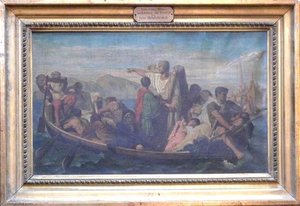
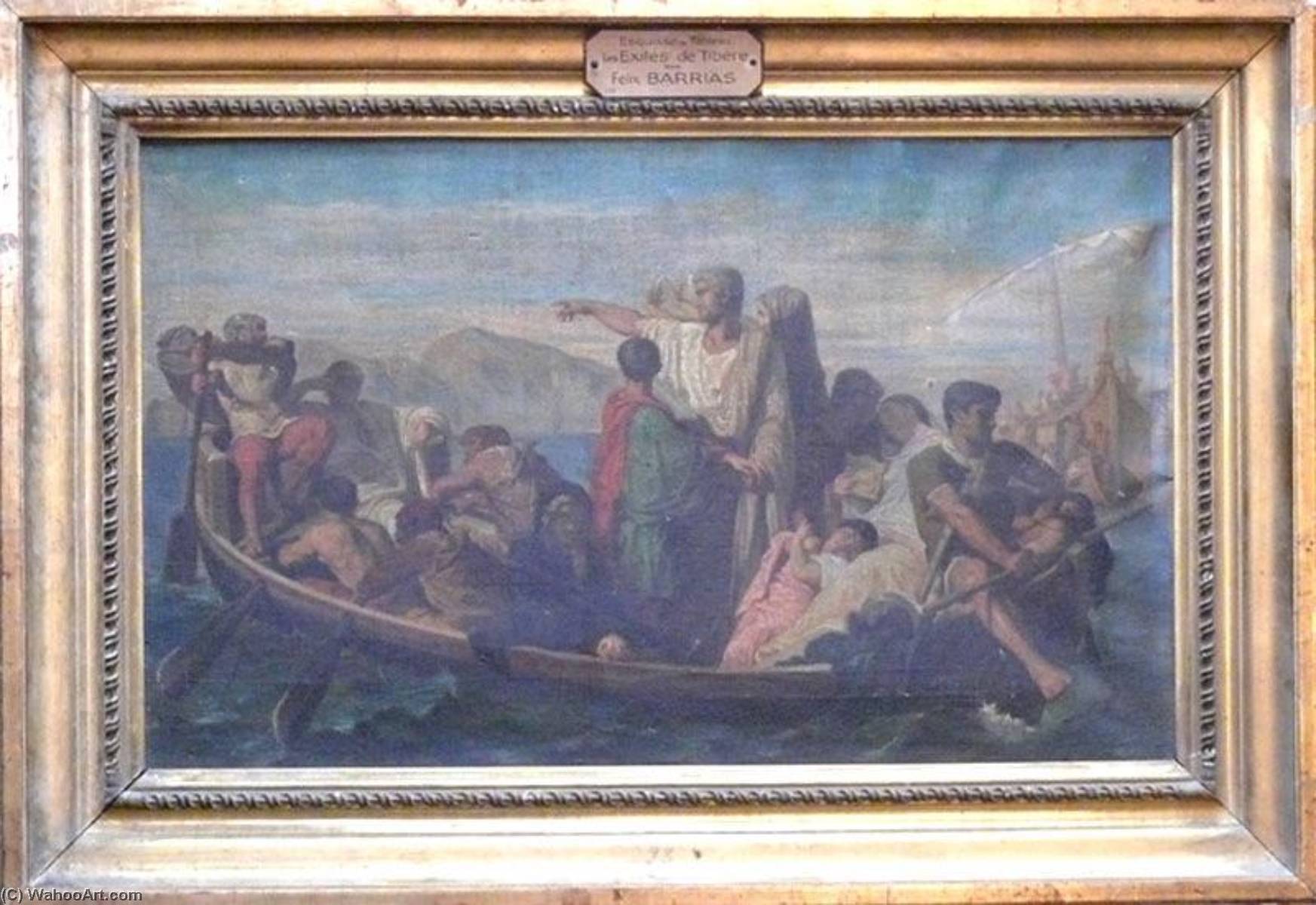
Les exilés de Tibère


 Read More
Hand Made Oil Reproduction
Hand-painted oil on canvas in your size and frame, made to order by our artists. ( Buy Print Buy Image)




P118B $10

P118H $10

P118W $10

P438Z $10

P508JH $12

P508YH $12

P805H $10

P805Z $10

P919BZ $10

P919G $10

P919XJ $10

P959ZH $10

P968JZ $12

W106C $8

W218G $10

W218JH $8

W218Y $10

W307PJ $10

W316G $10

W316PJ $8

W316Y $10

W398PJ $8

W4111J $10

W500HY $15

W500JH $15

W692G $12

W849H $8

W940BG $15

W953PJ $8




Pick from our preset sizes that match the artwork's original proportions.

You may enter your own dimensions to fit a specific frame or space. If your selected size does not match the original image's proportions, we will either crop the artwork or extend the painting with additional hand-painted elements. A digital mockup will be sent for your approval before production begins.
Please note that the on-screen preview does not reflect the actual cropping or extension. Only the mockup will accurately show the final composition.
While custom sizes are available, we recommend selecting a dimension from the predefined list to preserve the original proportions.
After order, ArtsDot.com team will email client for instructions and provide a mockup preview
Worldwide Delivery () in 3/4 weeks instead of standard 5 weeks. (20 August). No compromise on quality.

Free Worldwide Express Shipping

High-Quality Linen Canvas

Full Shipping Insurance

Customs Tax Refund Guarantee

True Color Matching Guarantee

60-Day Return Policy (Defects Only)

100% Money-Back Guarantee

Bulk Discount Offer
 Glass option is only available in size under 110 CM

Les exilés de Tibère
Reproduction Medium
Reproduction Size
-


Total Price
$ 438
Related Artworks

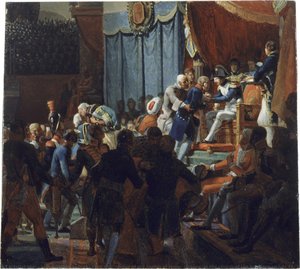
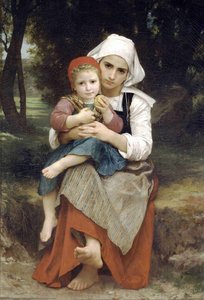
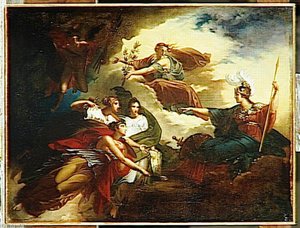
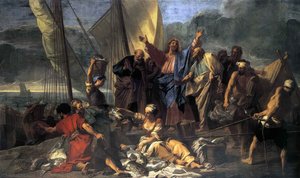
Artist Biography
Félix Joseph Barrias: A Forgotten Master of Neoclassical Romanticism
Félix Joseph Barrias (1822–1907) stands as a testament to the quiet brilliance of 19th-century French art—a painter largely eclipsed by his more famous contemporaries yet possessing an undeniable artistic legacy. While names like Edgar Degas, Gustave Achille Guillaumet, and Henri Pille gained immense renown through his studio, Barrias himself retreated from the frantic pursuit of public acclaim. Instead, he left behind a body of work characterized by solemn grandeur and imbued with profound humanist sensibilities. His canvases serve as breathtaking windows into the soul, depicting biblical narratives, historical dramas, and mythological tales with meticulous detail and a masterful execution that reflects the complex stylistic currents of Neoclassical Romanticism. Born in Paris on September 13th, 1822, Barrias’s artistic lineage was rooted in a deep appreciation for craftsmanship. His father, Jean-Baptiste Barrias, was a skilled porcelain painter who instilled in his son an early reverence for visual storytelling and precision. This familial dedication to the arts was further enriched by his brother, Louis Ernest Barrigas, who would achieve significant success as a sculptor. From a young age, Félix demonstrated exceptional talent, earning his livelihood by painting at the remarkable age of sixteen. He eventually honed his skills under the tutelage of Léon Cogniet, absorbing the rigorous principles of academic art and establishing himself as a respected figure within the prestigious Parisian artistic circles.The Pursuit of Classical Idealism
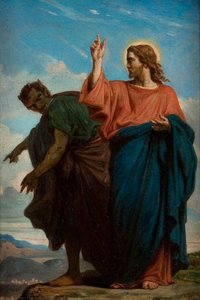
A pivotal moment in Barrias’s career arrived in 1844 when he secured the prestigious Prix de Rome for his work “Cincinnatus Receiving the Deputies of the Senate.” This scholarship provided him with invaluable access to the artistic treasures of Italy, a period of intensive study that would profoundly shape his artistic vision. Immersed in the humanist ideals championed by masters such as Michelangelo Buonarroti and Raphael, Barrias began to weave classical structure with emotional depth. His compositions often emphasized moral virtue and civic duty, rendered with a luminous chiaroscuro that breathed life into historical figures. His technical mastery is perhaps most vividly captured in his 1860 masterpiece, The Temptation of Christ by the Devil. In this profound work, Barrias captures a pivotal moment of spiritual history within a rugged, rocky landscape. The composition is anchored by the figure of Jesus Christ, depicted with a youthful yet resolute strength. Clad in a vibrant red robe and a flowing blue cloak—colors symbolizing both his humanity and his divine mission—he stands against the terrain, his arms raised toward the heavens. Opposing this celestial light is the sinister presence of the devil, positioned with predatory grace. Through masterful brushwork, Barrias creates a palpable sense of tension, where the dark, grasping energy of the tempter contrasts sharply with the upward, ascending gesture of Christ.A Legacy of Narrative and Grandeur
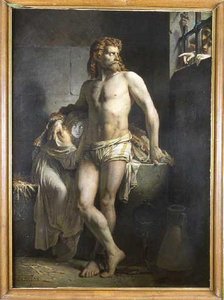
As his career progressed, Barrias continued to explore themes of loss, redemption, and historical weight. His works often functioned as visual chronicles of the human condition, ranging from the poignant scenes of Roman-era prisoners in Soldat gaulois avec sa fille prisonniers à Rome to the sweeping historical narratives found in Les Exilés de Tibère. The latter, inspired by the writings of Suetonius, presents a moving frieze of individuals banished by the tyrant Tiberius. In this piece, Barrias evokes the austerity of ancient coins through strict profiles and a sense of moral rectitude, capturing the very essence of a people abandoning their homeland. Though his name may not resonate with the same immediate recognition as the Impressionists, the historical significance of Félix Joseph Barrias remains profound. His contribution to the artistic landscape lies in his ability to balance meticulous anatomical precision with an evocative, emotional atmosphere. He was a bridge between the rigid traditions of the Academy and the burgeoning emotionality of Romanticism. Through his murals that once adorned Parisian landmarks and his enduring oil paintings, Barrias remains a singular voice—a master who found beauty in the solemn, the sacred, and the historical.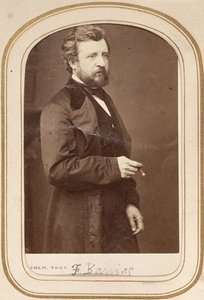
félix joseph barrias
1822 - 1907
Quick Facts
- Artistic Movement Or Style: Neoclassical
- Artists Or Movements Influenced By This Artist: ['Edgar Degas']
- Artists Who Influenced This Artist: ['Léon Cogniet']
- Date Of Birth: September 13, 1822
- Date Of Death: January 24, 1907
- Full Name: Félix Joseph Barrias
- Nationality: French
- Notable Artworks:
- Soldat gaulois avec sa fille prisonniers à Rome
- Les exilés de Tibère
- Place Of Birth: Paris, France
Related Articles

The Enduring Legacy of Oil on Canvas: Technique, History & Aesthetic Impact
Explore the rich history & techniques of oil painting – from Renaissance masters to Impressionism. Discover pigments, layering methods, and why this timeless medium endures. Expert insights for artists & art enthusiasts.

Oil on Canvas: A Historical & Technical Exploration of a Timeless Artistic Medium
Explore the rich history & enduring techniques of oil painting on canvas. Discover the science behind its longevity, conservation practices, and contemporary relevance. Expert insights for art enthusiasts.
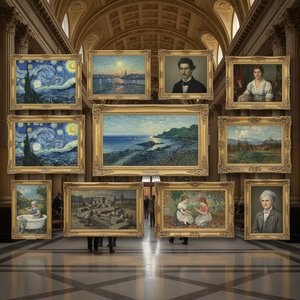
19th Century Masterpieces: 10 Paintings That Defined an Era | ArtsDot
Journey through 19th century art with ArtsDot! Explore 10 iconic paintings – from Monet & Renoir to Courbet – and discover the stories behind Romanticism, Realism & Impressionism. Find museum-quality reproductions for your home decor. Explore the full collection online!

The Enduring Power of Painting: A Historical & Contemporary Exploration of Form and Emotion
Explore the rich history & enduring techniques of oil painting with ArtsDot. Discover masterpieces, learn about art collecting, and find authentic handmade reproductions crafted by skilled artists.

The Enduring Legacy of Oil on Canvas: Technique, History & Contemporary Practice
Explore the rich history & enduring techniques of oil painting on canvas. Discover the science behind its longevity, conservation practices, and contemporary relevance. Expert insights for art enthusiasts.