 Preview
 Send
Send Share
Share
 Details

 Download
 Similars
 X-Ray
X-Ray Diaporama
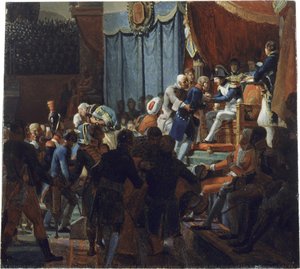
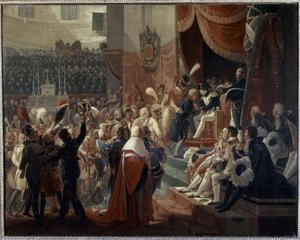
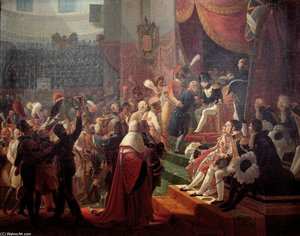
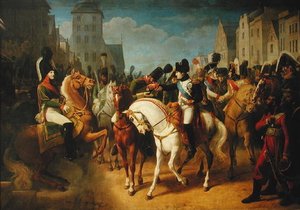
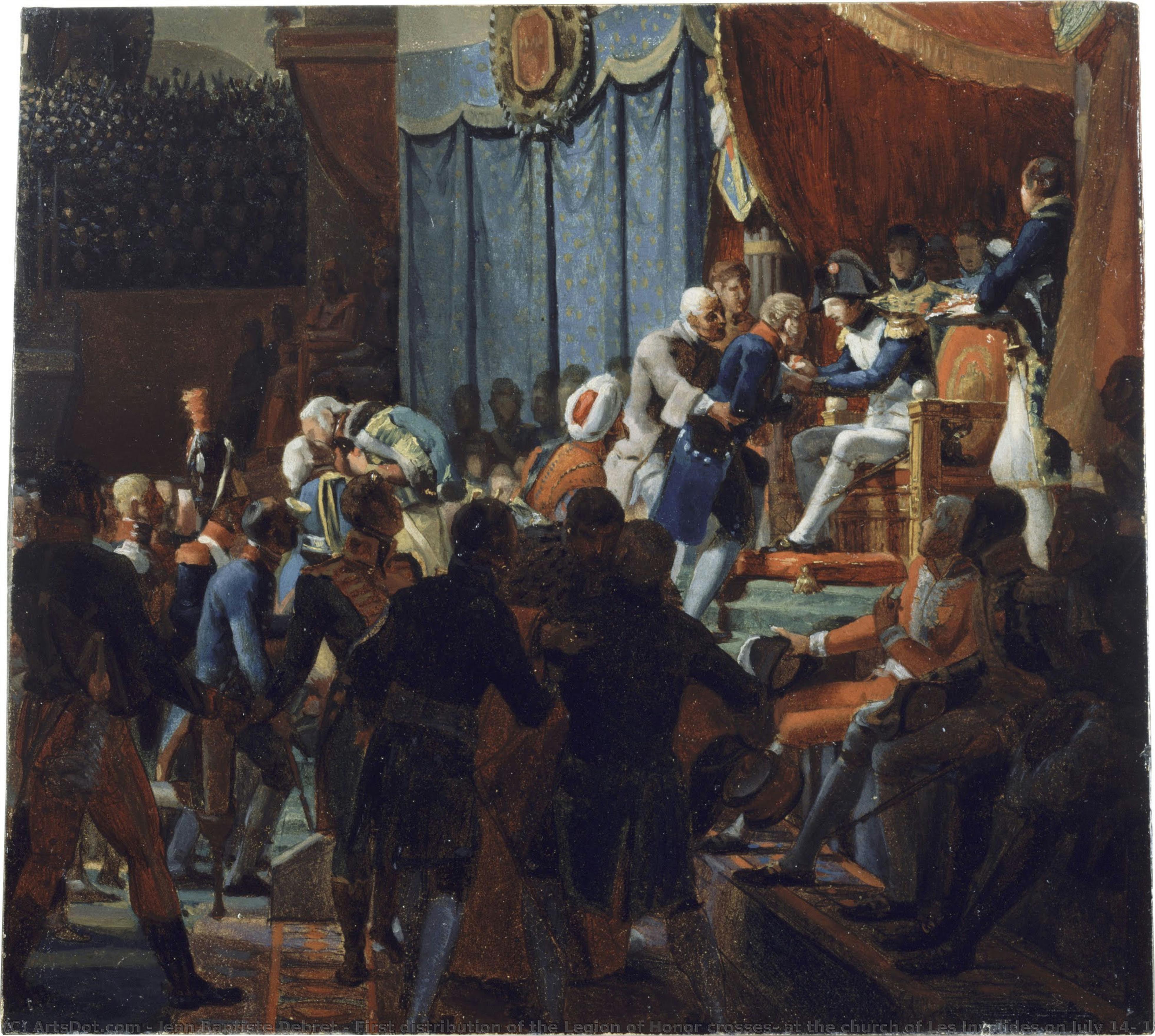
First distribution of the Legion of Honor crosses, at the church of Les Invalides on July 14, 1804


 Read More
Hand Made Oil Reproduction
Hand-painted oil on canvas in your size and frame, made to order by our artists. ( Buy Print Buy Image)




P118B $10

P118H $10

P118W $10

P438Z $10

P508JH $12

P508YH $12

P805H $10

P805Z $10

P919BZ $10

P919G $10

P919XJ $10

P959ZH $10

P968JZ $12

W106C $8

W218G $10

W218JH $8

W218Y $10

W307PJ $10

W316G $10

W316PJ $8

W316Y $10

W398PJ $8

W4111J $10

W500HY $15

W500JH $15

W692G $12

W849H $8

W940BG $15

W953PJ $8




Pick from our preset sizes that match the artwork's original proportions.

You may enter your own dimensions to fit a specific frame or space. If your selected size does not match the original image's proportions, we will either crop the artwork or extend the painting with additional hand-painted elements. A digital mockup will be sent for your approval before production begins.
Please note that the on-screen preview does not reflect the actual cropping or extension. Only the mockup will accurately show the final composition.
While custom sizes are available, we recommend selecting a dimension from the predefined list to preserve the original proportions.
After order, ArtsDot.com team will email client for instructions and provide a mockup preview
Worldwide Delivery () in 3/4 weeks instead of standard 5 weeks. (31 August). No compromise on quality.

Free Worldwide Express Shipping

High-Quality Linen Canvas

Full Shipping Insurance

Customs Tax Refund Guarantee

True Color Matching Guarantee

60-Day Return Policy (Defects Only)

100% Money-Back Guarantee

Bulk Discount Offer
 Glass option is only available in size under 110 CM

First distribution of the Legion of Honor crosses, at the church of Les Invalides on July 14, 1804
Reproduction Medium
Reproduction Size
-


Total Price
$ 388
A Moment of Imperial Grandeur
In the sweeping, monumental oil painting by Jean-Baptiste Debret, titled "First distribution of the Legion of Honor crosses, at the church of Les Invalides on July 14, 1804," we are transported to a pivotal epoch in French history. The canvas captures the very breath of an empire being born, documenting the ceremonial bestowal of the Legionnaire crosses by Emperor Napoleon I. Set within the opulent and hallowed halls of Les Invalides—a site that transitioned from a symbol of royal piety to a bastion of imperial authority—the scene is thick with the weight of destiny. Debret does not merely record an event; he orchestrates a visual symphony of power, where every figure and architectural detail serves to legitimize the ascent of Napoleon onto the world stage.
The composition is masterfully structured to command reverence. The viewer’s gaze is immediately pulled upward by a sophisticated use of linear perspective, climbing a grand staircase that leads directly to the heart of the ceremony. At the apex sits Napoleon, seated majestently upon an elaborately sculpted throne. He is the sun around which this entire historical solar system orbits, surrounded by a sea of dignitaries and spectators whose eager faces reflect the collective anticipation of a nation. This dynamic arrangement creates a sense of depth and spatial realism that makes the viewer feel like an unobserved guest standing within the crowded, bustling hall.
The Elegance of Neoclassical Precision
Adhering to the rigorous principles of the Neoclassical movement, Debret employs a technique defined by clarity, order, and idealized form. Influenced by his relation to the legendary Jacques-Louis David, the artist utilizes anatomical precision to render the figures with a noble dignity that mirrors the sculptural traditions of antiquity. There is an intentionality in the way the drapery cascades across the throne and architectural elements; the heavy, textured folds of fabric add a tactile richness to the scene, grounding the imperial splendor in a palpable reality.
The color palette is a sophisticated blend of warmth and authority. Deep earth tones—rich browns, regal reds, and shimmering golds—dominate the composition, evoking the stability and wealth of the new regime. These are punctuated by cooler blues and crisp whites found in the attire of the attendees, providing a visual rhythm that prevents the large-scale work from feeling heavy. The lighting, appearing to emanate from multiple sources within the cathedral, casts dramatic shadows that sculpt the figures, lending a theatrical intensity to the bestowal of the crosses.
A Timeless Legacy for the Discerning Collector
For the art lover or interior designer, this painting offers more than mere decoration; it provides a profound sense of historical gravity and architectural scale. The artwork is a masterclass in using geometry—squares, rectangles, and circles within the architecture—to create a sense of permanence and strength. It is a piece that demands attention, making it an extraordinary focal point for a grand salon, a library, or a formal study where one wishes to evoke themes of leadership, heritage, and the enduring impact of human ambition.
Owning a high-quality reproduction of this Debret masterpiece allows one to invite the spirit of the French Neoclassical era into a contemporary space. It serves as a conversation piece that bridges the gap between the turbulent beauty of the 19th century and the refined aesthetics of modern luxury. Whether you are drawn to the meticulous brushwork, the political symbolism of the imperial regalia, or the sheer emotional scale of the event, this painting remains an evocative testament to a moment when history was being rewritten in gold and crimson.
Related Artworks




Artist Biography
Jean-Baptiste Debret: A Neoclassical Painter and Pioneer of Brazilian Arts Education
- Born: Paris, France (April 18, 1768)
- Died: Paris, France (1848)
Early Life and Artistic Training
Jean-Baptiste Debret was a French painter and draughtsman celebrated for his Neoclassical style. Born in Paris, France, in 1768, he received his formal artistic training at the prestigious French Academy of Fine Arts. A pivotal influence on his development was Jacques-Louis David, a renowned neoclassical artist who also happened to be a relative of Debret’s. Under David's guidance, Debret honed his skills and absorbed the principles of Neoclassicism—a style emphasizing classical austerity, idealized forms, and heightened emotional expression.
Career Highlights: Salon Success and Travels to Brazil
Debret made his debut at the Salon des Beaux-Arts in 1798, earning a second prize. His early works reflected the Neoclassical aesthetic, often depicting historical scenes that resonated with the moral climate of the time. A significant turning point in Debret’s career arrived in March 1816 when he joined the French artistic mission to Brazil. This journey proved transformative, both personally and professionally.
- French Artistic Mission: Debret's participation in this mission underscored France's commitment to cultural exchange and arts education abroad.
- Imperial Academy of Fine Arts: In December 1822, he established his atelier at the Imperial Academy of Fine Arts in Rio de Janeiro, quickly becoming a valued teacher.
- First Brazilian Art Exhibition: Debret spearheaded the organization of Brazil's first-ever arts exhibition, showcasing both his own works and those of his students—a landmark event for the burgeoning Brazilian art scene.
Artistic Style and Notable Works
Debret’s paintings are characterized by their meticulous attention to detail and adherence to Neoclassical principles. His subject matter frequently encompassed historical events, portraits, and scenes depicting Brazilian life and culture. His work provides valuable insights into 19th-century Brazil.
- Neoclassical Influence: Debret’s style is deeply rooted in the Neoclassical tradition, evident in his emphasis on clarity, order, and idealized forms.
- Historical Scenes: Many of his paintings depict significant historical moments, reflecting a desire to educate and inspire through art.
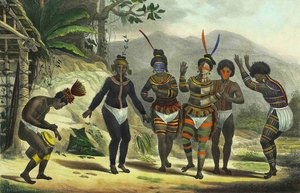
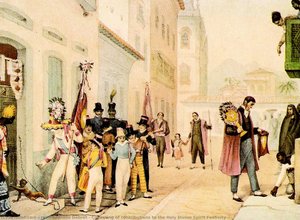
- Brazilian Subject Matter: His time in Brazil led him to focus increasingly on depicting Brazilian landscapes, indigenous peoples, and colonial life.
Notable works by Jean-Baptiste Debret can be found on the ArtsDot website, including:
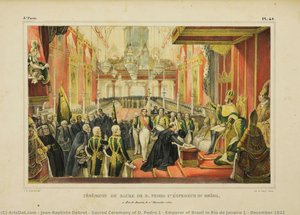
- Sacred Ceremony of D. Pedro 1 ° Emperor of Brazil in Rio de Janeiro 1 ° December 1822 – A detailed lithograph capturing a pivotal moment in Brazilian history.
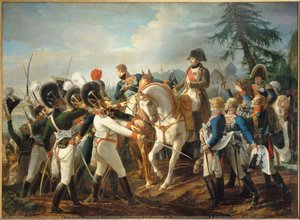
- Napoléon harangue les troupes bavaroises et wurtembourgeoises à Abensberg, 20 avril 1809 – A powerful depiction of Napoleon addressing troops.
- Indians Crossing A Creek – An example of his detailed depictions of indigenous life.
- Indigenous Population Of Cantagalo, C.1826 – A watercolor showcasing Brazilian culture and landscapes.
Legacy and Later Years
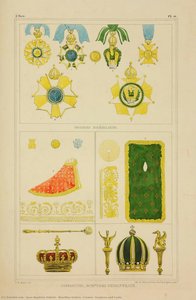
Debret returned to France in 1831 and was elected a member of the Académie des Beaux-Arts. He is perhaps best known for his monumental three-volume series of engravings, Voyage pittoresque et historique au Brésil, published in 1834. This work served as a visual record of Brazilian life during his time there and contributed significantly to European understanding of Brazil. Despite achieving recognition, Debret died poor in Paris in 1848.
- Voyage Pittoresque: His publication remains an invaluable resource for historians and art enthusiasts alike.
- Impact on Brazilian Art Education: Debret’s contributions to arts education in Brazil left a lasting legacy, helping to establish a foundation for the development of Brazilian artistic talent.
For further information on Jean-Baptiste Debret and his work, please visit the ArtsDot website or consult Wikipedia's page on the Museu Nacional de Belas Artes.

Jean-Baptiste Debret
1768 - 1848 , France
Quick Facts
- Artistic Movement Or Style: Neoclassical art
- Artists Who Influenced This Artist: ['Jacques-Louis David']
- Date Of Birth: April 18, 1768
- Date Of Death: 1848
- Full Name: Jean-Baptiste Debret
- Nationality: French
- Notable Artworks:
- Sacred Ceremony of D. Pedro 1 °
- Napoléon harangue les troupes
- Indians Crossing A Creek
- Indigenous Population Of Cantagalo
- Napoleon Bonaparte Decorating
- Place Of Birth: Paris, France
Related Articles

Jean-Baptiste Debret: Witnessing Brazil’s Emergence Through Art & Identity
Explore the captivating art of Jean-Baptiste Debret, a key witness to Brazil’s imperial era. Discover his iconic portraits, historical scenes & insightful depictions of Brazilian life. Learn about his legacy and find museum-quality reproductions at ArtsDot.
Neoclassical Art: 10 Masterpieces That Shaped History |
Explore 10 defining Neoclassical masterpieces by David, Ingres & Canova. Discover the history, symbolism & artistry behind these iconic paintings and sculptures. Find museum-quality art reproductions at – elevate your home with timeless beauty.
Jacques-Louis David: Neoclassical Ideals & Revolutionary Witness
Explore the life & art of Jacques-Louis David, leading Neoclassical painter of the French Revolution. Discover iconic works like 'The Death of Marat' and his lasting impact on art history. Expert analysis & high-quality reproductions at ArtsDot.
Charles Le Brun: Master of French Baroque Classicism & His Enduring Legacy
Explore the life & art of Charles Le Brun, master of French Baroque Classicism. Discover his royal commissions, influence on Versailles, and enduring legacy through detailed analysis & stunning artworks.
Simon Vouet: A Baroque Master's Journey from Italian Influence to French Classicism
Explore the life & art of Simon Vouet, a pivotal French Baroque painter who introduced Italian styles to France. Discover his masterpieces and lasting influence on 17th-century art.