 Preview
 Send
Send Share
Share
 Details

 Download
 Similars
 X-Ray
X-Ray Diaporama
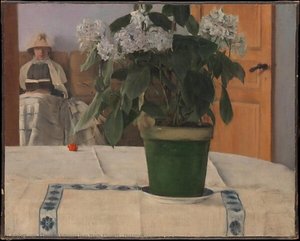
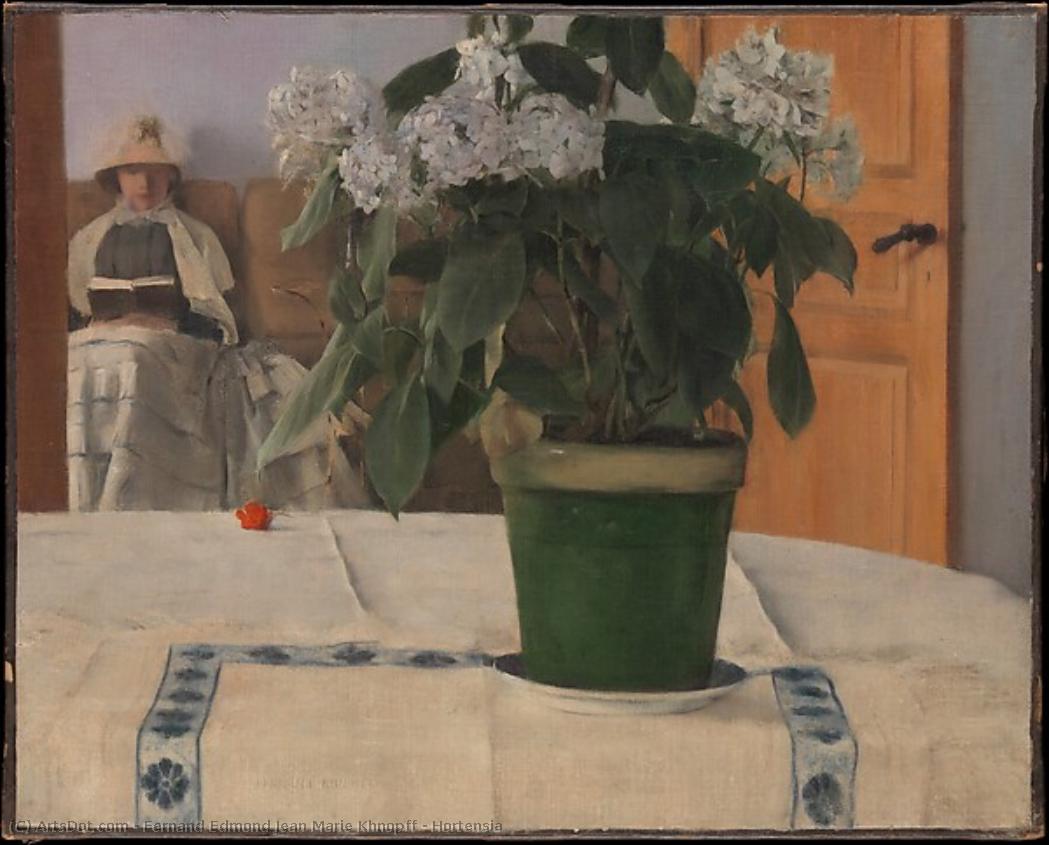
Hortensia
 Acrylic On Canvas
- WallArt
- Symbolism
 1884
1884- 19th Century
 48.0 x 60.0 cm
 Metropolitan Museum of Art
 Read More
Hand Made Oil Reproduction
Hand-painted oil on canvas in your size and frame, made to order by our artists. ( Buy Print Buy Image)




P118B $10

P118H $10

P118W $10

P438Z $10

P508JH $12

P508YH $12

P805H $10

P805Z $10

P919BZ $10

P919G $10

P919XJ $10

P959ZH $10

P968JZ $12

W106C $8

W218G $10

W218JH $8

W218Y $10

W307PJ $10

W316G $10

W316PJ $8

W316Y $10

W398PJ $8

W4111J $10

W500HY $15

W500JH $15

W692G $12

W849H $8

W940BG $15

W953PJ $8




Pick from our preset sizes that match the artwork's original proportions.

You may enter your own dimensions to fit a specific frame or space. If your selected size does not match the original image's proportions, we will either crop the artwork or extend the painting with additional hand-painted elements. A digital mockup will be sent for your approval before production begins.
Please note that the on-screen preview does not reflect the actual cropping or extension. Only the mockup will accurately show the final composition.
While custom sizes are available, we recommend selecting a dimension from the predefined list to preserve the original proportions.
After order, ArtsDot.com team will email client for instructions and provide a mockup preview
Worldwide Delivery () in 3/4 weeks instead of standard 5 weeks. (17 August). No compromise on quality.

Free Worldwide Express Shipping

High-Quality Linen Canvas

Full Shipping Insurance

Customs Tax Refund Guarantee

True Color Matching Guarantee

60-Day Return Policy (Defects Only)

100% Money-Back Guarantee

Bulk Discount Offer
 Glass option is only available in size under 110 CM

Hortensia
Reproduction Medium
Reproduction Size
-


Total Price
$ 263
Artwork Description
The Enigmatic Bloom: Unveiling Fernand Khnopff’s Hortensia
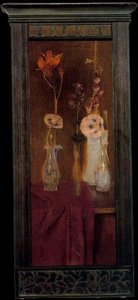
Fernand Khnopff, a pivotal figure within the Belgian Symbolist movement, possessed an extraordinary ability to distill emotion and memory into hauntingly beautiful paintings. His 1884 work, “Hortensia,” is not merely a depiction of flowers; it's a carefully constructed meditation on solitude, longing, and the subtle interplay between the visible and the unseen. The painting immediately draws the viewer in with its intimate scale – a mere 48 x 60 centimeters – creating an immediate sense of closeness and vulnerability, as if we’ve been invited into a private moment.
At first glance, the composition appears deceptively simple: a woman seated on a plush couch, absorbed in a book. However, Khnopff masterfully employs a technique that deliberately disrupts this initial impression. The figure of the woman, rendered with a soft, almost ethereal quality, is partially obscured by the shadows and folds of the upholstery, suggesting a detachment from the immediate scene. Her gaze is directed downwards, hinting at introspection rather than engagement with the vibrant floral arrangement before her. This deliberate ambiguity is characteristic of Khnopff’s style – he rarely offers easy answers or straightforward narratives.
A Symphony of Color and Light: Technique and Style
Khnopff's brushwork is remarkably delicate, almost hesitant, contributing to the painting’s overall sense of quiet contemplation. He utilizes a muted palette dominated by soft blues, greens, and browns, creating an atmosphere of subdued elegance. The flowers themselves – hydrangeas, represented with meticulous detail – are rendered in shades of white and purple, their velvety petals seeming to glow softly within the shadows. Notice how Khnopff employs subtle gradations of light and shadow to sculpt the forms, imbuing them with a remarkable sense of volume and texture. This masterful control over light is a hallmark of his technique.
Furthermore, Khnopff’s use of perspective is unconventional. The background elements – the partially visible bookshelf and chair – are rendered with a slightly blurred quality, further emphasizing the central focus on the woman and the flowers. This creates an illusion of depth while simultaneously maintaining a sense of intimacy and immediacy. It's as if we are peering through a veil, glimpsing a fleeting moment in time.
Symbolism and the Language of Dreams
“Hortensia” is rich with symbolic meaning, reflecting Khnopff’s fascination with psychological themes and the realm of dreams. The hydrangeas themselves have long been associated with remembrance and mourning – a poignant detail considering the painting's quiet melancholy. The book held by the woman likely represents knowledge, experience, or perhaps even a barrier between herself and the external world. The red blossom on the table acts as a striking focal point, injecting a burst of color and energy into the otherwise subdued scene, possibly symbolizing passion, desire, or a fleeting moment of joy.
Khnopff’s work aligns closely with the Symbolist movement's emphasis on subjective experience and emotional resonance. He sought to capture not just what he saw but also what he *felt*, creating paintings that resonate deeply with the viewer long after they have been observed. The painting evokes a sense of wistful nostalgia, inviting us to contemplate the beauty and fragility of life’s fleeting moments.
A Legacy of Introspection: Khnopff's Place in Art History
Fernand Khnopff was a key figure in Belgian art history, bridging the gap between Realism and Symbolism. His work profoundly influenced artists like Gustav Klimt, demonstrating his ability to capture the essence of human emotion through evocative imagery and masterful technique. “Hortensia” stands as a testament to his unique vision – a poignant meditation on solitude, beauty, and the enduring power of memory. Reproductions of this captivating artwork offer a window into Khnopff’s world, inviting viewers to lose themselves in its delicate reverie.
Related Artworks
Artist Biography
Fernand Khnopff: Architect of the Dream
Fernand Edmond Jean Marie Khnopff (1858-1921) stands as a singular figure in Belgian art, a master of Symbolism who crafted intensely personal and often unsettling visions. Born in Grevelingen, Belgium, into a wealthy bourgeois family, his early life was shaped by a complex blend of familial expectations and burgeoning artistic passion – a tension that would profoundly inform his work. Initially destined for a legal career, Khnopff’s true calling emerged through the influence of Xavier Mellery at the Académie Royale des Beaux-Arts in Brussels, where he began to explore the evocative power of painting. His early years were marked by trips to Paris, immersing himself in the works of Delacroix, Ingres, and Millais, laying the groundwork for his distinctive style – a haunting synthesis of realism and ethereal dreamscapes. Khnopff’s artistic journey wasn't simply about replicating reality; it was about capturing the hidden currents of emotion, memory, and the subconscious.The Language of Symbolism: Themes and Motifs
Khnopff’s art is deeply rooted in the Symbolist movement, yet he forged a unique path within its framework. Unlike many of his contemporaries who embraced overtly mythological or literary themes, Khnopff focused on intensely psychological explorations. His paintings are populated by enigmatic figures – often women – caught in moments of quiet contemplation, veiled desire, and profound isolation. Recurring motifs include the female nude, frequently rendered with an almost sculptural quality; the cheetah, a symbol of both predatory instinct and alluring beauty (most famously depicted in “The Caress”); and interiors that feel simultaneously familiar and unsettlingly alien. His use of muted color palettes – predominantly blues, grays, and browns – contributes to the overall atmosphere of melancholy and introspection. The figures in his works rarely engage directly with the viewer; instead, they seem lost within their own private worlds, inviting us to contemplate the mysteries of human experience.Key Works: “The Caress” and Beyond
Perhaps Khnopff’s most celebrated work, "The Caress" (1896), exemplifies his signature style. The painting depicts a nude couple, seemingly lost in an unspoken exchange, with a cheetah lurking nearby – a potent symbol of both desire and danger. The scene is bathed in a soft, diffused light, creating a dreamlike atmosphere that defies easy interpretation. Khnopff’s meticulous attention to detail—the texture of the skin, the subtle shifts in expression—grounds the ethereal quality of the work in a palpable sense of realism. Other notable works include “I Lock My Door” (1895), which explores themes of confinement and solitude; "The Mirror" (1897), a haunting meditation on identity and self-reflection; and numerous portraits of his sister, Marguerite, often imbued with an aura of melancholy and timeless beauty. These paintings demonstrate Khnopff’s ability to transform ordinary subjects into vehicles for profound psychological exploration.Influence and Legacy: Vienna Secession and Gesamtkunstwerk
Khnopff's work exerted a significant influence on the artistic landscape of late 19th-century Europe, particularly within the burgeoning avant-garde movements. His enigmatic style resonated deeply with artists in Vienna, notably Gustav Klimt, who exhibited several of Khnopff’s paintings at the Secession’s first exhibition in 1898. The influence extended beyond painting; Khnopff's designs for theater sets and opera costumes further solidified his reputation as a visionary artist. Later in life, he dedicated himself to creating a “Gesamtkunstwerk” – a total work of art – within his own home and studio in Brussels. This meticulously designed space, incorporating mosaic floors, golden circles, and symbolic furnishings, served as a physical manifestation of his artistic philosophy, reflecting his belief that art should encompass all aspects of human experience.A Lasting Vision: The Artist’s Temple
Fernand Khnopff died in Brussels in 1921, leaving behind a body of work that continues to captivate and challenge viewers today. His paintings are not merely beautiful images; they are invitations to delve into the depths of the human psyche, to confront our own anxieties and desires, and to contemplate the mysteries of existence. Khnopff’s legacy lies in his ability to create art that is both intensely personal and universally resonant—a testament to the enduring power of Symbolism and the visionary genius of a Belgian master. His work remains a poignant reminder of the beauty and complexity of the human experience, rendered with an unparalleled blend of realism and ethereal dreaminess.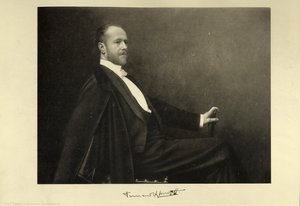
fernand edmond jean marie khnopff
1858 - 1921 , Belgium
Quick Facts
- Artistic Movement Or Style: Symbolism
- Artists Or Movements Influenced By This Artist:
- Vienna Secession
- British Pre-Raphaelitism
- Artists Who Influenced This Artist:
- Burne-Jones
- Millais
- Date Of Birth: September 12, 1858
- Date Of Death: November 12, 1921
- Full Name: Fernand Edmond Jean Marie Khnopff
- Nationality: Belgian
- Notable Artworks:
- The Caress
- I Lock My Door
- Place Of Birth: Grevelingen, Belgium
Related Articles
Blossoming Symbolism: A Historical Journey Through Flowers in Western Painting
Explore the rich history of flower symbolism in Western painting! Discover how artists from the Renaissance to Modernism used blossoms to convey meaning, emotion & beauty. Learn about iconic artworks and movements.
Blossoms of Time: A Historical Journey Through Flower Painting
Explore the captivating history of flower painting! Discover Dutch masters, symbolic meanings, & botanical art. Expert insights & high-quality reproductions at ArtsDot.
Blossoms of Time: A Historical & Aesthetic Exploration of Floral Painting Across Cultures
Explore the rich history of floral painting! Discover symbolism, techniques & masterpieces from Van Huysum to O'Keeffe. Expert insights for art lovers & collectors at ArtsDot.

Cézanne's Masterpieces: 25 Iconic Artworks to Transform Your Space
Journey through 25 iconic artworks by Paul Cézanne – a master of Impressionism and Post-Impressionism. Explore his landscapes, still lifes, and the stories behind these timeless masterpieces. Discover museum-quality reproductions & curated decor at ArtsDot.com.
Marianne North's Masterpieces: 25 Botanical Paintings That Bloom With Adventure | ArtsDot
Journey through the vibrant world of Marianne North’s botanical paintings! Explore 25 iconic artworks from this Victorian artist, celebrating exotic flora & travel. Find museum-quality reproductions and curated decor ideas at ArtsDot.com.