 Preview
 Send
Send Share
Share
 Details

 Download
 Similars
 X-Ray
X-Ray Diaporama
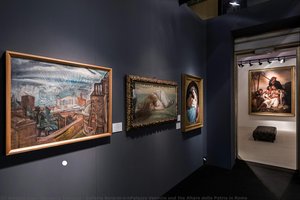
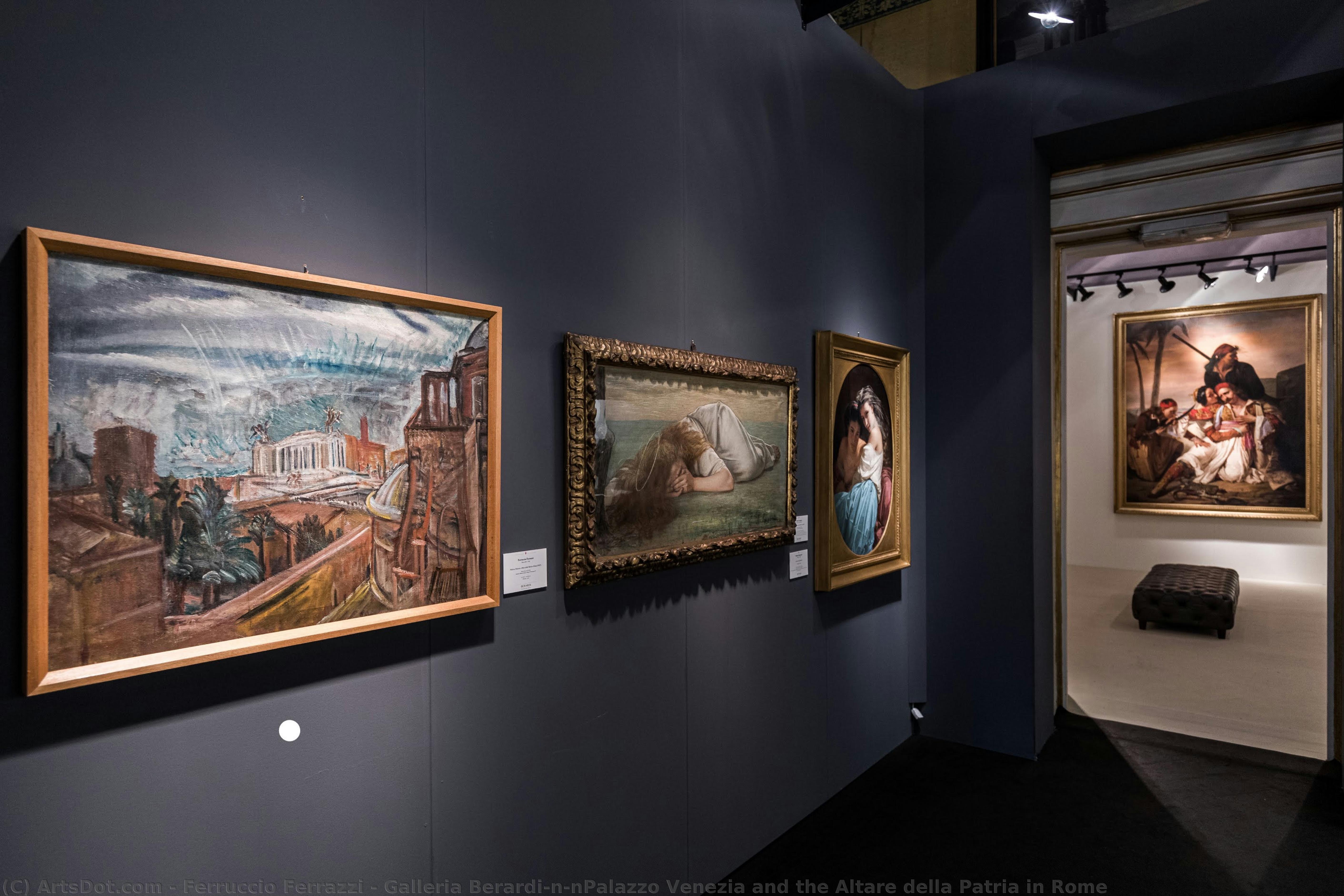
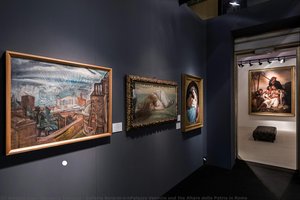
Galleria Berardi\n\nPalazzo Venezia and the Altare della Patria in Rome


 Read More
Giclée / Art Print
Museum-quality giclée or canvas print with fast production and flexible finish options. ( Buy Hand Made Painting Buy Image)




































Pick from our preset sizes that match the artwork's original proportions.

You may enter your own dimensions to fit a specific frame or space. If your selected size does not match the original image's proportions, we will either crop the artwork or extend the image with a mirrored or solid-fill edge. A digital mockup will be sent for your approval before production begins.
Please note that the on-screen preview does not reflect the actual cropping or extension. Only the mockup will accurately show the final composition.
While custom sizes are available, we recommend selecting a dimension from the predefined list to preserve the original proportions.
Worldwide Delivery () in 2 weeks instead of standard 4/5 weeks. (3 September)

Free Worldwide Express Shipping

High-Quality Linen Canvas

Full Shipping Insurance

Customs Tax Refund Guarantee

True Color Matching Guarantee

60-Day Return Policy (Defects Only)

100% Money-Back Guarantee

Bulk Discount Offer
 Glass option is only available in size under 110 CM

Galleria Berardi\n\nPalazzo Venezia and the Altare della Patria in Rome
Giclée / Art Print
Reproduction Size
-


Total Price
$ 63
Related Artworks
Artist Biography
The Visionary Spirit of Ferruccio Ferrazzi
Born amidst the timeless grandeur of Rome in 1891, Ferruccio Ferrazzi emerged as a profound force in the Italian art landscape, a creator whose hands moved with equal mastery between the fluidity of paint and the permanence of sculpture. As the eldest son of the sculptor Stanislao Ferrazzi, his destiny was woven into the very fabric of classical tradition, yet his spirit remained restless and hungry for the innovations of a new century. His early training under Francesco Bergamini and subsequent studies at the Accademia di Francia provided him with a rigorous foundation, but it was his innate ability to transcend boundaries that would define his legacy. From the vibrant energy of Futurism to the serene dignity of Neoclassicism, Ferrazzi’s journey was one of constant metamorphosis, reflecting the turbulent yet beautiful evolution of Italian modernism.
The trajectory of Ferrazzi's career was marked by a series of pivotal encounters and stylistic shifts that showcased his immense versatility. A transformative visit to the Louvre in Paris introduced him to the delicate pointillism of Georges Seurat, an influence that would subtly inform his approach to light and texture. This period of discovery saw him navigating the avant-garde currents of the Secessione Romana, where his work began to capture the pulse of a changing world. His ability to oscillate between the dynamic, fragmented compositions of Futurism and the more structured, Cézannian inspirations allowed him to command respect across diverse artistic circles. Perhaps most impressively, he demonstrated a sculptural depth in his two-dimensional works, even crafting a Michelangelo-esque Pietà that breathed life into classical themes through a modern lens.
Mastery of Medium and Monumental Vision
One of the most remarkable chapters in Ferrazzi's career was his experimentation with encaustic painting, a demanding technique involving heated beeswax and pigments. This method allowed him to achieve a luminous, almost ethereal quality in his large-scale murals, lending a sense of ancient permanence to contemporary subjects. His mastery of this medium found its greatest expression in monumental works that integrated seamlessly with the architectural splendor of Rome. Notable examples include his contributions to the Galleria Berardi Palazzo Venezia and the breathtaking Altare della Patria, where his skillful depiction of historical architecture and human drama left an indelible mark on the city's visual identity.
As his career matured, Ferrazzi’s focus underwent a spiritual deepening. Following the profound shifts brought about by the Second World War, he turned his gaze toward religious themes, producing works that blended sacred iconography with a modern sensibility. This era of his life was characterized by a contemplative grace, as both his paintings and sculptures sought to explore the eternal through the lens of human emotion. His dedication to the sanctity of art was matched by his commitment to education; as a professor at the Accademia di San Luca, he helped shape the next generation of Italian masters, ensuring that the lineage of Roman excellence would continue long after his passing.
Legacy and Accolades
The significance of Ferruccio Ferrazzi extends far beyond the borders of Italy, as his recognition reached international heights during his lifetime. He holds the distinction of being the first Italian artist to be honored with the prestigious Carnegie Prize in 1926, a testament to the universal appeal of his aesthetic vision. His election to the Italian Academy in 1933 solidified his status as a pillar of the national artistic community. Today, we remember Ferrazzi not merely as a painter or a sculptor, but as a bridge between eras—an artist who could honor the weight of history while fearlessly embracing the light of the future.
- Early Training: Studied under Francesco Bergamini and at the Accademia di Francia.
- Stylistic Range: Mastered Futurism, Neoclassicism, and Encaustic painting.
- Major Achievements: Winner of the Carnegie Prize; Professor at Accademia di San Luca.
- Key Works: Murals in Palazzo Venezia and contributions to the Altare della Patria.
ferruccio ferrazzi
1891 - 1978 , Italy
Quick Facts
- Artistic Movement Or Style: Regionalism
- Artists Or Movements Influenced By This Artist: ['American Gothic']
- Artists Who Influenced This Artist: ['Paul Gauguin']
- Date Of Birth: February 13, 1891
- Date Of Death: 1978
- Full Name: Grant Wood
- Nationality: American
- Notable Artworks:
- Shrine Quartet
- July Fifteenth
- Tree Planting
- Place Of Birth: Anamosa, Iowa, USA
Related Articles

The Enduring Legacy of Oil on Canvas: Technique, History & Aesthetic Impact
Explore the rich history & techniques of oil painting – from Renaissance masters to Impressionism. Discover pigments, layering methods, and why this timeless medium endures. Expert insights for artists & art enthusiasts.

Oil on Canvas: A Historical & Technical Exploration of a Timeless Artistic Medium
Explore the rich history & enduring techniques of oil painting on canvas. Discover the science behind its longevity, conservation practices, and contemporary relevance. Expert insights for art enthusiasts.

The Enduring Power of Painting: A Historical & Contemporary Exploration of Form and Emotion
Explore the rich history & enduring techniques of oil painting with ArtsDot. Discover masterpieces, learn about art collecting, and find authentic handmade reproductions crafted by skilled artists.
National Gallery London's Masterpieces: 25 Iconic Paintings for Your Home Decor
Journey through the National Gallery London's 25 most iconic paintings! Explore Van Gogh, Monet, Rembrandt & more. Discover art history, techniques & find museum-quality reproductions for your home decor on ArtsDot.com.
Bartolomeo Pinelli: Neoclassical Linearity & Roman Topography of Memory
Explore the captivating world of Bartolomeo Pinelli, a master Italian engraver renowned for his evocative Roman scenes & historical narratives. Discover his art and legacy with ArtsDot.