 Preview
 Send
Send Share
Share
 Details

 Download
 Similars
 X-Ray
X-Ray Diaporama
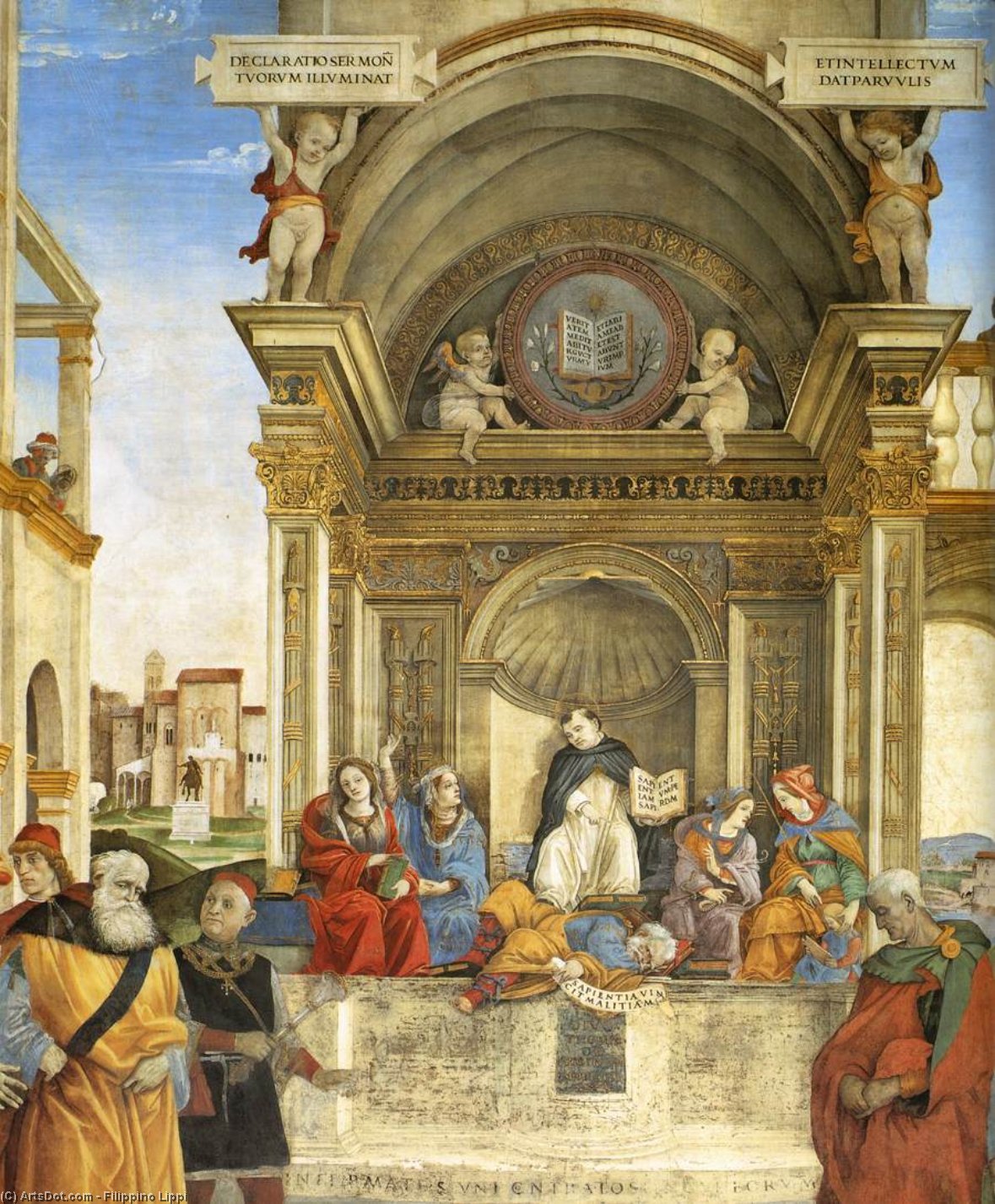
Triumph of St Thomas Aquinas over the Heretics (detail)


 Read More
Hand Made Oil Reproduction
Hand-painted oil on canvas in your size and frame, made to order by our artists. ( Buy Print Buy Image)




P118B $10

P118H $10

P118W $10

P438Z $10

P508JH $12

P508YH $12

P805H $10

P805Z $10

P919BZ $10

P919G $10

P919XJ $10

P959ZH $10

P968JZ $12

W106C $8

W218G $10

W218JH $8

W218Y $10

W307PJ $10

W316G $10

W316PJ $8

W316Y $10

W398PJ $8

W4111J $10

W500HY $15

W500JH $15

W692G $12

W849H $8

W940BG $15

W953PJ $8




Pick from our preset sizes that match the artwork's original proportions.

You may enter your own dimensions to fit a specific frame or space. If your selected size does not match the original image's proportions, we will either crop the artwork or extend the painting with additional hand-painted elements. A digital mockup will be sent for your approval before production begins.
Please note that the on-screen preview does not reflect the actual cropping or extension. Only the mockup will accurately show the final composition.
While custom sizes are available, we recommend selecting a dimension from the predefined list to preserve the original proportions.
After order, ArtsDot.com team will email client for instructions and provide a mockup preview
Worldwide Delivery () in 3/4 weeks instead of standard 5 weeks. (26 August). No compromise on quality.

Free Worldwide Express Shipping

High-Quality Linen Canvas

Full Shipping Insurance

Customs Tax Refund Guarantee

True Color Matching Guarantee

60-Day Return Policy (Defects Only)

100% Money-Back Guarantee

Bulk Discount Offer
 Glass option is only available in size under 110 CM

Triumph of St Thomas Aquinas over the Heretics (detail)
Reproduction Medium
Reproduction Size
-


Total Price
$ 463
Artwork Description
The Grand Narrative: Filippino Lippi’s Vision of Faith and Reason
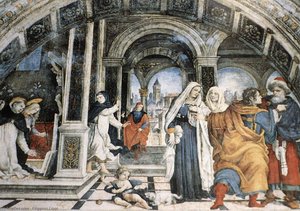
Filippino Lippi's “Triumph of St. Thomas Aquinas Over the Heretics” – a detail from this monumental fresco – isn’t merely a religious scene; it’s a carefully constructed dialogue between faith, reason, and the tumultuous intellectual landscape of 15th-century Europe. Painted in 1489, during his period at Rome, this work exemplifies Lippi's mastery of the High Renaissance style, blending meticulous detail with dramatic dynamism. The fresco, originally intended for the Carafa Chapel within Santa Maria sopra Minerva in Rome, depicts a pivotal moment in theological debate – Aquinas’s victory over dissenting heretical viewpoints. The sheer scale and complexity of the composition immediately draw the viewer into a world brimming with symbolism and intellectual fervor.

(Image: Detail from Filippino Lippi’s ‘Triumph of St Thomas Aquinas over the Heretics’)
A Hierarchical Stage: Composition and Symbolism
Lippi orchestrates a complex, hierarchical arrangement within the portico. At the heart stands St. Thomas Aquinas himself, radiating authority and intellectual prowess. He’s not simply presented as a saint; he embodies the synthesis of Aristotelian philosophy and Christian theology – a cornerstone of Renaissance humanism. Surrounding him are allegorical figures representing Philosophy, Theology, Grammar, and Dialectic, each holding symbolic objects—a scroll for Philosophy, a book for Theology, a pen for Grammar, and a scale for Dialectic—illustrating their roles in the pursuit of knowledge. The defeated heretics – Arius, Sabellius, and others – are positioned at the bottom of the scene, clutching books representing flawed logic and dissenting doctrines. The use of contrasting colors – the rich reds and golds of Aquinas’s robes against the muted tones of the heretics – further emphasizes his triumph over error.
Renaissance Technique: Light, Texture, and Perspective
Lippi's technical skill is immediately apparent in the meticulous rendering of textures. The drapery folds are sculpted with a remarkable sense of volume, achieved through impasto techniques—thickly applied paint that creates a tactile surface. The stonework of the portico is rendered with painstaking detail, capturing the play of light and shadow. The use of glazing layers – thin washes of translucent color applied over dried underpaintings – contributes to the painting’s luminous quality. Perspective is employed, though not entirely consistently, creating a sense of recession into the space while maintaining a clear, theatrical stage for the narrative. The dramatic lighting, originating from an unseen source above, casts strong shadows that enhance depth and volume, adding to the overall sense of drama.
Historical Context: Faith in a Time of Change
“Triumph of St. Thomas Aquinas Over the Heretics” was created during a period of intense intellectual and religious upheaval. The Renaissance witnessed a renewed interest in classical learning alongside a growing challenge to established dogma. The rise of humanism encouraged critical thinking, while figures like Martin Luther were beginning to question papal authority. Lippi’s fresco reflects this tension – celebrating the power of reason within a framework of Christian faith. The inclusion of figures like Aquinas, who sought to reconcile faith and philosophy, speaks to the intellectual currents of the era. The reference to the “Wisdom of the Wise” underscores the importance of discerning truth from falsehood—a central theme in both theology and philosophy.
A Timeless Masterpiece: Reproduction Possibilities
ArtsDot offers meticulously crafted, hand-painted reproductions of Filippino Lippi’s “Triumph of St. Thomas Aquinas Over the Heretics.” Our artists recreate the painting's rich textures, dramatic lighting, and intricate details with unparalleled accuracy. Whether you seek a stunning addition to your home or office, or are an art historian researching this pivotal work, our reproductions provide a faithful representation of Lippi’s masterpiece. Explore our options for custom sizes and framing to perfectly complement your space. Discover the full artwork here.
Related Artworks
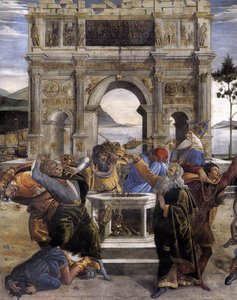

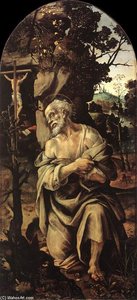
Artist Biography
Early Life and Training
- Born: April 1457, Prato, Italy
- Died: April 1504
- Parents: Fra Filippo Lippi (painter) and Lucrezia Buti
- Filippino was the illegitimate son of a renowned painter.
- Early training under his father laid the foundation for his artistic career.
Artistic Career and Development
- Early Period (1475-1480): Initial works, such as Madonnas, showed a less refined style. These were initially attributed to an anonymous artist known as "amico di Sandro."
- Evolution (1480-1485): Development of a more personal and effective approach in works like the *Journeys of Tobias*.
- Maturity (1485-1504): Mastery of the High Renaissance style, exemplified by *The Apparition of Christ to the Virgin*.
Major Works and Collaborations
- Collaboration with Perugino, Ghirlandaio, and Botticelli on frescoes at Lorenzo de' Medici’s villa.
- Completion of Masaccio's unfinished decoration in the Brancacci Chapel alongside Masolino.
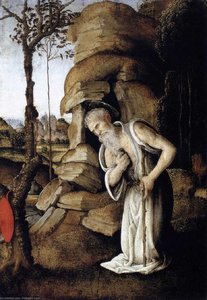
- Notable works include: *The Coronation of the Virgin*, *Tobias and the Angel*, *St Jerome*, and *Scene from the Life of St Thomas Aquinas*.
Influences and Artistic Style
- Early Influences: Sandro Botticelli, Fra Filippo Lippi.
- Style Characteristics: Animated form and line, warm colorism, detailed landscapes, expressive figures, and a blend of perspective geometry with intimate interiors.
- Roman Antiquities: Studies after Roman antiquities during his time in Rome influenced his work, incorporating an antique vocabulary into his art.
Historical Significance and Legacy
- A leading Florentine exponent of the tradition of great fresco cycles.
- His influence on the High Renaissance is undeniable.
- Works are found in museums worldwide, including the Uffizi Gallery in Florence.
- Known for bridging the gap between earlier Renaissance styles and the emerging High Renaissance aesthetic.
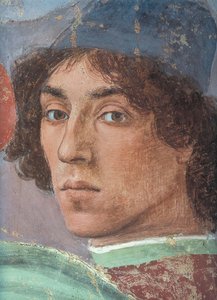
Filippino Lippi
1457 - 1504 , Italy
Quick Facts
- Artistic Movement Or Style: High Renaissance
- Artists Or Movements Influenced By This Artist: ['Raffaellino del Garbo']
- Artists Who Influenced This Artist:
- Fra Filippo Lippi
- Sandro Botticelli
- Date Of Birth: April 1457
- Date Of Death: April 1504
- Full Name: Filippino Lippi
- Nationality: Italian
- Notable Artworks:
- The Coronation of the Virgin
- Tobias and the Angel
- Scene from the Life of St Thomas Aquinas
- St Jerome
- Place Of Birth: Prato, Italy
Related Articles
Filippino Lippi: Renaissance Innovation Bridging Faith & Humanism
Explore the captivating world of Filippino Lippi, a Renaissance master bridging faith & humanism through innovative art. Discover his key works, influences, and lasting legacy with ArtsDot.
Filippo Lippi: Bridging Renaissance Devotion & Artistic Innovation
Explore the life & revolutionary art of Filippo Lippi, a pivotal Renaissance painter. Discover his masterpieces, influence on Botticelli, and investment potential. Expert analysis at ArtsDot.

Oil on Canvas: A Historical & Technical Exploration of a Timeless Artistic Medium
Explore the rich history & enduring techniques of oil painting on canvas. Discover the science behind its longevity, conservation practices, and contemporary relevance. Expert insights for art enthusiasts.

The Enduring Legacy of Oil on Canvas: Technique, History & Aesthetic Impact
Explore the rich history & techniques of oil painting – from Renaissance masters to Impressionism. Discover pigments, layering methods, and why this timeless medium endures. Expert insights for artists & art enthusiasts.

The Enduring Power of Painting: A Historical & Contemporary Exploration of Form and Emotion
Explore the rich history & enduring techniques of oil painting with ArtsDot. Discover masterpieces, learn about art collecting, and find authentic handmade reproductions crafted by skilled artists.