 Preview
 Send
Send Share
Share
 Details

 Download
 Similars
 X-Ray
X-Ray Diaporama
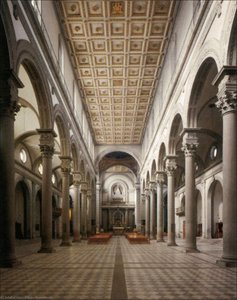
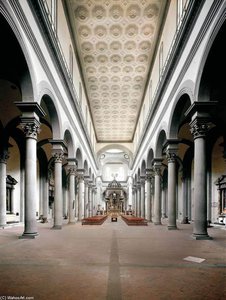
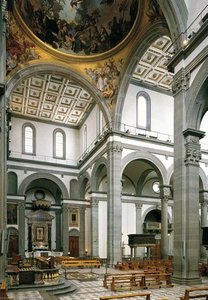
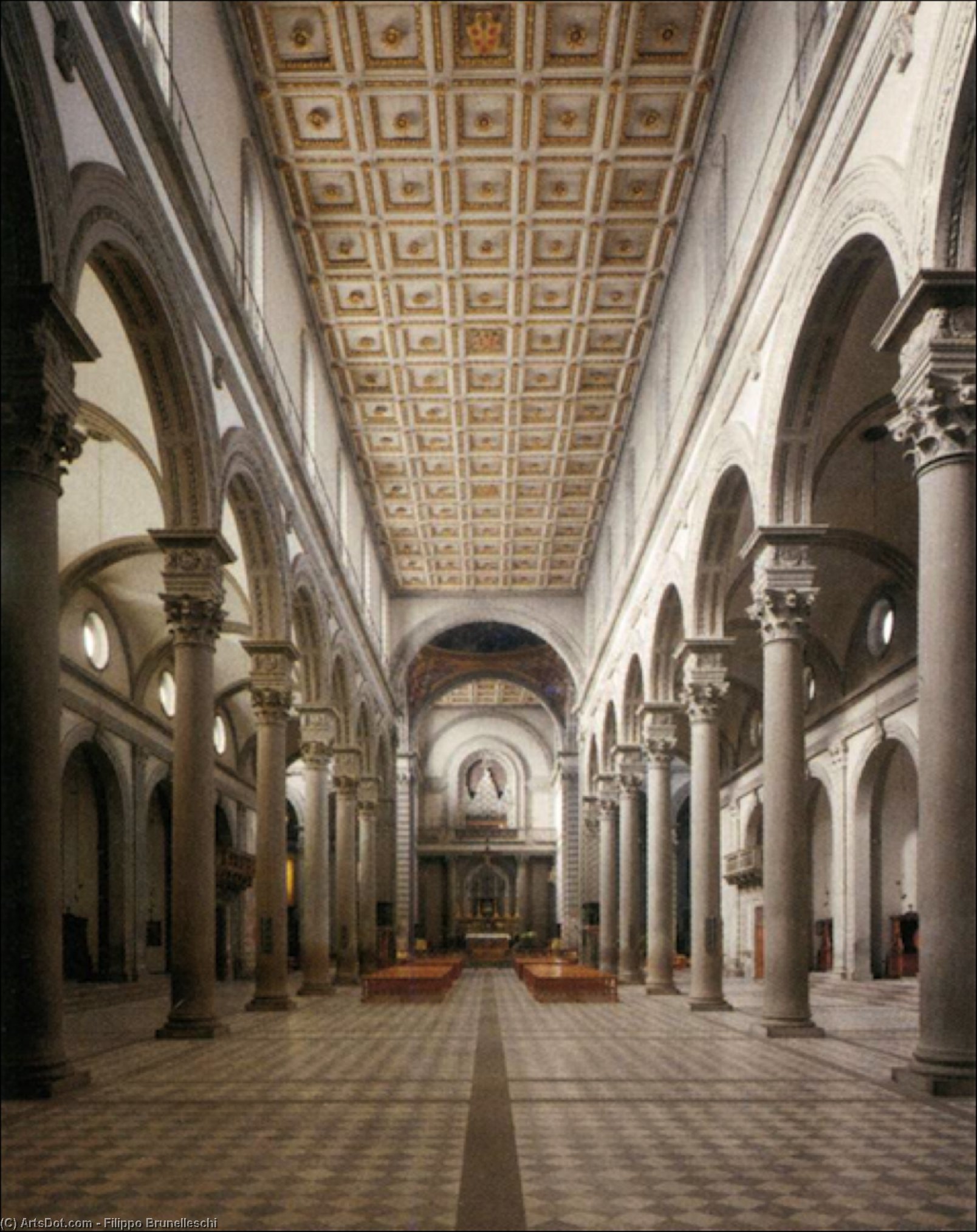
The nave of the church


 Read More
Giclée / Art Print
Museum-quality giclée or canvas print with fast production and flexible finish options. ( Buy Hand Made Painting Buy Image)




P118B $10

P118H $10

P118W $10

P438Z $10

P508JH $12

P508YH $12

P805H $10

P805Z $10

P919BZ $10

P919G $10

P919XJ $10

P959ZH $10

P968JZ $12

W106C $8

W218G $10

W218JH $8

W218Y $10

W307PJ $10

W316G $10

W316PJ $8

W316Y $10

W398PJ $8

W4111J $10

W500HY $15

W500JH $15

W692G $12

W849H $8

W940BG $15

W953PJ $8




Pick from our preset sizes that match the artwork's original proportions.

You may enter your own dimensions to fit a specific frame or space. If your selected size does not match the original image's proportions, we will either crop the artwork or extend the image with a mirrored or solid-fill edge. A digital mockup will be sent for your approval before production begins.
Please note that the on-screen preview does not reflect the actual cropping or extension. Only the mockup will accurately show the final composition.
While custom sizes are available, we recommend selecting a dimension from the predefined list to preserve the original proportions.
Worldwide Delivery () in 2 weeks instead of standard 4/5 weeks. (2 September)

Free Worldwide Express Shipping

High-Quality Linen Canvas

Full Shipping Insurance

Customs Tax Refund Guarantee

True Color Matching Guarantee

60-Day Return Policy (Defects Only)

100% Money-Back Guarantee

Bulk Discount Offer
 Glass option is only available in size under 110 CM

The nave of the church
Giclée / Art Print
Reproduction Size
-


Total Price
$ 63
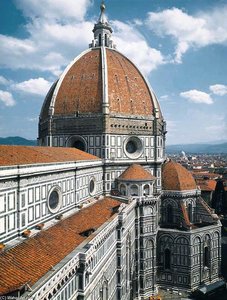
The Soul of Florence: Filippo Brunelleschi’s “The Nave of the Church”
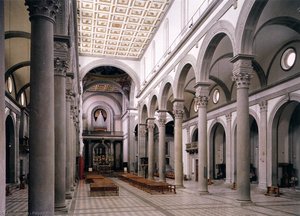
Within the venerable walls of the Basilica di San Lorenzo in Florence resides a painting that transcends mere representation; it is, quite simply, an embodiment of Renaissance ingenuity and spiritual aspiration. “The Nave of the Church,” meticulously crafted by Filippo Brunelleschi himself, offers a profound glimpse into the mind of a master architect and his unwavering belief in the power of visual harmony. More than just a depiction of a sacred space, this oil on canvas reproduction captures the very essence of Florentine ambition and the burgeoning spirit of humanism that defined the era.
Brunelleschi’s genius wasn't solely confined to towering domes and intricate facades; he possessed an extraordinary ability to translate three-dimensional reality onto a two-dimensional surface. This painting is a testament to his pioneering work in linear perspective, a technique he developed and refined during the construction of the Florence Cathedral dome. Notice how lines converge subtly towards a vanishing point – not just a technical exercise, but a deliberate attempt to create an illusion of depth and space, drawing the viewer into the heart of the basilica. The meticulous rendering of light and shadow further enhances this effect, lending a palpable sense of volume and atmosphere to the nave.
A Master’s Vision: Architectural Detail and Spiritual Resonance
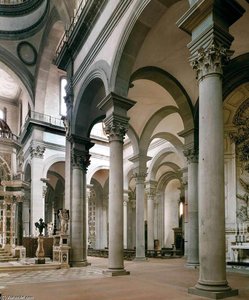
The painting is dominated by the Basilica's impressive nave – a space designed not merely for worship but as a physical manifestation of divine order. Brunelleschi meticulously documented every column, archway, and decorative element in his notebooks, demonstrating an obsessive attention to detail that would later revolutionize architectural design. Observe the careful proportioning of the columns, mirroring the natural forms they support; the subtle curves of the arches, echoing the graceful sweep of the ceiling. These aren’t arbitrary choices; they are rooted in a deep understanding of geometry and human scale.
Beyond the technical brilliance, however, lies a profound spiritual intent. The Basilica itself was commissioned by Giovanni de' Medici, a testament to his family’s burgeoning power and piety. Brunelleschi’s painting serves as an invitation – a visual prayer – encouraging contemplation of God’s presence within this sacred space. The light streaming through the windows, depicted with remarkable realism, symbolizes divine illumination, while the overall composition evokes a sense of serenity and reverence.
Historical Context: Renaissance Florence and Architectural Innovation
To truly appreciate “The Nave of the Church,” it's crucial to understand the historical context in which it was created. Florence during the 15th century was a crucible of artistic and intellectual innovation, fueled by the patronage of wealthy families like the Medici. Brunelleschi’s work reflected this spirit of experimentation and ambition, challenging established conventions and pushing the boundaries of what was considered possible. His success on the Florence Cathedral dome – a feat previously deemed impossible – cemented his reputation as a visionary architect and engineer.
Brunelleschi's approach to architecture wasn't simply about building structures; it was about creating experiences. He sought to harmonize form, function, and beauty, reflecting the humanist ideals that were transforming European society. “The Nave of the Church” embodies this philosophy perfectly – a testament to human ingenuity and a celebration of the divine.
Bringing Brunelleschi Home: A Reproduction for Your Space
At ArtsDot, we are proud to offer a meticulously crafted reproduction of “The Nave of the Church,” capturing every nuance and detail of Brunelleschi’s original masterpiece. Our artisans employ traditional oil painting techniques, using only the finest pigments and archival-quality canvas to ensure that this reproduction will endure for generations to come.
Whether you are an art enthusiast, a collector seeking to enrich your collection, or simply someone looking to add a touch of timeless elegance to your home or office, this reproduction offers a unique opportunity to connect with one of the Renaissance’s greatest minds. “The Nave of the Church” is more than just a painting; it's a window into the soul of Florence – a reminder of the enduring power of beauty, innovation, and spiritual aspiration.
For further information about Filippo Brunelleschi and his remarkable legacy, please visit Wikipedia.
Related Artworks
Artist Biography
A Renaissance Pioneer: The Life and Legacy of Filippo Brunelleschi
Filippo Brunelleschi, born in Florence in 1377, stands as a monumental figure bridging the medieval world and the burgeoning Renaissance. Initially destined for a life aligned with his father’s legal profession, young Filippo's artistic inclinations quickly asserted themselves. He was apprenticed to a goldsmith, a craft that honed his meticulous attention to detail and mastery of materials—skills that would prove invaluable in his later architectural endeavors. This early training wasn’t confined to mere technical skill; it fostered an understanding of form, proportion, and the expressive potential inherent in manipulating physical substances. His participation in the 1401 competition for the Florence Baptistery doors, though ultimately unsuccessful against Lorenzo Ghiberti, revealed a burgeoning talent and a bold artistic vision. This experience, while initially disheartening, proved pivotal, redirecting his energies toward architecture—a field where he would indelibly shape the course of Western art and engineering.Architectural Innovations and the Rebirth of Classical Ideals
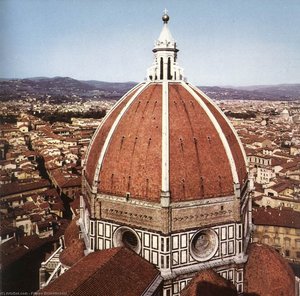
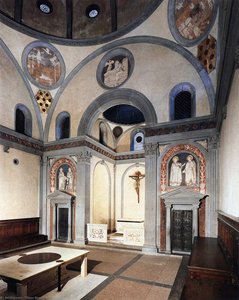
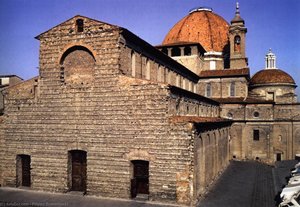
Brunelleschi’s architectural achievements are nothing short of revolutionary. He didn't simply build structures; he solved seemingly insurmountable problems, pushing the boundaries of what was thought possible. His most celebrated triumph is undoubtedly the dome of Florence Cathedral—a feat that had baffled architects for decades. The sheer scale and complexity of the project demanded innovative solutions, and Brunelleschi delivered them in abundance. Abandoning traditional scaffolding methods, he devised a self-supporting double shell structure, employing ingenious hoisting mechanisms and interlocking brick patterns to distribute weight and ensure stability. This wasn’t merely an engineering marvel; it was a testament to human ingenuity and a symbol of Florence's ambition. Beyond the dome, Brunelleschi championed a return to classical principles in his designs. He meticulously studied Roman ruins, absorbing their sense of proportion, harmony, and spatial organization. This influence is evident in works like the Old Sacristy of San Lorenzo, where he employed symmetrical layouts, rounded arches, and classical ornamentation to create spaces imbued with serenity and balance. Other notable projects—the Spedale degli Innocenti (foundling hospital), Palazzo Rucellai, and the Basilica di San Lorenzo—all bear the hallmarks of his distinctive style: a harmonious blend of classical inspiration and innovative structural solutions.The Dawn of Linear Perspective
Brunelleschi’s impact extends far beyond architecture; he is credited with rediscovering and formalizing the principles of linear perspective, a technique that fundamentally altered the course of art history. Prior to Brunelleschi, depictions of space lacked a consistent system for representing depth and realism. His meticulous investigations into optics and geometry led him to develop a method for creating illusions of three-dimensional space on a two-dimensional surface. This involved establishing a vanishing point—a single point on the horizon line toward which all parallel lines converge—and using mathematical calculations to accurately represent spatial relationships. The implications were profound. Linear perspective provided artists with a powerful tool for achieving greater realism and emotional impact in their work, influencing generations of painters and sculptors. It wasn’t simply about technical accuracy; it was about creating a more immersive and believable visual experience for the viewer.Influences and a Lasting Historical Significance
Brunelleschi's genius didn’t emerge in a vacuum. He drew inspiration from diverse sources, synthesizing them into something entirely new. The ancient Roman architecture he studied provided a foundation of classical principles, while his exposure to Gothic structures instilled an understanding of structural challenges and innovative building techniques. Crucially, the burgeoning humanist movement of the Renaissance—with its emphasis on human potential and achievement—resonated deeply with Brunelleschi’s own innovative spirit. He believed in the power of reason, observation, and experimentation, qualities that underpinned his groundbreaking work. His legacy is immense. He is rightfully regarded as one of the founding fathers of the Renaissance, a pivotal figure who ushered in a new era of artistic and intellectual flourishing. His engineering innovations continue to inform modern construction practices, while his development of linear perspective remains a cornerstone of representational art. But perhaps most importantly, Brunelleschi embodied a new way of thinking—a belief in human ingenuity, a commitment to rational inquiry, and a celebration of the beauty and order inherent in the natural world. He didn’t just change the skyline of Florence; he changed the way we see the world.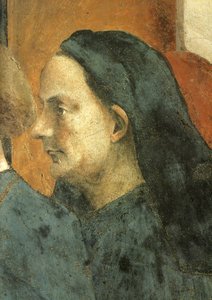
Filippo Brunelleschi
1377 - 1446 , Italy
Quick Facts
- Artistic Movement Or Style: Early Renaissance
- Artists Or Movements Influenced By This Artist:
- Renaissance architecture
- Linear perspective artists
- Artists Who Influenced This Artist: ['Ancient Roman architects']
- Date Of Birth: 1377
- Date Of Death: 1446
- Full Name: Filippo Brunelleschi
- Nationality: Italian
- Notable Artworks:
- Florence Cathedral Dome
- Old Sacristy San Lorenzo
- Spedale degli Innocenti
- Palazzo Rucellai
- Place Of Birth: Florence, Italy
Related Articles

Uffizi's 25 Masterpieces: Renaissance Art & Timeless Decor Inspiration
Journey through the Uffizi Gallery's 25 most iconic Renaissance artworks! Explore Botticelli, Leonardo da Vinci & Michelangelo’s masterpieces. Find museum-quality art reproductions and curated decor ideas to bring timeless Italian beauty into your home. Discover all masterpieces on ArtsDot.com
The Shadow of Faith: Exploring Gothic Art's Spiritual Intensity & Architectural Innovation
Explore the spiritual intensity & architectural innovation of Gothic art! Discover the symbolism behind cathedrals, stained glass & master artists like Giotto and Monet. A deep dive into medieval history & artistic expression.

The Dawn of a New Vision: Exploring the Artistic Innovations of the Early Renaissance
Explore the groundbreaking innovations of the Early Renaissance! Discover the art, history, and humanist ideals that shaped a new era in painting, sculpture & architecture. Learn about Masaccio, Florence, and more.

Fra Angelico's Masterpieces: 25 Renaissance Paintings for Your Home | ArtsDot
Explore 25 breathtaking masterpieces by Fra Angelico, a Renaissance master. Discover the stories behind his iconic frescoes, Annunciations & religious art. Find museum-quality reproductions and elevate your home decor with ArtsDot.com.
The Dawn of a New Aesthetic: Exploring Artistic Innovation in 15th-Century European Painting
Explore the groundbreaking artistic innovations of 15th-century European painting! Discover how Humanism & masters like Masaccio redefined art with perspective, realism & classical influence. Learn more at ArtsDot.