

 Preview
 Send
Send Share
Share
 Details

 Download
 Similars
 X-Ray
X-Ray Diaporama
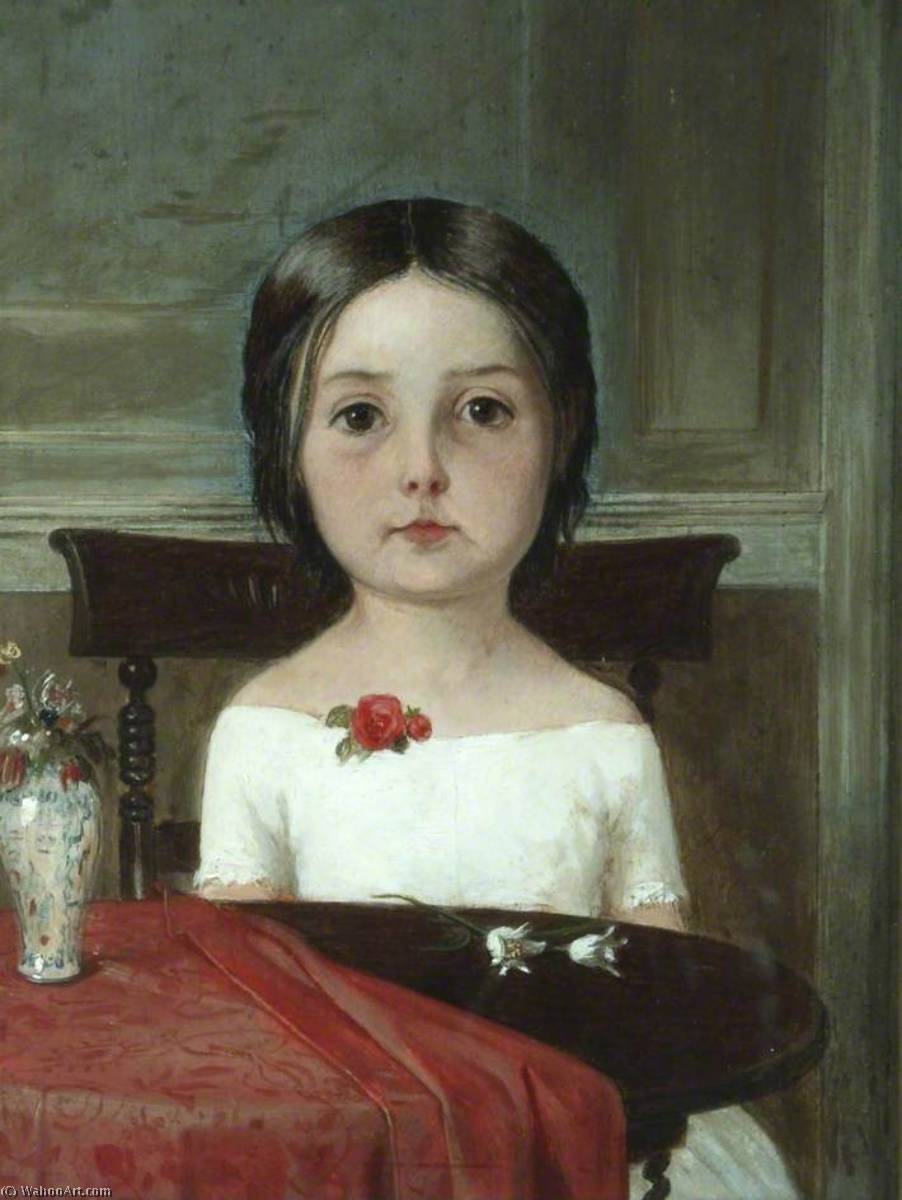
Millie Smith
 Acrylic On Canvas
- WallArt
- Pre-Raphaelite Movement
 1846
1846 23.0 x 18.0 cm
 Walker Art Gallery
 Read More
Purchase a high-resolution, enhanced digital image, far superior to the online preview.
Each file is meticulously prepared by our in-house specialists using advanced tools and expert manual retouching. We ensure every image has exceptional clarity, precise color accuracy, and fine detail.
The final file is delivered via email within 72 hours, optimized for immediate use in professional, editorial, and print environments. This is the same quality trusted by top-tier design studios, publishers, and galleries.
Digital Image
Download a high-resolution file for personal display, printing, and creative projects. ( Buy Print Buy Hand Made Painting)
Included in Every Digital Image Order
Expert Digital Delivery, Guaranteed
When you choose ArtsDot.com, you're not just getting an image - you're receiving a professionally enhanced digital artwork, crafted with precision and backed by a satisfaction guarantee. Here's everything that comes with your order, automatically:

Fast Email Delivery
Your high-resolution digital image file will be emailed to you within 72 hours of ordering - ready for immediate use.

AI-Enhanced Digital File
Your artwork is professionally optimized using advanced AI tools and manual editing, ensuring maximum detail, clarity, and color accuracy.

Free Lifetime Re-Delivery
Accidentally deleted or lost your file? No worries - we'll resend it to you anytime, free of charge.

No Import Fees - Ever
Enjoy your artwork instantly with zero customs, duties, or delivery fees - digital downloads are always tax-free.

Color Accuracy Guarantee
We ensure your digital image reflects the original colors as closely as possible using professional tools and color management.

60-Day Satisfaction Guarantee
If you're not satisfied with your digital image, we'll revise it or refund 100% within 60 days - no questions asked.

100% Money-Back Guarantee
Not satisfied? Get a full refund within 60 days of receiving your digital file - no questions asked.

Bulk Order Discounts
Buy 3 images, save 10% - Buy 5, save 15% - Buy 10+, save 20%. Great for creative projects, galleries, and agencies.
Collectible Description
Millie Smith: A Pre-Raphaelite Portrait of Innocence Amidst Victorian Realism
Ford Madox Brown’s “Millie Smith,” completed in 1846, stands as a cornerstone of the Pre-Raphaelite movement and a poignant reflection on Victorian society. More than just a depiction of a young girl—a common subject for portraiture at the time—the painting embodies Brown's revolutionary approach to artistic representation, prioritizing psychological depth and emotional resonance over mere surface beauty.
Subject Matter & Context: The portrait captures Millie Smith, daughter of Landlady Mary Smith, who resided in Southend-on-Sea where Brown was staying during his visit. Lucy, Brown’s three-year-old daughter, accompanied him on this journey, providing a crucial element to the scene—a child's presence intended to convey vulnerability and innocence. The Victorian era was marked by strict social conventions and anxieties surrounding morality; Brown deliberately challenged these expectations by portraying Millie with an unprecedented level of naturalism, eschewing idealized poses and expressions.
Style & Technique: Brown’s distinctive style—characterized by a rejection of academic conventions—is immediately apparent. He abandoned the luminous glazing favored by his contemporaries and opted for a darker palette dominated by browns and ochres, mirroring the muted tones of everyday life. The meticulous attention to detail is remarkable; observe the careful rendering of the flower vase, tablecloth, and Millie’s skin tone – techniques honed during Brown's studies in Italy where he absorbed influences from artists like Giuseppe Verdi and Giovanni Battista Tiepolo. He deliberately avoided excessive shading, prioritizing clarity and directness.
Symbolism & Emotional Impact: The composition itself speaks volumes about Brown’s artistic intentions. Millie’s gaze directly confronts the viewer, creating an unsettling intimacy that transcends mere visual representation. This bold gesture underscores Brown's fascination with capturing inner emotion—a hallmark of Pre-Raphaelite art. The brick wall backdrop serves as a grounding element, emphasizing Millie’s isolation and vulnerability against the grandeur of Victorian society. The painting isn’t merely aesthetically pleasing; it prompts contemplation about childhood innocence and the complexities of human experience.
Provenance & Legacy: “Millie Smith” entered the Walker Art Gallery's collection in 1972, securing its place as a celebrated masterpiece. Its enduring appeal lies not only in its technical brilliance but also in its ability to evoke empathy and provoke discussion about art’s role in capturing the spirit of an era. Today, reproductions of this iconic painting continue to inspire artists and collectors alike—a testament to Brown's visionary approach to portraiture and his unwavering commitment to portraying truthfulness with profound emotional impact.
- Artist: Ford Madox Brown
- Year Created: 1846
- Medium: Oil on Panel
- Dimensions: 23 x 18 cm
- Location: Walker Art Gallery, Liverpool
Related Artworks




Artist Biography
A Life Painted in Moral and Historical Light
Ford Madox Brown, born on April 16, 1821, in Calais, France, was a figure perpetually navigating the currents of artistic change during the Victorian era. His early life was one of transience, dictated by his parents’ search for affordable living—a shifting existence between the French coast and relatives in Kent. This nomadic upbringing, while limiting formal education, fostered an observant eye and a burgeoning talent for replicating Old Master prints, laying the foundation for his future artistic endeavors. The seeds of Brown's unique style were sown not within grand academies but in the quiet practice of copying, absorbing the techniques and compositions of past masters. His father’s initial aspirations for a naval career for young Ford were ultimately superseded by the undeniable pull of art, leading to studies in Bruges, Ghent, and Antwerp under notable artists like Albert Gregorius and Pieter van Hanselaere. These formative years instilled within him a rigorous technical foundation, yet Brown would soon forge his own path, diverging from conventional artistic norms. The early loss of family members – his mother in 1839, followed by his sister and father in the following years – cast a shadow over his personal life, perhaps contributing to the often-somber and reflective quality found within his work.The Pre-Raphaelite Affinity and Artistic Innovation
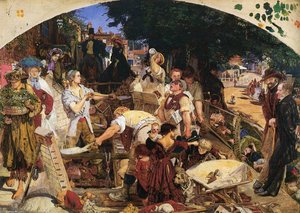
Though never formally a member of the Pre-Raphaelite Brotherhood, Ford Madox Brown exerted a significant influence on its development and shared many of its core tenets. He was an advisor and friend to the group’s founding members—Rossetti, Millais, and Hunt—and his commitment to truthfulness in representation, meticulous detail, and vibrant color resonated deeply with their artistic philosophies. However, Brown's style possessed a distinct character that set him apart. While the Pre-Raphaelites often focused on romanticized narratives or literary subjects, Brown frequently turned to contemporary life and moral themes, imbuing his paintings with a social consciousness rarely seen in Victorian art. Work, begun in 1852 and painstakingly completed over thirteen years, stands as perhaps his most ambitious and iconic achievement. This sprawling canvas is not merely a depiction of laborers; it’s a profound commentary on the social conditions of the working class, capturing their toil, dignity, and vulnerability with unflinching realism. The painting's graphic quality, often described as Hogarthian in its narrative detail, further distinguishes Brown’s approach. His commitment to depicting modern life extended beyond Work, manifesting in other significant pieces that explored themes of poverty, faith, and the human condition. The Last of England, for example, captures a poignant moment of emigration, reflecting anxieties about national identity during a period of social upheaval.Murals, Masterpieces, and a Lasting Legacy
Beyond his easel paintings, Ford Madox Brown’s artistic legacy is indelibly linked to the Manchester Murals. Commissioned for Manchester Town Hall, these twelve monumental works chronicle the city's history, from its Roman origins to its industrial present. The murals are a testament to Brown’s skill as a narrative painter and his ability to synthesize historical research with artistic vision. They represent some of the finest examples of Pre-Raphaelite mural painting, showcasing vibrant colors, meticulous detail, and a compelling sense of drama. These works were not without their challenges; Brown faced financial difficulties and logistical hurdles during their creation, yet he persevered, leaving behind a lasting monument to Mancunian history and artistic innovation. His influence extended beyond his immediate circle, inspiring artists like Thomas Benjamin Kennington, whose work The Pinch of Poverty echoes the social realism found in Brown’s paintings. His dedication to capturing the essence of modern life is also evident in pieces such as Study for the Head of Chaucer, a poignant portrait showcasing realistic detail and melancholic mood.Personal Life and Enduring Influence
Ford Madox Brown's personal life was marked by both joy and sorrow. He married twice—first to Elizabeth Bromley in 1841, who tragically died five years later, and then to Emily Hill in 1853. He fathered five children, including Lucy Madox Brown, herself a talented artist, and Catherine Madox Brown, who also pursued a creative path. These familial connections further enriched his life and provided inspiration for some of his work. Despite facing financial struggles throughout much of his career, Brown remained dedicated to his art, continually experimenting with new techniques and exploring challenging themes. His commitment to artistic integrity and social commentary cemented his place as a pioneer of the Pre-Raphaelite movement and a significant figure in 19th-century British art. He passed away on October 6, 1893, leaving behind a body of work that stands as a testament to his artistic vision and unwavering commitment to truth and beauty.Exploring Ford Madox Brown’s World Today
Numerous resources offer opportunities to delve deeper into the world of Ford Madox Brown. His works can be found in prominent collections such as the Manchester Art Gallery and the Lady Lever Art Gallery, offering visitors a chance to experience his masterpieces firsthand. Online platforms provide high-quality hand-painted reproductions, allowing art enthusiasts to bring his vision into their own homes. Further research can be conducted through resources like Wikipedia and Britannica, which offer comprehensive biographical information and critical analyses of his work.- Key Themes: Social realism, moral commentary, historical narrative, Victorian life.
- Influences: Old Masters, Nazarenes, William Hogarth, Thomas Carlyle.
- Major Works: Work, The Last of England, Manchester Murals, Study for the Head of Chaucer.

Ford Madox Brown
1821 - 1893 , France
Quick Facts
- Artistic Movement Or Style: Pre-Raphaelite
- Artists Or Movements Influenced By This Artist:
- Pre-Raphaelite Brotherhood
- Thomas Kennington
- Artists Who Influenced This Artist:
- Albert Gregorius
- Pieter van Hanselaere
- Date Of Birth: April 16, 1821
- Date Of Death: October 6, 1893
- Full Name: Ford Madox Brown
- Nationality: British
- Notable Artworks:
- Work
- The Last of England
- Manchester Murals
- Place Of Birth: Calais, France

