 Preview
 Send
Send Share
Share
 Details

 Download
 Similars
 X-Ray
X-Ray Diaporama
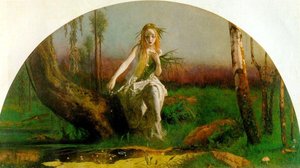
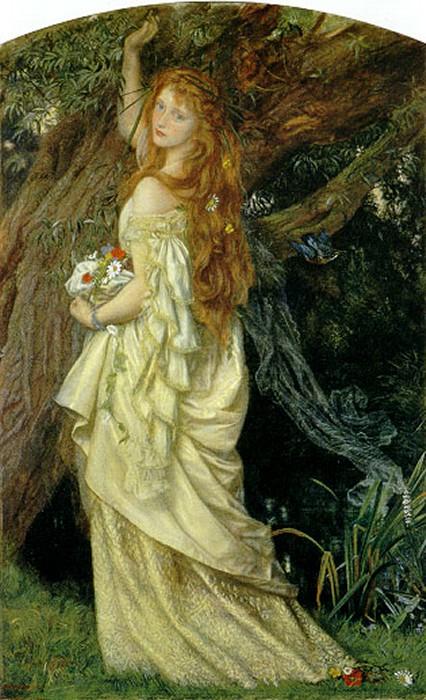
Ophelia (And will he not come again.'')''


 Read More
Hand Made Oil Reproduction
Hand-painted oil on canvas in your size and frame, made to order by our artists. ( Buy Print Buy Image)




P118B $10

P118H $10

P118W $10

P438Z $10

P508JH $12

P508YH $12

P805H $10

P805Z $10

P919BZ $10

P919G $10

P919XJ $10

P959ZH $10

P968JZ $12

W106C $8

W218G $10

W218JH $8

W218Y $10

W307PJ $10

W316G $10

W316PJ $8

W316Y $10

W398PJ $8

W4111J $10

W500HY $15

W500JH $15

W692G $12

W849H $8

W940BG $15

W953PJ $8




Pick from our preset sizes that match the artwork's original proportions.

You may enter your own dimensions to fit a specific frame or space. If your selected size does not match the original image's proportions, we will either crop the artwork or extend the painting with additional hand-painted elements. A digital mockup will be sent for your approval before production begins.
Please note that the on-screen preview does not reflect the actual cropping or extension. Only the mockup will accurately show the final composition.
While custom sizes are available, we recommend selecting a dimension from the predefined list to preserve the original proportions.
After order, ArtsDot.com team will email client for instructions and provide a mockup preview
Worldwide Delivery () in 3/4 weeks instead of standard 5 weeks. (17 August). No compromise on quality.

Free Worldwide Express Shipping

High-Quality Linen Canvas

Full Shipping Insurance

Customs Tax Refund Guarantee

True Color Matching Guarantee

60-Day Return Policy (Defects Only)

100% Money-Back Guarantee

Bulk Discount Offer
 Glass option is only available in size under 110 CM

Ophelia (And will he not come again.'')''
Reproduction Medium
Reproduction Size
-


Total Price
$ 263
Artwork Description
Arthur Hughes's 'Ophelia (And will he not come again.)': A Pre-Raphaelite Lament
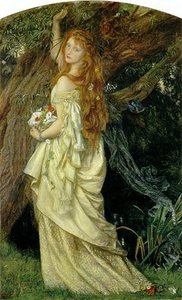
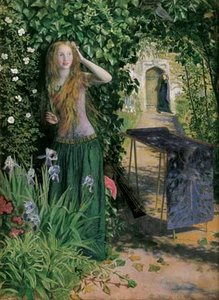
Arthur Hughes’s ‘Ophelia (And will he not come again.)’, painted in 1863, is more than just a depiction of Shakespearean tragedy; it’s a profound meditation on loss, longing, and the haunting beauty of despair. This oil-on-canvas masterpiece exemplifies the Pre-Raphaelite Brotherhood's commitment to meticulous detail, vibrant color palettes, and emotionally resonant storytelling – qualities that continue to captivate viewers over 150 years later. Hughes, deeply influenced by the artistic ideals of the early Italian Renaissance, meticulously recreates Ophelia’s final moments, transforming a literary scene into a powerfully evocative visual experience.
A Portrait of Melancholy: Style and Technique
Hughes's technique is characterized by its delicate brushwork and an almost obsessive attention to detail. The painting showcases the Pre-Raphaelite penchant for realism, evident in the rendering of Ophelia’s flowing gown, the intricate folds of her hair, and the subtle textures of the flowers surrounding her. The muted color scheme – dominated by blues, greens, and whites – contributes significantly to the overall atmosphere of sorrow and quiet contemplation. The artist skillfully employs chiaroscuro, using dramatic contrasts between light and shadow to heighten the emotional impact and draw the viewer’s eye to Ophelia's face, partially obscured as she gazes upwards.
Symbolism Woven into Sorrow
- Flowers: The profusion of flowers – violets, poppies, daisies, and willow branches – is laden with symbolic meaning. Violets represent faithfulness and modesty, while poppies symbolize sleep and death. The willow, a traditional symbol of mourning, reinforces the theme of loss.
- Birds: The presence of two birds, one near the top left corner and another towards the center-right, adds to the painting’s unsettling beauty. Birds are often associated with souls ascending to heaven, suggesting Ophelia's journey beyond earthly sorrow.
- The Water: The water itself is a potent symbol, representing both death and purification – Ophelia’s final immersion mirroring the tragic end of her story.
Historical Context and Artistic Influence
‘Ophelia (And will he not come again.)’ was created during a pivotal moment in British art history, coinciding with the rise of the Pre-Raphaelite Brotherhood. This group sought to reject the academic conventions of the Royal Academy and return to the perceived sincerity and beauty of early Italian Renaissance painting. Hughes's work reflects this movement's emphasis on narrative subject matter, detailed observation, and a deep engagement with literature and mythology. His connection to figures like John Everett Millais and Holman Hunt solidified his place within this influential artistic circle, contributing significantly to the Brotherhood’s legacy.
A Timeless Masterpiece
More than just a beautiful painting, ‘Ophelia (And will he not come again.)’ is a poignant exploration of human emotion and the enduring power of Shakespearean tragedy. Its meticulous execution, rich symbolism, and evocative atmosphere continue to resonate with audiences today, cementing its place as one of Arthur Hughes's most significant works and a cornerstone of Pre-Raphaelite art.
Related Artworks
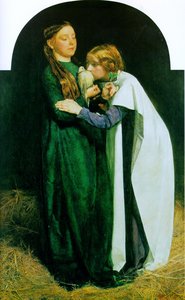
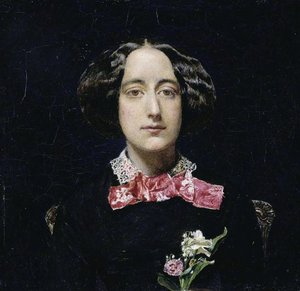


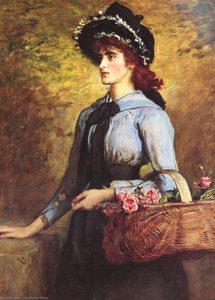
Artist Biography
early life and training
arthur hughes, a british painter and illustrator associated with the pre-raphaelite brotherhood, was born in london on january 27, 1832. in 1846, he entered the art school at somerset house, where his first master was alfred stevens. later, he attended the royal academy schools, where he met john everett millais and holman hunt, becoming a part of the pre-raphaelite group of painters.notable works and style
hughes' first picture, musidora, was exhibited at the royal academy when he was just 17. he continued to contribute to the royal academy and later to the grosvenor and new gallery exhibitions almost annually. his best-known works include april love and the long engagement, which depict troubled couples contemplating the transience of love and beauty, inspired by john everett millais's earlier "couple" paintings.personal life and legacy
in 1855, hughes married tryphena foord, who was his model for april love. he died in kew green, london, on december 22, 1915, leaving behind approximately 700 known paintings and drawings, along with over 750 book illustrations. his daughter, emily, had to destroy his preparatory sketches and private papers due to a shortage of space after her mother's death in 1921.artistic style and influences
magical, glowing coloring and delicate draughtsmanship characterize hughes' works. he was also influenced by the writer george macdonald, for whom he illustrated some books, and produced numerous illustrations for norman macleod's monthly magazine, good words.- view more of arthur hughes' artworks on ArtsDot
- read more about arthur hughes on wikipedia
- explore the timeline of art movements to understand the context of pre-raphaelite art
key works and exhibitions
- april love, 1855 (exhibited at grosvenor gallery) - the long engagement, 1862 (exhibited at new gallery) - musidora, 1849 (exhibited at the royal academy)notable museums and collections
- toledo museum of art (features hughes' ophelia) - victoria and albert museum (holds several of hughes' illustrations)
Arthur Hughes
1832 - 1915 , United Kingdom
Quick Facts
- Artistic Movement Or Style: Pre-Raphaelite
- Artists Or Movements Influenced By This Artist: ['John Everett Millais']
- Artists Who Influenced This Artist:
- Alfred Stevens
- George Macdonald
- Date Of Birth: January 27, 1832
- Date Of Death: December 22, 1915
- Full Name: Arthur Hughes
- Nationality: British
- Notable Artworks:
- April Love
- The Long Engagement
- Musidora
- Place Of Birth: London, United Kingdom
Related Articles
Arthur Hughes: Pre-Raphaelite Visions of Beauty & Melancholy
Explore the captivating world of Arthur Hughes (1832-1915), a leading Pre-Raphaelite painter. Discover his dreamy landscapes, poetic narratives & iconic Victorian artworks. Learn about his life, style & collecting today.

Dante Gabriel Rossetti's 25 Masterpieces: A Journey Through Victorian Art & Symbolism | ArtsDot
Explore 25 iconic artworks by Dante Gabriel Rossetti, a leading Pre-Raphaelite artist. Discover the stories behind masterpieces like 'Proserpine' & 'Beata Beatrix'. Find museum-quality art reproductions and elevate your home decor with ArtsDot.com.
Giclée Prints: Archival Quality & Aesthetic Nuances for the Discerning Collector
Explore the world of giclée prints with ArtsDot. Learn about archival quality, aesthetic nuances & investment potential. Expert guidance for discerning art collectors seeking museum-quality reproductions and lasting value.

The Pre-Raphaelite Brotherhood: Rebellion, Romance & Medieval Revival
Explore the captivating world of the Pre-Raphaelite Brotherhood! Discover their rebellious spirit, iconic masterpieces & lasting influence on art history. Learn about Rossetti, Millais & more.

John William Waterhouse: Pre-Raphaelite Mythmaker & Poetic Depictions of Female Identity
Explore the captivating world of John William Waterhouse, a master of Pre-Raphaelite painting. Discover his iconic depictions of mythology and female identity in this expert guide.