 Preview
 Send
Send Share
Share
 Details

 Download
 Similars
 X-Ray
X-Ray Diaporama
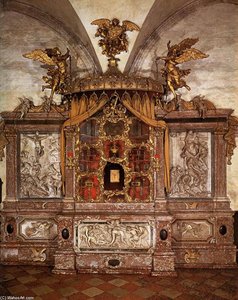
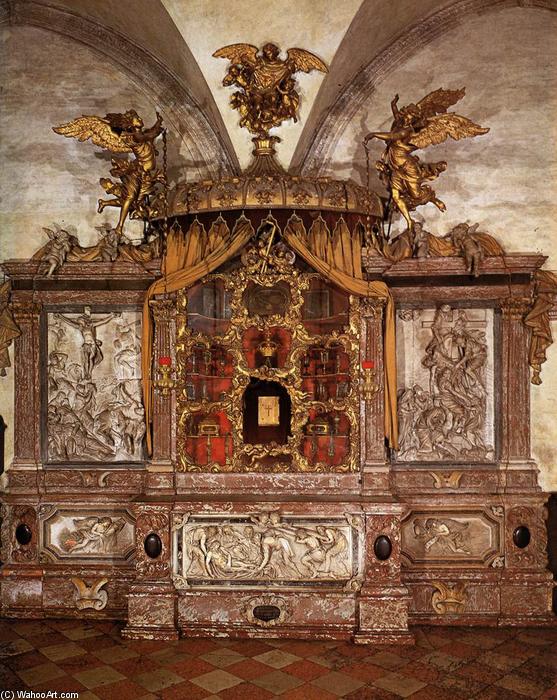
Altar of the Relics


 Read More
Hand Made Oil Reproduction
Hand-painted oil on canvas in your size and frame, made to order by our artists. ( Buy Print Buy Image)




































Pick from our preset sizes that match the artwork's original proportions.

You may enter your own dimensions to fit a specific frame or space. If your selected size does not match the original image's proportions, we will either crop the artwork or extend the painting with additional hand-painted elements. A digital mockup will be sent for your approval before production begins.
Please note that the on-screen preview does not reflect the actual cropping or extension. Only the mockup will accurately show the final composition.
While custom sizes are available, we recommend selecting a dimension from the predefined list to preserve the original proportions.
After order, ArtsDot.com team will email client for instructions and provide a mockup preview
Worldwide Delivery () in 3/4 weeks instead of standard 5 weeks. (17 August). No compromise on quality.

Free Worldwide Express Shipping

High-Quality Linen Canvas

Full Shipping Insurance

Customs Tax Refund Guarantee

True Color Matching Guarantee

60-Day Return Policy (Defects Only)

100% Money-Back Guarantee

Bulk Discount Offer
 Glass option is only available in size under 110 CM

Altar of the Relics
Reproduction Medium
Reproduction Size
-


Total Price
$ 263
Related Artworks
Artist Biography
Francesco Penso – The Venetian Sculptor of Poignant Scenes
Francesco Penso, more commonly known as Cabianca, was a pivotal figure in the artistic landscape of 17th and 18th-century Venice. Born in the heart of the Serenissima Republic in 1665 and tragically passing away in 1737, his life mirrored the fluctuating fortunes of Venice itself – periods of opulent patronage interspersed with economic hardship and personal struggles. His legacy isn’t defined by grand monuments or universally celebrated works, but rather by a collection of deeply affecting sculptures that reveal a profound understanding of human emotion and classical form. Cabianca's story is one of artistic evolution, marked by shifts in style and subject matter, reflecting the changing currents of Venetian art history.Early Years and Dalmatian Sojourn
Cabianca’s early career began under the tutelage of Giusto Le Corti, a prominent sculptor whose influence can be seen in some of his initial works. His first documented commission, the marble St. Benedict for San Michele in Isola (1695), established him as a skilled craftsman, demonstrating an aptitude for capturing religious figures with a nascent sense of dynamism. However, fate intervened when Cabianca found himself embroiled in financial difficulties and forced to seek patronage elsewhere. In 1698, he embarked on a decade-long sojourn in Dalmatia – encompassing present-day Croatia and Montenegro – a period that profoundly shaped his artistic development. Here, amidst the diverse cultural influences of the region, he contributed significantly to the decoration of churches and chapels, notably for Santa Chiara in Cattaro (Kotor), creating elaborate altars adorned with saints and biblical scenes. This experience exposed him to new techniques and compositional approaches, broadening his stylistic range beyond the strictly Venetian tradition. The Dalmatian period witnessed a shift towards greater theatricality and emotional intensity in his work – qualities that would become hallmarks of his later career.The Reliquary at Santa Maria Gloriosa dei Frari: A Masterpiece of Baroque Drama
Cabianca’s most celebrated achievement is undoubtedly the reliquary he sculpted for the sacristy of the Basilica di Santa Maria Gloriosa dei Frari in Venice (1711). This monumental work, featuring bas-reliefs depicting scenes from the Passion of Christ – the Crucifixion, Deposition, and Pietà – stands as a testament to his technical mastery and profound artistic vision. Unlike many Baroque sculptures that prioritized idealized beauty, Cabianca’s figures are imbued with raw emotion and dramatic intensity. The musculature is realistically rendered, conveying both suffering and spiritual anguish. The composition is carefully orchestrated, drawing the viewer into the heart of each scene. Scholars believe his work was influenced by Caravaggio's use of light and shadow, creating a palpable sense of drama and immediacy. This reliquary isn’t merely a decorative element; it’s a powerful meditation on faith, mortality, and human suffering – a defining statement of Cabianca’s artistic identity.Beyond Venice: Works in St. Petersburg and Padua
While firmly rooted in Venetian tradition, Cabianca's career extended beyond the confines of his native city. In 1717, he was commissioned to create a series of mythological figures for the Summer Garden in St. Petersburg – Saturn, Vertumnus, and Pomona – reflecting the tastes of Russian aristocracy. These works demonstrate a shift towards greater classical influence, showcasing his ability to adapt his style to different cultural contexts. Later, he spent time in Padua, producing sculptures for the Seminario Patriarcale, including bas-relief panels illustrating scenes from Jacob’s Dream and the Vision of the Orphan. Even in these seemingly more didactic works, Cabianca retains a remarkable sensitivity to human emotion and narrative detail.A Legacy of Poignant Emotion
Francesco Penso – Cabianca – died in Venice in 1737, leaving behind a body of work characterized by its emotional depth and technical skill. He wasn’t a prolific artist, nor did he achieve widespread fame during his lifetime. However, his sculptures continue to resonate with viewers today due to their ability to evoke powerful feelings of empathy and contemplation. His works are not defined by grand scale or revolutionary innovation, but rather by the quiet intensity of human experience they capture – a testament to the enduring power of Venetian Baroque sculpture. His legacy resides in the poignant scenes he rendered, offering a glimpse into the soul of a remarkable artist who spent his life exploring the complexities of faith, suffering, and beauty.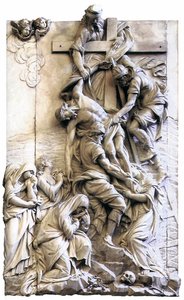
francesco cabianca
1665 - 1737 , Italy
Quick Facts
- Artistic Movement Or Style: Baroque/Neoclassical
- Artists Or Movements Influenced By This Artist: ['Neoclassicism']
- Artists Who Influenced This Artist: ['Giusto Le Court']
- Date Of Birth: 1665, Venice
- Date Of Death: 1737, Venice
- Full Name: Francesco Penso”, "Cabianca"
- Nationality: Italian
- Notable Artworks:
- St. Benedict (1695)
- Reliquary (1711)
- Saturnus (1717)
- Vertumnus & Pomona (1717)
- Place Of Birth: Venice, Italy
Related Articles

The Dramatic Flourish: Exploring the Baroque Movement's Enduring Legacy in Art History
Explore the dramatic world of Baroque art! Discover iconic artists like Caravaggio & Rubens, defining techniques, and its lasting impact on art history. Expert insights for collectors & enthusiasts at ArtsDot.

Baroque Masterpieces: 10 Paintings That Defined an Era |
Journey through the drama & grandeur of Baroque art! Explore 10 masterpieces by Caravaggio, Rembrandt, Rubens & more. Discover stunning oil paintings, rich colors & timeless stories. Find museum-quality reproductions at .

Baroque Drama: Bringing Opulence & Emotion into Contemporary Interiors
Explore the opulent world of Baroque interior design! Discover key elements, modern applications & how to bring dramatic elegance into your home with 's authentic reproductions.

The Visceral Stage: Exploring Dramatic Narratives & Emotional Intensity in Baroque Art
Explore the dramatic world of Baroque art! Discover iconic masters like Caravaggio & Rembrandt, their techniques, and the movement's lasting impact. Expert insights for collectors & enthusiasts at ArtsDot.

Theatricality & Triumph: Baroque Drama in Painting & Sculpture
Explore the dramatic world of Baroque art! Discover its history, defining characteristics, & lasting influence on painting & sculpture. Expert insights into Caravaggio, Zurbarán, and Bernini – plus high-quality reproductions at ArtsDot.