 Preview
 Send
Send Share
Share
 Details

 Download
 Similars
 X-Ray
X-Ray Diaporama
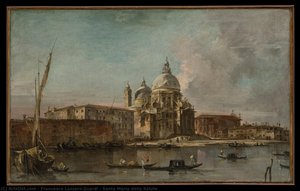
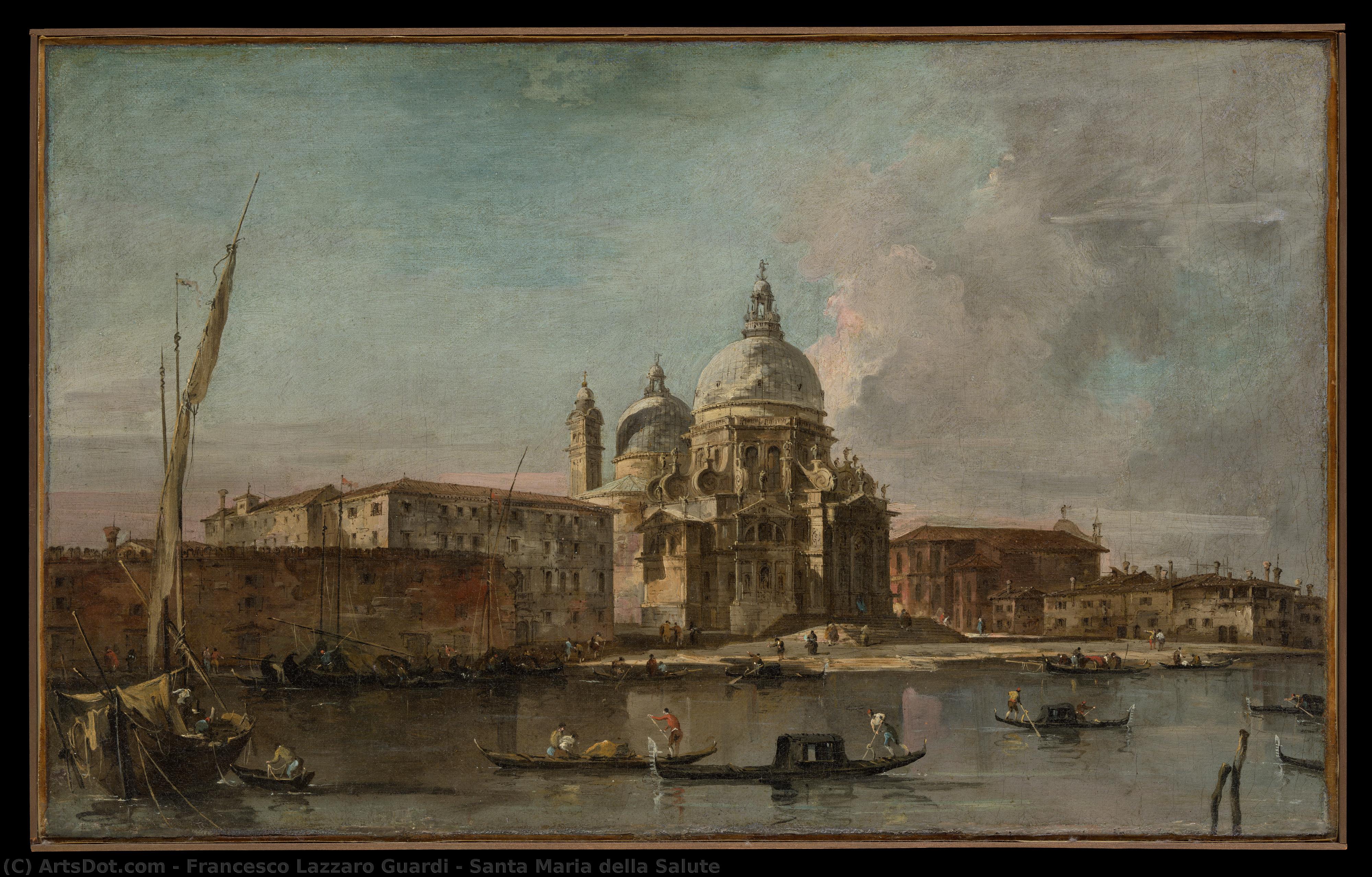
Santa Maria della Salute
 Painting
- WallArt
- Baroque
 1760
1760 53.0 x 86.0 cm
 Metropolitan Museum of Art
 Read More
Hand Made Oil Reproduction
Hand-painted oil on canvas in your size and frame, made to order by our artists. ( Buy Print Buy Image)




P118B $10

P118H $10

P118W $10

P438Z $10

P508JH $12

P508YH $12

P805H $10

P805Z $10

P919BZ $10

P919G $10

P919XJ $10

P959ZH $10

P968JZ $12

W106C $8

W218G $10

W218JH $8

W218Y $10

W307PJ $10

W316G $10

W316PJ $8

W316Y $10

W398PJ $8

W4111J $10

W500HY $15

W500JH $15

W692G $12

W849H $8

W940BG $15

W953PJ $8




Pick from our preset sizes that match the artwork's original proportions.

You may enter your own dimensions to fit a specific frame or space. If your selected size does not match the original image's proportions, we will either crop the artwork or extend the painting with additional hand-painted elements. A digital mockup will be sent for your approval before production begins.
Please note that the on-screen preview does not reflect the actual cropping or extension. Only the mockup will accurately show the final composition.
While custom sizes are available, we recommend selecting a dimension from the predefined list to preserve the original proportions.
After order, ArtsDot.com team will email client for instructions and provide a mockup preview
Worldwide Delivery () in 3/4 weeks instead of standard 5 weeks. (16 August). No compromise on quality.

Free Worldwide Express Shipping

High-Quality Linen Canvas

Full Shipping Insurance

Customs Tax Refund Guarantee

True Color Matching Guarantee

60-Day Return Policy (Defects Only)

100% Money-Back Guarantee

Bulk Discount Offer
 Glass option is only available in size under 110 CM

Santa Maria della Salute
Reproduction Medium
Reproduction Size
-


Total Price
$ 263
Artwork Description
Santa Maria della Salute: A Venetian Masterpiece
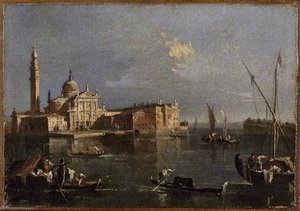
Francesco Guardi’s “Santa Maria della Salute” transcends mere depiction; it embodies the very soul of Venice at the cusp of its golden age, capturing an ethereal beauty that continues to inspire awe centuries later. Painted in 1760, this monumental veduta—a panoramic cityscape view—represents not just a building but a profound meditation on faith and resilience amidst turbulent times. Guardi’s masterful use of sfumato, achieved through delicate layering of translucent glazes, softens the architectural lines of the basilica and its surrounding canalscape, creating an atmosphere of hazy luminescence that evokes the Venetian twilight so characteristic of his oeuvre.- Subject Matter: The painting portrays Santa Maria della Salute church prominently positioned on Punta della Dogana, overlooking the Grand Canal and Giudecca Canal.
- Style: Guardi’s style is distinctly Venetian, influenced by Luca Carlevarijs and Canaletto, yet infused with a personal vision that distinguishes him from his contemporaries. It's characterized by loose brushstrokes and imaginative architectural embellishments—a deliberate departure from Canaletto’s meticulous realism.
- Technique: Guardi employed the technique of pittura di tocco – applying paint in small dots – which allowed for exceptional tonal control and a luminous effect that is unparalleled. The subtle blending of colors creates an illusion of depth and atmosphere, transporting the viewer into the Venetian scene.
Historical Context: Venice Under Pressure
The painting’s creation coincided with a period of significant political instability in Venice. Following the Seven Years' War, the Serenissima Republic faced mounting challenges from rival European powers, particularly Austria and Russia. The church itself had been erected after a devastating plague epidemic that decimated the Venetian population—a testament to the city’s unwavering devotion to Saint Mary Magdalene, patron saint of healing. Guardi skillfully conveyed this sense of solemn grandeur alongside palpable anxiety, reflecting the anxieties of his time.- Religious Significance: The basilica was built as a votive offering for deliverance from plague and symbolized Venice's spiritual fortitude.
- Political Landscape: Guardi’s depiction captures the visual drama of Venetian society amidst diplomatic maneuvering and military threats—a poignant reminder of the city’s vulnerability.
Symbolism and Emotional Impact
Beyond its architectural representation, “Santa Maria della Salute” resonates with deeper symbolic meanings. The hazy sky symbolizes divine grace enveloping the basilica, while the boats traversing the Grand Canal represent the flow of life amidst uncertainty. Guardi’s masterful composition evokes a feeling of contemplative serenity mingled with solemn reverence—a visual embodiment of Venice's enduring spirit. It is a painting that invites viewers to contemplate beauty and faith in equal measure, cementing its place as one of the most iconic images of Venetian art history.- Color Palette: Guardi’s use of muted pastel hues – predominantly blues, pinks, and yellows – contributes to the painting's ethereal mood and enhances its symbolic resonance.
- Composition: The diagonal lines of the basilica dominate the canvas, guiding the viewer’s gaze and emphasizing the church’s central role in the cityscape—a deliberate artistic choice that underscores its spiritual significance.
Legacy and Influence
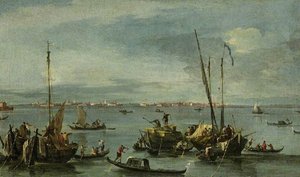
Francesco Guardi's “Santa Maria della Salute” profoundly impacted subsequent generations of Venetian artists and established him as a pivotal figure in the Venetian School. Its innovative technique and atmospheric perspective served as inspiration for Impressionist painters like Claude Monet and Pierre-Auguste Renoir, who sought to capture fleeting moments of beauty with similar luminous brushstrokes—a testament to Guardi’s enduring artistic legacy.Related Artworks
Artist Biography
A Venetian Twilight: The Life and Art of Francesco Guardi
Francesco Lazzaro Guardi, born into a family steeped in artistic tradition on October 5, 1712, stands as a poignant figure at the close of the illustrious Venetian School. His life mirrored the fading grandeur of Venice itself—a city once a vibrant hub of commerce and culture, slowly yielding to political decline and economic hardship. Guardi wasn’t merely a painter; he was a chronicler of this twilight era, capturing its atmospheric beauty and underlying melancholy with a unique sensitivity that would later resonate profoundly with the Impressionists. The Guardi family workshop, established by his father Domenico, was a bustling center of artistic production, where Francesco initially collaborated with his elder brother Gian Antonio on religious paintings. This early partnership provided a solid foundation in technique, but it was after Gian Antonio’s death in 1760 that Francesco truly found his voice, turning his attention to the *vedute*—the captivating cityscape views for which he would become celebrated.From Collaboration to Individual Vision
Initially, Guardi's work bore the clear influence of Canaletto, the undisputed master of Venetian *vedute*. Both artists depicted the city’s canals, palaces, and bustling piazzas with meticulous detail. However, while Canaletto prioritized topographical accuracy, Guardi gradually moved towards a more expressive and imaginative approach. He wasn’t concerned with photographic realism; instead, he sought to convey the *feeling* of Venice—its shimmering light, its atmospheric haze, and the sense of impermanence that permeated its beauty. This shift is evident in his looser brushwork, characterized by spirited strokes and freely imagined architectural details. His skies became particularly noteworthy, often filled with dramatic cloud formations that hinted at impending change. This departure from strict representation wasn’t a rejection of Canaletto's skill but rather an evolution towards a more personal and emotionally resonant style. The family legacy played a significant role; his sister Maria Cecilia’s marriage to Giovanni Battista Tiepolo further connected him to the leading artistic circles of the time, fostering a rich exchange of ideas and influences.The Doge's Feasts and *Pittura di Tocco*
Guardi’s most ambitious undertaking came in 1763 with his commission for *The Doge's Feasts*, a series of twelve monumental canvases celebrating the ceremonies surrounding the election of Alvise IV Mocenigo. These paintings weren’t simply documentary records; they were grand theatrical spectacles, teeming with figures and vibrant details. They showcased Guardi’s mastery of composition and his ability to capture the energy and pageantry of Venetian civic life. It was during this period that his signature style—known as *pittura di tocco* (painting of touch)—fully blossomed. This technique involved applying paint in small, broken strokes, creating a shimmering surface that seemed to vibrate with light and movement. The effect wasn’t one of precise detail but rather an impressionistic rendering of form and atmosphere. This innovative approach set him apart from his contemporaries and foreshadowed the artistic revolutions that would unfold in France decades later.A Legacy of Atmosphere and Influence
Francesco Guardi passed away at Campiello de la Madonna in Cannaregio, Venice, on January 1, 1793, leaving behind a body of work that continues to captivate audiences today. His paintings weren’t merely depictions of a city; they were evocations of a mood—a sense of nostalgia for a bygone era and an awareness of the fragility of beauty. He differed significantly from Canaletto, who often presented Venice in bright sunlight, Guardi frequently depicted the city shrouded in twilight or beneath clouded skies, emphasizing its melancholic charm. This atmospheric quality is what particularly appealed to the French Impressionists, such as Claude Monet and Edgar Degas, who recognized in his work a kindred spirit—an artist who prioritized feeling and sensation over strict representation. Guardi’s influence can be seen in their own explorations of light, color, and atmosphere.Rediscovering Guardi: A Lasting Impression
While not achieving the same level of fame as Canaletto during his lifetime, Francesco Guardi's reputation has steadily grown over the centuries. Today, he is recognized as a pivotal figure in Venetian art—a master who bridged the gap between the classical tradition and the modern sensibility. His paintings are treasured for their unique blend of realism and imagination, their evocative atmosphere, and their poignant portrayal of a city on the cusp of change. Exploring his work offers not just a glimpse into 18th-century Venice but also an appreciation for the enduring power of art to capture the essence of a place and time—and to resonate with viewers across generations.- Key Dates: October 5, 1712: Birth; January 1, 1793: Death.
- Style: *Vedute*, *Pittura di tocco* (painting of touch).
- Influences: Canaletto, Venetian School traditions.

Francesco Lazzaro Guardi
1712 - 1793 , Italy
Quick Facts
- Artistic Movement Or Style: Veduta, Venetian School
- Artists Or Movements Influenced By This Artist: ['French Impressionists']
- Artists Who Influenced This Artist: ['Canaletto']
- Date Of Birth: October 5, 1712
- Date Of Death: January 1, 1793
- Full Name: Francesco Lazzaro Guardi
- Nationality: Italian
- Notable Artworks:
- Capriccio with Ruins
- San Giorgio Maggiore
- Doge's Feasts
- Place Of Birth: Venice, Italy
Related Articles
Francesco Guardi: Venetian Light, Atmospheric Perspective & the Rococo to Neoclassical Transition
Explore the captivating world of Francesco Guardi, master of Venetian light and atmosphere. Discover his transition from Rococo to Neoclassicism, influence on Impressionism & investment potential with ArtsDot.

Giclée Prints: Archival Quality & Aesthetic Nuances for the Discerning Collector
Explore the world of giclée prints with ArtsDot. Learn about archival quality, aesthetic nuances & investment potential. Expert guidance for discerning art collectors seeking museum-quality reproductions and lasting value.

Jacopo Tintoretto's Masterpieces: 25 Paintings That Define Venetian Drama | ArtsDot
Explore 25 breathtaking masterpieces by Jacopo Tintoretto, the Venetian master of drama and light. Discover the stories behind iconic Renaissance paintings & find museum-quality art reproductions to elevate your home decor on ArtsDot.com.
Giovanni Antonio Canal (Canaletto): A Venetian Master of Light, Space & Societal Observation
Explore the life & art of Giovanni Antonio Canal (Canaletto), a Venetian master renowned for his breathtaking cityscapes. Discover his techniques, legacy, and captivating depictions of 18th-century Venice & London.

The Enduring Legacy of Fine Art Prints: Technique, History & Aesthetic Impact
Explore the rich history & techniques of fine art prints. Discover investment potential, assess authenticity, and learn how to preserve your collection with expert guidance. Trusted insights for discerning collectors.