

 Preview
 Send
Send Share
Share
 Details

 Download
 Similars
 X-Ray
X-Ray Diaporama
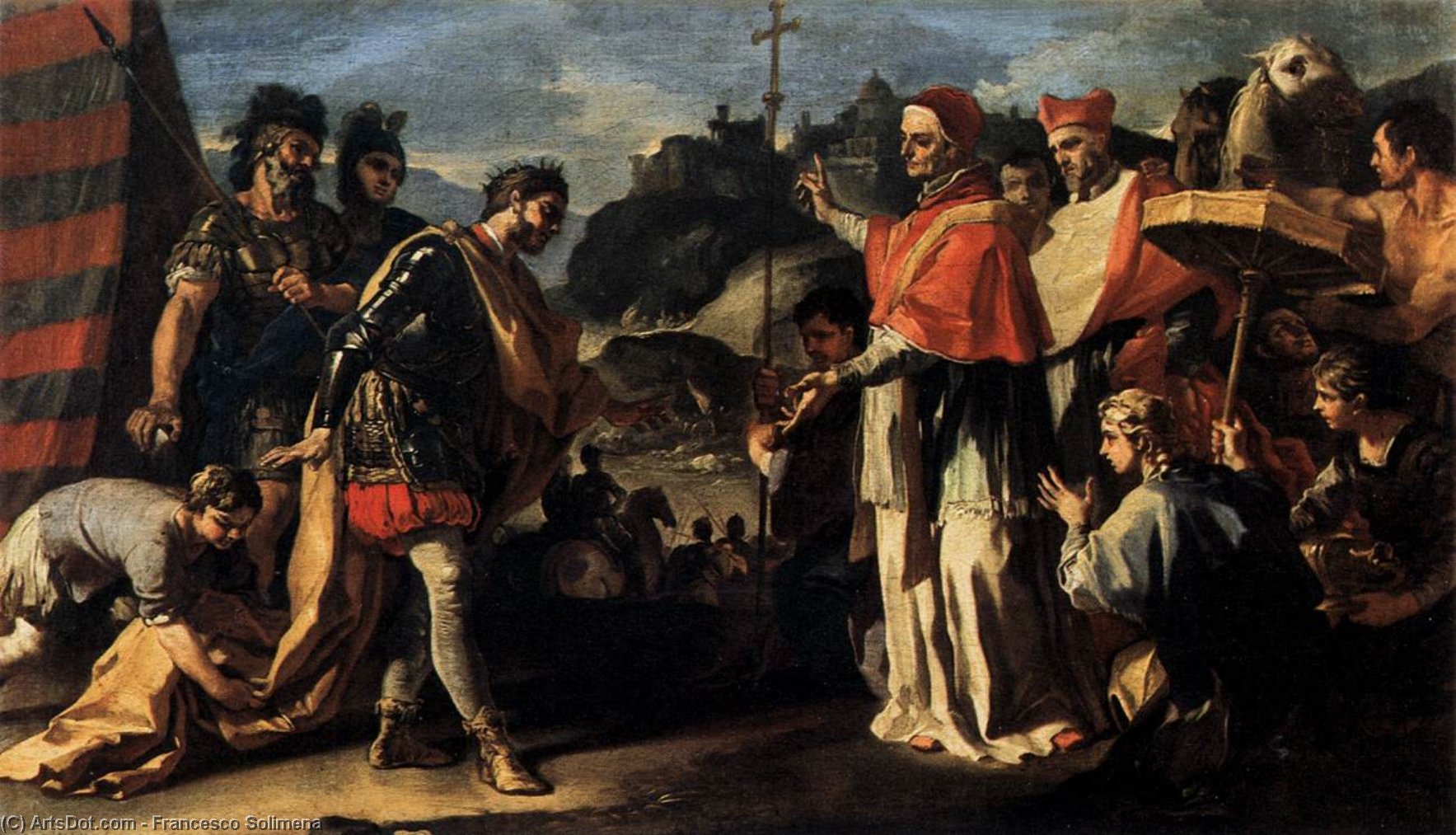
The Meeting of Pope Leo and Attila
 Oil On Canvas
- WallArt
- Baroque
 Early Modern
 43.0 x 75.0 cm
 Pinacoteca di Brera
 Read More
Purchase a high-resolution, enhanced digital image, far superior to the online preview.
Each file is meticulously prepared by our in-house specialists using advanced tools and expert manual retouching. We ensure every image has exceptional clarity, precise color accuracy, and fine detail.
The final file is delivered via email within 72 hours, optimized for immediate use in professional, editorial, and print environments. This is the same quality trusted by top-tier design studios, publishers, and galleries.
Digital Image
Download a high-resolution file for personal display, printing, and creative projects. ( Buy Print Buy Hand Made Painting)
Included in Every Digital Image Order
Expert Digital Delivery, Guaranteed
When you choose ArtsDot.com, you're not just getting an image - you're receiving a professionally enhanced digital artwork, crafted with precision and backed by a satisfaction guarantee. Here's everything that comes with your order, automatically:

Fast Email Delivery
Your high-resolution digital image file will be emailed to you within 72 hours of ordering - ready for immediate use.

AI-Enhanced Digital File
Your artwork is professionally optimized using advanced AI tools and manual editing, ensuring maximum detail, clarity, and color accuracy.

Free Lifetime Re-Delivery
Accidentally deleted or lost your file? No worries - we'll resend it to you anytime, free of charge.

No Import Fees - Ever
Enjoy your artwork instantly with zero customs, duties, or delivery fees - digital downloads are always tax-free.

Color Accuracy Guarantee
We ensure your digital image reflects the original colors as closely as possible using professional tools and color management.

60-Day Satisfaction Guarantee
If you're not satisfied with your digital image, we'll revise it or refund 100% within 60 days - no questions asked.

100% Money-Back Guarantee
Not satisfied? Get a full refund within 60 days of receiving your digital file - no questions asked.

Bulk Order Discounts
Buy 3 images, save 10% - Buy 5, save 15% - Buy 10+, save 20%. Great for creative projects, galleries, and agencies.
Collectible Description
The Grand Drama of Faith Confronting Power
To stand before The Meeting of Pope Leo and Attila is to be transported across the centuries, into a moment etched by legend and stained with the rich pigments of Baroque drama. Francesco Solimena, in this masterful oil on canvas, does not merely depict an encounter; he stages a profound dialogue between spiritual authority and raw military might. The scene captures the legendary year of 452 AD, centering on Pope Leo I greeting Attila the Hun. Observe the composition: it is a carefully orchestrated tableau where every figure seems to carry the weight of history. Solimena’s genius lies in transforming a historical narrative into an intensely emotional spectacle, inviting the viewer not just to look, but to feel the tension vibrating through the very air of this courtyard.
Baroque Grandeur and Theatrical Composition
Solimena, a Neapolitan master whose hand was steeped in the grandeur of the late Baroque period, utilized color and movement with breathtaking skill. The dynamic composition is immediately apparent; figures are arranged not randomly, but according to dramatic vectors that guide the eye from the welcoming gesture of Pope Leo toward the imposing presence of Attila. Note the vibrant palette—the deep robes contrasting against the lighter tones of the setting—all contributing to a sense of heightened reality. This was Solimena at his most theatrical, employing techniques that give life to stone and cloth alike. The inclusion of supporting figures, some kneeling in reverence while others stand as witnesses, builds an almost palpable atmosphere of momentous consequence.
Symbolism: Forgiveness Over Force
The true heart of the painting lies in its potent symbolism. At first glance, we see a confrontation between two titans—the spiritual leader and the feared conqueror. Yet, the narrative focus is on Pope Leo’s gesture: an open embrace that speaks volumes more than any sword or shield could. This act symbolizes the ultimate triumph of Christian doctrine over brute force; it is the message of forgiveness meeting the edge of empire. The presence of sacred objects, such as the visible cross and the book resting nearby, anchors this human drama within a divine framework. It suggests that even in the face of overwhelming worldly power, grace remains the most potent force.
A Legacy for Modern Adoration
For the contemporary collector or designer seeking an anchor piece for a grand hall or library, this reproduction offers more than mere decoration; it offers contemplation. Owning a faithful hand-painted replica allows one to engage intimately with Solimena’s brushwork and the narrative weight of the original masterpiece housed in Milan's Pinacoteca di Brera. The scale, measuring approximately 43 x 75 cm, provides an ideal focal point without overwhelming a sophisticated interior space. It is an opportunity to bring home not just paint on canvas, but a tangible piece of art history—a meditation on mercy, power, and the enduring light of faith.
The Craftsmanship of Reproduction
To appreciate this work fully is to admire both the original vision and the skill required to replicate it. The meticulous detail in the drapery folds, the subtle expressions on the faces, and the suggestion of life through the horse positioned at the edge—all testify to the dedication of the artisans who recreate this scene. This reproduction serves as a bridge, allowing modern admirers to connect directly with the emotional intensity and technical brilliance that defined Francesco Solimena’s career.
Related Artworks



Artist Biography
A Neapolitan Master of Baroque Grandeur
Francesco Solimena, born in the small Italian town of Canale di Serino near Avellino in 1657, emerged as one of the most significant figures in Neapolitan painting during the late Baroque period. His artistic journey began within a family already steeped in artistic tradition; his father, Angelo Solimena, served as his initial instructor, collaborating with him on early projects like the Paradise fresco for the cathedral of Nocera. This foundational experience instilled in young Francesco a deep appreciation for technique and composition. He further refined his skills under the tutelage of Francesco di Maria and Giacomo del Po, absorbing diverse influences that would ultimately shape his distinctive style. The patronage of Cardinal Vincenzo Orsini proved pivotal, providing encouragement and opportunities that allowed Solimena to establish himself as an independent artist by the 1680s, undertaking increasingly ambitious fresco commissions.Forging a Style: Echoes of Rome in Neapolitan Splendor
Solimena’s artistic voice is immediately recognizable through its warm, brownish shadowing and dramatic use of light – qualities deeply indebted to the Roman Baroque masters Luca Giordano and Giovanni Lanfranco. However, he didn't merely imitate; instead, he synthesized these influences into a uniquely Neapolitan aesthetic. The hallmarks of his work include dynamic compositions brimming with emotional intensity, reflecting the Baroque period’s penchant for grandeur and theatricality. He possessed an exceptional ability to capture movement and drama within his scenes, drawing viewers into narratives both sacred and mythological. From the 1690s onward, Solimena's studio became a dominant force in Naples, shaping the artistic landscape of the city for decades. His workshop was remarkably productive, churning out altarpieces, frescoes, and canvases that adorned churches and palaces throughout the region. A key characteristic of his compositional approach involved suggesting settings with minimal detail, strategically directing attention towards the figures themselves and their elaborately rendered draperies – often illuminated by carefully placed light sources to heighten their impact.A Prolific Output: Frescoes, Altarpieces, and Mythological Visions
Francesco Solimena was an extraordinarily prolific artist, leaving behind a vast body of work encompassing a wide range of subjects and formats. He excelled in large-scale fresco cycles, transforming the interiors of Neapolitan churches and palaces into vibrant displays of religious fervor and aristocratic splendor. His altarpieces are particularly noteworthy for their ability to convey complex theological narratives with both emotional depth and technical brilliance. Beyond his religious works, Solimena also demonstrated a mastery of mythological scenes, imbuing classical tales with dramatic energy and sensuous beauty. Among his most celebrated pieces is the *Allegory of Rule*, currently housed in the State Hermitage Museum in St. Petersburg – a testament to his skill in allegorical representation and sophisticated composition. His depictions of weddings and courtly events further showcase his versatility, capturing the elegance and opulence of Neapolitan society. Works like “St John the Baptist” and “The Assumption and Coronation of the Virgin” exemplify his mastery of chiaroscuro and dynamic compositions.Legacy and Influence: A School of Neapolitan Painting
Solimena’s impact extended far beyond his own artistic creations. His large, well-organized atelier functioned as a veritable academy, playing a crucial role in the cultural life of Naples. He trained numerous pupils who went on to become prominent artists in their own right, solidifying his position as a central figure in 18th-century Italian art. Notable among his students were Francesco de Mura, Giuseppe Bonito, Pietro Capelli, and Corrado Giaquinto – each contributing significantly to the evolution of Neapolitan painting. Solimena’s success wasn't limited to artistic recognition; he achieved considerable financial prosperity during his lifetime, being bestowed with the title of baron and living a life commensurate with his fame. He passed away in 1747 at Barra, near Naples, leaving behind an enduring legacy that continues to be celebrated through exhibitions, scholarly studies, and reproductions available today. He stands as one of the most important figures in Neapolitan Baroque painting, successfully synthesizing Roman influences with local traditions to create a distinctive style that defined artistic production in Naples for generations. His works remain admired for their dramatic flair, technical mastery, and enduring beauty – a testament to his genius and lasting contribution to art history.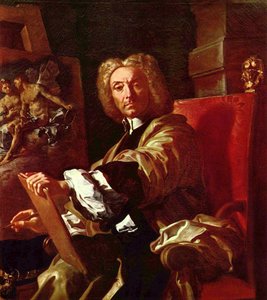
Francesco Solimena
1657 - 1747 , Italy
Quick Facts
- Artistic Movement Or Style: Baroque
- Artists Or Movements Influenced By This Artist:
- Francesco de Mura
- Giuseppe Bonito
- Artists Who Influenced This Artist:
- Luca Giordano
- Giovanni Lanfranco
- Date Of Birth: October 4, 1657
- Date Of Death: 1747
- Full Name: Francesco Solimena
- Nationality: Italian
- Notable Artworks:
- Allegory of Rule
- Frescoes in Naples
- St John the Baptist
- Assumption & Coronation
- Place Of Birth: Canale di Serino, Italy

