

 Preview
 Send
Send Share
Share
 Details

 Download
 Similars
 X-Ray
X-Ray Diaporama
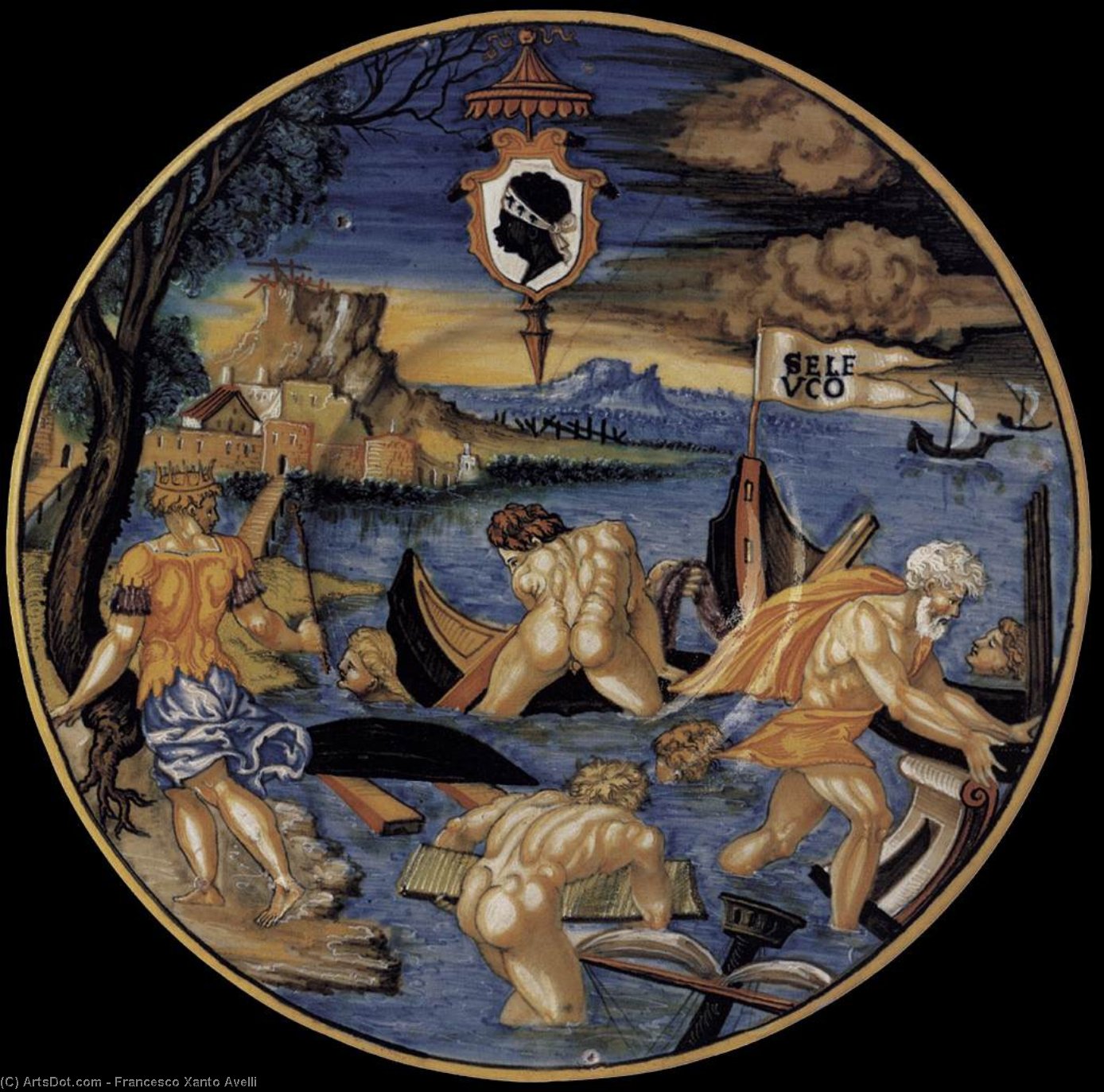
Plate with the Sinking of the Fleet of Seleucus
 Acrylic On Canvas
- WallArt
- Renaissance Ceramics
 1532
1532 26.0 x 26.0 cm
 Corcoran Gallery of Art
 Read More
Purchase a high-resolution, enhanced digital image, far superior to the online preview.
Each file is meticulously prepared by our in-house specialists using advanced tools and expert manual retouching. We ensure every image has exceptional clarity, precise color accuracy, and fine detail.
The final file is delivered via email within 72 hours, optimized for immediate use in professional, editorial, and print environments. This is the same quality trusted by top-tier design studios, publishers, and galleries.
Digital Image
Download a high-resolution file for personal display, printing, and creative projects. ( Buy Print Buy Hand Made Painting)
Included in Every Digital Image Order
Expert Digital Delivery, Guaranteed
When you choose ArtsDot.com, you're not just getting an image - you're receiving a professionally enhanced digital artwork, crafted with precision and backed by a satisfaction guarantee. Here's everything that comes with your order, automatically:

Fast Email Delivery
Your high-resolution digital image file will be emailed to you within 72 hours of ordering - ready for immediate use.

AI-Enhanced Digital File
Your artwork is professionally optimized using advanced AI tools and manual editing, ensuring maximum detail, clarity, and color accuracy.

Free Lifetime Re-Delivery
Accidentally deleted or lost your file? No worries - we'll resend it to you anytime, free of charge.

No Import Fees - Ever
Enjoy your artwork instantly with zero customs, duties, or delivery fees - digital downloads are always tax-free.

Color Accuracy Guarantee
We ensure your digital image reflects the original colors as closely as possible using professional tools and color management.

60-Day Satisfaction Guarantee
If you're not satisfied with your digital image, we'll revise it or refund 100% within 60 days - no questions asked.

100% Money-Back Guarantee
Not satisfied? Get a full refund within 60 days of receiving your digital file - no questions asked.

Bulk Order Discounts
Buy 3 images, save 10% - Buy 5, save 15% - Buy 10+, save 20%. Great for creative projects, galleries, and agencies.
Plate with the Sinking of the Fleet of Seleucus
Francesco Xanto Avelli’s “Plate with the Sinking of the Fleet of Seleucus” stands as a testament to Urbino’s artistic fervor during the Renaissance, embodying not merely visual beauty but also profound symbolic resonance. Executed in 1532, this exquisite maiolica plate transcends its material form—ceramic—to become an emblem of naval defeat and resilience, skillfully rendered by Avelli with meticulous attention to detail.A Dramatic Narrative Embodied in Ceramic
The painting depicts a chaotic maritime confrontation: figures jostle amidst boats strewn across the turbulent waters surrounding Seleucus I’s fleet. Twelve individuals populate the scene—a commanding presence at the forefront, alongside sailors and onlookers—each positioned with deliberate precision to convey movement and urgency. The artist's masterful use of perspective draws the viewer into the drama unfolding before them, capturing the palpable tension of impending disaster.Technique and Style: Urbino’s Ceramic Legacy
Avelli’s technique exemplifies Urbino’s celebrated ceramic tradition—a style characterized by vibrant colors achieved through layering glazes and incorporating intricate decorative motifs. The palette is dominated by shades of ochre, crimson, and azure, reflecting the grandeur of the subject matter and enhancing its visual impact. Delicate floral patterns adorn the plate's surface, subtly juxtaposed against the turbulent seascape, symbolizing beauty amidst adversity—a recurring motif in Renaissance art.Historical Context: Seleucus’ Defeat and Artistic Reflection
The depiction draws inspiration from Marcus Junianus Justinus’ “History of the World,” a chronicle detailing Seleucus I’s naval defeat at Rhosus by Antiochus III—a pivotal moment shaping Hellenistic history. Avelli's choice to portray this event speaks to the broader humanist preoccupation with capturing significant historical narratives and conveying moral lessons through artistic representation. The plate serves as a visual reminder of vulnerability and triumph, mirroring the complexities inherent in human experience.Symbolism: Beauty Amidst Chaos
Beyond its narrative depiction, “Plate with the Sinking of the Fleet of Seleucus” operates on multiple symbolic levels. The umbrella held aloft by one figure represents protection—a safeguard against misfortune—while the boats themselves symbolize navigation and perseverance. These elements coalesce to convey a message of fortitude in the face of challenges, aligning seamlessly with Urbino’s artistic ethos.Emotional Impact: Capturing the Spirit of Resilience
Ultimately, Avelli's plate succeeds in evoking an emotional response from the viewer. The dynamism of the scene—the swirling water, the active figures—captures the immediacy of crisis and underscores the importance of courage and determination. It’s a piece that invites contemplation on themes of fate, triumph, and the enduring power of beauty to illuminate even darkest moments—a timeless reflection of Urbino's artistic spirit.Related Artworks







Artist Biography
Francesco Xanto Avelli: The Poet of Urbino Maiolica
Francesco Xanto Avelli (c. 1487 – c. 1542) stands as a singular figure in the vibrant tapestry of Renaissance ceramics, primarily recognized for his exquisitely painted maiolica plates—objects imbued with both artistic brilliance and profound symbolic resonance. Born in Rovigo, Italy, details surrounding his early life remain elusive, shrouded in the mists of historical record. Despite this paucity of biographical information, Avelli’s contribution to Urbino’s ceramic tradition is undeniable, shaping the aesthetic sensibilities of an era.- Early Career & Urbino Influence: Avelli's emergence onto the artistic scene coincides with a pivotal moment in Urbino – the burgeoning spirit of proto-guild organization spearheaded by Francesco Della Rovere. Documents from 1530 reveal efforts to establish a trade union among pottery workers, reflecting the broader socio-economic transformations occurring during this period. This association immediately cemented Avelli’s position within Urbino's artistic milieu and foreshadowed his prolific output.
- Signature & Symbolism: Avelli’s distinctive signature – .f.x.a.r., accompanied by the mark î urbino – exemplifies a meticulous approach to artistic authentication, uncommon for its time. This dedication to marking his works speaks volumes about his commitment to preserving his legacy and underscores the importance of provenance in assessing artistic value.
- Notable Works & Artistic Style: Avelli’s oeuvre comprises numerous plates bearing evocative imagery—particularly “The Story of Aeneas,” featuring a depiction of Virgil's hero battling Neptune. These pieces showcase masterful glazing techniques, vibrant color palettes, and intricate decorative motifs characteristic of Urbino maiolica. His style is marked by poetic inscriptions that elevate the ceramic form beyond mere utilitarian function, transforming it into a vessel for conveying narrative and philosophical contemplation.
- Collaborations & Legacy: Avelli’s artistic influence extended beyond his own creations; he fostered collaborations with skilled artisans like Francesco de Silvano, establishing a workshop environment where stylistic innovation flourished. The consistency of signing his works—a rare occurrence in the 16th century—has fueled scholarly debate regarding potential censorship or challenges to his professional standing.
- Historical Significance: Avelli’s contribution to Urbino’s artistic heritage is commemorated by the Basilica di San Francesco, where frescoes by Beccafumi and Sodoma stand as testament to the grandeur of Renaissance art. His work continues to inspire admiration for its beauty and intellectual depth, securing his place among the foremost ceramicists of his time.
The Urbino Workshop & Artistic Innovation
Avelli’s workshop in Urbino served as a crucible for artistic experimentation, fostering a collaborative environment where stylistic influences converged. The meticulous attention to detail evident in his plates—particularly the aforementioned “Aeneas” depiction—demonstrates a profound understanding of humanist ideals and a commitment to conveying complex narratives through visual language. His glazing techniques—characterized by luminous colors and subtle tonal variations—were particularly noteworthy, elevating Urbino maiolica to new heights of artistic sophistication.Plate: The Story of Aeneas
The “Plate with the Sinking of the Fleet of Seleucus” exemplifies Avelli’s artistic prowess. Executed around 1537, this masterpiece captures Virgil's epic poem with breathtaking accuracy—a testament to his ability to translate literary themes into visual form. The vibrant blues and reds employed in the depiction of Neptune’s wrath underscore the dramatic intensity of the narrative, while the intricate floral borders contribute to the overall aesthetic harmony.Provenance & Recognition
Despite the scarcity of definitive biographical data, Avelli's work has gained considerable recognition within scholarly circles. The Metropolitan Museum of Art’s acquisition of “Plate with the Sinking of the Fleet of Seleucus” underscores its enduring artistic value and confirms its place among the finest examples of Renaissance ceramics. Further research into Avelli’s life and oeuvre promises to illuminate new facets of Urbino’s cultural landscape during the formative years of the Renaissance.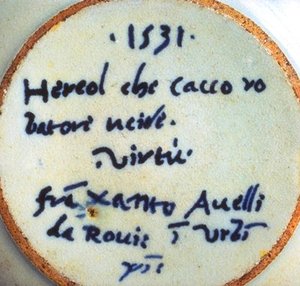
Francesco Xanto Avelli
1487 - 1542 , Italy
Quick Facts
- Artistic Movement Or Style: Maiolica
- Artists Or Movements Influenced By This Artist: ['Renaissance']
- Artists Who Influenced This Artist: ['']
- Date Of Birth: c. 1487
- Date Of Death: c. 1542
- Full Name: Francesco Xanto Avelli
- Nationality: Italian
- Notable Artworks:
- Plate (piatto): The story of Aeneas
- Plate with the Sinking of the Fleet of Seleucus
- Place Of Birth: Rovigo, Italy

