 Preview
 Send
Send Share
Share
 Details

 Download
 Similars
 X-Ray
X-Ray Diaporama
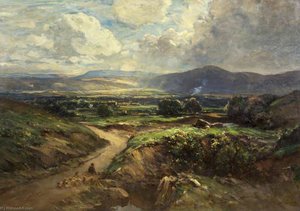
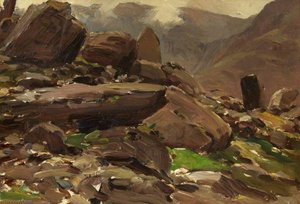
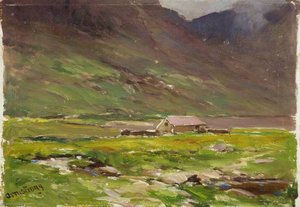
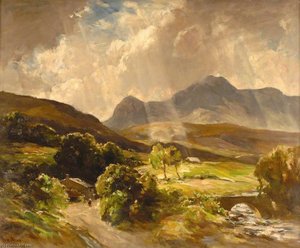
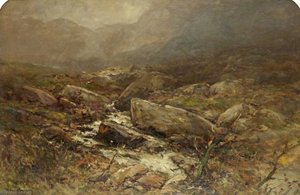
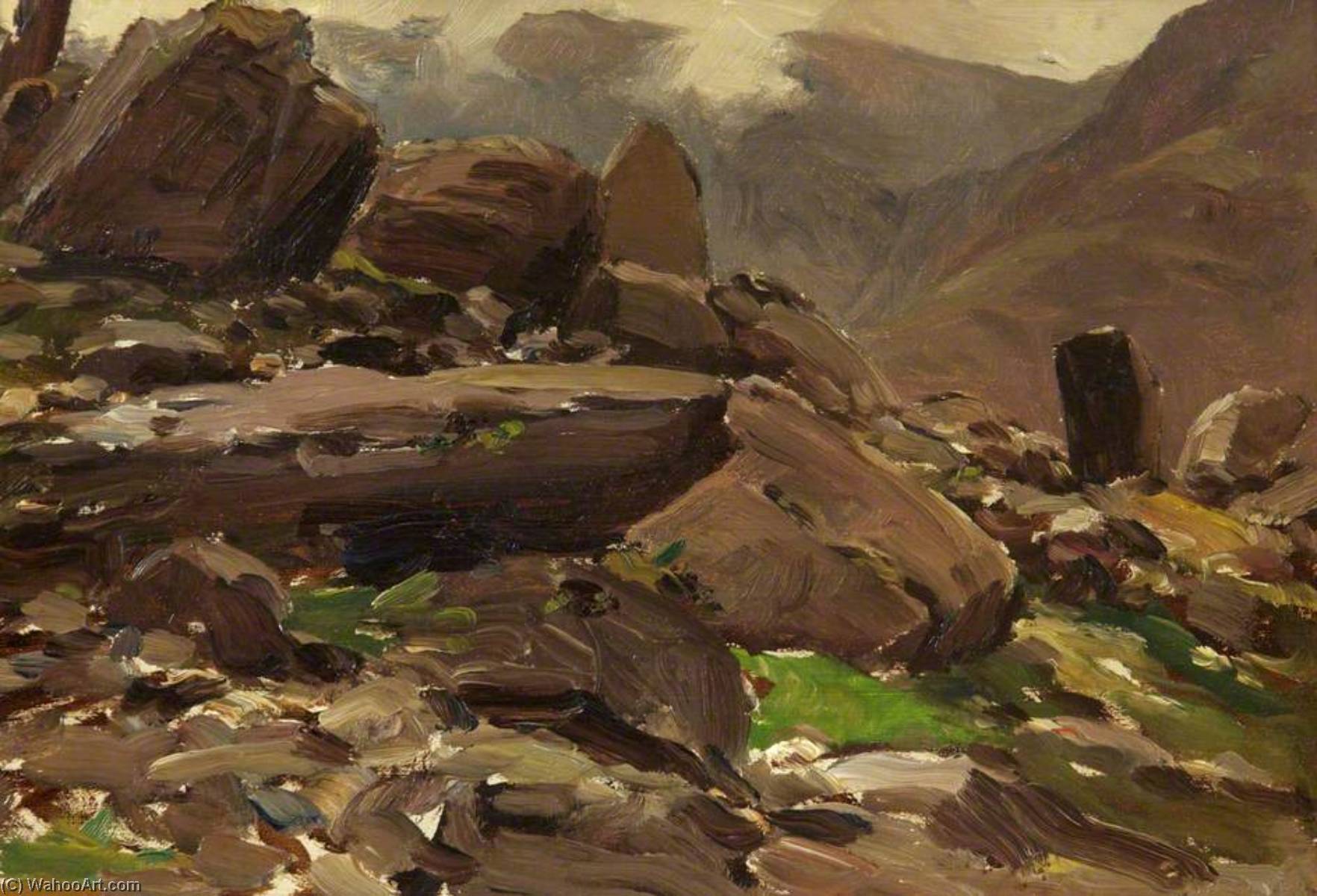
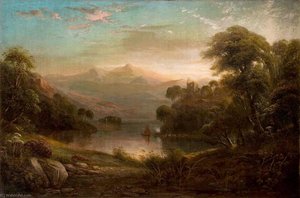
A Mountainous Lake Scene with Rocks in the Foreground
 Impressionism
 16.0 x 24.0 cm
 Royal West of England Academy
 Read More
Giclée / Art Print
Museum-quality giclée or canvas print with fast production and flexible finish options. ( Buy Hand Made Painting Buy Image)




































Pick from our preset sizes that match the artwork's original proportions.

You may enter your own dimensions to fit a specific frame or space. If your selected size does not match the original image's proportions, we will either crop the artwork or extend the image with a mirrored or solid-fill edge. A digital mockup will be sent for your approval before production begins.
Please note that the on-screen preview does not reflect the actual cropping or extension. Only the mockup will accurately show the final composition.
While custom sizes are available, we recommend selecting a dimension from the predefined list to preserve the original proportions.
Worldwide Delivery () in 2 weeks instead of standard 4/5 weeks. (23 August)

Free Worldwide Express Shipping

High-Quality Linen Canvas

Full Shipping Insurance

Customs Tax Refund Guarantee

True Color Matching Guarantee

60-Day Return Policy (Defects Only)

100% Money-Back Guarantee

Bulk Discount Offer
 Glass option is only available in size under 110 CM

A Mountainous Lake Scene with Rocks in the Foreground
Giclée / Art Print
Reproduction Size
-


Total Price
$ 63
Related Artworks
Artist Biography
The Visionary Landscapes of Francis Abel William Taylor Armstrong
Francis Abel William Taylor Armstrong (1849 – 1920) emerged as a prominent figure in British landscape painting during the Victorian era, leaving behind a legacy of evocative depictions that continue to resonate with collectors and art historians alike. Born in Bristol, England, Armstrong’s artistic journey was shaped by both familial connections to the arts and a burgeoning fascination with capturing the beauty of the natural world. His father, William Taylor Armstrong Sr., a solicitor, instilled in his son a love for meticulous observation and intellectual curiosity. While his formal training may have begun through self-study and experimentation, his innate talent allowed him to navigate the complex artistic landscape of 19th-century Britain with remarkable grace.
By the late 1870s, Armstrong relocated to London, immersing himself in the vibrant artistic milieu of the city. This period marked a significant turning point in his development as he began exhibiting his work regularly at prestigious institutions such as the Royal Academy and the Slade School of Fine Art. It was during these years that his mastery of light and color truly began to flourish. His style became firmly established through a sophisticated use of atmospheric perspective and a profound sensitivity to tonal variations. Favoring oil paints on canvas, Armstrong employed intricate layering techniques to achieve a sense of remarkable realism, all while maintaining the ability to convey the deep mood and character of his subjects.
A Mastery of Light and Atmosphere
The essence of Armstrong’s work lies in its ability to transport the viewer into the heart of the English countryside. His canvases often reflect the profound influence of Romanticism, drawing inspiration from the legendary techniques of masters like Turner and Constable. He possessed a unique gift for capturing the fleeting qualities of nature—the way golden sunlight bathes a valley or how mist clings to a rugged moorland. This technical prowess is perhaps most evident in his celebrated works:
- The River Avon at Bradford Abbas (1883): A stunning portrayal of Dorset’s Avon Valley, where the artist uses light to create a sense of warmth and tranquility.
- Cornfield Near Stoke Newington (1886): A piece that captures the quiet grandeur and peacefulness of rural England.
- Dartmoor Moorland (1902): A demonstration of his ability to convey the raw, rugged beauty of the wild landscape.
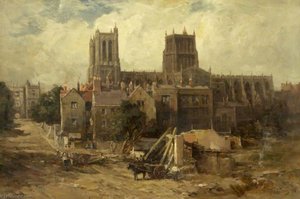
Beyond the pastoral, Armstrong also displayed a keen interest in urban and architectural subjects, blending the majesty of historical structures with the vitality of daily life. His paintings of Bristol, such as The Church of St Mary Redcliffe (1899) and Bristol Cathedral (1904), showcase his skill in capturing the essence of urban landscapes. In these works, he utilizes bold brushstrokes and vivid colors to highlight intricate architectural details, often juxtaposing the permanence of stone towers with the transient movement of horse-drawn carriages and bustling city life.
Legacy and Historical Significance
The historical significance of Francis Abel William Taylor Armstrong lies in his role as a chronicler of a changing Britain. Through his eyes, we witness the serene beauty of the pre-industrial countryside and the dignified evolution of English cities. His work serves as a bridge between the classical landscape traditions of the past and the more emotive, atmospheric approaches of the late Victorian period. By focusing on the interplay of light, texture, and atmosphere, Armstrong created a body of work that transcends mere documentation, offering instead a poetic meditation on the natural and built environments.
Today, his paintings remain cherished for their ability to evoke nostalgia and wonder. Whether depicting a tranquil river scene or a majestic cathedral, Armstrong’s dedication to capturing the soul of his subjects ensures his enduring place in the annals of British art history. His legacy continues to inspire those who find beauty in the subtle shifts of light and the timeless landscapes of the English realm.
francis abel william taylor armstrong
1849 - 1920
Quick Facts
- Artistic Movement Or Style: Romanticism
- Artists Or Movements Influenced By This Artist: ['Hudson Lowe']
- Artists Who Influenced This Artist:
- John Constable
- George Frederic Handel
- Date Of Birth: 1849
- Date Of Death: 1920
- Full Name: Francis Abel William Taylor Armstrong
- Nationality: British
- Notable Artworks:
- The Old Mill
- Redcliffe Gorge
- Place Of Birth: Bristol, England
Related Articles
Impressionistic Landscapes: 10 Masterpieces That Changed Art & Decor
Journey into the heart of Impressionism! Explore 10 masterpieces by Monet, Renoir & Degas that revolutionized landscape art. Discover their stories, techniques & find museum-quality reproductions to elevate your home decor on ArtsDot.com.
Impressionist Landscapes: 10 Masterpieces for Your Home | ArtsDot
Journey through 10 iconic Impressionist landscapes by Monet, Renoir & Degas. Explore the history, techniques & emotions behind these masterpieces. Find museum-quality reproductions for your home at ArtsDot.com – where art comes to life! Discover all masterpieces on ArtsDot.com

Evocations of Place: A Historical Journey Through Landscape Art
Explore the rich history of landscape art with ArtsDot. Discover renowned artists, movements like Impressionism & Romanticism, and expert guidance for collecting timeless pieces. Find your perfect serene escape today!

Romantic Landscapes: 10 Masterpieces for Your Home | ArtsDot
Journey through 10 Romantic landscape masterpieces by Friedrich, Turner & Cole. Explore emotional art, sublime nature scenes & iconic 19th-century paintings. Find museum-quality reproductions for your home at ArtsDot.com – discover the full collection online!

John Constable's Masterpieces: Explore 25 Iconic Landscapes for Your Home
Journey through John Constable's 25 most celebrated landscapes. Explore Romanticism, Dedham Vale & his masterful use of light in iconic paintings like 'Hay Wain'. Find museum-quality art reproductions and elevate your home decor on ArtsDot.com.