 Preview
 Send
Send Share
Share
 Details

 Download
 Similars
 X-Ray
X-Ray Diaporama
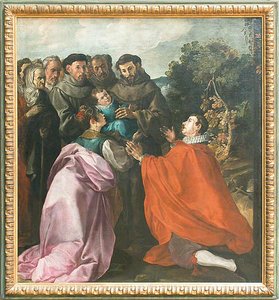
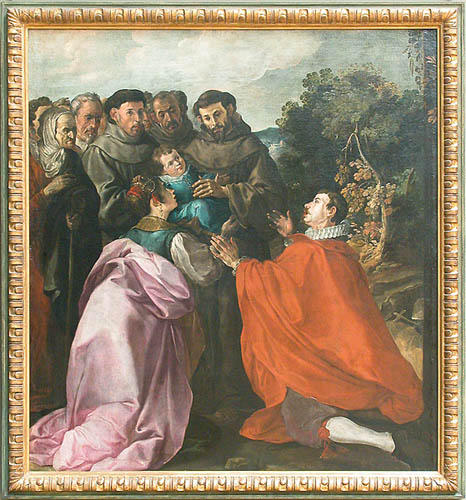
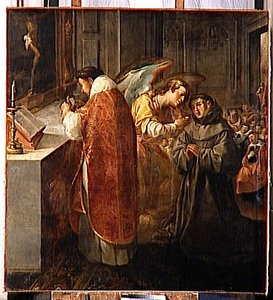
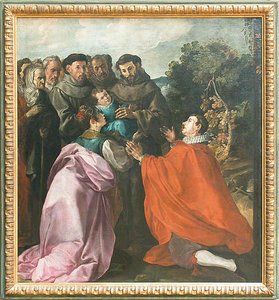
Guérison de saint Bonaventure enfant par saint François


 Read More
Hand Made Oil Reproduction
Hand-painted oil on canvas in your size and frame, made to order by our artists. ( Buy Print Buy Image)




P118B $10

P118H $10

P118W $10

P438Z $10

P508JH $12

P508YH $12

P805H $10

P805Z $10

P919BZ $10

P919G $10

P919XJ $10

P959ZH $10

P968JZ $12

W106C $8

W218G $10

W218JH $8

W218Y $10

W307PJ $10

W316G $10

W316PJ $8

W316Y $10

W398PJ $8

W4111J $10

W500HY $15

W500JH $15

W692G $12

W849H $8

W940BG $15

W953PJ $8




Pick from our preset sizes that match the artwork's original proportions.

You may enter your own dimensions to fit a specific frame or space. If your selected size does not match the original image's proportions, we will either crop the artwork or extend the painting with additional hand-painted elements. A digital mockup will be sent for your approval before production begins.
Please note that the on-screen preview does not reflect the actual cropping or extension. Only the mockup will accurately show the final composition.
While custom sizes are available, we recommend selecting a dimension from the predefined list to preserve the original proportions.
After order, ArtsDot.com team will email client for instructions and provide a mockup preview
Worldwide Delivery () in 3/4 weeks instead of standard 5 weeks. (30 August). No compromise on quality.

Free Worldwide Express Shipping

High-Quality Linen Canvas

Full Shipping Insurance

Customs Tax Refund Guarantee

True Color Matching Guarantee

60-Day Return Policy (Defects Only)

100% Money-Back Guarantee

Bulk Discount Offer
 Glass option is only available in size under 110 CM

Guérison de saint Bonaventure enfant par saint François
Reproduction Medium
Reproduction Size
-


Total Price
$ 413
A Divine Encounter in Baroque Splendor
To stand before this depiction of the Guérison de saint Bonaventure enfant par saint François is to step directly into the fervent heart of 17th-century Spanish devotion. The scene pulses with an almost palpable energy, capturing a moment of miraculous intervention—the healing of Saint Bonaventure by Saint Francis. It is not merely a depiction of an event; it is an immersive spiritual experience rendered in oil paint. The composition itself is a masterclass in Baroque drama, utilizing dynamic arrangements and emotional intensity to draw the viewer into the sacred narrative unfolding before them. One feels the weight of history, the fervor of faith, and the sheer power of divine grace emanating from the canvas.
Mastery of Light and Earth Tones
Technically, the painting showcases the profound skill of Francisco de Herrera le Vieux. His handling of light is particularly noteworthy; it does not merely illuminate but seems to emanate from the divine action itself, casting dramatic highlights upon the figures while allowing deep, rich shadows to lend depth and mystery to the setting. The palette is dominated by warm earth tones—ochres, deep reds, burnished browns, and muted greens—a characteristic resonance of Spanish religious art that grounds the miraculous in a tangible, earthly reality. Observe how the artist builds volume; through meticulous layering of glazes and strategic use of impasto, the textures range from the smooth, idealized skin of the figures to the richly articulated folds of their robes and the dense foliage surrounding them. This sophisticated handling of materials speaks to an unparalleled technical command.
The Symbolism of Brotherhood and Healing
Symbolically, the work is rich with meaning. The interaction between Saint Francis and the young Bonaventure transcends a simple narrative; it embodies themes of spiritual mentorship, divine intervention, and the enduring power of brotherhood in faith. Every gesture—the kneeling posture, the outstretched hands administering aid—is imbued with profound significance. The setting, though somewhat theatrically arranged, serves to focus all attention on this central act of grace. For the collector or admirer, these symbolic elements offer endless avenues for contemplation, inviting a personal meditation on redemption and spiritual renewal.
A Touch of Seville School Grandeur
Hailing from the vibrant artistic crucible of Seville, Herrera le Vieux’s style places this piece firmly within the lineage of the Spanish Baroque. While bridging Mannerist elegance with burgeoning Baroque dynamism, his work retains a devotional gravity that is both immediate and timeless. The slightly flattened perspective, typical of the period's emphasis on emotional immediacy over strict Renaissance recession, pulls the viewer right into the action. Owning a reproduction of this piece allows one to bring home not just a painting, but a tangible echo of the passionate artistic spirit that defined Spanish religious art at its zenith.
Related Artworks
Artist Biography
The Soul of the Seville School: The Life and Legacy of Francisco de Herrera le Vieux
To encounter the works of Francisco de Herrera le Vieux is to witness the very moment when the restrained elegance of Mannerism surrendered to the breathtaking drama of the Baroque. Born in the vibrant artistic hub of Seville around 1590, Herrera emerged as a pivotal figure who did not merely participate in the Spanish Renaissance but actively helped redefine its emotional boundaries. His journey was one of profound transformation, bridging the gap between stylized, intellectual abstraction and a new, visceral reality that sought to touch the very soul of the viewer. As a foundational pillar of the Seville School, his brushwork became a vessel for spiritual fervor, turning canvas into a stage for divine intervention.
The formative years of Herrera were steeped in the rich, competitive atmosphere of Seville, a city flourishing under the patronage of the Habsburg reign. It was within the prestigious Escuela Real de San Fernando that his talent began to coalesce, shaped by an environment shared with other luminaries such as Diego Velázquez and Juan Carreton Céspedes. This period of intense training instilled in him a reverence for meticulous observation and a technical command over light and shadow. While his contemporaries often sought perfection through line and form, Herrera leaned into the burgeoning influence of Caravaggio, embracing the revolutionary use of chiaroscuro to create compositions that felt less like static images and more like theatrical, living moments.
A Master of Divine Drama and Technical Brilliance
The true essence of Herrera’s genius lies in his ability to render the miraculous with a tangible, earthly weight. His religious compositions are far more than mere illustrations of scripture; they are immersive spiritual experiences. In masterpieces such as Guérison de saint Bonaventure enfant par saint François, one observes a masterclass in Baroque energy. The artist utilizes dynamic arrangements and a palette dominated by warm earth tones—ochres, deep reds, and burnished browns—to ground the supernatural within a recognizable reality. His handling of light is particularly evocative; it does not simply illuminate the scene but seems to emanate from the divine action itself, casting dramatic highlights that pull the viewer into the sacred narrative.
Beyond the spiritual impact, Herrera’s technical prowess provided a blueprint for future generations of Spanish painters. He possessed an unparalleled ability to manipulate texture and volume through the strategic use of impasto and delicate glazes. This allowed him to capture the profound contrast between the soft luminescence of human skin and the heavy, tactile folds of velvet and liturgical robes. In works like Saint Basile dictant sa doctrine, his command over narrative density is evident, as figures emerge from deep, mysterious shadows in clusters that suggest both scholarly weight and divine inspiration. Every brushstroke serves a dual purpose: to build physical form and to heighten the emotional tension of the scene.
Historical Significance and Artistic Heritage
The historical importance of Francisco de Herrera le Vieux cannot be overstated, as his stylistic evolution mirrored the broader shift in European art toward emotional authenticity. By moving away from the rigid formalism of his predecessors, he helped establish a visual language for the Counter-Reformation—a language of movement, light, and palpable piety. His influence acted as a bridge, connecting the classical traditions of the Renaissance to the exuberant, high-drama era of the Baroque.
His legacy is woven into the very fabric of Spanish art history through several key contributions:
- Founding the Seville School: Alongside Velázquez, he helped establish Seville as one of the most influential artistic centers in Europe.
- Pioneering Baroque Emotion: He was instrumental in transitioning art from intellectual abstraction to a style characterized by dramatic lighting and intense human emotion.
- Technical Innovation: His sophisticated use of chiaroscuro and textural layering influenced the development of the Spanish Baroque aesthetic.
- Spiritual Narrative: He redefined religious iconography, making the divine feel accessible, physical, and profoundly moving for the faithful.
Though his life ended in 1656, the echoes of Herrera’s dramatic vision continue to resonate. He remains a titan of the Spanish Golden Age, an artist who understood that to truly depict the divine, one must first master the profound, beautiful, and often turbulent reality of the human experience.
francisco de herrera le vieux
1590 - 1656
Quick Facts
- Artistic Movement Or Style: Baroque
- Artists Or Movements Influenced By This Artist: ['Diego Velázquez']
- Date Of Death: 1656
- Full Name: Francisco de Herrera le Vieux
- Nationality: Spanish
- Notable Artworks:
- The Last Judgment
- Holy Family
- Place Of Birth: Seville, Spain
Related Articles

The Golden Age Reforged: Dramatic Realism & Religious Zeal in Spanish Baroque Art
Explore the dramatic world of Spanish Baroque art! Discover masters like Zurbarán & the powerful influence of religious zeal on painting techniques – a guide for collectors and enthusiasts.
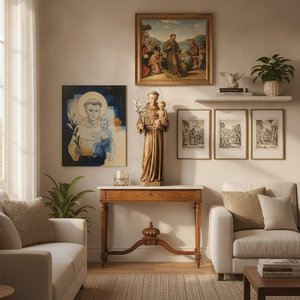
Discover the Divine: Inspiring Saint Anthony Artworks to Elevate Your Home Decor
Transform your home with the profound beauty of Saint Anthony artworks. Explore exquisite Baroque reproductions by Murillo and Zurbarán, hand-painted on 100% cotton canvas to bring divine serenity and timeless elegance to your interior design.

The Dramatic Flourish: Exploring the Baroque Movement's Enduring Legacy in Art History
Explore the dramatic world of Baroque art! Discover iconic artists like Caravaggio & Rubens, defining techniques, and its lasting impact on art history. Expert insights for collectors & enthusiasts at ArtsDot.

Baroque Masterpieces: 10 Paintings That Defined an Era |
Journey through the drama & grandeur of Baroque art! Explore 10 masterpieces by Caravaggio, Rembrandt, Rubens & more. Discover stunning oil paintings, rich colors & timeless stories. Find museum-quality reproductions at .

Theatricality & Triumph: Baroque Drama in Painting & Sculpture
Explore the dramatic world of Baroque art! Discover its history, defining characteristics, & lasting influence on painting & sculpture. Expert insights into Caravaggio, Zurbarán, and Bernini – plus high-quality reproductions at ArtsDot.