 Preview
 Send
Send Share
Share
 Details

 Download
 Similars
 X-Ray
X-Ray Diaporama
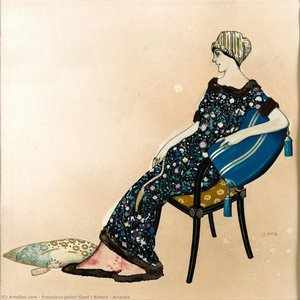
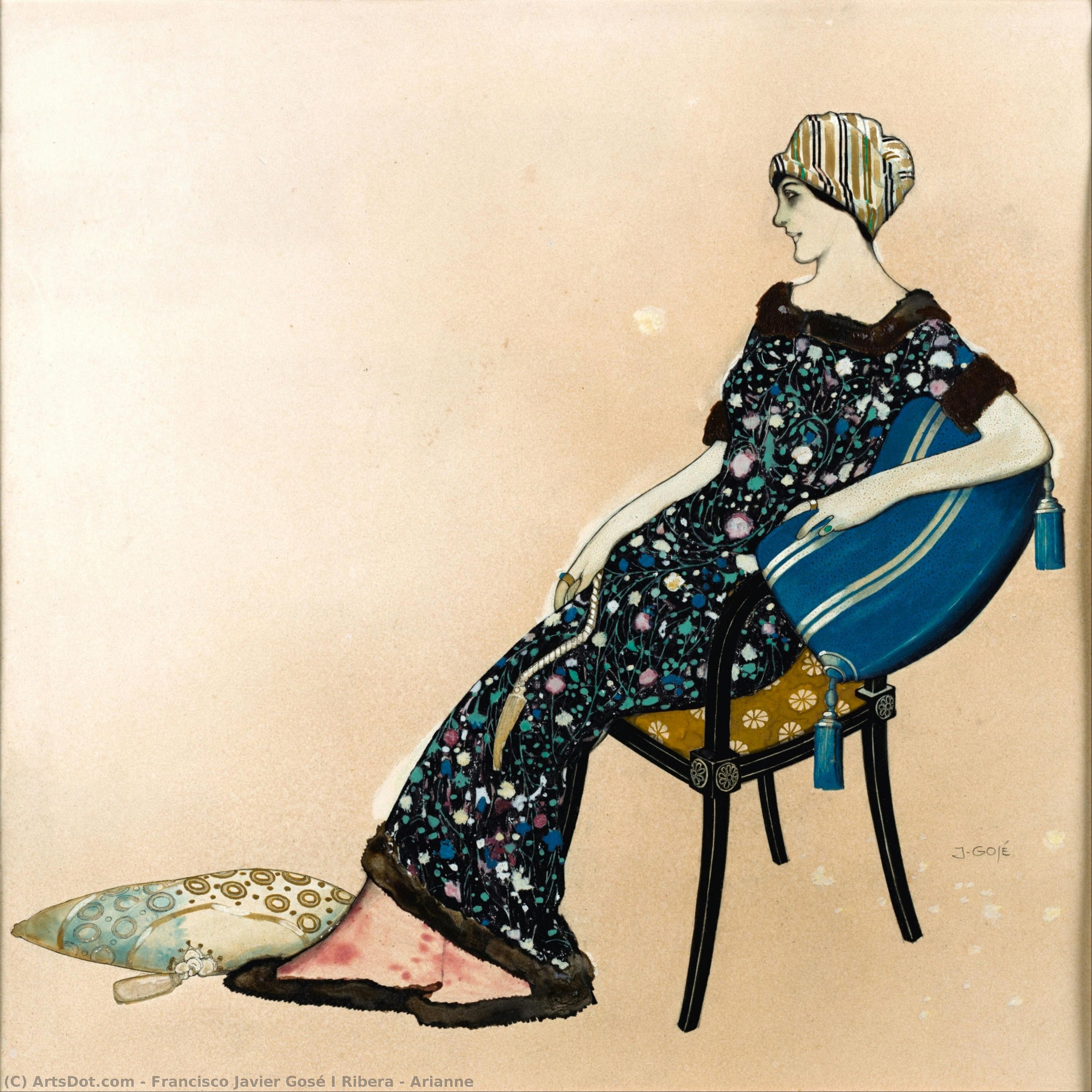
Arianne
 Oil
Oil- WallArt
- Art Nouveau
 1913
1913- Modern
 39.0 x 41.0 cm
 Museu d'Art Jaume Morera
 Read More
Hand Made Oil Reproduction
Hand-painted oil on canvas in your size and frame, made to order by our artists. ( Buy Print Buy Image)




P118B $10

P118H $10

P118W $10

P438Z $10

P508JH $12

P508YH $12

P805H $10

P805Z $10

P919BZ $10

P919G $10

P919XJ $10

P959ZH $10

P968JZ $12

W106C $8

W218G $10

W218JH $8

W218Y $10

W307PJ $10

W316G $10

W316PJ $8

W316Y $10

W398PJ $8

W4111J $10

W500HY $15

W500JH $15

W692G $12

W849H $8

W940BG $15

W953PJ $8




Pick from our preset sizes that match the artwork's original proportions.

You may enter your own dimensions to fit a specific frame or space. If your selected size does not match the original image's proportions, we will either crop the artwork or extend the painting with additional hand-painted elements. A digital mockup will be sent for your approval before production begins.
Please note that the on-screen preview does not reflect the actual cropping or extension. Only the mockup will accurately show the final composition.
While custom sizes are available, we recommend selecting a dimension from the predefined list to preserve the original proportions.
After order, ArtsDot.com team will email client for instructions and provide a mockup preview
Worldwide Delivery () in 3/4 weeks instead of standard 5 weeks. (17 August). No compromise on quality.

Free Worldwide Express Shipping

High-Quality Linen Canvas

Full Shipping Insurance

Customs Tax Refund Guarantee

True Color Matching Guarantee

60-Day Return Policy (Defects Only)

100% Money-Back Guarantee

Bulk Discount Offer
 Glass option is only available in size under 110 CM

Arianne
Reproduction Medium
Reproduction Size
-


Total Price
$ 263
Artwork Description
A Moment Frozen in Time: The Elegance of Arianne
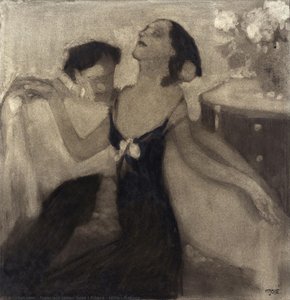
In the delicate brushstrokes of Francisco Javier Gosé i Ribera’s 1913 masterpiece, Arianne, we find ourselves transported to the sophisticated atmosphere of early twentieth-century Europe. This intimate portrait captures a woman seated with a poised, contemplative grace, her legs crossed in a manner that suggests both casual comfort and a deliberate, studied elegance. Draped in a soft dress and accented by a striking blue scarf that draws the eye toward her face, the subject embodies the very essence of the era's burgeoning fashion sensibilities. The composition is masterfully balanced; while the woman remains the undeniable focal point, the presence of a secondary figure in the periphery and the subtle placement of a handbag and a vase create a lived-in, narrative depth that invites the viewer to wonder about the story unfolding within this quiet room.
The painting serves as a breathtaking intersection of Art Nouveau fluidity and the structured sophistication of Art Deco. Gosé i Ribera, a pioneer of these movements, utilizes a color palette that is both soothing and visually stimulating. The deep blues of the chair's cushion and the subject's scarf harmonize with the surrounding elements, creating a cohesive aesthetic that feels both modern and timeless. His technique reflects his training at the Escola de la Llotja, where an appreciation for decorative arts was paramount. Every stroke contributes to a sense of texture and light, making the fabric of her clothing and the soft shadows of the room feel tangibly real to the observer.
A Legacy of Style and Sophistication
To possess or display a reproduction of Arianne is to bring a piece of art history into the contemporary home. Beyond its aesthetic beauty, the work carries the historical weight of the pre-war era, a time of immense artistic experimentation and social transition. Gosé i Ribera’s ability to blend satirical wit—often seen in his illustrations for Le Rire—with the refined elegance of portraiture makes this piece particularly unique for collectors. For interior designers, this artwork offers a versatile centerpiece; its classic subject matter complements both traditional, opulent settings and sleek, modern minimalist spaces, providing a touch of nostalgic luxury.
The emotional impact of Arianne lies in its quietude. It does not shout for attention through grand gestures but rather commands it through subtle nuance and an atmosphere of serene introspection. For the discerning art lover, this painting is more than just a depiction of a woman in a chair; it is a window into a lost world of grace, a celebration of form, and a testament to the enduring power of the decorative arts. Whether as an investment in fine art reproduction or a soulful addition to a curated gallery wall, Arianne remains a captivating jewel of Spanish modernism.
Related Artworks
Artist Biography
The Visionary Lines of Francisco Javier Gosé i Ribera
In the vibrant, shifting landscape of early twentieth-century Europe, few artists captured the pulse of modernity with as much wit and elegance as Francisco Javier Gosé i Ribera. Born in 1876 in the historic Spanish city of Alcalá de Henares, Gosé emerged not merely as a painter, but as a visual chronicler of an era caught between the flowing, organic grace of Art Nouveau and the sharp, geometric sophistication of Art Deco. His life, though tragically brief, was a whirlwind of intellectual pursuit and artistic experimentation that bridged the gap between Spanish tradition and Parisian avant-garde.
Gosé’s artistic foundation was laid in Barcelona, a city then breathing the air of Catalan Modernisme. At the Escola de la Llotja, he studied under the influential Josep Luís Pellicer, whose teachings emphasized the profound connection between decorative arts and architectural structure. This early immersion in design would become the heartbeat of Gosé’s later work. As he navigated the bohemian circles of Barcelona, particularly the legendary Els Quatre Gats—a sanctuary for icons like Picasso—he absorbed the rebellious spirit of the era, learning to use the line not just to depict form, but to convey social commentary and cultural movement.
A Parisian Odyssey and the Art of Satire
The year 1900 marked a transformative departure for the young artist when he relocated to Paris, the undisputed epicenter of the art world. It was in this cosmopolitan atmosphere that Gosé truly found his voice as an illustrator and satirist. He became a vital contributor to the most prestigious satirical publications of the day, including Le Rer and L’Assiette au Beurre. These platforms demanded a unique mastery of caricature—an ability to distill complex social hierarchies and political tensions into single, biting images. His work during this period was characterized by a remarkable precision, where every stroke served to highlight the nuances of fashion, class, and the burgeoning urban identity.
Beyond the boundaries of pure illustration, Gosé’s intellect sought deeper expressions of the human condition. He was a man of multifaceted talents, venturing into literary realms to explore themes of psychology and philosophy. This intellectual depth allowed his visual art to transcend mere decoration; his drawings often possessed an underlying tension, reflecting the psychological complexities of the modern subject. His ability to weave together the aesthetic beauty of fashion illustration with the sharp edge of social critique made him a singular figure in the European press.
Legacy and Artistic Significance
The historical significance of Francisco Javier Gosé i Ribera lies in his role as a stylistic bridge. He possessed the rare ability to synthesize the ornamental flourishes of the late nineteenth century with the streamlined, industrial aesthetic that would define the coming decades. His legacy is preserved through several key artistic contributions:
- Mastery of Style: The seamless integration of Art Nouveau curves with the structured elegance of Art Deco.
- Visual Storytelling: A profound contribution to the golden age of European satirical illustration, using art as a tool for social observation.
- Cultural Synthesis: Bringing the spirit of Spanish identity into the heart of the French avant-garde movement.
- Fashion and Form: Capturing the ephemeral beauty of early 20th-century fashion through a lens of sophisticated graphic design.
Though his life ended in 1915, leaving much of his potential unfulfilled, the impact of Gosé’s vision remains etched in the history of modern graphic art. He remains a celebrated figure for those who seek to understand the transition from the romanticism of the past to the bold, unapologetic modernity of the twentieth century.
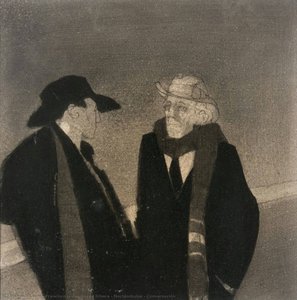
francisco javier gosé i ribera
1876 - 1915 , Spain
Quick Facts
- Artistic Movement Or Style: Art Nouveau & Art Deco
- Artists Or Movements Influenced By This Artist: ['Expressionism']
- Artists Who Influenced This Artist: ['José Luis Pellicer']
- Date Of Birth: 1876
- Date Of Death: 1915
- Full Name: Francisco Javier Gosé i Ribera
- Nationality: Spanish
- Notable Artworks:
- Noctámbulos / Conversación
- Arianne
- Idilio / Italiana
- Place Of Birth: Alcalá de Henares, Spain
Related Articles
Slate Blue Masterpieces: 10 Iconic Paintings & Timeless Home Decor Ideas
Immerse yourself in the captivating world of slate blue! Explore 10 iconic paintings by Monet, Van Gogh & Renoir. Discover their stories, techniques & find museum-quality art reproductions for your home at .
The Allure of Azure: Exploring the Symbolic & Aesthetic Depths of Blue in Art History
Explore the rich history of blue in art! Discover its symbolism, from ancient pigments to modern masterpieces by Kandinsky & Seurat. Uncover the psychological impact and cultural meanings behind this captivating hue.
Rafael de Penagos: A Study in Spanish Portraiture & Artistic Identity
Explore the life & art of Rafael de Penagos, a leading Spanish Art Deco illustrator. Discover his iconic 'Penagos Woman', commercial work, and lasting legacy. Learn about this pivotal figure in 20th-century Spanish art history.

The Gilded Age Reimagined: Exploring the Aesthetic Principles & Enduring Legacy of Art Deco
Explore the captivating world of Art Deco! Discover its origins, defining features, cultural impact & enduring legacy. Expert insights for collectors and design enthusiasts. Shop handmade reproductions at ArtsDot.
The Gleaming Geometry of Desire: Exploring Art Deco's Enduring Influence on Visual Culture
Explore the captivating world of Art Deco! Discover its history, key characteristics, enduring influence on design & collecting with expert insights from ArtsDot.com.