 Preview
 Send
Send Share
Share
 Details

 Download
 Similars
 X-Ray
X-Ray Diaporama
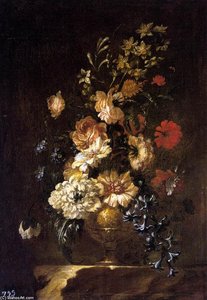
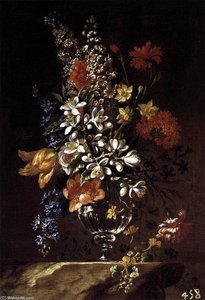
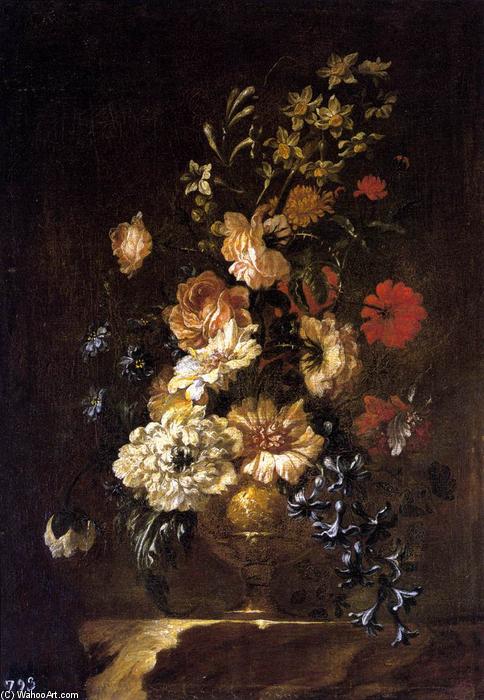
Vase of Flowers
 Baroque
 1690
1690 60.0 x 41.0 cm
 Monasterio de El Escorial
 Read More
Hand Made Oil Reproduction
Hand-painted oil on canvas in your size and frame, made to order by our artists. ( Buy Print Buy Image)




































Pick from our preset sizes that match the artwork's original proportions.

You may enter your own dimensions to fit a specific frame or space. If your selected size does not match the original image's proportions, we will either crop the artwork or extend the painting with additional hand-painted elements. A digital mockup will be sent for your approval before production begins.
Please note that the on-screen preview does not reflect the actual cropping or extension. Only the mockup will accurately show the final composition.
While custom sizes are available, we recommend selecting a dimension from the predefined list to preserve the original proportions.
After order, ArtsDot.com team will email client for instructions and provide a mockup preview
Worldwide Delivery () in 3/4 weeks instead of standard 5 weeks. (22 August). No compromise on quality.

Free Worldwide Express Shipping

High-Quality Linen Canvas

Full Shipping Insurance

Customs Tax Refund Guarantee

True Color Matching Guarantee

60-Day Return Policy (Defects Only)

100% Money-Back Guarantee

Bulk Discount Offer
 Glass option is only available in size under 110 CM

Vase of Flowers
Reproduction Medium
Reproduction Size
-


Total Price
$ 263
Artwork Description
The Artist and His Style
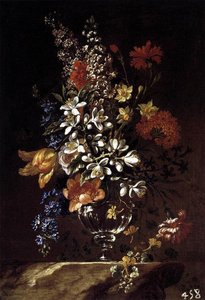
Francisco Pérez Sierra was a Neapolitan painter of Spanish origin, known for his works in the Baroque style. His paintings often featured still life compositions, including flowers, fruits, and other objects. The Vase of Flowers is a prime example of his skill in this genre, with its beautiful arrangement of blooms and delicate petals. Key Features of the Painting The painting features a stunning bouquet of flowers, including roses, lilies, and other varieties. The colors are rich and varied, with shades of red, yellow, white, and green dominating the palette. The vase holding the bouquet is not clearly visible due to the abundance of flowers, but it seems to be made of a dark material, possibly ceramic or metal.- The painting is characterized by its use of chiaroscuro, with strong contrasts between light and dark.
- The artist's attention to detail is evident in the delicate petals and leaves of the flowers.
- The composition is balanced and harmonious, with a sense of movement and energy.
For more information on Francisco Pérez Sierra and his works, visit Wikipedia. To explore more artworks and reproductions, visit ArtsDot.com.
Related Artworks
Artist Biography
The Dramatic Legacy of Francisco Pérez Sierra
In the grand, theatrical tapestry of the Spanish Baroque, few artists possessed the ability to navigate the extremes of human experience as gracefully as Francisco Pérez Sierra. A painter of profound duality, Sierra’s oeuvre oscillates between the thunderous chaos of the battlefield and the hushed, fragrant stillness of a floral arrangement. Born in Naples around 1627, his very identity was a bridge between cultures; he was a Neapolitan painter of Spanish descent, the son of a Spanish general, a lineage that perhaps prepared him for a life spent traversing the artistic landscapes of both Italy and Spain. His early years in Naples provided him with a foundation steeped in the dramatic tenebrism of the Italian masters, a style defined by sharp contrasts between light and shadow that would later become his signature method for breathing life into the most turbulent scenes.
The seeds of Sierra's mastery were sown under the watchful eye of Aniello Falcone, a preeminent specialist in battle painting. From Falcone, Sierra inherited more than just technical precision; he learned to capture the visceral energy of movement and the psychological weight of conflict. This training was further refined through his association with Juan de Toledo, whose influence helped steer Sierra toward the prestigious artistic circles of Madrid. As he transitioned from the vibrant, sun-drenched atmosphere of Naples to the austere yet opulent court of the Habsburg monarchs, Sierra’s work began to reflect a sophisticated blend of Italian dynamism and Spanish gravity.
A Master of Contrast: From Warfare to Still Life
To study the works of Pérez Sierra is to witness a remarkable evolution of genre. While he achieved significant renown for his ability to depict the grandeur and carnage of war, he was equally adept at capturing the ephemeral beauty of the natural world. His battle scenes were characterized by a meticulous attention to detail—the glint of steel, the billowing smoke, and the dramatic interplay of light across armored figures—all rendered with a sense of epic scale. Yet, in stark contrast to these monumental struggles, Sierra found a different kind of intensity in his still lifes. In works such as his celebrated Vase of Flowers, created around 1690, he demonstrated an exquisite sensitivity to texture and color.
In these floral compositions, the artist moved away from the sweeping narratives of combat to focus on the intimate and the delicate. He utilized a rich palette of reds, yellows, and whites to bring roses and lilies to life, using chiaroscuro to give each petal a sculptural presence. This ability to command both the epic and the intimate allowed him to serve a wide range of patrons, from religious institutions seeking devotional imagery to the royal court desiring decorative splendor. His versatility was not merely a matter of skill but a profound understanding of how light could be used to evoke either the terror of battle or the serene contemplation of nature.
Courtly Success and Artistic Influence
Sierra’s career in Madrid was marked by significant triumphs and high-profile commissions that cemented his status within the Spanish Golden Age. His presence at court allowed him to collaborate with some of the most influential figures of his era, including Matías de Torres and Francisco Rizi. These professional intersections enriched his style, integrating the monumental fresco techniques required for palace decorations with the refined oil painting traditions of the period. His work on large-scale projects, such as the frescoes for the Huerta de Sora, showcased a mastery of composition that could command vast architectural spaces.
Beyond his individual canvases, Sierra’s historical significance lies in his role as a cultural conduit. By bringing the stylistic innovations of Naples to the heart of Madrid, he helped sustain the vitality of the Baroque movement in Spain. His religious commissions, though many have been lost to time due to the destruction of various convents, once adorned the sacred spaces of the Trinitarias and San Plácido, providing a visual language for faith through his depictions of the Immaculate Conception and various saints. Today, the surviving fragments of his legacy—housed in prestigious institutions like the Museo del Prado and the Royal Palace in Madrid—stand as a testament to an artist who could find the sublime in both the roar of a charging cavalry and the silent bloom of a single rose.
francisco pérez sierra
1627 - 1709 , Italy
Quick Facts
- Artistic Movement Or Style: Baroque
- Artists Or Movements Influenced By This Artist: ['Diego Velázquez']
- Artists Who Influenced This Artist: ['Francisco de Zurbarán']
- Date Of Birth: Naples, Italy (1627)
- Date Of Death: 1709
- Full Name: Francisco Pérez Sierra
- Nationality: Spanish
- Notable Artworks:
- Vase of Flowers
- Saint Joachim
- Place Of Birth: Naples
Related Articles

Goya's Masterpieces: Explore 25 Iconic Paintings & Art Prints | ArtsDot
Delve into the world of Francisco Goya with ArtsDot. Explore 25 iconic paintings – from 'The Third of May' to his haunting Black Paintings. Discover the stories, techniques & emotions behind these Spanish masterpieces. Find museum-quality art reproductions for your home at ArtsDot.com!
Decoding Baroque Grandeur: A Guide to the Drama and Emotion of 17th-Century Art
Explore the breathtaking drama of 17th-century Baroque art. Our expert guide decodes the use of chiaroscuro, emotional intensity, and historical grandeur to help you appreciate and curate timeless masterpieces for your collection.
Silent Narratives: Exploring the Enduring Appeal of Still Life Painting Across Centuries
Explore the rich history of still life painting with ArtsDot. Discover Dutch Masters, decode vanitas symbolism & learn about collecting timeless art. Expert insights and museum-quality reproductions.

The Dramatic Flourish: Exploring the Baroque Movement's Enduring Legacy in Art History
Explore the dramatic world of Baroque art! Discover iconic artists like Caravaggio & Rubens, defining techniques, and its lasting impact on art history. Expert insights for collectors & enthusiasts at ArtsDot.

Baroque Masterpieces: 10 Paintings That Defined an Era |
Journey through the drama & grandeur of Baroque art! Explore 10 masterpieces by Caravaggio, Rembrandt, Rubens & more. Discover stunning oil paintings, rich colors & timeless stories. Find museum-quality reproductions at .