 Preview
 Send
Send Share
Share
 Details

 Download
 Similars
 X-Ray
X-Ray Diaporama
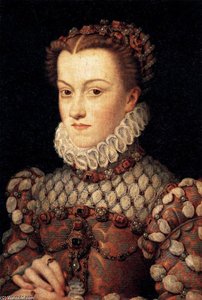
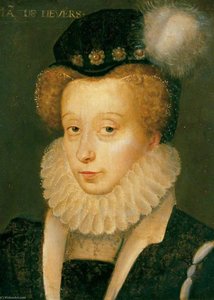
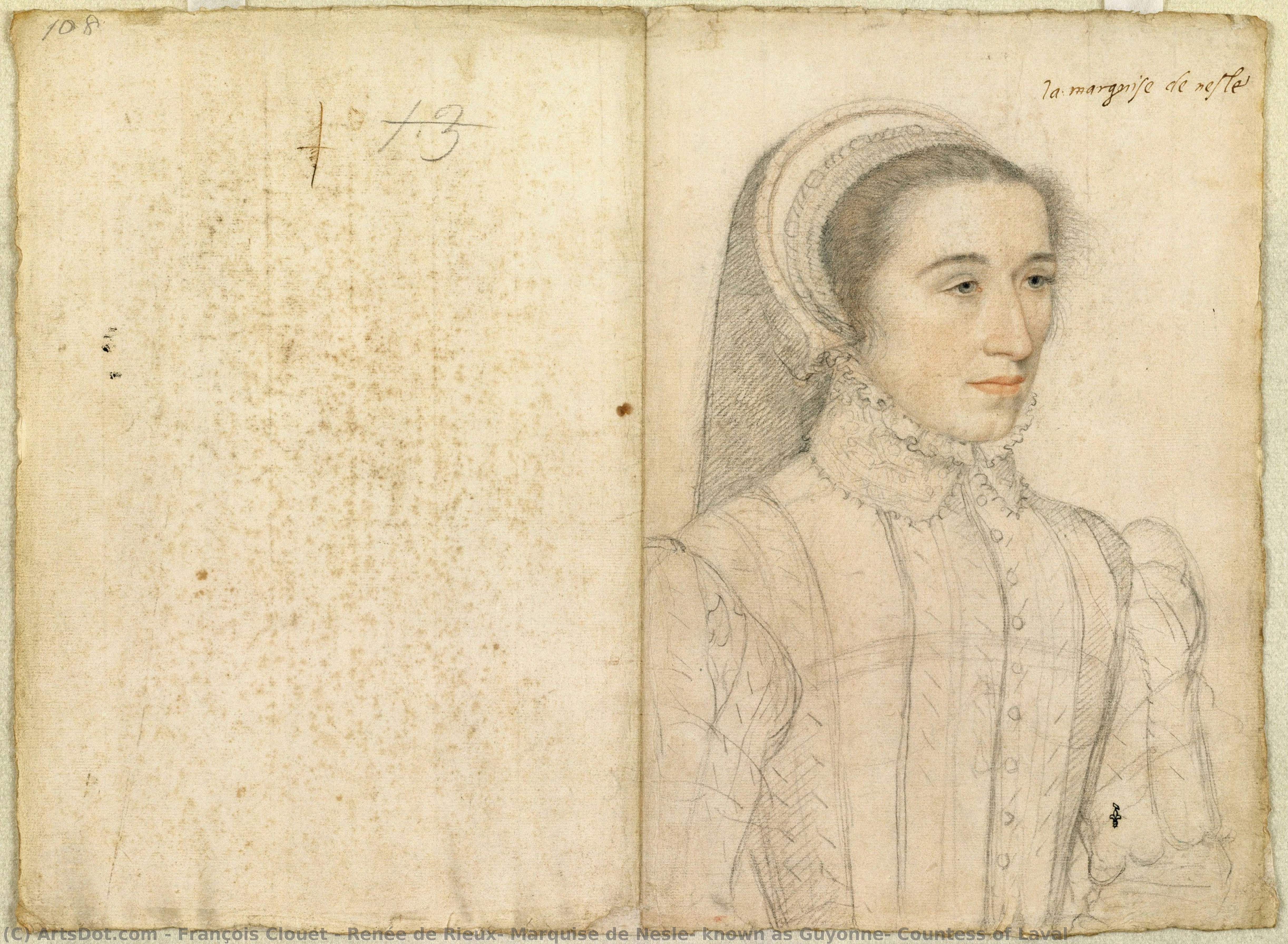
Renée de Rieux, Marquise de Nesle, known as Guyonne, Countess of Laval


 Read More
Hand Made Oil Reproduction
Hand-painted oil on canvas in your size and frame, made to order by our artists. ( Buy Print Buy Image)




P118B $10

P118H $10

P118W $10

P438Z $10

P508JH $12

P508YH $12

P805H $10

P805Z $10

P919BZ $10

P919G $10

P919XJ $10

P959ZH $10

P968JZ $12

W106C $8

W218G $10

W218JH $8

W218Y $10

W307PJ $10

W316G $10

W316PJ $8

W316Y $10

W398PJ $8

W4111J $10

W500HY $15

W500JH $15

W692G $12

W849H $8

W940BG $15

W953PJ $8




Pick from our preset sizes that match the artwork's original proportions.

You may enter your own dimensions to fit a specific frame or space. If your selected size does not match the original image's proportions, we will either crop the artwork or extend the painting with additional hand-painted elements. A digital mockup will be sent for your approval before production begins.
Please note that the on-screen preview does not reflect the actual cropping or extension. Only the mockup will accurately show the final composition.
While custom sizes are available, we recommend selecting a dimension from the predefined list to preserve the original proportions.
After order, ArtsDot.com team will email client for instructions and provide a mockup preview
Worldwide Delivery () in 3/4 weeks instead of standard 5 weeks. (26 August). No compromise on quality.

Free Worldwide Express Shipping

High-Quality Linen Canvas

Full Shipping Insurance

Customs Tax Refund Guarantee

True Color Matching Guarantee

60-Day Return Policy (Defects Only)

100% Money-Back Guarantee

Bulk Discount Offer
 Glass option is only available in size under 110 CM

Renée de Rieux, Marquise de Nesle, known as Guyonne, Countess of Laval
Reproduction Medium
Reproduction Size
-


Total Price
$ 263
Artwork Description
A Glimpse into the Valois Court
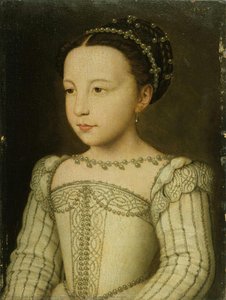
In the delicate interplay of light and shadow captured by François Clouet, we find more than just a portrait; we encounter a window into the soul of the French Renaissance. His depiction of Renée de Rieux, Marquise de Nesle—famously known as Guyonne, Countess of Laval—serves as a profound testament to an era defined by unparalleled courtly elegance and aristocratic poise. Created around 1560, this work transcends mere likeness, offering a window into the sophisticated atmosphere of the Valois monarchy. As Clouet renders the Marquise, he does not simply document her features but breathes life into the very essence of her station, capturing a moment of quiet dignity that has resonated through centuries of art history.
The subject herself, a figure of significant importance within the royal circles, is presented with a solemnity that commands respect. Clouet’s mastery lies in his ability to balance the external trappings of nobility with an intimate psychological depth. There is a palpable sense of presence in her gaze, a serious expression that suggests a woman well-acquainted with the weight of her lineage and the complexities of court life. For the modern collector or interior designer, this piece offers a sense of historical gravity, making it an ideal centerpiece for spaces that require a touch of timeless authority and intellectual refinement.
The Mastery of Line and Texture
Technically, Clouet’s work is a triumph of the Flemish naturalism blended with the emerging grace of the Italian Renaissance. While the medium often utilized fine chalks, colored pencils, and sanguine on paper, the visual impact is one of incredible richness and tactile detail. One cannot help but be captivated by the meticulous rendering of the Marquise’s attire; the intricate patterns of her lace headband and the crisp, architectural folds of her ruffled collar are executed with a precision that borders on the miraculous. Every stroke of the artist's hand seems dedicated to celebrating the textures of the 16th century—the softness of skin, the stiffness of fine linen, and the delicate complexity of woven thread.
This obsession with detail serves a greater symbolic purpose. The ornamentation of the subject is not merely decorative; it is a visual language of status and power. By highlighting the craftsmanship of her clothing, Clouet simultaneously highlights the wealth and stability of the French court. For those seeking to adorn a home with high-quality reproductions, the depth of this technique provides a stunning visual complexity that holds the eye, offering different nuances of beauty upon every viewing. The interplay between the fine lines of the drawing and the soft tonal transitions creates a luminous quality that brings a sense of light and life to any gallery or living space.
An Eternal Legacy for the Modern Collector
To possess a reproduction of this Clouet masterpiece is to invite the spirit of the Renaissance into the contemporary world. The emotional impact of the portrait lies in its quietude; it does not shout for attention but rather commands it through a dignified, understated beauty. It evokes a sense of nostalgia for an age of chivalry and refined aesthetics, making it a perfect choice for curated collections that value historical narrative and artistic excellence.
Whether integrated into a classical interior or used to provide a sophisticated contrast within a modern minimalist setting, this artwork acts as a bridge between eras. It offers more than just decoration; it provides a conversation piece that speaks of heritage, the meticulous skill of the Old Masters, and the enduring power of the human portrait. For the discerning eye, Clouet’s work remains an incomparable standard of grace, making it a timeless investment for any lover of fine art.
Related Artworks

Artist Biography
A Legacy of Likeness: The World of François Clouet
François Clouet, a name synonymous with the refined portraiture of the French Renaissance, emerged from a lineage steeped in artistic skill and courtly favor. Born around 1510 in Tours, France, his life unfolded against a backdrop of evolving artistic sensibilities and the opulent world of the Valois monarchy. He wasn’t merely a painter; he was a chronicler of an era, capturing the essence of kings, queens, and courtiers with a meticulousness that continues to captivate viewers today. The shadow of his father, Jean Clouet, loomed large – both artists shared not only a profession but also the familiar nickname ‘Janet,’ leading to occasional confusion in attributing their works across generations. Yet, François carved his own distinct path, blending Flemish naturalism with an emerging Italianate grace, and establishing himself as one of France’s most celebrated portraitists.Inheriting a Tradition: Early Life and Artistic Formation
The early years of François Clouet remain somewhat veiled in historical obscurity, but his artistic trajectory was undeniably shaped by the legacy of his father. Jean Clouet, originating from the Southern Netherlands, brought with him to the French court the meticulous detail and realistic approach characteristic of Flemish painting. This foundation formed the bedrock of François’s training. A pivotal moment arrived in 1541 when François inherited his father's estate, formally stepping into his artistic inheritance and assuming the responsibilities that came with it. This wasn’t simply a transfer of property; it was an assumption of a role within the very fabric of the French court. The Clouet family also enjoyed a unique connection to the Italian Renaissance through Jean’s time in Amboise, exposing François to the burgeoning ideals and innovative techniques emanating from Italy – a subtle but significant influence that would later manifest in his work. He absorbed not just technique, but an understanding of how art could serve as both documentation and celebration of power and status.The Art of Revelation: Style and Major Works
François Clouet’s oeuvre is defined by a remarkable precision and elegance. His portraits weren't simply likenesses; they were insightful studies of character, capturing not only physical features but also the personality and social standing of his subjects. He possessed an extraordinary ability to convey royal authority and sophistication, as evidenced in several notable depictions of Francis I, examples of which reside in prestigious collections like the Uffizi Gallery and the Louvre Museum. Beyond Francis I, Clouet’s brush immortalized other key figures of the era. He likely painted portraits of Catherine de' Medici at Versailles, contributing to a visual record of her influential reign. Perhaps one of his most celebrated achievements is the chalk drawing of Mary, Queen of Scots, held in the Bibliothèque nationale – a work that showcases his mastery of capturing delicate features and conveying emotional depth with astonishing subtlety. Other notable works include portraits of Elizabeth of Austria (Louvre), Marguerite of France (Chantilly), and Charles IX (Château de Chantilly).A Defining Aesthetic: Characteristics of Clouet’s Art
Several hallmarks define François Clouet's distinctive style.- Elaborate Detail: A meticulous attention to detail permeates his work, evident in the intricate rendering of clothing, jewelry, and facial features – every element contributing to a sense of realism and opulence.
- Accurate Drawing: Clouet’s portraits are grounded in precise anatomical rendering and skillful use of line, demonstrating a mastery of draftsmanship that underpinned his artistic vision.
- Exquisite Completeness: His compositions convey a sense of wholeness and personality, going beyond mere physical representation to capture the inner life of his subjects. He didn’t just paint faces; he painted individuals.
A Lasting Impression: Historical Significance and Legacy
François Clouet’s contributions to French Renaissance art are profound. He played a crucial role in establishing portraiture as a prominent genre in France, elevating the status of the artist and providing invaluable visual records of the royal court. He bridged the gap between medieval artistic traditions and the emerging Renaissance ideals, incorporating naturalism and humanistic principles into his work. As a court painter for multiple French monarchs – Francis I, Henry II, Francis II, and Charles IX – he documented the lives and appearances of key figures in French history, creating a visual archive that continues to inform our understanding of this period. His meticulous style and attention to detail profoundly influenced subsequent generations of French portraitists, solidifying his place as a pivotal figure in the development of French art. François Clouet died on December 22, 1572, shortly after the tumultuous St. Bartholomew's Day Massacre – a poignant end for an artist who had dedicated his life to immortalizing the world around him. His will offers glimpses into his personal life and financial standing, further cementing his legacy as both an artistic master and a significant figure in French society.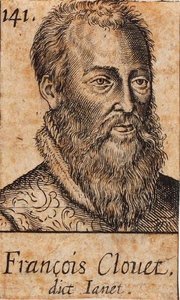
François Clouet
1510 - 1572 , France
Quick Facts
- Artistic Movement Or Style: Renaissance portraiture
- Artists Or Movements Influenced By This Artist: ['French portraitists']
- Artists Who Influenced This Artist:
- Jean Clouet
- Leonardo da Vinci
- Date Of Birth: c. 1510
- Date Of Death: 1572
- Full Name: François Clouet
- Nationality: French
- Notable Artworks:
- The Love Letter
- Portrait of Henri II
- Francis I, King of France
- Mary, Queen of Scots
- Place Of Birth: Tours, France
Related Articles

Goya's Masterpieces: Explore 25 Iconic Paintings & Art Prints | ArtsDot
Delve into the world of Francisco Goya with ArtsDot. Explore 25 iconic paintings – from 'The Third of May' to his haunting Black Paintings. Discover the stories, techniques & emotions behind these Spanish masterpieces. Find museum-quality art reproductions for your home at ArtsDot.com!

About Us
Discover our story! We bring world-class art into your life through expert curation, personalized creations, and free previews. Trusted by individuals and businesses since 2000.
Maurice Quentin de La Tour: Light, Shadow & the Rococo Portrait
Explore the captivating world of Maurice Quentin de La Tour, a master of Rococo portraiture. Discover his innovative pastel techniques, intimate depictions of French aristocracy, and lasting artistic legacy. Learn more at ArtsDot.
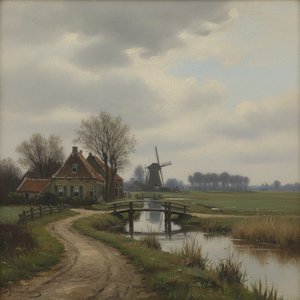
Jacob Henricus Maris: A Master of Dutch Atmospheric Realism & the Intimate Landscape
Explore the captivating world of Jacob Henricus Maris, a leading figure of the Dutch Hague School. Discover his atmospheric landscapes, signature brushstrokes & lasting influence on 19th-century art. Learn more at ArtsDot.
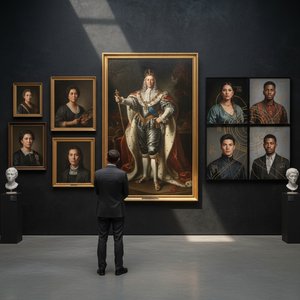
The Enduring Legacy of Formal Portraiture: Power, Identity & Artistic Exploration
Explore the rich history of formal portraiture & its enduring power to capture identity and shape perception. Discover investment-worthy artworks, expert appraisals, and custom reproduction services at ArtsDot.