 Preview
 Send
Send Share
Share
 Details

 Download
 Similars
 X-Ray
X-Ray Diaporama
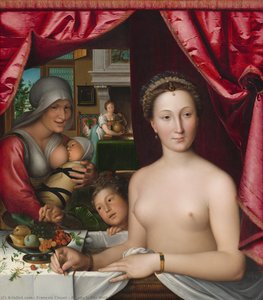
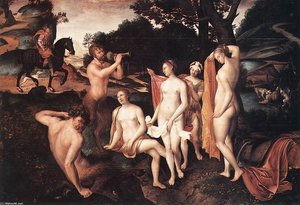
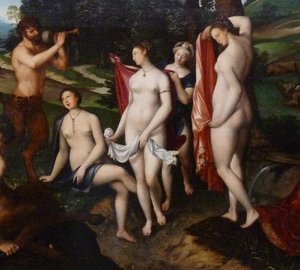
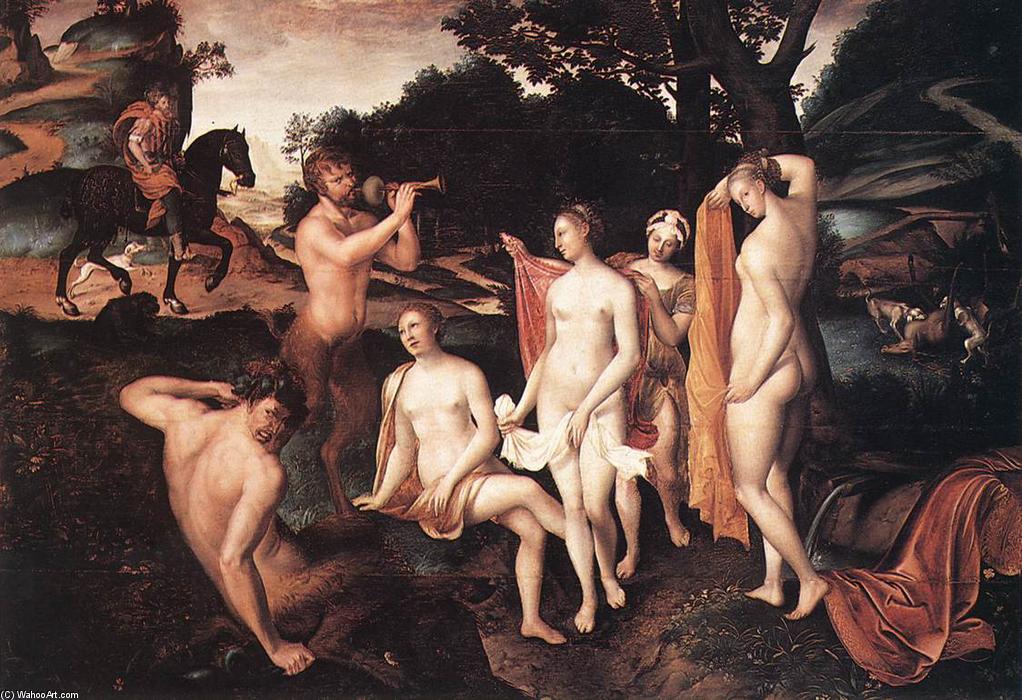
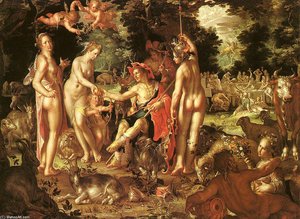
The Bath of Diana
 Oil On Panel
- Renaissance Mannerism
 1550
1550 78.0 x 110.0 cm
 Museu de Arte
 Read More
Hand Made Oil Reproduction
Hand-painted oil on canvas in your size and frame, made to order by our artists. ( Buy Print Buy Image)




P118B $10

P118H $10

P118W $10

P438Z $10

P508JH $12

P508YH $12

P805H $10

P805Z $10

P919BZ $10

P919G $10

P919XJ $10

P959ZH $10

P968JZ $12

W106C $8

W218G $10

W218JH $8

W218Y $10

W307PJ $10

W316G $10

W316PJ $8

W316Y $10

W398PJ $8

W4111J $10

W500HY $15

W500JH $15

W692G $12

W849H $8

W940BG $15

W953PJ $8




Pick from our preset sizes that match the artwork's original proportions.

You may enter your own dimensions to fit a specific frame or space. If your selected size does not match the original image's proportions, we will either crop the artwork or extend the painting with additional hand-painted elements. A digital mockup will be sent for your approval before production begins.
Please note that the on-screen preview does not reflect the actual cropping or extension. Only the mockup will accurately show the final composition.
While custom sizes are available, we recommend selecting a dimension from the predefined list to preserve the original proportions.
After order, ArtsDot.com team will email client for instructions and provide a mockup preview
Worldwide Delivery () in 3/4 weeks instead of standard 5 weeks. (20 August). No compromise on quality.

Free Worldwide Express Shipping

High-Quality Linen Canvas

Full Shipping Insurance

Customs Tax Refund Guarantee

True Color Matching Guarantee

60-Day Return Policy (Defects Only)

100% Money-Back Guarantee

Bulk Discount Offer
 Glass option is only available in size under 110 CM

The Bath of Diana
Reproduction Medium
Reproduction Size
-


Total Price
$ 263
Artwork Description
A Moment of Grace and Intrigue: Unveiling François Clouet’s “The Bath of Diana”
François Clouet's "The Bath of Diana," painted around 1550, isn’t merely a depiction of a Roman goddess; it’s a meticulously crafted tableau brimming with political allegory and Renaissance artistry. Housed within the Museo de Arte in São Paulo, Brazil, this oil-on-panel masterpiece invites us into a serene yet subtly charged scene—a world of courtly intrigue, mythological grace, and the delicate dance between beauty and power.
At first glance, the painting presents a captivating vision: Diana, the huntress goddess, reclines in a verdant grove, attended by her nymphs and satyrs. The composition is remarkably balanced, drawing the eye through a carefully orchestrated arrangement of figures engaged in various activities—conversation, music, observation, and playful pursuit. Yet, beneath this surface tranquility lies a complex web of symbolism, reflecting the turbulent political landscape of 16th-century France. Clouet’s skill isn't just in rendering form; it’s in imbuing every detail with meaning.
Renaissance Precision and Flemish Influence
Clouet, a pivotal figure bridging the gap between the Northern Renaissance and Italian High Renaissance styles, masterfully combines meticulous realism—inherited from his training under his father, Jean Clouet—with an emerging Italianate elegance. The figures are rendered with astonishing detail: the delicate folds of fabric, the subtle expressions on faces, the intricate patterns adorning jewelry – all speak to a profound understanding of human anatomy and texture. Notice particularly the influence of Flemish naturalism in the rendering of light and shadow, creating a palpable sense of depth and volume within the scene.
The painting’s technique is equally impressive. Clouet employs a layering approach, building up color gradually with thin glazes of oil paint, resulting in a luminous quality that captures the play of sunlight filtering through the foliage. The use of perspective—though not entirely linear—creates a convincing illusion of space, drawing the viewer into this idyllic, yet subtly unsettling, world.
Decoding the Allegory: Politics and Power
“The Bath of Diana” is widely interpreted as an allegorical representation of the political machinations within the French court. The nymph seated on the black cloth—Catherine de’ Medici—is a key element in this interpretation, her mourning attire signifying the recent death of Henry II. The goddess Diana herself embodies both chastity and power, while the satyrs represent the forces of temptation and discord. The presence of Mary Stuart, Queen of Scots, is further reinforced by the thistle motif, a symbol of her Scottish heritage.
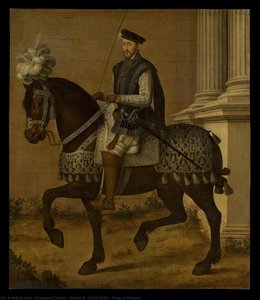
Beyond these specific figures, the painting’s composition—the arrangement of bodies, the placement of objects—suggests a broader commentary on the instability of the era. The scene feels poised between celebration and impending doom, mirroring the political turmoil that gripped France during this period. The inclusion of the equestrian portrait of Henry II in the background adds another layer of complexity, hinting at the legacy of past conflicts.
A Timeless Masterpiece: Emotion and Enduring Appeal
“The Bath of Diana” transcends its historical context to offer a profound meditation on beauty, power, and mortality. Clouet’s ability to capture not only physical likeness but also the emotional essence of his subjects is truly remarkable. The painting evokes a sense of serenity and grace, yet it also carries an undercurrent of melancholy—a reminder of the fleeting nature of life and the enduring consequences of political ambition.
Whether viewed as a historical document, a work of art, or simply a source of aesthetic pleasure, “The Bath of Diana” remains a testament to François Clouet’s genius and a captivating window into the world of 16th-century France. Its enduring appeal lies in its ability to simultaneously delight and intrigue, inviting viewers to unravel its layers of meaning and appreciate the artistry of one of Renaissance Europe's most accomplished painters.
Related Artworks
Artist Biography
A Legacy of Likeness: The World of François Clouet
François Clouet, a name synonymous with the refined portraiture of the French Renaissance, emerged from a lineage steeped in artistic skill and courtly favor. Born around 1510 in Tours, France, his life unfolded against a backdrop of evolving artistic sensibilities and the opulent world of the Valois monarchy. He wasn’t merely a painter; he was a chronicler of an era, capturing the essence of kings, queens, and courtiers with a meticulousness that continues to captivate viewers today. The shadow of his father, Jean Clouet, loomed large – both artists shared not only a profession but also the familiar nickname ‘Janet,’ leading to occasional confusion in attributing their works across generations. Yet, François carved his own distinct path, blending Flemish naturalism with an emerging Italianate grace, and establishing himself as one of France’s most celebrated portraitists.Inheriting a Tradition: Early Life and Artistic Formation
The early years of François Clouet remain somewhat veiled in historical obscurity, but his artistic trajectory was undeniably shaped by the legacy of his father. Jean Clouet, originating from the Southern Netherlands, brought with him to the French court the meticulous detail and realistic approach characteristic of Flemish painting. This foundation formed the bedrock of François’s training. A pivotal moment arrived in 1541 when François inherited his father's estate, formally stepping into his artistic inheritance and assuming the responsibilities that came with it. This wasn’t simply a transfer of property; it was an assumption of a role within the very fabric of the French court. The Clouet family also enjoyed a unique connection to the Italian Renaissance through Jean’s time in Amboise, exposing François to the burgeoning ideals and innovative techniques emanating from Italy – a subtle but significant influence that would later manifest in his work. He absorbed not just technique, but an understanding of how art could serve as both documentation and celebration of power and status.The Art of Revelation: Style and Major Works
François Clouet’s oeuvre is defined by a remarkable precision and elegance. His portraits weren't simply likenesses; they were insightful studies of character, capturing not only physical features but also the personality and social standing of his subjects. He possessed an extraordinary ability to convey royal authority and sophistication, as evidenced in several notable depictions of Francis I, examples of which reside in prestigious collections like the Uffizi Gallery and the Louvre Museum. Beyond Francis I, Clouet’s brush immortalized other key figures of the era. He likely painted portraits of Catherine de' Medici at Versailles, contributing to a visual record of her influential reign. Perhaps one of his most celebrated achievements is the chalk drawing of Mary, Queen of Scots, held in the Bibliothèque nationale – a work that showcases his mastery of capturing delicate features and conveying emotional depth with astonishing subtlety. Other notable works include portraits of Elizabeth of Austria (Louvre), Marguerite of France (Chantilly), and Charles IX (Château de Chantilly).A Defining Aesthetic: Characteristics of Clouet’s Art
Several hallmarks define François Clouet's distinctive style.- Elaborate Detail: A meticulous attention to detail permeates his work, evident in the intricate rendering of clothing, jewelry, and facial features – every element contributing to a sense of realism and opulence.
- Accurate Drawing: Clouet’s portraits are grounded in precise anatomical rendering and skillful use of line, demonstrating a mastery of draftsmanship that underpinned his artistic vision.
- Exquisite Completeness: His compositions convey a sense of wholeness and personality, going beyond mere physical representation to capture the inner life of his subjects. He didn’t just paint faces; he painted individuals.
A Lasting Impression: Historical Significance and Legacy
François Clouet’s contributions to French Renaissance art are profound. He played a crucial role in establishing portraiture as a prominent genre in France, elevating the status of the artist and providing invaluable visual records of the royal court. He bridged the gap between medieval artistic traditions and the emerging Renaissance ideals, incorporating naturalism and humanistic principles into his work. As a court painter for multiple French monarchs – Francis I, Henry II, Francis II, and Charles IX – he documented the lives and appearances of key figures in French history, creating a visual archive that continues to inform our understanding of this period. His meticulous style and attention to detail profoundly influenced subsequent generations of French portraitists, solidifying his place as a pivotal figure in the development of French art. François Clouet died on December 22, 1572, shortly after the tumultuous St. Bartholomew's Day Massacre – a poignant end for an artist who had dedicated his life to immortalizing the world around him. His will offers glimpses into his personal life and financial standing, further cementing his legacy as both an artistic master and a significant figure in French society.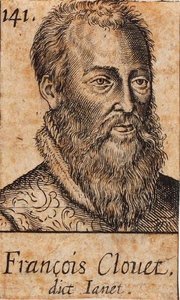
François Clouet
1510 - 1572 , France
Quick Facts
- Artistic Movement Or Style: Renaissance portraiture
- Artists Or Movements Influenced By This Artist: ['French portraitists']
- Artists Who Influenced This Artist:
- Jean Clouet
- Leonardo da Vinci
- Date Of Birth: c. 1510
- Date Of Death: 1572
- Full Name: François Clouet
- Nationality: French
- Notable Artworks:
- The Love Letter
- Portrait of Henri II
- Francis I, King of France
- Mary, Queen of Scots
- Place Of Birth: Tours, France
Related Articles
François Boucher: Rococo Master of Myth, Sensuality, and the French Court
Explore the captivating world of François Boucher, master of Rococo painting! Discover his iconic works, aristocratic patronage, and lasting influence on French art history. Learn more at ArtsDot.
Jacob Henricus Maris: A Master of Dutch Atmospheric Realism & the Intimate Landscape
Explore the captivating world of Jacob Henricus Maris, a leading figure of the Dutch Hague School. Discover his atmospheric landscapes, signature brushstrokes & lasting influence on 19th-century art. Learn more at ArtsDot.
François Flameng: Bridging Academic Tradition & Impressionistic Sensibility
Explore the captivating works of François Flameng, a celebrated French painter bridging academic tradition & Impressionistic sensibilities. Discover his portraits, landscapes, and poignant WWI art with insights from ArtsDot.
Charles Le Brun: Master of French Baroque Classicism & His Enduring Legacy
Explore the life & art of Charles Le Brun, master of French Baroque Classicism. Discover his royal commissions, influence on Versailles, and enduring legacy through detailed analysis & stunning artworks.
Simon Vouet: A Baroque Master's Journey from Italian Influence to French Classicism
Explore the life & art of Simon Vouet, a pivotal French Baroque painter who introduced Italian styles to France. Discover his masterpieces and lasting influence on 17th-century art.