 Preview
 Send
Send Share
Share
 Details

 Download
 Similars
 X-Ray
X-Ray Diaporama
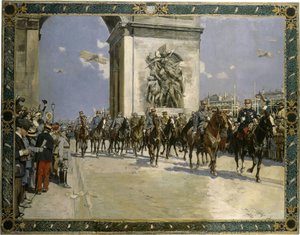
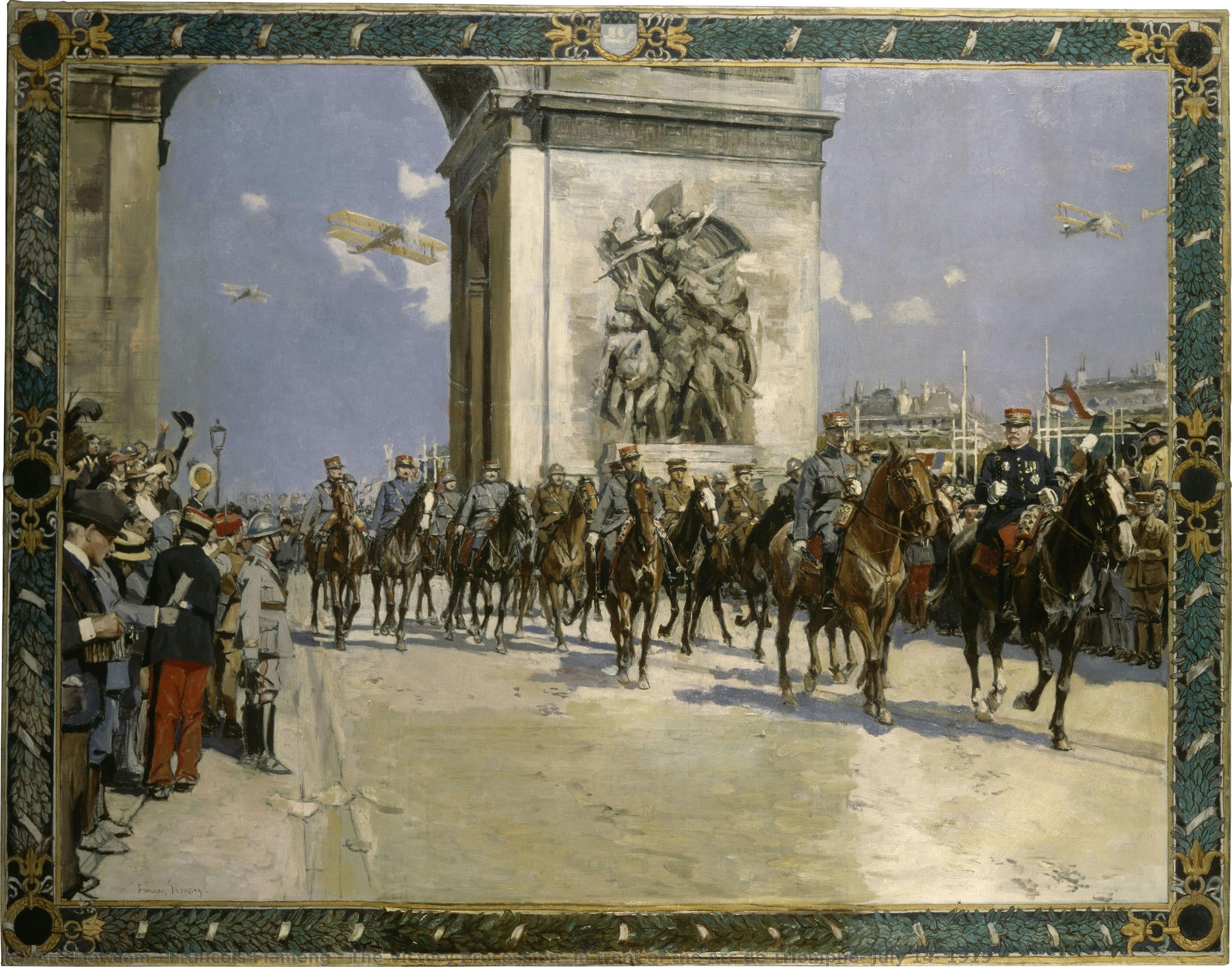
The Victory Procession, in front of the Arc de Triomphe, July 14, 1919


 Read More
Hand Made Oil Reproduction
Hand-painted oil on canvas in your size and frame, made to order by our artists. ( Buy Print Buy Image)




P118B $10

P118H $10

P118W $10

P438Z $10

P508JH $12

P508YH $12

P805H $10

P805Z $10

P919BZ $10

P919G $10

P919XJ $10

P959ZH $10

P968JZ $12

W106C $8

W218G $10

W218JH $8

W218Y $10

W307PJ $10

W316G $10

W316PJ $8

W316Y $10

W398PJ $8

W4111J $10

W500HY $15

W500JH $15

W692G $12

W849H $8

W940BG $15

W953PJ $8




Pick from our preset sizes that match the artwork's original proportions.

You may enter your own dimensions to fit a specific frame or space. If your selected size does not match the original image's proportions, we will either crop the artwork or extend the painting with additional hand-painted elements. A digital mockup will be sent for your approval before production begins.
Please note that the on-screen preview does not reflect the actual cropping or extension. Only the mockup will accurately show the final composition.
While custom sizes are available, we recommend selecting a dimension from the predefined list to preserve the original proportions.
After order, ArtsDot.com team will email client for instructions and provide a mockup preview
Worldwide Delivery () in 3/4 weeks instead of standard 5 weeks. (25 August). No compromise on quality.

Free Worldwide Express Shipping

High-Quality Linen Canvas

Full Shipping Insurance

Customs Tax Refund Guarantee

True Color Matching Guarantee

60-Day Return Policy (Defects Only)

100% Money-Back Guarantee

Bulk Discount Offer
 Glass option is only available in size under 110 CM

The Victory Procession, in front of the Arc de Triomphe, July 14, 1919
Reproduction Medium
Reproduction Size
-


Total Price
$ 263
Artwork Description
François Flameng’s Triumph: A Celebration of Victory in Parisian Art
The painting “The Victory Procession, in front of the Arc de Triomphe, July 14, 1919,” by François Flameng stands as a monumental testament to the spirit of resilience and triumph that characterized France following the First World War. Executed in 1923, this impressive canvas captures a pivotal moment – the jubilant procession commemorating the Allied victory over Germany, unfolding against the grandeur of Paris’s iconic Arc de Triomphe. Flameng's masterful depiction transcends mere historical record; it embodies an emotional response to the momentous occasion and reflects the artistic sensibilities of his time.A Symphony of Color and Composition
Flameng’s stylistic approach firmly adheres to the Beaux-Arts tradition, prioritizing meticulous detail and a convincingly realistic portrayal of light and texture. The artist skillfully employs a palette dominated by warm hues – golds, reds, and creams – mirroring the celebratory fervor of the event. These colors are strategically layered to create depth and dynamism, guiding the viewer’s eye across the expansive canvas. Compositionally, Flameng arranges the figures with deliberate precision, establishing a pyramidal structure that emphasizes the central procession led by Marshal Ferdinand Foch and Marshal Joseph Joffre. The positioning of the horses and riders contributes significantly to this visual hierarchy, reinforcing the grandeur and solemnity of the occasion.Historical Context: Echoes of Remembrance
The painting’s genesis lies in the immediate aftermath of the Great War, a period marked by profound grief and national introspection. Yet, amidst the sorrow, there emerged an unwavering determination to honor those who had sacrificed their lives for France's liberation. July 14th, 1919 – Bastille Day – served as the focal point for commemorating this victory, symbolizing freedom from oppression and reaffirming republican ideals. Flameng’s artwork captures not only the visual spectacle of the procession but also its symbolic significance: it represents the collective yearning for peace and prosperity after years of devastation. The Arc de Triomphe itself—constructed to honor Napoleon's military triumphs—becomes a poignant reminder of France’s enduring legacy of leadership and resilience.Technique and Detail: Flameng’s Artistic Virtuosity
Flameng’s technique is characterized by painstaking brushwork, meticulously rendering the musculature of the horses and the uniforms of the soldiers with remarkable accuracy. He utilizes glazing techniques—applying thin layers of translucent paint over underlying colors—to achieve luminous effects and imbue the scene with an ethereal quality. Close observation reveals subtle nuances in shading and texture, demonstrating Flameng’s dedication to capturing the materiality of his subjects. The artist's attention to detail extends beyond mere representation; he strives to convey a palpable sense of movement and energy, conveying the excitement and jubilation of the celebratory procession.Emotional Resonance: Triumph Over Adversity
Ultimately, “The Victory Procession” transcends its historical context to evoke a powerful emotional response in the viewer. Flameng’s masterful depiction captures the spirit of optimism and hope that permeated French society following the war—a desire to rebuild and honor those who had endured unimaginable hardship. The grandeur of the Arc de Triomphe serves as a visual anchor for this sentiment, symbolizing France's triumphant return to glory. More than just an illustration of a historical event, Flameng’s painting speaks to the universal human experience of overcoming adversity and celebrating victory—a timeless masterpiece that continues to inspire awe and admiration.Related Artworks
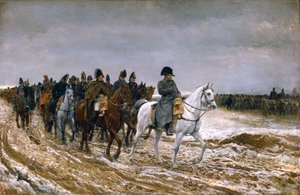
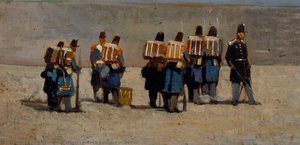
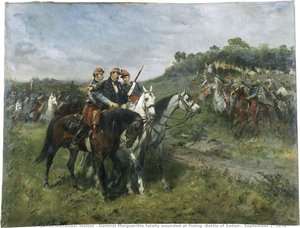
Artist Biography
François Flameng: A Life in Art
Early Life and Education
- Born: 1856, France.
- François Léopold Flameng was the son of Léopold Flameng, a celebrated engraver. This familial connection provided him with an early and thorough education in artistic techniques.
- He attended the École Nationale Supérieure des Beaux-arts, where he studied under Alexandre Cabanel.
- From 1870, Flameng began creating reproductions of works by renowned artists for the Durand-Ruel gallery catalogue.
Artistic Development and Style
- Flameng initially gained recognition for his history paintings and portraiture. His early style was firmly rooted in academic tradition, emphasizing precise draftsmanship and realistic representation.
- He exhibited at the Salon for the first time in 1875 with “The Lectern,” marking a significant step in his career.
- His work evolved over time to encompass broader themes, including depictions of military life and scenes from contemporary society.
Major Achievements and Commissions
- Flameng became a professor at the Academy of Fine Arts, demonstrating his standing within the artistic community.
- He received important commissions to decorate prominent civic buildings such as the Sorbonne and the Opéra-Comique.
- In 1891, he designed sketches for France’s first four-color bank notes (though the initial 1000 Franc note design wasn't issued until later in a modified form).
- He was invited to Russia in 1894 by Tsar Alexander III to paint portraits of members of the Imperial Court.
- In 1900, he created a decorative mural of Paris for Le Train Bleu, the restaurant at the Gare de Lyon.
- He was granted France’s highest civilian honor, the Légion d'Honneur.
- In 1908, he became an honorary commander of the Royal Victorian Order.
World War I and Later Work
- Flameng’s work took on a new dimension during World War I. He was named honorary president of the Society of Military Painters and an accredited documenter for the war ministry.
- His paintings from this period, while realistic, were initially criticized by some for lacking heroic drama – a testament to his commitment to portraying the realities of war.
- Many of these war paintings were later donated to the Musée de l'Armée.
- In 1919, he was elected into the National Academy of Design as an honorary corresponding academician.
Personal Life and Legacy
- Flameng married Marguerite Henriette Augusta Turquet in 1881. Their daughter, Marie, married tennis star Max Decugis, whom Flameng also painted.
- He was a friend of John Singer Sargent, who painted his portrait, and traveled with Jean-Léon Gérôme and Victor Clairin in Italy.
- François Flameng died in 1923, leaving behind a diverse body of work that reflects the artistic and historical currents of his time. His paintings offer valuable insights into French society during the Belle Époque and the realities of World War I.
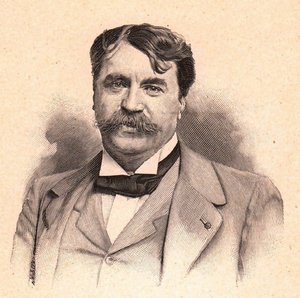
François Flameng
1856 - 1923 , France
Quick Facts
- Birth_Date: 1856
- Birth_Place: France
- Death_Date: 1923
- Influenced_By:
- Alexandre Cabanel
- Léopold Flameng
- Movement:
- Academic art
- Belle Époque
- Name: François Flameng
- Nationality: French
- Notable_Works:
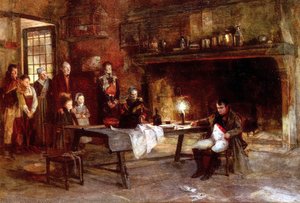
- Napoleon After The Battle Of Waterloo
- The Victory Procession, in front of the Arc de Triomphe, July 14, 1919
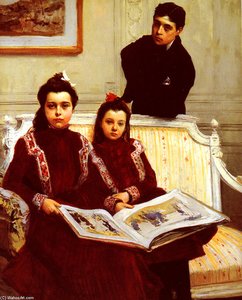
- Mily Portrait Of A Boy And His Two Sisters Admiring A Sketch Book
Related Articles

Goya's Masterpieces: Explore 25 Iconic Paintings & Art Prints | ArtsDot
Delve into the world of Francisco Goya with ArtsDot. Explore 25 iconic paintings – from 'The Third of May' to his haunting Black Paintings. Discover the stories, techniques & emotions behind these Spanish masterpieces. Find museum-quality art reproductions for your home at ArtsDot.com!

About Us
Discover our story! We bring world-class art into your life through expert curation, personalized creations, and free previews. Trusted by individuals and businesses since 2000.
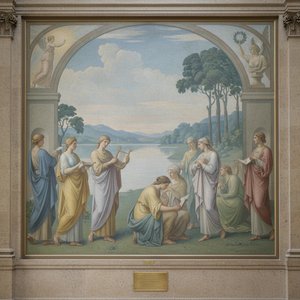
Pierre Puvis de Chavannes: Symbolism, Mural Painting, and the Pursuit of Ideal Beauty
Explore the life & work of Pierre Puvis de Chavannes, a pivotal Symbolist painter renowned for his monumental murals. Discover his aesthetic principles, key artworks like 'Hope,' and lasting influence on modern art. A deep dive into 19th-century French painting.
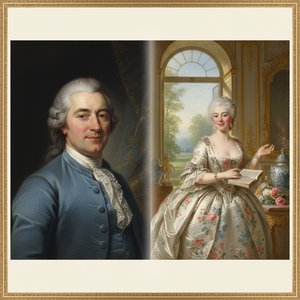
Maurice Quentin de La Tour: Light, Shadow & the Rococo Portrait
Explore the captivating world of Maurice Quentin de La Tour, a master of Rococo portraiture. Discover his innovative pastel techniques, intimate depictions of French aristocracy, and lasting artistic legacy. Learn more at ArtsDot.
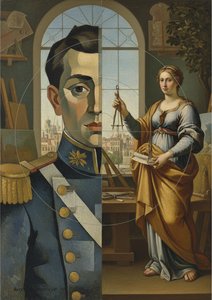
Roger de la Fresnaye: Cubism, Tradition & the Search for Order in Early 20th-Century French Painting
Explore the captivating world of Roger de la Fresnaye, a pivotal French Cubist painter. Discover his unique blend of tradition & modernity, influences, and lasting legacy with ArtsDot.