

 Preview
 Send
Send Share
Share
 Details

 Download
 Similars
 X-Ray
X-Ray Diaporama
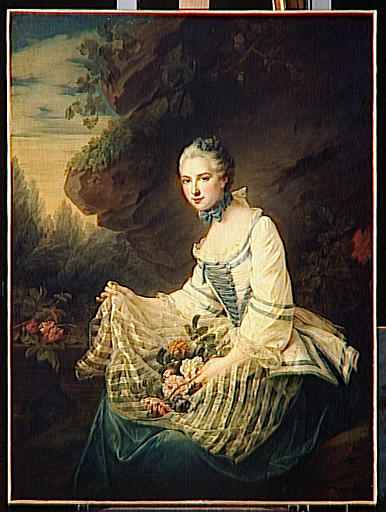
LOUISE ELISABETH DE MAILLE KARMAN


 Read More
Purchase a high-resolution, enhanced digital image, far superior to the online preview.
Each file is meticulously prepared by our in-house specialists using advanced tools and expert manual retouching. We ensure every image has exceptional clarity, precise color accuracy, and fine detail.
The final file is delivered via email within 72 hours, optimized for immediate use in professional, editorial, and print environments. This is the same quality trusted by top-tier design studios, publishers, and galleries.
Digital Image
Download a high-resolution file for personal display, printing, and creative projects. ( Buy Print Buy Hand Made Painting)
Included in Every Digital Image Order
Expert Digital Delivery, Guaranteed
When you choose ArtsDot.com, you're not just getting an image - you're receiving a professionally enhanced digital artwork, crafted with precision and backed by a satisfaction guarantee. Here's everything that comes with your order, automatically:

Fast Email Delivery
Your high-resolution digital image file will be emailed to you within 72 hours of ordering - ready for immediate use.

AI-Enhanced Digital File
Your artwork is professionally optimized using advanced AI tools and manual editing, ensuring maximum detail, clarity, and color accuracy.

Free Lifetime Re-Delivery
Accidentally deleted or lost your file? No worries - we'll resend it to you anytime, free of charge.

No Import Fees - Ever
Enjoy your artwork instantly with zero customs, duties, or delivery fees - digital downloads are always tax-free.

Color Accuracy Guarantee
We ensure your digital image reflects the original colors as closely as possible using professional tools and color management.

60-Day Satisfaction Guarantee
If you're not satisfied with your digital image, we'll revise it or refund 100% within 60 days - no questions asked.

100% Money-Back Guarantee
Not satisfied? Get a full refund within 60 days of receiving your digital file - no questions asked.

Bulk Order Discounts
Buy 3 images, save 10% - Buy 5, save 15% - Buy 10+, save 20%. Great for creative projects, galleries, and agencies.
Collectible Description
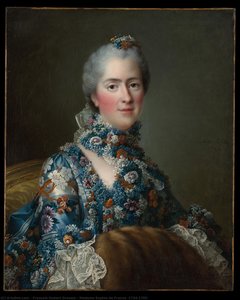
Louise Elisabeth De Maille Karman by François Hubert Drouais: A Rococo Portrait of Elegance
François Hubert Drouais’s “Portrait of Louise Elisabeth De Maille Karman, Marquise of Soran” stands as a quintessential example of French Rococo art—a style characterized by opulent ornamentation, delicate pastel hues, and an idealized depiction of aristocratic beauty. Painted in 1757, this masterpiece captures the essence of the era’s fascination with refined taste and aristocratic leisure, offering viewers a glimpse into the gilded age of Louis XV’s reign.Composition and Style: Balancing Form and Feeling
The painting's composition is remarkably balanced, placing Louise Elisabeth Karman centrally within a landscape setting that serves as both backdrop and reflection of her inner grace. Drouais skillfully employs pyramidal structure—a hallmark of Rococo—to draw the eye upwards towards the Marquise’s face, emphasizing her serene expression and conveying an aura of composure. Soft curves dominate the drapery and foliage, mirroring the flowing lines characteristic of the style and creating a harmonious visual experience. The artist eschews harsh contrasts in light and shadow, favoring diffused illumination that softens features and enhances the overall atmosphere of tranquility. This deliberate aesthetic choice underscores Rococo’s aim to evoke emotion rather than simply documenting reality.Technique: Oil Painting with Layers of Texture
Drouais executed “Louise Elisabeth De Maille Karman” using oil paint on canvas—a technique favored by artists during this period for its ability to achieve rich textures and luminous colors. The artist meticulously applied thin glazes over underlayers, building up depth and subtlety of tone. Brushstrokes are soft and blended seamlessly, creating a velvety surface that captures the delicate folds of fabric and the intricate details of foliage. Careful attention was paid to capturing the nuances of light reflecting off Louise Elisabeth’s skin and clothing—a testament to Drouais's mastery of chiaroscuro, or tonal contrast. The meticulous layering process ensured that every element contributed to the painting's overall impression of elegance and refinement.Symbolism: Flowers as Expressions of Femininity
The landscape surrounding Louise Elisabeth is adorned with lush floral arrangements—primarily roses and lilies—which serve as potent symbols of beauty and femininity, aligning perfectly with Rococo’s preoccupation with idealized representations of women. These flowers are not merely decorative; they convey a deeper message about the Marquise's virtue and status within aristocratic society. The landscape itself embodies wealth and leisure—elements highly valued during Louis XV’s time—suggesting that Louise Elisabeth Karman possesses both inner grace and outward prosperity.Emotional Impact: Capturing Serenity and Grace
Ultimately, “Portrait of Louise Elisabeth De Maille Karman” succeeds in conveying a profound sense of serenity and grace. The Marquise's gaze is direct yet gentle, inviting the viewer into her world of refined contemplation. Drouais’s masterful use of color and texture creates an immersive experience that transports us back to 18th-century France—a time defined by aristocratic splendor and artistic innovation. This painting remains a timeless celebration of beauty and poise, continuing to inspire admiration for its exquisite craftsmanship and evocative emotional resonance.Related Artworks
Artist Biography
Thomas Gainsborough: A Painter of Light and Life
Thomas Gainsborough, born in Sudbury, Suffolk, on May 14th, 1727, was a pivotal figure in the development of British art during the late 18th century. His life’s work—a captivating blend of portraiture and landscape—established him as one of the most influential painters of his era, alongside Sir Joshua Reynolds. More than simply depicting subjects, Gainsborough sought to capture the essence of English life, imbued with a sense of naturalism and an appreciation for the fleeting beauty of the world around him. His career unfolded against a backdrop of social change and artistic rivalry, ultimately shaping the course of British painting.Early Years and Training
Gainsborough’s early years were marked by a practical apprenticeship rather than formal academic training. At thirteen, he was sent to London to learn engraving under Hubert Gravelot, a French artist who had trained with the renowned Jean-Antoine Watteau. This experience proved invaluable, exposing Gainsborough to the techniques of drawing and etching – skills that would later inform his distinctive brushwork. Following his apprenticeship, he briefly worked as a silversmith before dedicating himself fully to painting. His early portraits were largely commissioned by local gentry in Suffolk, establishing a reputation for capturing likenesses with a subtle realism. The influence of Gravelot’s work is evident in Gainsborough's initial style – a delicate, almost ethereal quality that foreshadowed his later development.The Rise to Prominence: Bath and London
Seeking greater opportunities and recognition, Gainsborough moved to Bath in 1759. This period marked a significant shift in his artistic focus. He began painting portraits of prominent figures – writers, actors, and members of the fashionable elite – capturing their personalities with remarkable insight. His style evolved during this time, becoming looser and more expressive, reflecting the Rococo influences prevalent in Bath’s vibrant social scene. The use of light and color became increasingly important, creating a sense of atmosphere and immediacy. Around 1768, he was elected a founding member of the Royal Academy, an event that solidified his position as a leading artist. Shortly after, he relocated to London, settling in Schomberg House on Pall Mall, where he established a studio and continued to attract wealthy patrons.A Master of Light and Landscape
Despite his success as a portrait painter, Gainsborough maintained a deep passion for landscape painting. He believed that true observation of nature was essential to understanding the human condition. His landscapes are characterized by a remarkable sensitivity to light and atmosphere – capturing the subtle shifts in color and tone with extraordinary skill. Unlike Reynolds, who often incorporated classical motifs into his landscapes, Gainsborough drew inspiration from Dutch and Flemish masters, particularly their ability to depict atmospheric effects. His most celebrated landscape works, such as *The Morning Walk* (1789), are imbued with a sense of tranquility and beauty, offering glimpses into the idyllic countryside of England. These paintings weren’t merely representations; they were meditations on nature's power and grace.Legacy and Historical Significance
Thomas Gainsborough died in London on August 2nd, 1788, leaving behind a remarkable body of work that continues to captivate audiences today. His influence on subsequent generations of British artists is undeniable. He helped to establish the tradition of landscape painting as a serious artistic pursuit and demonstrated the importance of capturing the nuances of everyday life. His portraits are admired for their psychological depth and his landscapes for their atmospheric beauty. Notably, Gainsborough’s work has recently come under scrutiny due to its connection to the slave trade; several of his commissioned portraits depict individuals who benefited from wealth derived from enslaved people. This revelation adds a complex layer to our understanding of his artistic legacy, prompting critical reflection on the ethical considerations within art history and challenging us to examine the historical context surrounding these works. Despite this complexity, Gainsborough remains a towering figure in British art—a painter who captured the spirit of his time with unparalleled skill and sensitivity.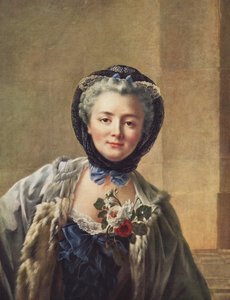
françois hubert drouais
1727 - 1775 , France
Quick Facts
- Artistic Movement Or Style: Picturesque, Landscape
- Artists Or Movements Influenced By This Artist: ['Dutch Landscape School']
- Artists Who Influenced This Artist:
- Hubert Gravelot
- Jean-Antoine Watteau
- Date Of Birth: May 14, 1727
- Date Of Death: August 2, 1788
- Full Name: Thomas Gainsborough
- Nationality: British
- Notable Artworks:
- Mr and Mrs Andrews
- The Blue Boy
- Morning Walk
- Place Of Birth: Sudbury, Suffolk, England

