 Preview
 Send
Send Share
Share
 Details

 Download
 Similars
 X-Ray
X-Ray Diaporama
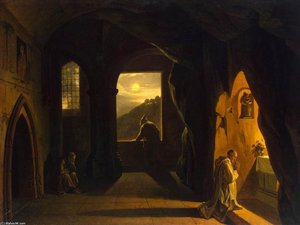
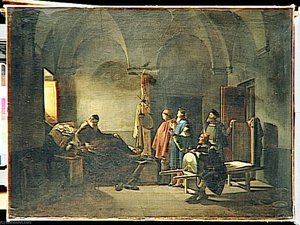
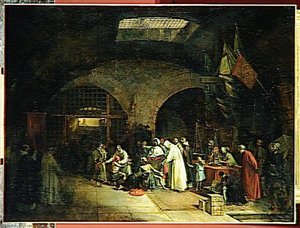
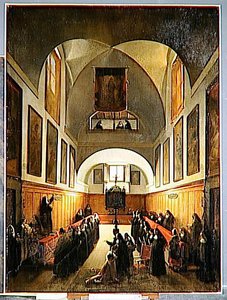
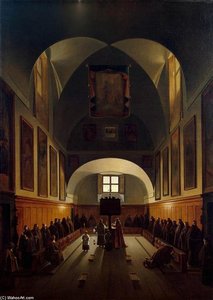
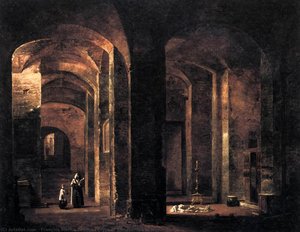
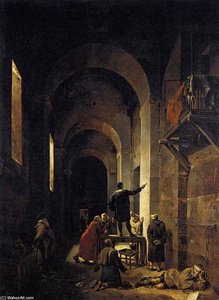
Crypt of San Martino ai Monti, Rome
 Oil On Canvas
- WallArt
- Romantic Revival
 1806
1806- 19th Century
 126.0 x 159.0 cm
 Musée Fabre
 Read More
Hand Made Oil Reproduction
Hand-painted oil on canvas in your size and frame, made to order by our artists. ( Buy Print Buy Image)




P118B $10

P118H $10

P118W $10

P438Z $10

P508JH $12

P508YH $12

P805H $10

P805Z $10

P919BZ $10

P919G $10

P919XJ $10

P959ZH $10

P968JZ $12

W106C $8

W218G $10

W218JH $8

W218Y $10

W307PJ $10

W316G $10

W316PJ $8

W316Y $10

W398PJ $8

W4111J $10

W500HY $15

W500JH $15

W692G $12

W849H $8

W940BG $15

W953PJ $8




Pick from our preset sizes that match the artwork's original proportions.

You may enter your own dimensions to fit a specific frame or space. If your selected size does not match the original image's proportions, we will either crop the artwork or extend the painting with additional hand-painted elements. A digital mockup will be sent for your approval before production begins.
Please note that the on-screen preview does not reflect the actual cropping or extension. Only the mockup will accurately show the final composition.
While custom sizes are available, we recommend selecting a dimension from the predefined list to preserve the original proportions.
After order, ArtsDot.com team will email client for instructions and provide a mockup preview
Worldwide Delivery () in 3/4 weeks instead of standard 5 weeks. (27 August). No compromise on quality.

Free Worldwide Express Shipping

High-Quality Linen Canvas

Full Shipping Insurance

Customs Tax Refund Guarantee

True Color Matching Guarantee

60-Day Return Policy (Defects Only)

100% Money-Back Guarantee

Bulk Discount Offer
 Glass option is only available in size under 110 CM

Crypt of San Martino ai Monti, Rome
Reproduction Medium
Reproduction Size
-


Total Price
$ 263
A Descent into Devotion: The Soul of San Martino ai Monti
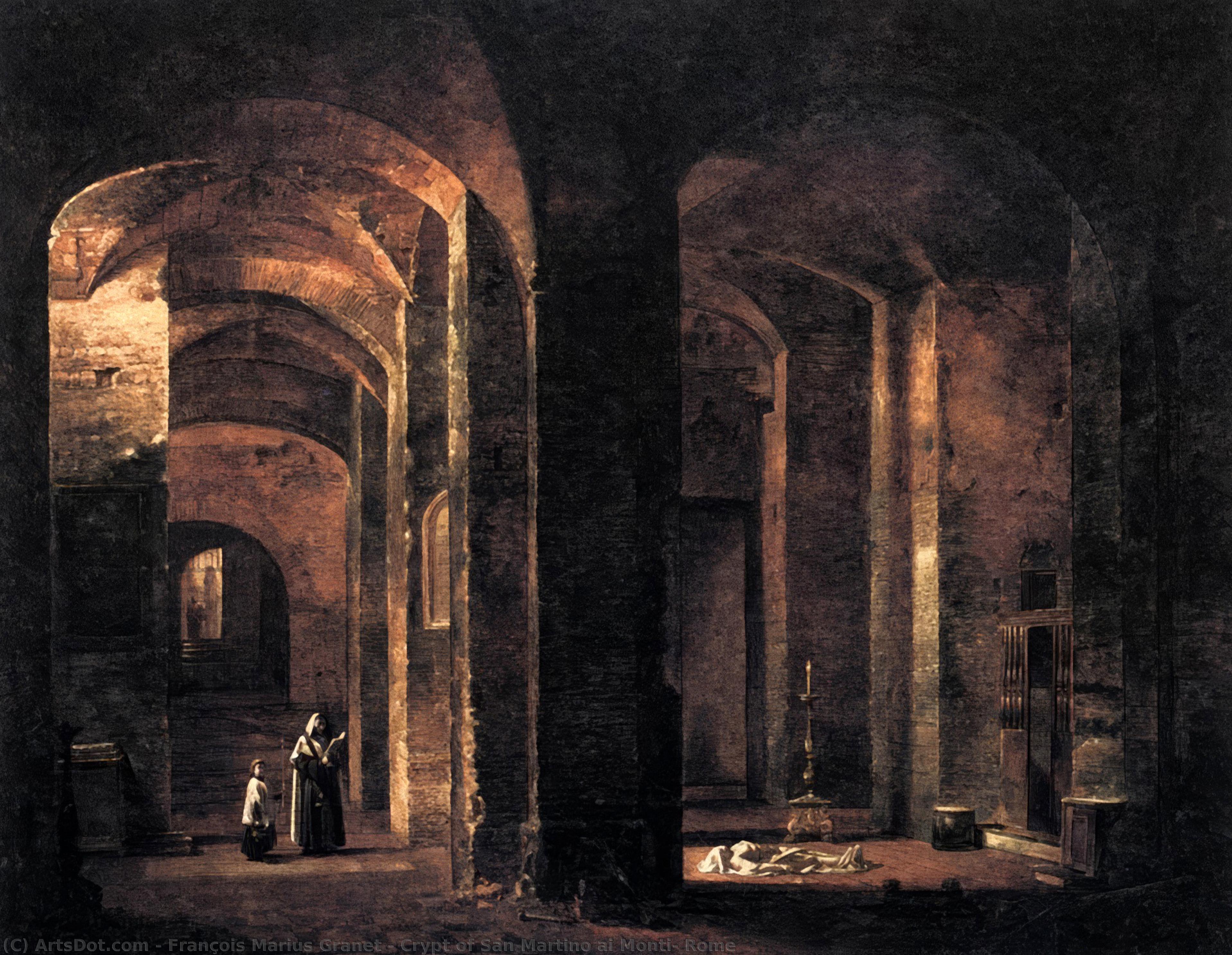
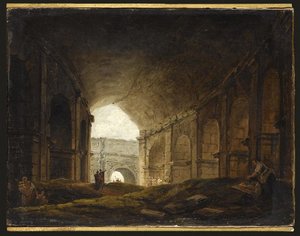
In the quiet, subterranean depths of Rome, where the air grows heavy with the scent of ancient stone and whispered prayers, François Marius Granet captured a moment of profound spiritual stillness. His 1806 masterpiece, Crypt of San Martino ai Monti, is far more than a mere architectural study; it is an invitation into a sacred sanctuary. As one gazes upon this canvas, the boundaries between the viewer and the Roman crypt begin to dissolve, replaced by a palpable sense of reverence. The painting transports us to a time when the shadows of the Napoleonic era were receding, giving way to a fervent artistic revival that sought beauty in the sublime and the eternal.
The subject matter centers on the interior of the San Martino ai Monti church, specifically focusing on its crypt—a space designed for solemnity and the housing of holy relics. Within this dim, arched chamber, Granet places figures that appear almost as ghosts of devotion, their presence lending a human scale to the overwhelming architectural grandeur. The composition guides the eye through a labyrinth of pillars and vaults, creating a sense of depth that pulls the observer into the very heart of the earth. It is a scene that celebrates the quiet power of contemplation, making it an ideal centerpiece for any collection seeking to evoke peace and intellectual depth.
The Mastery of Light and Romantic Shadow
Technically, Granet achieves a breathtaking balance between his Neoclassical training and the burgeoning Romantic movement. While his precision in rendering the structural elements of the crypt speaks to the rigorous discipline he learned under Jacques-Louis David, it is his use of chiaroscuro that truly defines the work's emotional resonance. He employs dramatic contrasts between deep, impenetrable shadows and sudden, piercing light to illuminate the figures and the textures of the stone. This interplay of light does not merely reveal form; it creates an atmosphere of mystery and intrigue, suggesting that much of the sacred truth remains hidden in the darkness.
The artist’s technique is further enriched by a meticulous application of oil on canvas. Granet utilized thick impasto to build up the surfaces, allowing the light to catch on the physical ridges of the paint. This tactile quality gives the architectural details—the weathered edges of the pillars and the ruggedness of the subterranean walls—a lifelike, three-dimensional presence. For the discerning collector or interior designer, this texture provides a sophisticated visual weight, ensuring that a high-quality reproduction retains the commanding presence and "soul" of the original masterpiece.
An Eternal Resonance for Modern Spaces
Beyond its historical significance, the Crypt of San Martino ai Monti serves as a profound symbol of the human search for meaning amidst the passage of time. The painting captures the tension between the permanence of stone and the fleeting nature of human life, represented by the small, contemplative figures within the vast space. It is an artwork that speaks to the enduring strength of faith and the beauty found in solitude.
For those looking to curate a space of distinction, this piece offers unparalleled versatility. Whether placed in a grand library, a formal study, or a contemporary living area, its moody palette and dramatic composition act as a focal point that commands attention without overwhelming the room. It provides a window into a bygone era of Romanticism, offering a sense of historical continuity and an emotional anchor that can transform any interior into a sanctuary of thought and elegance.
Related Artworks

Artist Biography
Early Life and Artistic Beginnings
François Marius Granet, born in Aix-en-Provence on December 17, 1775, emerged from humble beginnings. His father was a modest builder, a life far removed from the world of art that would ultimately consume his son’s passions. Even as a young boy, Granet possessed an intense artistic drive, prompting his parents to seek instruction for him—first from a passing Italian artist and then at a free school directed by M. Constantin, a respected landscape painter. This early exposure laid the foundation for his future endeavors, though it was his experiences during the tumultuous years of the French Revolution that would first shape his artistic vision. In 1793, Granet joined the volunteers of Aix at the siege of Toulon, not as a soldier but as a decorator in the arsenal. This period provided him with practical skills and a firsthand glimpse into the realities of conflict—a theme that would subtly permeate his later work. A pivotal encounter with the young Comte de Forbin proved transformative; upon Forbin’s invitation, Granet journeyed to Paris in 1797, entering the prestigious studio of Jacques-Louis David.The Studio of David and the Capuchin Monastery
David's rigorous neoclassical style initially influenced Granet, but he soon began to forge his own path. He secured a cell within the former Capuchin monastery—a space once used for printing revolutionary assignats—which had become a haven for artists. It was here, amidst the play of light and shadow in the ancient corridors, that Granet conceived what would become his life’s defining work: “The Choir of the Capuchins.” He dedicated himself to this painting with unwavering commitment, revisiting and refining it repeatedly over decades. The monastery itself became more than just a studio; it was an environment that profoundly impacted his artistic sensibility. Unlike many of his contemporaries who focused on grand historical narratives or portraits of the elite, Granet found beauty and meaning in the quiet austerity of monastic life, exploring the interplay between architecture, light, and human presence. This focus wasn’t merely aesthetic; it reflected a deeper interest in spirituality and the passage of time.Roman Years and the Development of Tonal Painting
In 1802, Granet embarked on an extended sojourn to Rome, a period that proved crucial to his artistic maturation. He remained there until 1819, immersing himself in the classical heritage of the city and absorbing its atmosphere of grandeur and decay. It was during these years that he fully developed his distinctive tonal style—a technique characterized by subtle gradations of light and shadow, emphasizing atmospheric effects over precise detail. His Roman paintings, such as “Stella Painting a Madonna on his Prison Wall” (1810) and “Sodoma at the Hospital” (1815), demonstrate this evolving approach. He wasn’t interested in recreating historical events with photographic accuracy; instead, he sought to capture the emotional resonance of a scene through carefully orchestrated tones and compositions. The figures within his works often appear integrated into the architectural setting, almost as if they are extensions of the stone and plaster around them. This emphasis on tone became his signature, distinguishing him from other artists of the period.Later Career and Legacy
Upon returning to Paris in 1819, Granet continued to refine his unique style, producing a series of significant works including “Basilica Basse di St François d'Assise” (1823) and “The Redemption of Prisoners” (1831). He was appointed director of the Académie de France in Rome in 1829, a testament to his growing reputation. His paintings consistently prioritized atmosphere and emotional depth over narrative clarity. Even works with historical or religious themes—like "Death of Poussin" (1834)—were treated as opportunities to explore tonal effects and architectural space. Granet’s dedication to tone sometimes drew criticism; some found his work lacking in dramatic intensity, but he remained steadfast in his artistic vision. He was a master of creating mood and evoking a sense of quiet contemplation. François Marius Granet died in 1849, leaving behind a body of work that continues to captivate viewers with its subtle beauty and unique sensibility. His influence can be seen in the later works of artists who explored similar themes of spirituality, atmosphere, and the interplay between light and architecture. The Musée Granet in Aix-en-Provence, established after his death, serves as a lasting tribute to his life and artistic achievements, housing many of his most important paintings and offering visitors a glimpse into the world of this remarkable French painter.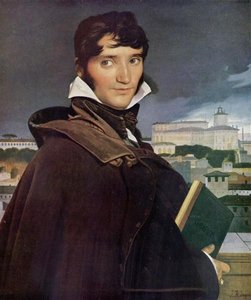
françois marius granet
1775 - 1849 , France
Quick Facts
- Artistic Movement Or Style: Tonal Painting
- Artists Who Influenced This Artist: ['David']
- Date Of Birth: December 17, 1775
- Date Of Death: 1849
- Full Name: François Marius Granet
- Nationality: French
- Notable Artworks:
- Chœur des Capucins
- Stella painting a Madonna
- Sodoma à l'hôpital
- Rachat de prisonniers
- Mort de Poussin
- Place Of Birth: Aix-en-Provence, France
Related Articles

Baroque Classicism: Reconciling Drama & Order in 17th-Century Art
Explore the captivating world of Baroque Classicism! Discover its history, key artists like Caravaggio & Rubens, and defining characteristics. Expert insights & high-quality reproductions at ArtsDot.
Simon Vouet: A Baroque Master's Journey from Italian Influence to French Classicism
Explore the life & art of Simon Vouet, a pivotal French Baroque painter who introduced Italian styles to France. Discover his masterpieces and lasting influence on 17th-century art.
Guido Reni: A Study in Baroque Classicism & Artistic Perfection
Explore the life & work of Guido Reni, a master of Baroque classicism. Discover his iconic religious & mythological paintings, and understand his enduring influence on art history. Expert analysis for collectors.

The Visceral Stage: Exploring Dramatic Narratives & Emotional Intensity in Baroque Art
Explore the dramatic world of Baroque art! Discover iconic masters like Caravaggio & Rembrandt, their techniques, and the movement's lasting impact. Expert insights for collectors & enthusiasts at ArtsDot.

Baroque Masterpieces: 10 Paintings That Defined an Era |
Journey through the drama & grandeur of Baroque art! Explore 10 masterpieces by Caravaggio, Rembrandt, Rubens & more. Discover stunning oil paintings, rich colors & timeless stories. Find museum-quality reproductions at .