 Preview
 Send
Send Share
Share
 Details

 Download
 Similars
 X-Ray
X-Ray Diaporama
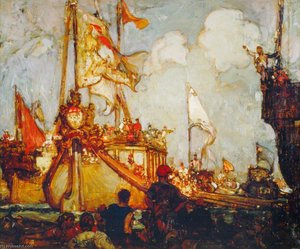
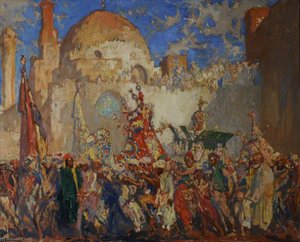
The Rajah's Birthday
 Oil On Canvas
- WallArt
- Symbolism
 1908
1908- Modern
 116.0 x 155.0 cm
 Leeds Art Gallery
 Read More
Hand Made Oil Reproduction
Hand-painted oil on canvas in your size and frame, made to order by our artists. ( Buy Print Buy Image)




P118B $10

P118H $10

P118W $10

P438Z $10

P508JH $12

P508YH $12

P805H $10

P805Z $10

P919BZ $10

P919G $10

P919XJ $10

P959ZH $10

P968JZ $12

W106C $8

W218G $10

W218JH $8

W218Y $10

W307PJ $10

W316G $10

W316PJ $8

W316Y $10

W398PJ $8

W4111J $10

W500HY $15

W500JH $15

W692G $12

W849H $8

W940BG $15

W953PJ $8




Pick from our preset sizes that match the artwork's original proportions.

You may enter your own dimensions to fit a specific frame or space. If your selected size does not match the original image's proportions, we will either crop the artwork or extend the painting with additional hand-painted elements. A digital mockup will be sent for your approval before production begins.
Please note that the on-screen preview does not reflect the actual cropping or extension. Only the mockup will accurately show the final composition.
While custom sizes are available, we recommend selecting a dimension from the predefined list to preserve the original proportions.
After order, ArtsDot.com team will email client for instructions and provide a mockup preview
Worldwide Delivery () in 3/4 weeks instead of standard 5 weeks. (17 August). No compromise on quality.

Free Worldwide Express Shipping

High-Quality Linen Canvas

Full Shipping Insurance

Customs Tax Refund Guarantee

True Color Matching Guarantee

60-Day Return Policy (Defects Only)

100% Money-Back Guarantee

Bulk Discount Offer
 Glass option is only available in size under 110 CM

The Rajah's Birthday
Reproduction Medium
Reproduction Size
-


Total Price
$ 413
Artwork Description
A Symphony of Chaos and Color
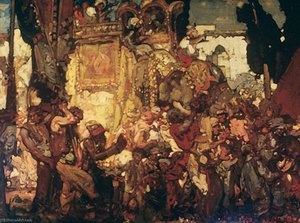
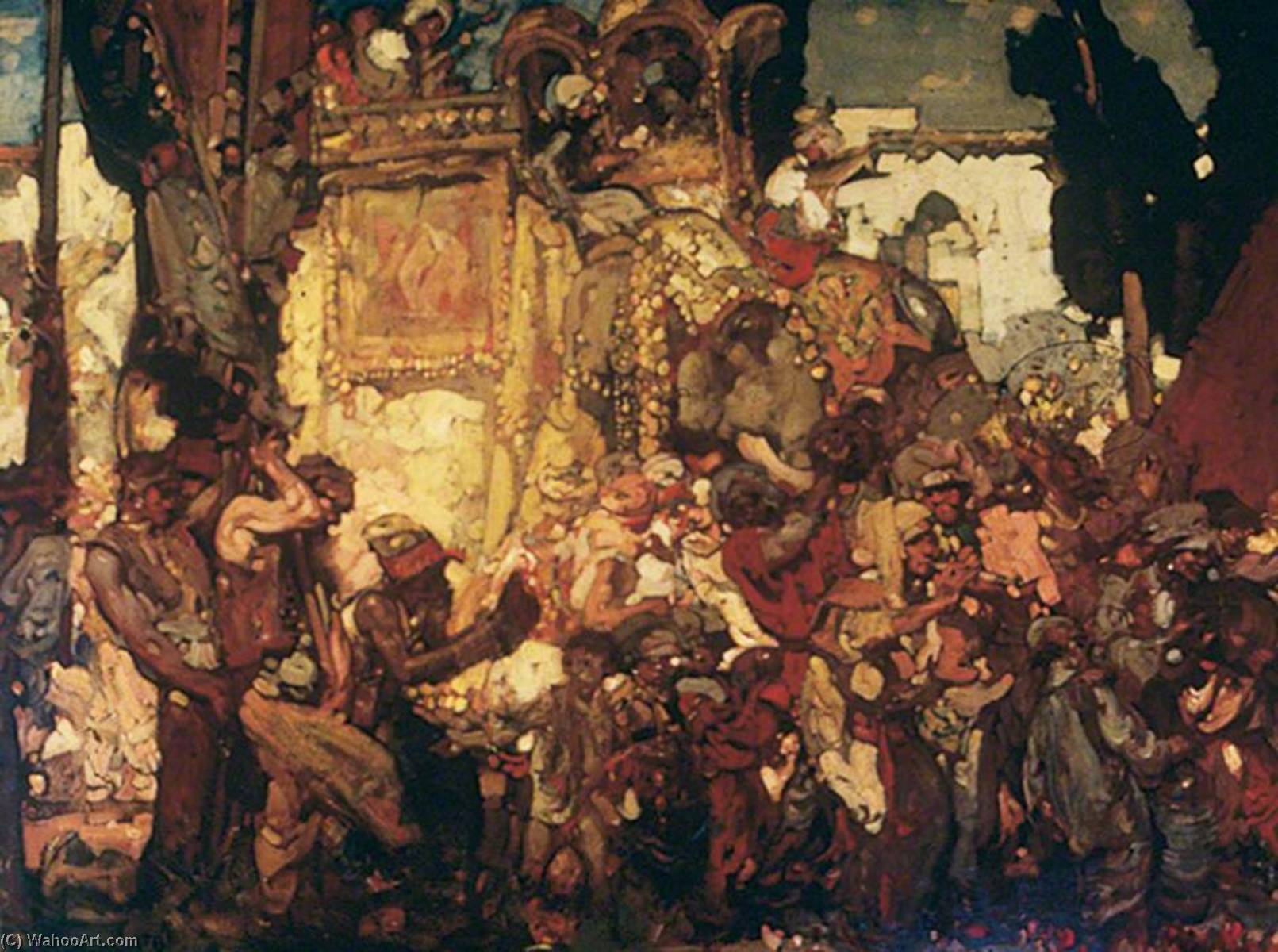
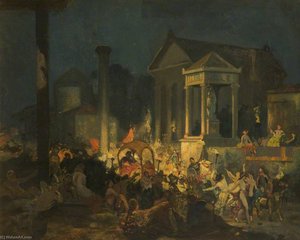
In the vibrant, swirling depths of Frank Brangwyn’s 1908 masterpiece, The Rajah's Birthday, the viewer is not merely an observer but a participant in a feverish, sensory spectacle. This oil on canvas serves as a breathtaking window into a world of ceremonial grandeur and unbridled energy. At first glance, the composition strikes the eye with its overwhelming density; it is a scene that refuses to be still, pulling the gaze into a labyrinth of figures and movement. Brangwyn, a master of capturing the pulse of life, utilizes an expressive, almost Fauvist approach to depict what appears to be a momentous public gathering. The central focus rests upon an elevated platform, a dais where the weight of tradition meets the electricity of celebration, surrounded by a sea of humanity that seems to surge and ebb like a tide.
The technique employed here is nothing short of visceral. Brangwyn’s brushwork is thick and impasto-like, leaving behind visible traces of his movement that lend the painting an almost sculptural quality. There is no attempt at the polite, polished finish of academic realism; instead, the artist embraces a certain ruggedness, where shapes are often amorphous and boundaries between figures blur into a singular, rhythmic mass. This rejection of traditional perspective creates a flattened, tapestry-like effect, heightening the sense of claustrophobia and excitement. The lighting is equally dramatic, with pockets of intense, warm illumination clashing against deep, velvety shadows, creating a chiaroscuro effect that breathes life into the crowded scene.
The Warmth of an Exotic Spectacle
Color serves as the emotional heartbeat of this work. Brangwyn employs an intensely saturated palette dominated by fiery reds, burnt oranges, and rich, earthy browns. These warm tones wrap the viewer in a sense of heat and humidity, evoking the atmosphere of a tropical or Orientalist setting. This deliberate use of color does more than just decorate the canvas; it communicates the very essence of a celebration—the warmth of communal joy, the heat of the midday sun, and the glowing embers of a festive spirit. The way these hues blend and bleed into one another contributes to the painting's overall sense of motion, making the entire scene feel as though it is vibrating with sound and scent.
Beyond the surface beauty, there is a profound layer of symbolic complexity woven into the textures of the piece. While the subject matter celebrates a birthday, the expressions and postures of the gathered figures suggest a nuanced spectrum of human emotion. Amidst the outward display of reverence for the Rajah, one can detect subtle traces of anxiety, anticipation, and even a quiet, watchful tension. It is this duality—the intersection of public spectacle and private sentiment—that elevates the work from a mere historical depiction to a timeless exploration of the human condition during moments of great transition or ritual.
An Eternal Inspiration for the Modern Collector
For the discerning collector or interior designer, The Rajah's Birthday offers an unparalleled opportunity to introduce a sense of historical weight and artistic drama into a space. A high-quality reproduction of this work brings with it the legacy of the Arts and Crafts movement and the bold, experimental spirit of the early 20th century. The painting’s rich textures and commanding color palette make it a magnificent focal point for rooms that demand character and depth. Whether placed in a contemporary gallery setting or a classic, richly appointed study, Brangwyn’s work acts as a conversation piece, inviting contemplation on the beauty of chaos and the enduring power of light and labor.
Related Artworks

Artist Biography
A Life Forged in Light and Labor: The World of Frank Brangwyn
Born Guillaume François Brangwyn in Bruges, Belgium, in 1867, Sir Frank Brangwyn’s artistic journey was one of relentless exploration and prolific creation. His father, William Curtis Brangwyn, a successful designer who had won a competition to design a parish church in Belgium, instilled in him an early appreciation for craftsmanship and visual form. The family's return to England in 1875 proved pivotal, exposing young Frank to the burgeoning artistic landscape of London. Though his formal education was somewhat fractured – frequently skipping classes at Westminster City School to immerse himself in his father’s workshop or lose himself amongst the treasures of the South Kensington Museum – this self-directed learning fostered an independent spirit that would define his career. Early apprenticeships with Arthur Heygate Mackmurdo and William Morris, initially focused on practical skills like glazing, embroidery, and wallpaper design, laid a foundation in the principles of the Arts and Crafts movement, emphasizing the integration of art into everyday life. However, Brangwyn’s true calling lay in painting, a passion ignited by his early successes, notably the medal awarded to “Funeral at Sea” at the 1891 Paris Salon – a validation that cemented his commitment to an artistic path.From Maritime Scenes to Orientalist Visions
Brangwyn’s initial subjects were deeply rooted in the maritime world, reflecting both personal fascination and the prevailing tastes of the time. He meticulously captured the drama and toil of life at sea, demonstrating a keen eye for detail and atmospheric effect. However, his artistic horizons expanded dramatically with travels to Istanbul (Constantinople), Spain, Egypt, Turkey, and Morocco throughout the 1890s. These journeys proved transformative, infusing his work with vibrant color, exotic motifs, and a newfound sense of light. The influence of Orientalism is palpable in paintings like “The Golden Horn, Constantinople,” which stands in stark contrast to the somber tones of earlier works such as "Funeral at Sea." This shift wasn’t merely aesthetic; it reflected Brangwyn's growing desire to break free from conventional artistic boundaries and embrace a more expressive palette. He became an exceptionally versatile artist, refusing to be confined by any single medium. Painting was central, certainly, but he also excelled in drawing, engraving, illustration, stained glass design, furniture design, ceramics, and even architectural projects. This multifaceted approach set him apart from many of his contemporaries, establishing him as a true polymath of the decorative arts.A Prolific Output and Monumental Commissions
The sheer volume of Brangwyn’s output is astonishing – estimated at over 12,000 works encompassing paintings, drawings, etchings, wood engravings, lithographs, architectural designs, and more. This relentless productivity was fueled by a tireless work ethic and an insatiable curiosity. He became renowned for his large-scale mural commissions, characterized by their vibrant colors, intricate detail, and often monumental scale. A particularly significant moment came in 1895 when Siegfried Bing commissioned him to decorate the exterior of Galerie l'Art Nouveau in Paris, opening doors to a wider world of decorative arts opportunities. His illustrations for a six-volume reprint of Edward William Lane’s translation of “One Thousand and One Nights” in 1896 further showcased his talent for narrative detail and exotic imagery. Collaborations with Japanese artist Urushibara Mokuchu on woodblock prints demonstrate his willingness to experiment with different techniques and cultural influences. However, perhaps the most ambitious – and ultimately controversial – project was his commission for a series of murals depicting scenes from the British Empire for the House of Lords in 1924. Though initially embraced, the panels were eventually rejected by Parliament, deemed unsuitable for their intended location. These magnificent works found a new home in Swansea’s Guildhall, becoming the centerpiece of the Brangwyn Hall – a testament to his enduring legacy.Legacy and Historical Significance
Frank Brangwyn's artistic journey was deeply intertwined with the aesthetic currents of his time. His early exposure to William Morris and the Arts and Crafts movement instilled in him a reverence for craftsmanship and design integration, while his travels to the East ignited a passion for Orientalist themes that resonated with the broader European fascination with exotic cultures. Though sometimes overlooked by British critics who struggled to categorize his diverse style, Brangwyn received considerable recognition from continental and American audiences. He bridged the gap between traditional painting and modern design, embracing both historical subjects and contemporary trends. His murals, in particular, left an indelible mark on the British artistic landscape, transforming public spaces into vibrant showcases of color and imagination. Brangwyn’s prolific output and versatility established him as a significant figure in late 19th and early 20th-century art, demonstrating a remarkable ability to adapt and innovate throughout his long and distinguished career. He was not merely an artist; he was a designer, a craftsman, and a visionary who sought to enrich the world around him with beauty and artistry. His influence continues to be felt today, inspiring artists and designers alike to embrace experimentation, celebrate diversity, and strive for excellence in all their endeavors.Personal Reflections
Beyond his artistic achievements, Brangwyn’s personal life was marked by both passion and complexity. His affair with Ellen Kate Chesterfield resulted in a son, James Barron Chesterfield-Brangwyn, while his marriage to Lucy Ray, a nurse, in 1896 provided a stable domestic foundation, though they remained childless. He resided at Temple Lodge, Hammersmith, London from 1900 until around 1937/38 and also purchased The Jointure, Ditchling, Sussex in 1918, reflecting his desire for both urban engagement and rural retreat. Brangwyn’s life was a testament to the power of dedication, innovation, and an unwavering commitment to artistic expression – a legacy that continues to inspire awe and admiration today.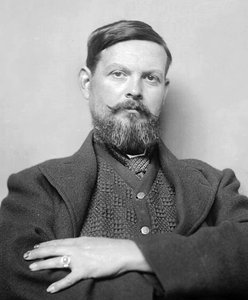
Frank Brangwyn
1867 - 1956 , Belgium
Quick Facts
- Artistic Movement Or Style: Arts & Crafts, Orientalism
- Artists Or Movements Influenced By This Artist: ['British decorative arts']
- Artists Who Influenced This Artist: ['William Morris']
- Date Of Birth: 1867
- Date Of Death: 1956
- Full Name: Sir Frank William Brangwyn
- Nationality: British
- Notable Artworks:
- Funeral at Sea
- The Golden Horn
- Arab Musicians
- Begonias
- Place Of Birth (City And Country): Bruges, Belgium
Related Articles
Frank Brangwyn: A Life Immersed in Colour, Craft & the Spirit of Modern British Art
Explore the vibrant life & prolific work of Frank Brangwyn, a master of British art. Discover his stunning paintings, designs, and monumental Empire Panels – a celebration of colour, craft, and artistic innovation.

The Enduring Legacy of Oil on Canvas: Technique, History & Aesthetic Impact
Explore the rich history & techniques of oil painting – from Renaissance masters to Impressionism. Discover pigments, layering methods, and why this timeless medium endures. Expert insights for artists & art enthusiasts.

Oil on Canvas: A Historical & Technical Exploration of a Timeless Artistic Medium
Explore the rich history & enduring techniques of oil painting on canvas. Discover the science behind its longevity, conservation practices, and contemporary relevance. Expert insights for art enthusiasts.

The Enduring Power of Painting: A Historical & Contemporary Exploration of Form and Emotion
Explore the rich history & enduring techniques of oil painting with ArtsDot. Discover masterpieces, learn about art collecting, and find authentic handmade reproductions crafted by skilled artists.

The Enduring Legacy of Oil on Canvas: Technique, History & Contemporary Practice
Explore the rich history & enduring techniques of oil painting on canvas. Discover the science behind its longevity, conservation practices, and contemporary relevance. Expert insights for art enthusiasts.