 Preview
 Send
Send Share
Share
 Details

 Download
 Similars
 X-Ray
X-Ray Diaporama
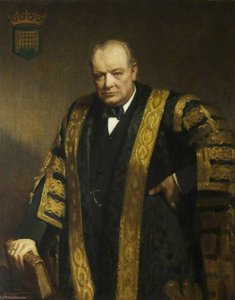
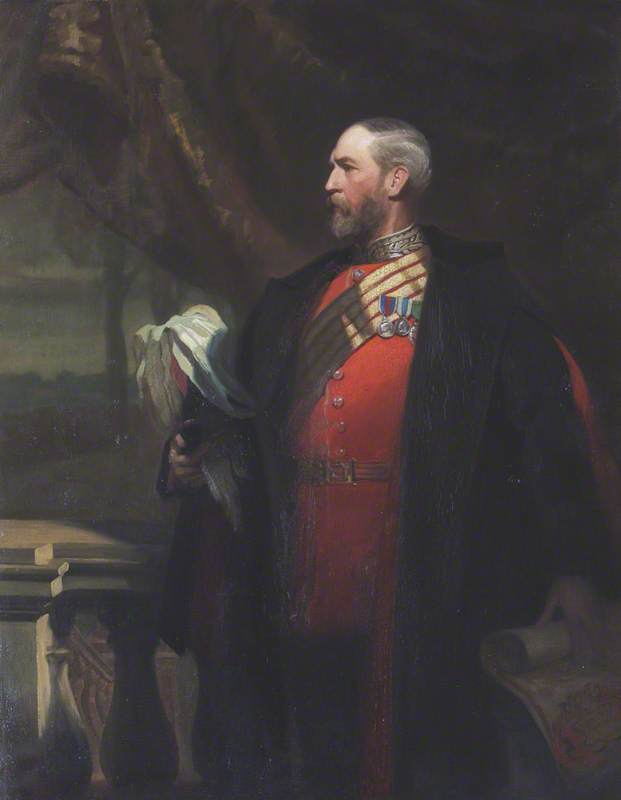
Adelbert Wellington Brownlow Cust (1844–1921), 3rd Earl Brownlow, GCVO, PC, MP
 Oil On Canvas
- WallArt
- Late 19th-century Portraiture
 1908
1908 205.0 x 166.0 cm
 National Trust
 Read More
Giclée / Art Print
Museum-quality giclée or canvas print with fast production and flexible finish options. ( Buy Hand Made Painting Buy Image)




P118B $10

P118H $10

P118W $10

P438Z $10

P508JH $12

P508YH $12

P805H $10

P805Z $10

P919BZ $10

P919G $10

P919XJ $10

P959ZH $10

P968JZ $12

W106C $8

W218G $10

W218JH $8

W218Y $10

W307PJ $10

W316G $10

W316PJ $8

W316Y $10

W398PJ $8

W4111J $10

W500HY $15

W500JH $15

W692G $12

W849H $8

W940BG $15

W953PJ $8




Pick from our preset sizes that match the artwork's original proportions.

You may enter your own dimensions to fit a specific frame or space. If your selected size does not match the original image's proportions, we will either crop the artwork or extend the image with a mirrored or solid-fill edge. A digital mockup will be sent for your approval before production begins.
Please note that the on-screen preview does not reflect the actual cropping or extension. Only the mockup will accurately show the final composition.
While custom sizes are available, we recommend selecting a dimension from the predefined list to preserve the original proportions.
Worldwide Delivery () in 2 weeks instead of standard 4/5 weeks. (20 August)

Free Worldwide Express Shipping

High-Quality Linen Canvas

Full Shipping Insurance

Customs Tax Refund Guarantee

True Color Matching Guarantee

60-Day Return Policy (Defects Only)

100% Money-Back Guarantee

Bulk Discount Offer
 Glass option is only available in size under 110 CM

Adelbert Wellington Brownlow Cust (1844–1921), 3rd Earl Brownlow, GCVO, PC, MP
Giclée / Art Print
Reproduction Size
-


Total Price
$ 63
Collectible Description
A Portrait of Dignity: Adelbert Wellington Brownlow Cust, 3rd Earl Brownlow by Frank O. Salisbury
This striking portrait, painted in 1908 by the esteemed British artist Frank Owen Salisbury, captures Adelbert Wellington Brownlow Cust, the 3rd Earl Brownlow, a figure of considerable influence within late Victorian and Edwardian society. More than just a likeness, it’s a carefully constructed representation of status, intellect, and perhaps a touch of quiet melancholy—a window into a world of privilege and responsibility. The painting stands as a testament to Salisbury's skill in portraying the upper echelons of British aristocracy, embodying the formal conventions of late 19th-century portraiture while subtly hinting at the complexities of its subject.
The Composition and Artistic Technique
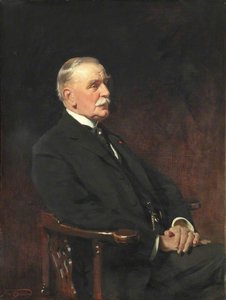
Salisbury’s approach is rooted in realism, evident in the meticulous rendering of detail. The Earl dominates the foreground, posed in a dignified three-quarter view that draws the viewer into his gaze. He faces slightly to the right, creating an impression of engagement while maintaining a sense of reserved authority. A glimpse of a table and chairs suggests an interior setting—perhaps a study or dining room within one of the Earl’s grand estates—grounding the figure in a tangible world. The background is deliberately softened, employing atmospheric perspective to gently fade into muted tones, ensuring that all attention remains focused on the central subject. The artist masterfully utilizes light and shadow; diffused illumination from the left highlights the Earl's face and clothing, while subtle shadows define his form and add depth. Noticeable brushstrokes contribute a tactile quality to the canvas, particularly in the rendering of fabrics and textures—the smooth skin tones contrasting with the rougher weave of his attire.
Symbolism and Social Context
Beyond mere representation, the portrait is rich in symbolic detail reflecting the Earl’s position. His formal attire, complete with medals and decorations, speaks volumes about his military service and courtly duties—he served as a Volunteer Aide-de-Camp to three monarchs and held various important positions within government and the armed forces. The book he holds is not merely an accessory; it suggests intellectual pursuits and refinement, aligning him with the ideals of the educated elite. The color palette itself contributes to the overall impression: rich reds and golds evoke a sense of opulence and power, while cooler tones in the background provide contrast and balance. This portrait was created during a period of significant social change in Britain—the waning years of the Victorian era transitioning into Edwardian society. The aristocracy still held considerable sway, but their world was facing new challenges from industrialization, rising democratic movements, and shifting cultural norms. Salisbury’s work captures this moment of transition, presenting a figure firmly rooted in tradition while subtly acknowledging the changing landscape around him.
Frank O. Salisbury: Britain's Painter Laureate
The artist behind this compelling portrait, Frank Owen Salisbury (1874-1962), earned the affectionate title "Britain’s Painter Laureate." His career was marked by a steadfast commitment to traditional artistic values and a keen ability to capture the likenesses of prominent figures. Remarkably, Salisbury's early education was largely home-based due to health concerns, but he received invaluable training from his brother, a stained glass artist, which honed his skills in detail work and color application. He later attended the Royal Academy Schools, where he excelled and developed a distinctive style characterized by realism and meticulous observation. While he enjoyed considerable success during his lifetime, painting royalty and influential figures alike, Salisbury remained a staunch critic of modern art movements, preferring to uphold the established traditions of portraiture.
Related Artworks
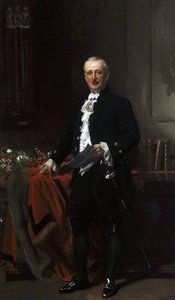
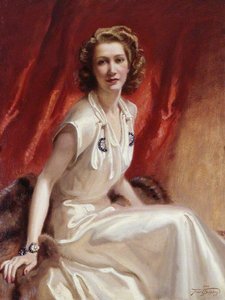
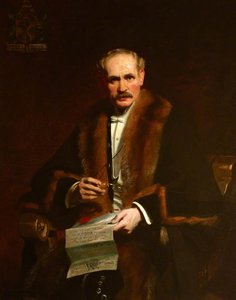
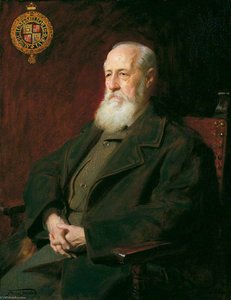
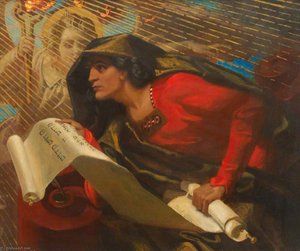
Artist Biography
Frank Owen Salisbury: A Life in Portraiture and Pageantry
- Born: Harpenden, United Kingdom (December 18, 1874)
- Died: August 31, 1962
- Known as "Britain's Painter Laureate"
Early Life and Training
- Salisbury’s early life was marked by delicate health, leading to a home-based education primarily overseen by his sister, Emilie.
- He began working at his father’s cycle depot, repairing bicycles.
- At the age of 15, he was apprenticed to his brother, Henry James Salisbury, who managed a stained glass company in St Albans. This apprenticeship provided him with invaluable skills in painting and detail work crucial for stained glass artistry.
- He attended Heatherley’s School of Art and later won scholarships to the Royal Academy Schools (1892-1897), where he excelled, earning two silver medals and the Landseer scholarship which facilitated travel to Italy in 1896.
Artistic Development and Style
- Salisbury’s style was characterized by a steadfastly conservative approach, rooted in traditional techniques and subject matter. He favored large-scale canvases depicting historical events and ceremonial occasions.
- His early work included portraiture of local gentry and members of the Harpenden Methodist Church.
- A pivotal meeting with Lord Wakefield introduced him to society portraiture, leading to commissions from prominent figures.
- He developed a rapid painting technique, reportedly honed by daily practice painting his twin daughters for an hour each morning.
- His work was influenced by Renaissance frescos and a desire to capture the grandeur of pageantry.
Major Achievements and Notable Works
- Royal Portraits: Salisbury gained significant recognition for his portraits of the British Royal Family, including twenty-five members of the House of Windsor and being the first artist to paint HM Queen Elizabeth II.
- Winston Churchill: He painted Winston Churchill more times than any other artist, creating iconic images such as those depicting him in a siren suit and during the "Blood, Sweat, and Tears" speech.
- American Presidents: Salisbury’s reputation extended to the United States, where he painted six US presidents, including Franklin D. Roosevelt (whose portrait remains the official White House portrait).
- Notable Sitters: Other significant portraits include those of Richard Burton, Andrew Carnegie, Sir Alan Cobham, Sir Robert Ludvig Mond, Maria Montessori, Montgomery of Alamein, Earl Mountbatten of Burma, Benito Mussolini, John Player, Lord Rank, Jan-Christiaan Smuts and Sir Henry Wood.
- Mural for the Royal Exchange: In 1919, he painted a large mural for the Royal Exchange in London commemorating the National Peace Thanksgiving Service.
Historical Significance and Legacy
- Salisbury achieved considerable financial success on both sides of the Atlantic, embodying what was considered the "American Dream."
- Despite his prolific output and popularity, he was never elected a member of the Royal Academy, a source of disappointment for him.
- He was a vocal critic of modern art movements like Cubism and Surrealism, reflecting a preference for traditional artistic values.
- His legacy lies in his ability to capture the essence of prominent figures and historical moments through a classical and dignified style, solidifying his place as one of Britain's leading society artists of his generation.
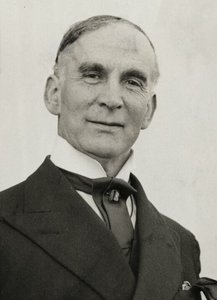
Frank O. Salisbury
1874 - 1962 , United Kingdom
Quick Facts
- Artistic Movement Or Style: Conservative Realism
- Artists Who Influenced This Artist: ['Renaissance artists']
- Date Of Birth: December 18, 1874
- Date Of Death: August 31, 1962
- Full Name: Frank Owen Salisbury
- Nationality: English
- Notable Artworks:
- The Boy Cornwell
- Winston Churchill portraits
- Queen Elizabeth II portrait
- Royal Exchange mural
- Place Of Birth: Harpenden, United Kingdom
Related Articles
Frank O. Salisbury: Capturing an Era Through Victorian Portraiture & Atmospheric Realism
Explore the life & work of Frank O. Salisbury, Britain's celebrated 'Painter Laureate'. Discover his masterful Victorian portraits, atmospheric realism, and captivating historical murals. A deep dive into a remarkable artistic legacy.

Frank Brangwyn: A Life Immersed in Colour, Craft & the Spirit of Modern British Art
Explore the vibrant life & prolific work of Frank Brangwyn, a master of British art. Discover his stunning paintings, designs, and monumental Empire Panels – a celebration of colour, craft, and artistic innovation.
British Museum Masterpieces: Explore 25 Iconic Artworks & Decor Inspiration
Journey through 25 iconic artworks at the British Museum, London! Explore masterpieces from Egyptian sculptures to Renaissance paintings & uncover their stories. Find museum-quality art reproductions and curated decor ideas on ArtsDot.com.
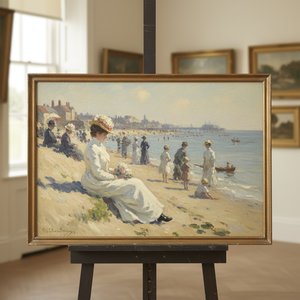
Philip Wilson Steer: Capturing Modern Life & British Impressionism's Essence
Explore the life & art of Philip Wilson Steer, a leading British Impressionist painter. Discover his coastal scenes, influences, and legacy. Expert analysis & high-quality reproductions at ArtsDot.
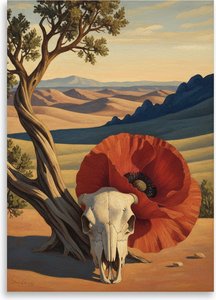
Georgia O'Keeffe: Redefining Modernism Through Symbolism & the American Landscape
Explore the captivating world of Georgia O'Keeffe! Discover her groundbreaking flower paintings, New Mexico landscapes & lasting impact on American Modernism. Expert analysis and insights.