

 Preview
 Send
Send Share
Share
 Details

 Download
 Similars
 X-Ray
X-Ray Diaporama
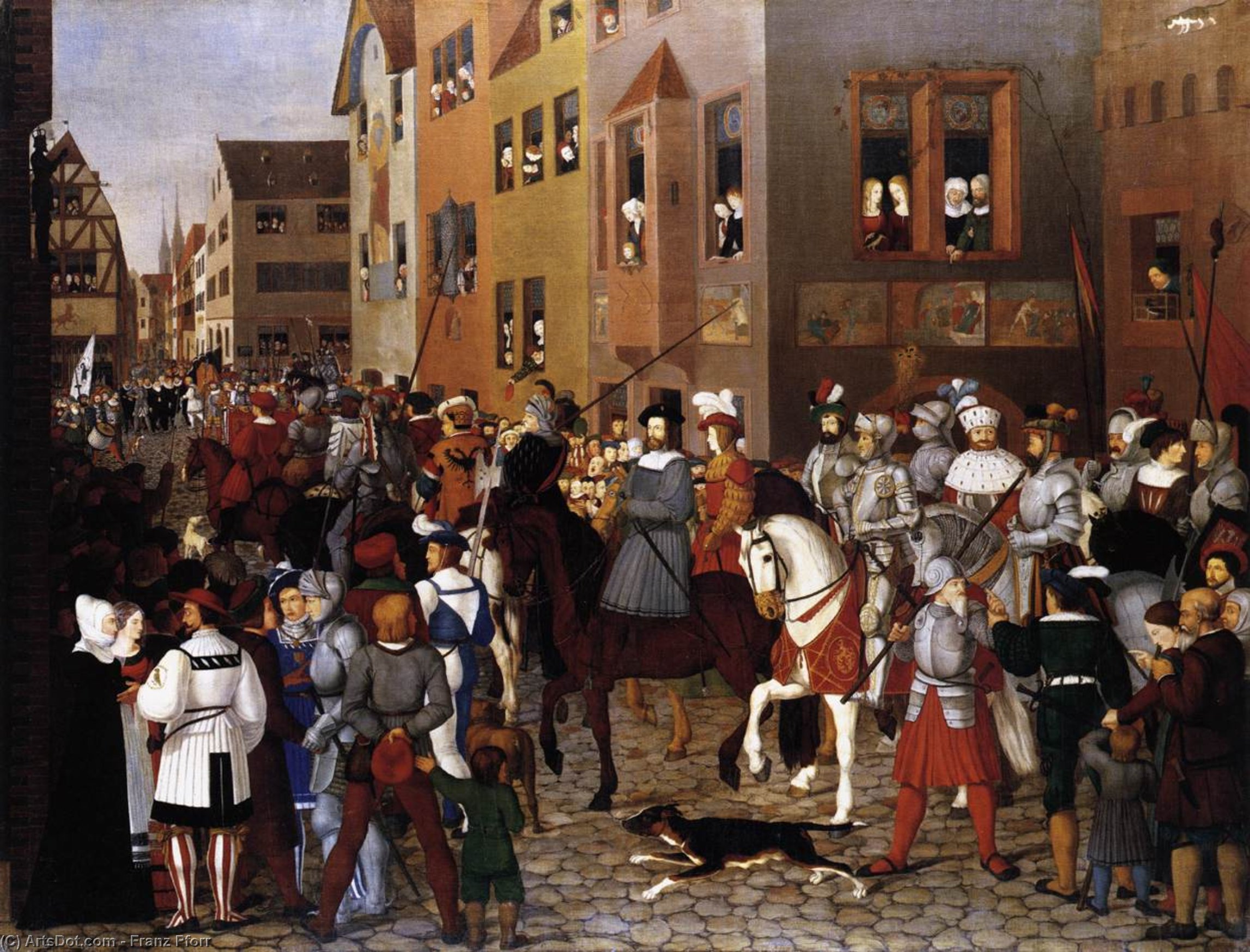
The Entry of Emperor Rudolf of Habsburg into Basel
 Acrylic On Canvas
- WallArt
- Nazarene Movement
 1809
1809 90.0 x 119.0 cm
 Städelsche Kunstinstitut Und Städtische Galerie
 Read More
Purchase a high-resolution, enhanced digital image, far superior to the online preview.
Each file is meticulously prepared by our in-house specialists using advanced tools and expert manual retouching. We ensure every image has exceptional clarity, precise color accuracy, and fine detail.
The final file is delivered via email within 72 hours, optimized for immediate use in professional, editorial, and print environments. This is the same quality trusted by top-tier design studios, publishers, and galleries.
Digital Image
Download a high-resolution file for personal display, printing, and creative projects. ( Buy Print Buy Hand Made Painting)
Included in Every Digital Image Order
Expert Digital Delivery, Guaranteed
When you choose ArtsDot.com, you're not just getting an image - you're receiving a professionally enhanced digital artwork, crafted with precision and backed by a satisfaction guarantee. Here's everything that comes with your order, automatically:

Fast Email Delivery
Your high-resolution digital image file will be emailed to you within 72 hours of ordering - ready for immediate use.

AI-Enhanced Digital File
Your artwork is professionally optimized using advanced AI tools and manual editing, ensuring maximum detail, clarity, and color accuracy.

Free Lifetime Re-Delivery
Accidentally deleted or lost your file? No worries - we'll resend it to you anytime, free of charge.

No Import Fees - Ever
Enjoy your artwork instantly with zero customs, duties, or delivery fees - digital downloads are always tax-free.

Color Accuracy Guarantee
We ensure your digital image reflects the original colors as closely as possible using professional tools and color management.

60-Day Satisfaction Guarantee
If you're not satisfied with your digital image, we'll revise it or refund 100% within 60 days - no questions asked.

100% Money-Back Guarantee
Not satisfied? Get a full refund within 60 days of receiving your digital file - no questions asked.

Bulk Order Discounts
Buy 3 images, save 10% - Buy 5, save 15% - Buy 10+, save 20%. Great for creative projects, galleries, and agencies.
The Grand Entry: Franz Pforr’s Vision of Habsburg Power
Franz Pforr's "The Entry of Emperor Rudolf of Habsburg into Basel," painted in 1809, is more than just a historical depiction; it’s a carefully constructed tableau of imperial authority and nascent Romanticism. This monumental oil on canvas transports the viewer to a pivotal moment – the arrival of Rudolf I, the first elected King of the Romans, in the bustling city of Basel in 1273. Pforr, a key figure within the Nazarene movement, eschewed the prevailing Neoclassical trends of his time, instead embracing a style rooted in the perceived sincerity and spiritual depth of early Christian art. The painting isn’t merely a record of an event; it's a deliberate evocation of a bygone era, imbued with a potent sense of national pride and dynastic ambition.
The scene unfolds with dramatic immediacy. Rudolf, depicted as a youthful and vigorous figure astride a magnificent warhorse, dominates the composition. His posture exudes confidence and power, while his entourage – knights in gleaming armor, richly dressed officials, and a throng of cheering citizens – reinforces the image of imperial grandeur. The artist masterfully employs perspective to draw the eye towards the central action, creating a dynamic sense of movement as the procession surges into the city gates. Note the careful attention to detail: the intricate embroidery on the clothing, the polished armor reflecting the light, and the expressions of excitement and reverence on the faces of the onlookers all contribute to the painting’s immersive quality.
The Nazarene Aesthetic: A Return to Spiritual Roots
Pforr's artistic choices are deeply informed by the principles of the Nazarene movement. Rejecting the polished surfaces and idealized forms favored by many contemporary artists, he opted for a deliberately rough and expressive style. The colors are rich and vibrant, yet tempered with a sense of muted intensity – a characteristic often associated with the use of oil paints in layers to achieve depth and luminosity. The figures themselves are rendered with a degree of simplification, prioritizing emotional impact over meticulous realism. This stylistic approach reflects the Nazarenes’ desire to reconnect with the spiritual essence of art, believing that true beauty resided not in superficial appearances but in conveying profound religious themes.
Furthermore, Pforr's use of light and shadow is particularly noteworthy. The scene is bathed in a warm, golden glow, suggesting both the auspiciousness of the occasion and the inherent dignity of the Habsburg dynasty. The artist skillfully employs chiaroscuro – the dramatic contrast between light and dark – to sculpt the forms of the figures and create a sense of three-dimensionality. This technique not only enhances the painting’s visual impact but also serves to heighten its emotional resonance, drawing the viewer's attention to key elements within the composition.
Symbolism and Historical Context
The "Entry of Emperor Rudolf" is laden with symbolic meaning. Rudolf I was a pivotal figure in German history, marking the beginning of the Habsburg dynasty’s rise to prominence. His election as King of the Romans signaled a return to stability after decades of political fragmentation and paved the way for the empire's eventual expansion under subsequent rulers. The painting, therefore, functions as both a historical record and a carefully crafted propaganda piece, designed to legitimize the Habsburg claim to power and inspire loyalty among the German populace.
Basel itself holds significance within this narrative. As a major trading center and a strategically important city in the heart of the Holy Roman Empire, Basel served as the perfect stage for Rudolf’s triumphant arrival. The painting captures not only the emperor's personal journey but also the broader ambitions of the Habsburg dynasty to consolidate its influence across Central Europe. The inclusion of the dog, likely accompanying one of the riders, adds a touch of humanity and reinforces the image of Rudolf as a benevolent ruler who cares for his people.
A Legacy of Romantic Vision
Franz Pforr’s “The Entry of Emperor Rudolf of Habsburg into Basel” stands as a remarkable example of early 19th-century art, blending historical accuracy with emotional intensity and stylistic innovation. It is a testament to the Nazarene movement's commitment to spiritual expression and its rejection of prevailing artistic conventions. The painting’s dramatic composition, rich colors, and evocative symbolism continue to captivate viewers today, offering a glimpse into a pivotal moment in German history and a profound meditation on power, ambition, and the enduring legacy of the Habsburg dynasty. Reproductions of this powerful artwork offer a stunning window into a bygone era, bringing the grandeur of imperial Europe vividly to life.
Related Artworks
Artist Biography
Franz Pforr: A Pioneer of the Nazarene Movement
Early Life and Training
- Born: 1788 in Frankfurt am Main, Hesse, Germany.
- Franz Pforr received his initial artistic training from his father, Johann Georg Pforr, a painter himself.
- His uncle, Johann Heinrich Tischbein the Younger, an art professor and gallery inspector, also played a crucial role in his early development.
- He continued his studies at the Academy of Fine Arts in Vienna, laying the foundation for his future artistic pursuits.
The Nazarene Movement and Roman Period
- In 1810, Pforr moved to Rome alongside fellow artists including Johann Friedrich Overbeck, Ludwig Vogel, and Johann Konrad Hottinger.
- The Nazarene Movement: This group sought a return to the perceived purity of early Christian art, rejecting what they saw as the superficiality of contemporary styles.
- They resided at the abandoned monastery of Sant’Isidoro a Capo le Case, fostering a communal and spiritually focused artistic environment.
- Overbeck became a significant influence during this period, shaping Pforr's aesthetic direction.
Artistic Style and Themes
- Pforr’s work is characterized by its Romanticism and deep religious sentiment.
- He focused on historical and biblical subjects, often depicting scenes with a sense of solemnity and spiritual intensity.
- Chiaroscuro, the dramatic use of light and shadow, is prominent in his paintings, enhancing their emotional impact.
- His style blended elements of German Romanticism with the ideals of the Nazarenes – a focus on simplicity, sincerity, and spiritual depth.
Major Works
- The Entry of Emperor Rudolf of Habsburg into Basel: A historical painting showcasing Pforr’s narrative skill.
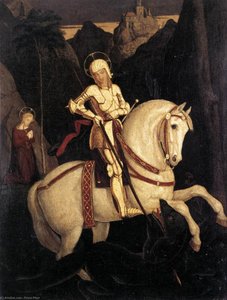
- St George and the Dragon: Demonstrates his ability to depict dramatic scenes with religious symbolism.
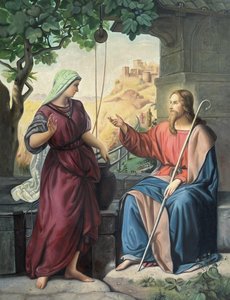
- Shulamit and Mary: An example of his exploration of biblical themes and intimate portrayals.
- Raphael, Fra Angelico and Michelangelo over Rome: A tribute to the masters he admired and a reflection of the Nazarene’s reverence for Renaissance art.
- Nocturnal Homecoming: Showcases his skill in Flemish realism with intimate figures.
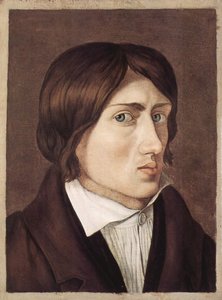
- Several self-portraits provide insight into his personal appearance and artistic sensibility.
Legacy and Historical Significance
- Early Death: Tragically, Franz Pforr died of tuberculosis in Albano Laziale, Rome, in 1812 at the young age of 24.
- Despite his short life, he left a significant mark on the Nazarene movement and early 19th-century art.
- His work embodies the search for spiritual expression that characterized the Romantic era.
- Pforr’s influence can be seen in the subsequent development of German Romantic painting, inspiring artists to explore religious and historical themes with renewed fervor.
- He remains a notable figure for those studying the intersection of art, religion, and national identity in 19th-century Germany.
Franz Pforr
1788 - 1812 , Germany
Quick Facts
- Birth Date: 1788
- Birth Place: Hesse, Germany
- Death Date: 1812
- Influenced By:
- Johann Georg Pforr
- Johann Heinrich Tischbein the Younger
- Johann Friedrich Overbeck
- Movement: Nazarene movement
- Name: Franz Pforr
- Nationality: German
- Notable Works:
- The Entry of Emperor Rudolf of Habsburg into Basel
- St George and the Dragon
- Shulamit and Mary
- Raphael, Fra Angelico and Michelangelo over Rome
- Nocturnal homecoming

