

 Send
Send Share
Share
 Details

 Download
 Similars
 Diaporama
Franz Joseph I of Austria


 Read More
Giclée / Art Print
Museum-quality giclée or canvas print with fast production and flexible finish options. ( Buy Hand Made Painting Buy Image)




































Pick from our preset sizes that match the artwork's original proportions.

You may enter your own dimensions to fit a specific frame or space. If your selected size does not match the original image's proportions, we will either crop the artwork or extend the image with a mirrored or solid-fill edge. A digital mockup will be sent for your approval before production begins.
Please note that the on-screen preview does not reflect the actual cropping or extension. Only the mockup will accurately show the final composition.
While custom sizes are available, we recommend selecting a dimension from the predefined list to preserve the original proportions.
Worldwide Delivery () in 2 weeks instead of standard 4/5 weeks. (4 September)

Free Worldwide Express Shipping

High-Quality Linen Canvas

Full Shipping Insurance

Customs Tax Refund Guarantee

True Color Matching Guarantee

60-Day Return Policy (Defects Only)

100% Money-Back Guarantee

Bulk Discount Offer
 Glass option is only available in size under 110 CM

Franz Joseph I of Austria
Giclée / Art Print
Reproduction Size
-


Total Price
$ 63
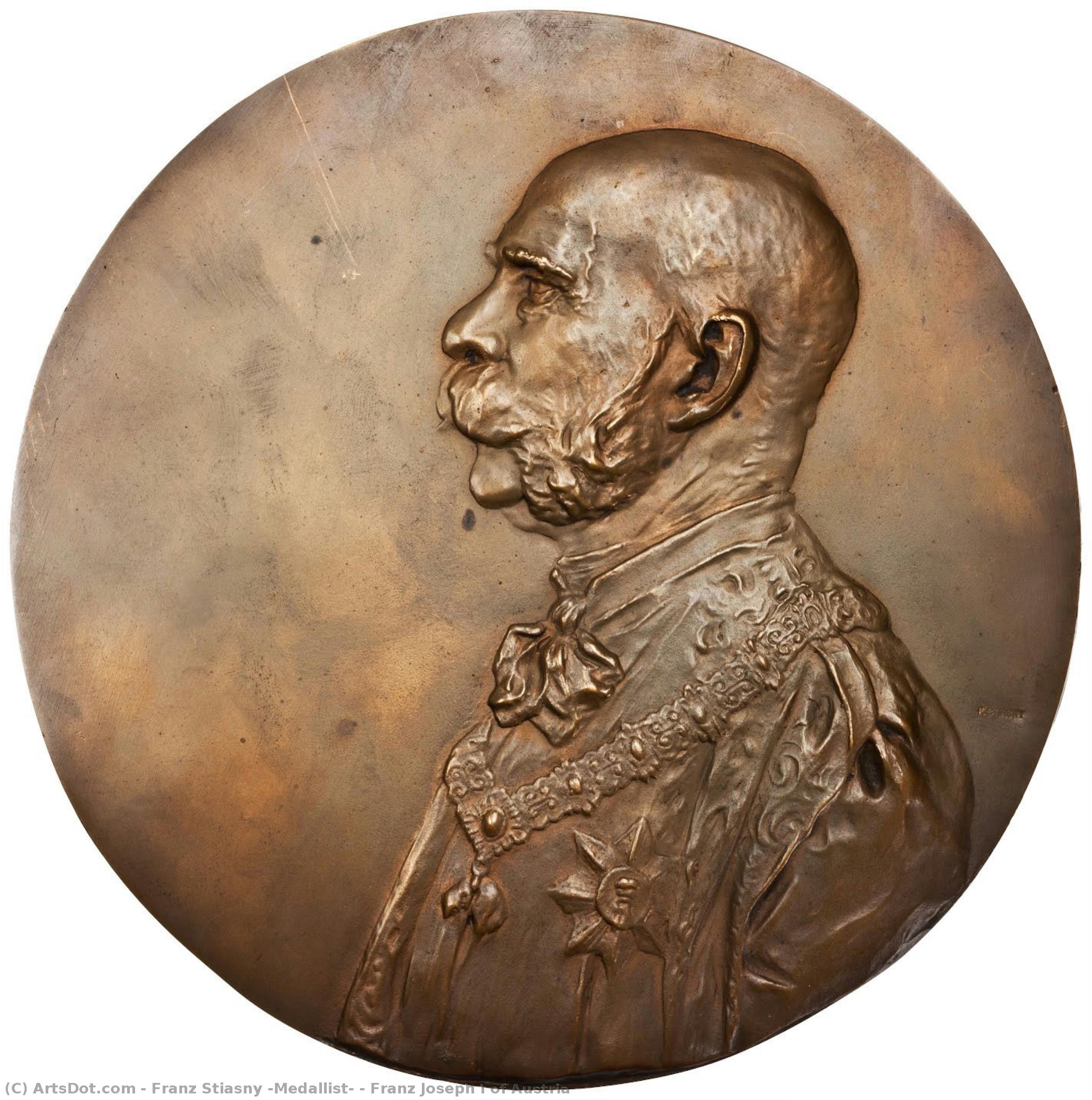
A Bronze Legacy: The Eternal Profile of Franz Joseph I
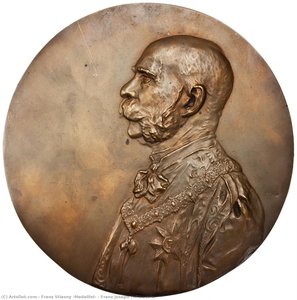
In the quiet, tactile presence of bronze, history finds its most enduring voice. This exquisite medallion, sculpted by the master medallist Franz Stiasny, serves as a profound window into the twilight of an empire. Depicting the venerable Franz Joseph I of Austria, the piece captures more than just a likeness; it encapsulates the gravity and the fading grandeur of the Austro-Hungarian era. The profile, rendered with meticulous precision, presents a man whose reign defined a century. Through the subtle interplay of light and shadow across the metallic surface, we encounter a ruler characterized by his iconic mustache and beard, his gaze fixed toward an unseen horizon, embodying both the steadfastness of tradition and the weight of imperial responsibility.
The artistry of Stiasny is revealed in every textured ridge and polished contour. As a student of the legendary Gustav Klimt, Stiasny brought a unique sensitivity to the medium of bronze portraiture, blending the decorative elegance of the Vienna Secession with a raw, expressive depth. In this particular work, the technique of low-relief casting allows for a breathtaking level of detail. One can trace the intricate decorations of the military uniform, where stars and medals emerge from the bronze as if caught in a moment of frozen splendor. The deliberate patina and the slight, weathered imperfections on the surface do not detract from the piece; rather, they enhance its soul, suggesting a relic that has survived the tumultuous shifts of the early 20th century to reach us today.
Symbolism and Historical ResonanceTo hold or to view such a medallion is to engage with the very concept of memory. The circular form of the piece, reminiscent of ancient coins, symbolizes the cyclical nature of power and the permanence of legacy. Every scratch and discoloration on the bronze acts as a silent witness to the passage of time, grounding the imperial subject in a tangible, human reality. For the collector or the historian, this work is not merely an object of decoration but a vessel of historical truth. It represents the intersection of personal identity and political destiny, where the individual features of the Emperor are inextricably linked to the fate of his vast, multi-ethnic empire.
An Inspiration for Sophisticated InteriorsFor the discerning interior designer or art enthusiast, a high-quality reproduction of this medallion offers an unparalleled opportunity to introduce a sense of historical weight and classical elegance into a contemporary space. This piece functions beautifully as a focal point in a curated gallery wall or as a sophisticated accent within a study lined with leather-bound books. Its bronze tones provide a warm, grounding element that complements rich wood textures, velvet fabrics, and muted color palettes. By integrating this work of art, one does not simply decorate a room; one invites a conversation between the modern era and the storied past, creating an atmosphere of intellectual depth and timeless prestige.
Related Artworks
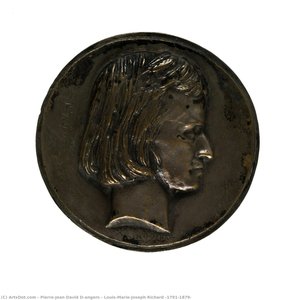
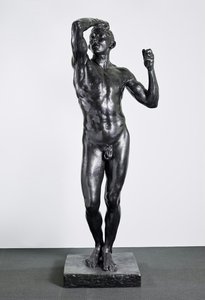
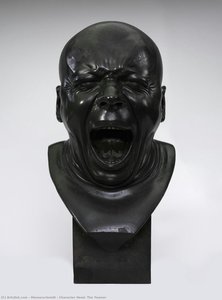
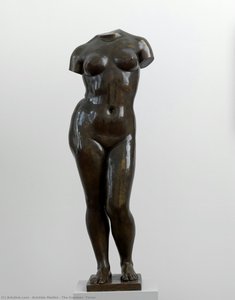
Artist Biography
The Bronze Legacy of Franz Stiasny
In the quiet, tactile presence of bronze, history finds its most enduring voice. Franz Stiasny (1881–1941) stands as a singular figure in Austrian art history, a master medallist whose work captured the very spirit of an era caught between imperial grandeur and modern upheaval. Born in Vienna, Stiasny’s artistic journey was deeply rooted in the prestigious Akademie der Bildenden Künste Wien. It was here that he encountered the transformative influence of Gustav Klimt, a mentorship that would profoundly shape his aesthetic sensibilities. From Klimt, Stiasny inherited an appreciation for stylized forms and a unique sensitivity to decorative elegance, elements that he would later translate into the much more rugged and intimate medium of bronze casting.
Stiasny’s technical mastery was further refined through his studies under Wilhelm Moser, where he mastered the delicate art of wax modeling and the complex processes of bronze casting. This rigorous training allowed him to move beyond mere likeness, enabling him to explore the psychological depths of his subjects. His work became a bridge between the decorative traditions of the Vienna Secession and the raw, emotional intensity of the Expressionist movement. As a figure connected to the Blue Rider group, alongside luminaries such as Emil Nolde and Karl Schmidt-Rottluff, Stiasny’s artistic development was propelled by an exploration of spirituality, myth, and the human condition, mirroring the core tenets of the avant-garde movements of his time.
A Symphony in Metal
The true essence of Stiasny’s oeuvre lies in his prolific production of bronze portrait medals—rectangular plaques that served as much more than simple commemorations. These works were meticulously crafted to capture the fleeting expressions and profound legacies of the most influential figures of the early 20th century. Unlike traditional, larger-scale sculpture, Stiasny’s medallions prioritized a sense of psychological intimacy. He utilized the inherent qualities of bronze—its ability to retain minute detail while projecting a monumental presence—to create portraits that felt alive with emotion. Through subtle tonal gradations and simplified forms, he achieved a remarkable artistic impact that resonated far beyond the physical dimensions of his plaques.
His subjects were a "who's who" of the cultural and historical landscape, ranging from legendary composers to powerful monarchs. Stiasny is perhaps most celebrated for his portraits of musical giants, including:
- Gustav Mahler
- Alban Berg
- Johannes Brahms
- Oskar Kokoschka
- Emil Nolde
One of his most poignant achievements is his depiction of Franz Joseph I of Austria. In this piece, the medallist captures the gravity and the fading grandeur of the Austro-Hungarian era. Through the interplay of light and shadow across the metallic surface, the viewer encounters a ruler characterized by an iconic presence, embodying both the steadfastness of tradition and the heavy weight of imperial responsibility. The low-relief casting allows for breathtaking detail, where even the intricate decorations of a military uniform emerge from the bronze as if caught in a moment of frozen splendor.
Historical Resonance and Enduring Impact
Stiasny’s work serves as a profound window into the twilight of an empire and the dawn of modernism. His choice of the rectangular format for his medals was a departure from the traditional circular coin, offering a unique canvas for narrative depth. These pieces, often measuring approximately 54mm x 65mm, possess a weight and texture that ground their historical subjects in a tangible reality. To view a Stiasny medallion is to engage with the very concept of memory; the subtle patina and weathered imperfections on the bronze act as silent witnesses to the passage of time, suggesting a relic that has survived the tumultuous shifts of the early 20th century.
Ultimately, the significance of Franz Stiasny lies in his ability to transform a small, portable medium into an epic vessel for history. He did not merely record faces; he captured souls. By blending the decorative elegance of his Viennese roots with the emotional urgency of Expressionism, he created a body of work that remains a vital link to the cultural heartbeat of the Weimar Republic and the enduring legacy of Austrian art.
franz stiasny (medallist)
1881 - 1941 , Austria
Quick Facts
- Artistic Movement Or Style: Expressionist
- Artists Or Movements Influenced By This Artist: ['Blue Rider']
- Artists Who Influenced This Artist: ['Franz Marc']
- Date Of Death: 1941
- Full Name: Franz Stiasny
- Nationality: Austrian
- Notable Artworks: ['Composer Medals']
- Place Of Birth: Vienna, Austria
Related Articles

The Enduring Legacy of Bronze: A Historical & Artistic Exploration for the Collector
Explore the rich history & enduring appeal of bronze sculpture with expert insights for collectors at ArtsDot. Learn about casting techniques, iconic artists, collecting tips & contemporary interpretations.

Bronze Age to Modern Masters: 10 Sculptures That Redefined Art | ArtsDot
Journey through art history with 10 legendary bronze sculptures – from Michelangelo's David to Rodin’s Thinker. Explore the stories, techniques & timeless beauty of these masterpieces. Find museum-quality reproductions & elevate your home decor on ArtsDot.com.
The Enduring Legacy of Bronze: History, Technique & Artistic Expression for the Collector
Explore the rich history & enduring appeal of bronze sculpture with expert insights for collectors at ArtsDot. Learn about casting techniques, iconic artists, and collecting tips.

The Enduring Legacy of Bronze Sculpture: Technique, Symbolism & Cultural Impact
Explore the rich history & enduring appeal of bronze sculpture with expert insights for collectors. Learn about casting techniques, iconic artists, collecting tips & contemporary interpretations at ArtsDot.

The Enduring Legacy of Bronze Sculpture: A Collector's Guide to Form & Cultural Significance
Explore the rich history & enduring appeal of bronze sculpture with expert insights for collectors at ArtsDot. Learn about casting techniques, iconic artists, and collecting tips to build a discerning art collection.


