 Preview
 Send
Send Share
Share
 Details

 Download
 Similars
 X-Ray
X-Ray Diaporama
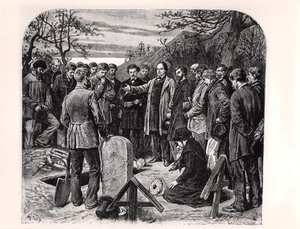
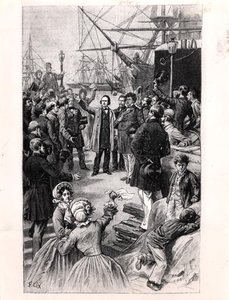
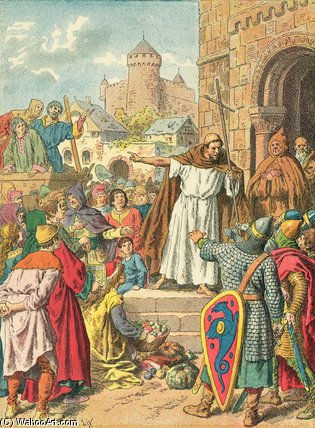
Peter The Hermit Preaching The Crusade

 Read More
Hand Made Oil Reproduction
Hand-painted oil on canvas in your size and frame, made to order by our artists. ( Buy Print Buy Image)




































Pick from our preset sizes that match the artwork's original proportions.

You may enter your own dimensions to fit a specific frame or space. If your selected size does not match the original image's proportions, we will either crop the artwork or extend the painting with additional hand-painted elements. A digital mockup will be sent for your approval before production begins.
Please note that the on-screen preview does not reflect the actual cropping or extension. Only the mockup will accurately show the final composition.
While custom sizes are available, we recommend selecting a dimension from the predefined list to preserve the original proportions.
After order, ArtsDot.com team will email client for instructions and provide a mockup preview
Worldwide Delivery () in 3/4 weeks instead of standard 5 weeks. (17 August). No compromise on quality.

Free Worldwide Express Shipping

High-Quality Linen Canvas

Full Shipping Insurance

Customs Tax Refund Guarantee

True Color Matching Guarantee

60-Day Return Policy (Defects Only)

100% Money-Back Guarantee

Bulk Discount Offer
 Glass option is only available in size under 110 CM

Peter The Hermit Preaching The Crusade
Reproduction Medium
Reproduction Size
-


Total Price
$ 563
Related Artworks



Artist Biography
A Legacy Carved in Stone and Spirit
Frederic Theodore Lix (1830-1897) remains a singular, evocative figure within the tapestry of nineteenth-century French art, a creator whose vision bridged the tangible weight of archaeological reconstruction with the ethereal realms of folklore. Born in Strasbourg, Alsace Lorraine—a region then nestled within the German Empire—Lix’s early years were steeped in an appreciation for meticulous craftsmanship and the enduring strength of historical detail. While his biographical footprint may appear lighter than that of his more famous contemporaries like Gustave Moreau, his artistic soul was deeply anchored in a profound dedication to preserving cultural heritage. His work serves as a bridge between the physical remnants of antiquity and the imaginative reconstructions of what those lost worlds might have once felt like to the ancients.
The foundations of Lix’s mastery were laid at the prestigious École Supérieure des Beaux-Arts in Paris. It was within these hallowed halls that he honed his technical prowess under the guidance of influential instructors, yet his true education perhaps occurred through his obsessive fascination with the ancient civilizations of Europe. He found himself drawn to the mysterious legacies of Celtic and Germanic traditions, a passion that would eventually define his professional identity. This intellectual curiosity drove him to look beyond the contemporary Parisian salons and toward the weathered stones of Brittany and the monumental mysteries of the prehistoric past.
The Architect of Antiquity
Lix’s most enduring contribution to the art world lies in his ambitious sculptural reconstructions, projects that were as much feats of engineering as they were works of fine art. He possessed a rare ability to translate archaeological fragments into monumental presence. His reputation was cemented through his painstaking recreations of Celtic monuments discovered in Brittany, where he sought to breathe life back into structures like the Carnac Stones and various Dolmens. To achieve this, Lix employed innovative and then-modern techniques, including the use of reinforced concrete, allowing him to faithfully reproduce the grandeur and spiritual gravity of these ancient megaliths.
These were not mere copies; they were deeply researched interpretations designed to evoke the spiritual significance of their original sites. Through his hands, the silent stones of the past regained a voice, conveying a sense of awe and primordial power. His sculptural achievements represent a unique intersection of archaeology and artistry, where the scientist's precision meets the sculptor's passion. This commitment to documenting and reconstructing the artistry of bygone eras ensured that even as the physical world changed, the monumental spirit of the Celts remained accessible to the nineteenth-century imagination.
Whimsy and Watercolor: The Illustrative Soul
Beyond the heavy, enduring medium of stone and concrete, Lix possessed a delicate, luminous side that flourished in his illustrative work. As an illustrator, he excelled in producing fantastical watercolor paintings that captured the shimmering essence of European folklore and mythology. In these works, the artist’s hand moved with a different kind of grace, trading the permanence of sculpture for the fluid, dreamlike qualities of pigment on paper. His illustrations often delved into the realms of the supernatural, presenting tales of giants, enchanted worlds, and fairytale romances with a level of detail that invited viewers to lose themselves in the narrative.
This duality—the ability to command both the monumental and the miniature—is what makes Lix such a captivating subject for modern art enthusiasts. Whether he was depicting the historical gravity of a Napoleonic war scene or the whimsical charm of Sleeping Beauty, his work always maintained a signature level of meticulousness. His legacy continues to resonate through various institutions, including the British Museum and the Museu Frederic Marès, serving as a testament to an artist who refused to be confined by a single genre, choosing instead to inhabit the space where history meets myth, and reality meets fantasy.
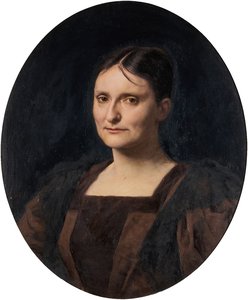
frederic theodore lix
1830 - 1897 , France
Quick Facts
- Artistic Movement Or Style: Sculpture
- Date Of Birth: 1830 Strasbourg France
- Date Of Death: 1897
- Full Name: Frederic Theodore Lix
- Nationality: French
- Notable Artworks:
- Puis Conduisant Ma Prise
- The Battle Of Zurich
- Disturbances In Seoul
- Place Of Birth: Strasbourg France
Related Articles
High Medieval Art: 10 Masterpieces That Shaped an Era | ArtsDot
Journey through High Medieval Art! Explore 10 iconic masterpieces – from Giotto's frescoes to stunning Gothic cathedrals. Discover the stories behind these timeless paintings, sculptures & illuminated manuscripts. Find museum-quality art reproductions at ArtsDot.com.
Illuminating Faith & Power: A Journey Through Medieval Art (c. 500 – c. 1500)
Explore the rich history of Medieval Art (c. 500 – c. 1500) with ArtsDot. Discover Byzantine mosaics, Gothic cathedrals & Renaissance masterpieces. Expert insights & museum-quality reproductions.
The Enduring Power of Illustration: A Historical Survey of Narrative Art & Visual Storytelling
Explore the rich history of illustration! From ancient cave paintings to Art Nouveau masterpieces, discover how visual storytelling has shaped culture. Expert insights & stunning examples.

Timeless Elegance: How to Integrate High Medieval Art into Your Modern Interior Design
Discover how to infuse your modern home with the divine light of High Medieval art. From gilded illuminated manuscripts to Gothic-inspired textures, learn expert tips for integrating timeless elegance and historical grandeur into contemporary interior design.

Kay Rasmus Nielsen: A Golden Age Illustrator's Enchanting Legacy of Symbolism & Narrative
Explore the captivating world of Kay Rasmus Nielsen, a celebrated Golden Age illustrator renowned for his Art Nouveau fairy tale art & Disney contributions. Discover his unique style, enduring legacy, and how to collect his enchanting works.