

 Preview
 Send
Send Share
Share
 Details

 Download
 Similars
 X-Ray
X-Ray Diaporama
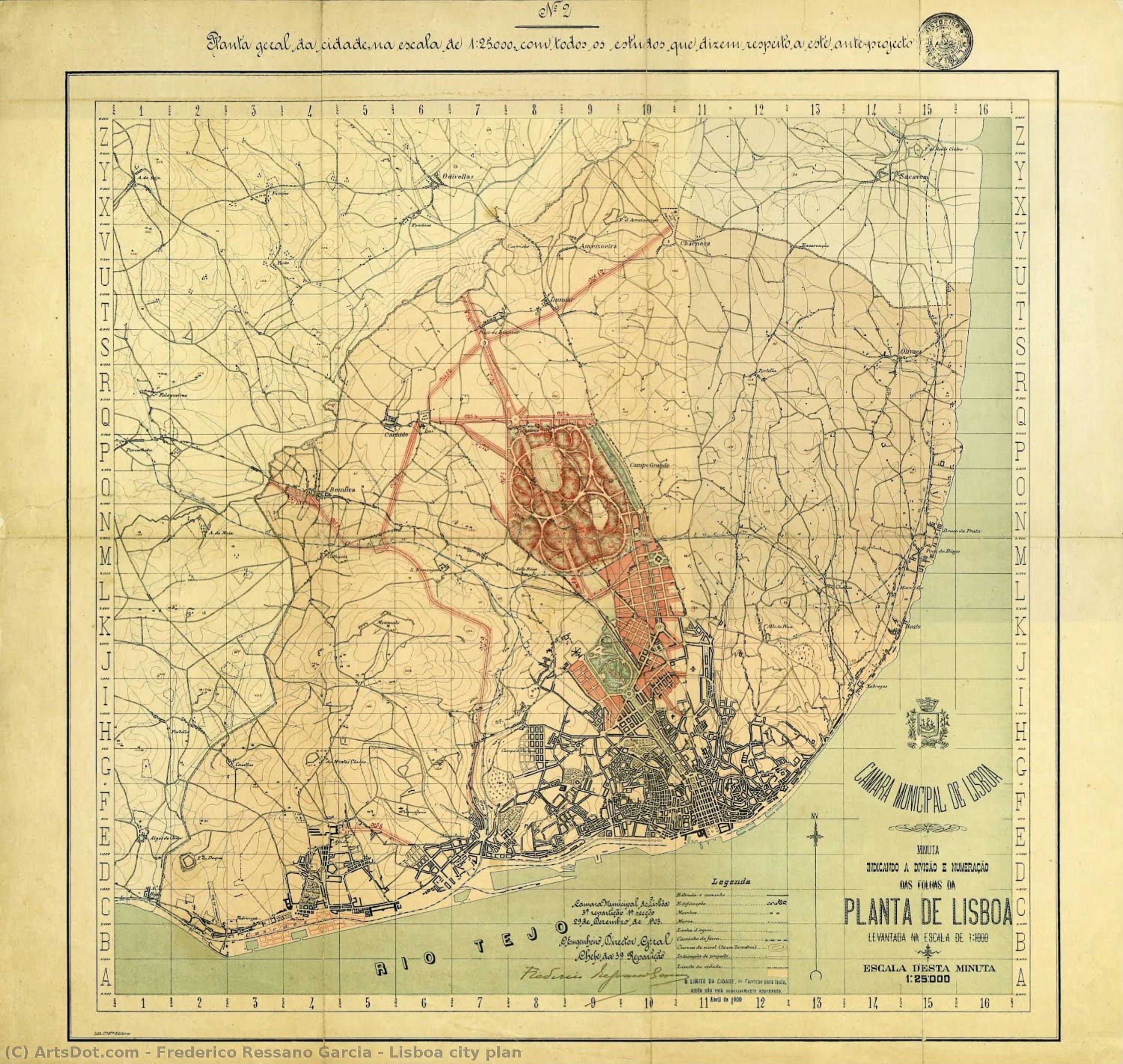
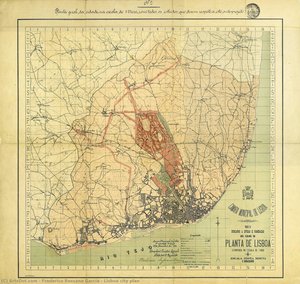
Lisboa city plan
 Ink On Paper
 1903
1903- 19th Century
 64.0 x 62.0 cm
 Lisboa Municipal Archive
 Read More
Hand Made Oil Reproduction
Hand-painted oil on canvas in your size and frame, made to order by our artists. ( Buy Print Buy Image)




P118B $10

P118H $10

P118W $10

P438Z $10

P508JH $12

P508YH $12

P805H $10

P805Z $10

P919BZ $10

P919G $10

P919XJ $10

P959ZH $10

P968JZ $12

W106C $8

W218G $10

W218JH $8

W218Y $10

W307PJ $10

W316G $10

W316PJ $8

W316Y $10

W398PJ $8

W4111J $10

W500HY $15

W500JH $15

W692G $12

W849H $8

W940BG $15

W953PJ $8




Pick from our preset sizes that match the artwork's original proportions.

You may enter your own dimensions to fit a specific frame or space. If your selected size does not match the original image's proportions, we will either crop the artwork or extend the painting with additional hand-painted elements. A digital mockup will be sent for your approval before production begins.
Please note that the on-screen preview does not reflect the actual cropping or extension. Only the mockup will accurately show the final composition.
While custom sizes are available, we recommend selecting a dimension from the predefined list to preserve the original proportions.
After order, ArtsDot.com team will email client for instructions and provide a mockup preview
Worldwide Delivery () in 3/4 weeks instead of standard 5 weeks. (20 August). No compromise on quality.

Free Worldwide Express Shipping

High-Quality Linen Canvas

Full Shipping Insurance

Customs Tax Refund Guarantee

True Color Matching Guarantee

60-Day Return Policy (Defects Only)

100% Money-Back Guarantee

Bulk Discount Offer
 Glass option is only available in size under 110 CM

Lisboa city plan
Reproduction Medium
Reproduction Size
-


Total Price
$ 263
Related Artworks
Artist Biography
The Architect of Modern Lisbon: Frederico Ressano Garcia
Frederico Ressano Garcia (1847-1911) remains a pivotal, though often unsung, figure in the transformation of Lisbon during the late 19th century. More than simply an engineer, he was a visionary who reshaped the very fabric of Portugal’s capital, imbuing it with a sense of modernity inspired by the grand urban projects unfolding across Europe, particularly those undertaken by Georges-Eugène Haussmann in Paris. His legacy isn't found in paintings adorning museum walls, but rather in the boulevards and public spaces that continue to define Lisbon’s character today.
Early Life and Formation
Born in Lisbon in 1847, Ressano Garcia dedicated his life to public service. He wasn't solely a technical expert; he was deeply involved in politics and administration, holding positions that allowed him to translate theoretical concepts into tangible realities. His formal education centered around engineering, providing him with the foundational skills necessary for ambitious urban planning. However, it was his astute observation of European capitals—and specifically Paris under Haussmann’s direction—that truly shaped his approach. The rapid modernization of Paris, with its wide avenues designed to improve circulation and public health, served as a powerful model for Lisbon, a city grappling with overcrowding and outdated infrastructure.
A Parisian Influence on Portuguese Soil
The mid-19th century witnessed a wave of urban renewal across Europe, driven by industrialization, population growth, and evolving ideas about civic life. Haussmann’s Paris became the benchmark for this transformation. Ressano Garcia recognized the potential benefits of applying similar principles to Lisbon. He wasn't simply copying Parisian designs; he adapted them to the specific context of the Portuguese capital, taking into account its unique topography, climate, and cultural heritage. This involved a comprehensive plan to demolish older, congested neighborhoods and replace them with a network of broad avenues, public squares, and improved sanitation systems.
Major Achievements: Reconstructing Lisbon
Ressano Garcia’s most enduring achievements are visible throughout central Lisbon. Avenida da Liberdade, the city's grandest boulevard, stands as a testament to his vision—a tree-lined avenue designed for both functionality and aesthetic appeal. Praça Marquês de Pombal, another iconic landmark, became a focal point of civic life, offering a spacious public square surrounded by impressive architecture. Avenida 24 de Julho further extended this network of modern thoroughfares, improving connectivity across the city. Crucially, he oversaw the construction of the Ribeira Nova Market, a vital infrastructure project that addressed the needs of Lisbon’s growing population and modernized its commercial center. These projects weren't merely about aesthetics; they were fundamentally about improving public health, facilitating commerce, and creating a more livable urban environment.
Legacy and Historical Significance
Frederico Ressano Garcia’s work profoundly impacted Lisbon’s urban landscape, leaving an indelible mark on the city’s identity. While his methods sometimes involved displacement and disruption—a common consequence of large-scale urban renewal projects—his overall contribution was transformative. He successfully modernized Lisbon, bringing it into line with other European capitals and laying the foundation for its future development. His legacy extends beyond specific buildings or avenues; it resides in the very spirit of Lisbon—a city that embraces both its historical roots and its aspirations for modernity. He demonstrated a remarkable ability to synthesize international influences with local needs, creating an urban environment that was both innovative and distinctly Portuguese.
frederico ressano garcia
1847 - 1911 , Portugal
Quick Facts
- Artistic Movement Or Style: Urban Renewal Design
- Artists Or Movements Influenced By This Artist: Lisbon's urban landscape
- Artists Who Influenced This Artist: ['Georges-Eugène Haussmann']
- Date Of Birth: 1847
- Date Of Death: 1911
- Full Name: Frederico Ressano Garcia
- Nationality: Portuguese
- Notable Artworks:
- Lisboa City Plan
- Avenida da Liberdade
- Praça Marquês de Pombal
- Ribeira Nova Market
- Place Of Birth: Lisbon, Portugal
Related Articles
Concrete Narratives: Exploring Urban Life in Modern & Contemporary Art
Explore the evolution of cityscape painting with ArtsDot. Discover key artists from Realism to contemporary movements & invest in timeless urban visions. Expert guidance, museum-quality reproductions.
Concrete Visions: Exploring the Urban Landscape in Painting – From Realism to Contemporary Art
Explore the evolution of cityscape painting from Realism to contemporary art with ArtsDot. Discover key artists & invest in timeless urban visions. Expert guidance, museum-quality reproductions.

Concrete Visions: Exploring Representations of Urban Life in Modern & Contemporary Art
Explore the evolution of cityscape painting from Realism to contemporary art. Discover key artists & invest in timeless urban visions with ArtsDot's expert guidance and museum-quality reproductions.
Urban Visions: A Historical & Artistic Exploration of the Cityscape in Painting
Explore the evolution of cityscape painting from historical maps to Impressionist masterpieces. Discover artists like Caillebotte & Utrillo. Find museum-quality reproductions at ArtsDot.
Urban Visions: A Historical & Artistic Exploration of the Cityscape in Painting
Explore the evolution of cityscape painting from historical maps to Impressionist masterpieces. Discover artists like Caillebotte, Utrillo & Matsumoto Shunsuke. Find museum-quality reproductions at ArtsDot.

