 Preview
 Send
Send Share
Share
 Details

 Download
 Similars
 X-Ray
X-Ray Diaporama
Prometheus


 Read More
Hand Made Oil Reproduction
Hand-painted oil on canvas in your size and frame, made to order by our artists. ( Buy Print Buy Image)




































Pick from our preset sizes that match the artwork's original proportions.

You may enter your own dimensions to fit a specific frame or space. If your selected size does not match the original image's proportions, we will either crop the artwork or extend the painting with additional hand-painted elements. A digital mockup will be sent for your approval before production begins.
Please note that the on-screen preview does not reflect the actual cropping or extension. Only the mockup will accurately show the final composition.
While custom sizes are available, we recommend selecting a dimension from the predefined list to preserve the original proportions.
After order, ArtsDot.com team will email client for instructions and provide a mockup preview
Worldwide Delivery () in 3/4 weeks instead of standard 5 weeks. (25 August). No compromise on quality.

Free Worldwide Express Shipping

High-Quality Linen Canvas

Full Shipping Insurance

Customs Tax Refund Guarantee

True Color Matching Guarantee

60-Day Return Policy (Defects Only)

100% Money-Back Guarantee

Bulk Discount Offer
 Glass option is only available in size under 110 CM

Prometheus
Reproduction Medium
Reproduction Size
-


Total Price
$ 263
Related Artworks

Artist Biography
A Legacy in Stone: The Neoclassical Vision of Fyodor Gordeyev
In the grand tapestry of eighteenth-century Russian art, few figures embody the transition from the ornate flourishes of the Baroque to the disciplined grace of Neoclassicism as profoundly as Fyodor Gordeyevich Gordeyev. Born in 1744, a period marked by the burgeoning Enlightenment, Gordeyev emerged from humble beginnings—the son of a cowherd from Tsarskoye Selo—to ascend to the highest echelons of the imperial artistic establishment. His journey was one of remarkable transformation, driven by an insatiable intellectual curiosity and a technical mastery that would eventually lead him to become the Rector of the Imperial Academy of Fine Arts. Gordeyev did not merely sculpt figures; he sculpted the very spirit of an era, capturing the tension between classical order and the raw, human emotion that defined the Russian Neoclassical movement.
The foundation of Gordeyev’s brilliance was laid within the hallowed halls of the Imperial Academy of Fine Arts in Saint Petersburg. It was here that his raw talent was refined under the rigorous tutelage of masters like Jean-Baptiste Lemoyne, whose influence instilled in him a profound respect for anatomical precision and the pursuit of ideal beauty. However, it was Gordeyev’s exposure to the wider European landscape that truly ignited his creative fire. Supported by prestigious bursaries, he embarked on transformative journeys to Paris and Rome, immersing himself in the epicenters of Western culture. In Paris, he absorbed the sophisticated nuances of French Neoclassicism, while in Rome, the monumental grandeur of antiquity—the echoes of Michelangelo and the timeless perfection of Greek marble—became his spiritual guide. These travels allowed him to synthesize a unique style that married the technical rigor of the Academy with the dramatic soul of classical myth.
Mastery of Form and Mythological Narrative
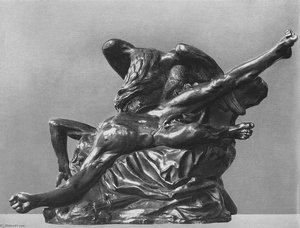
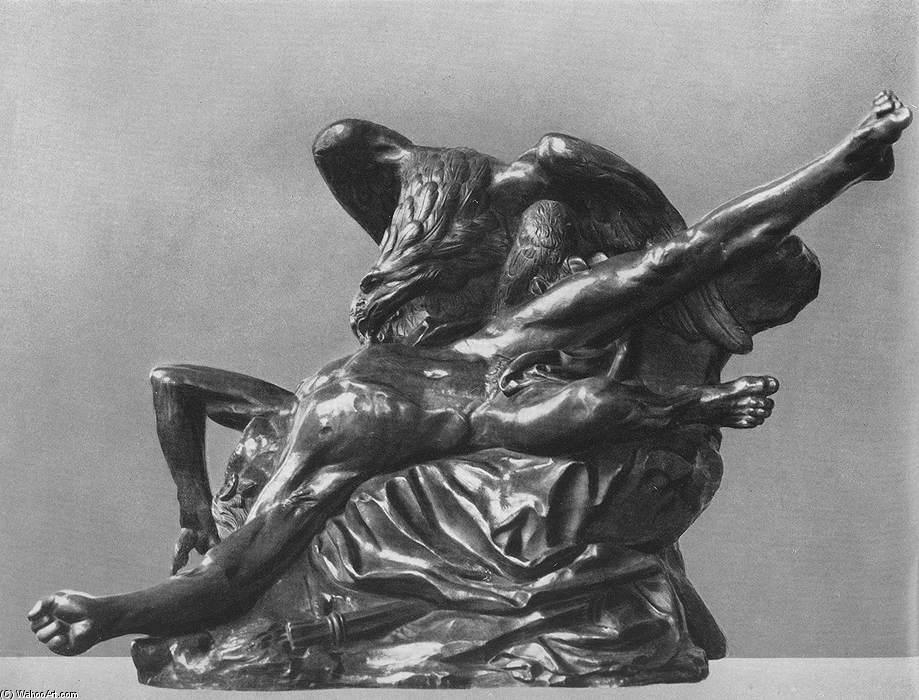
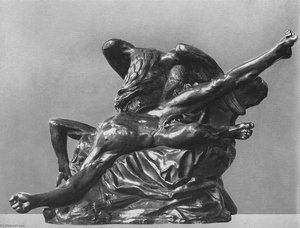
Gordeyev’s oeuvre serves as a breathtaking chronicle of his stylistic evolution. His early works often retained the rhythmic, emotive energy of the Baroque, yet even in these pieces, one can detect the creeping influence of a new, more restrained aesthetic. A poignant example is his 1769 work, Prometheus, a bronze sculpture that captures the agonizing struggle and heroic endurance of the Titan. In this piece, the texture of the metal and the tension of the musculature evoke a sense of profound human suffering, demonstrating his ability to breathe life into cold material. As his career progressed, his work moved toward a more serene and balanced composition, epitomized by the exquisite bas-relief Mercury Entrusting Bacchus to the Nymphs (1776). This work showcases his command over narrative flow and the delicate interplay of light and shadow across sculpted surfaces.
Beyond his individual sculptures, Gordeyev’s influence extended into the very architecture of Russian imperial identity. His contributions to significant landmarks include:
- The Monument to A. M. Golitsyn: A testament to his ability to blend commemorative gravity with classical elegance within the Alexander Nevsky Lavra.
- The Ostankino Palace Bas-reliefs: Where his mastery of decorative relief helped define the opulent interior landscapes of the Russian aristocracy.
- Kazan Cathedral Tympanum: His work on this architectural marvel in Saint Petersburg stands as a monumental achievement, integrating sculpture with the grand scale of religious architecture.
Ultimately, the significance of Fyodor Gordeyev lies in his role as a bridge between worlds. He took the lessons of the European Enlightenment and translated them into a Russian visual language, creating a legacy that honored the ancient past while forging a path for the future of Russian fine arts. Through his leadership at the Academy and his enduring sculptures, he ensured that the ideals of reason, order, and classical beauty would remain etched in the cultural memory of his nation long after his passing in 1810.
fyodor gordeyevich gordeyev
1744 - 1810 , Russia
Quick Facts
- Artistic Movement Or Style: Neoclassicism
- Artists Or Movements Influenced By This Artist: ['Classical Art']
- Artists Who Influenced This Artist: ['Jean-Baptiste Lemoyne']
- Date Of Birth: 1744
- Date Of Death: 1810
- Full Name: Fyodor Gordeyevich Gordeyev
- Nationality: Russian
- Notable Artworks: ['Mercury Entrusting Bacchus']
- Place Of Birth: Saint Petersburg, Russia
Related Articles

Bronze Age to Modern Masters: 10 Sculptures That Redefined Art | ArtsDot
Journey through art history with 10 legendary bronze sculptures – from Michelangelo's David to Rodin’s Thinker. Explore the stories, techniques & timeless beauty of these masterpieces. Find museum-quality reproductions & elevate your home decor on ArtsDot.com.

Bronze Sculptures That Defined Art History | ArtsDot
Journey through art history with our Top 10 bronze sculptures! Explore masterpieces by Rodin, Michelangelo & more. Discover stories behind iconic statues and find museum-quality reproductions for your home decor at ArtsDot.com.

The Enduring Legacy of Bronze: A Historical & Artistic Exploration for the Collector
Explore the rich history & enduring appeal of bronze sculpture with expert insights for collectors at ArtsDot. Learn about casting techniques, iconic artists, collecting tips & contemporary interpretations.
The Enduring Legacy of Bronze: History, Technique & Artistic Expression for the Collector
Explore the rich history & enduring appeal of bronze sculpture with expert insights for collectors at ArtsDot. Learn about casting techniques, iconic artists, and collecting tips.
The Enduring Legacy of Bronze Sculpture: A Collector's Guide to Form & Cultural Significance
Explore the rich history & enduring appeal of bronze sculpture with expert insights for collectors at ArtsDot. Learn about casting techniques, iconic artists, and collecting tips to build a discerning art collection.