 Preview
 Send
Send Share
Share
 Details

 Download
 Similars
 X-Ray
X-Ray Diaporama
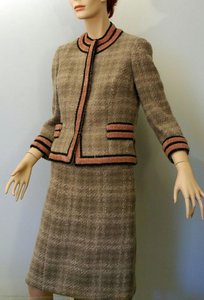
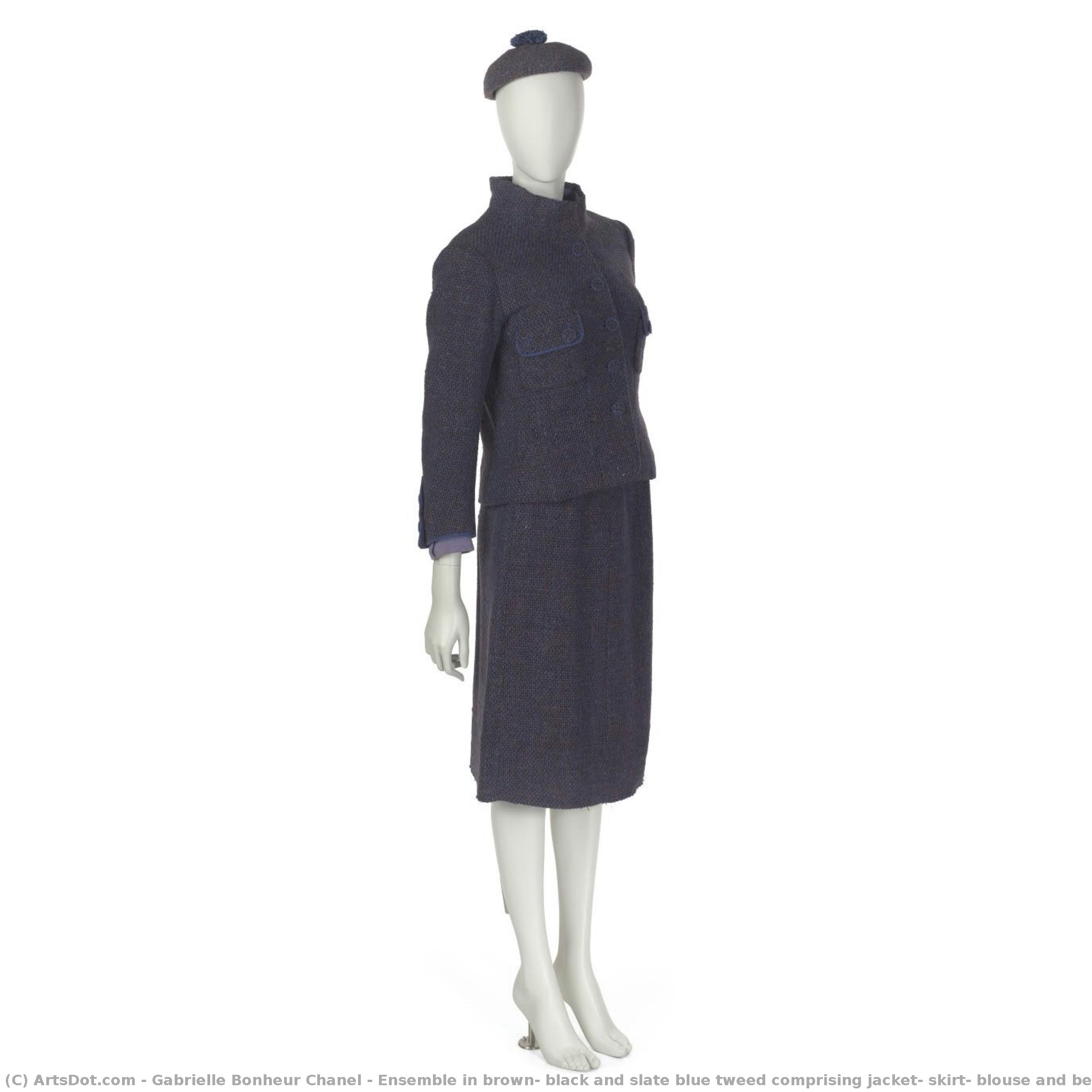
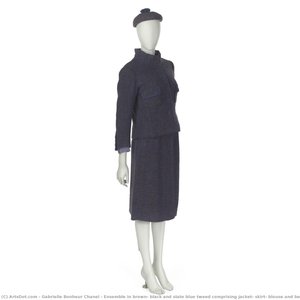
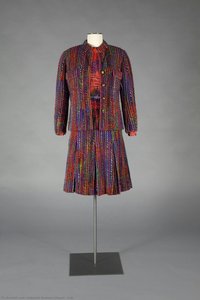
Ensemble in brown, black and slate blue tweed comprising jacket, skirt, blouse and beret


 Read More
Giclée / Art Print
Museum-quality giclée or canvas print with fast production and flexible finish options. ( Buy Hand Made Painting Buy Image)




P118B $10

P118H $10

P118W $10

P438Z $10

P508JH $12

P508YH $12

P805H $10

P805Z $10

P919BZ $10

P919G $10

P919XJ $10

P959ZH $10

P968JZ $12

W106C $8

W218G $10

W218JH $8

W218Y $10

W307PJ $10

W316G $10

W316PJ $8

W316Y $10

W398PJ $8

W4111J $10

W500HY $15

W500JH $15

W692G $12

W849H $8

W940BG $15

W953PJ $8




Pick from our preset sizes that match the artwork's original proportions.

You may enter your own dimensions to fit a specific frame or space. If your selected size does not match the original image's proportions, we will either crop the artwork or extend the image with a mirrored or solid-fill edge. A digital mockup will be sent for your approval before production begins.
Please note that the on-screen preview does not reflect the actual cropping or extension. Only the mockup will accurately show the final composition.
While custom sizes are available, we recommend selecting a dimension from the predefined list to preserve the original proportions.
Worldwide Delivery () in 2 weeks instead of standard 4/5 weeks. (25 August)

Free Worldwide Express Shipping

High-Quality Linen Canvas

Full Shipping Insurance

Customs Tax Refund Guarantee

True Color Matching Guarantee

60-Day Return Policy (Defects Only)

100% Money-Back Guarantee

Bulk Discount Offer
 Glass option is only available in size under 110 CM

Ensemble in brown, black and slate blue tweed comprising jacket, skirt, blouse and beret
Giclée / Art Print
Reproduction Size
-


Total Price
$ 63
Collectible Description
A Timeless Portrait of Parisian Elegance: The 1960 Chanel Ensemble
The image before us isn’t merely a photograph; it's a frozen moment in the heart of mid-20th century fashion, a testament to Coco Chanel’s enduring vision. This meticulously rendered reproduction captures an ensemble from 1960 – a quintessential example of her signature style: a harmonious blend of understated luxury and effortless chic. The mannequin, posed with a quiet dignity, embodies the spirit of a woman who moved through the world with confidence and grace. The muted palette of browns, blacks, and slate blues speaks to a sophisticated restraint, reflecting the era’s preference for subtle elegance over flamboyant display.
At first glance, the ensemble appears deceptively simple – a tailored jacket, a flowing skirt, a delicate blouse, and a classic beret. However, closer inspection reveals the intricate details that define Chanel's genius: the precise tailoring of the jacket, with its subtly padded shoulders and carefully placed button closures; the fluid drape of the lavender jersey blouse, hinting at both comfort and refinement; the structured lines of the skirt, suggesting movement and confidence. The beret, adorned with a small pom-pom and three elegant hat pins – two self-covered and one beaded – adds a final touch of Parisian charm.
The Architect of Modern Style: Gabrielle “Coco” Chanel
To truly appreciate this ensemble, it’s essential to understand the woman behind it. Gabrielle Bonheur Chanel (1883-1971), more famously known as Coco Chanel, was a revolutionary figure in the world of fashion. Born into poverty in Saumur, France, she overcame adversity through sheer determination and an innate sense of style. She began her career as a milliner before establishing her own couture house in 1910, quickly becoming renowned for her innovative designs that liberated women from restrictive Victorian fashions. Chanel’s influence extended far beyond clothing; she redefined beauty standards, championed comfort and practicality, and popularized the little black dress – an enduring symbol of timeless elegance.
Her legacy is one of radical innovation and a profound understanding of the female form. She understood that fashion wasn't about ostentation but about empowering women to express themselves with confidence and grace. Chanel’s designs were not simply garments; they were statements – declarations of independence, sophistication, and personal style.
Craftsmanship and Technique: A Window into a Golden Age
The reproduction itself is a remarkable achievement of contemporary craftsmanship. The meticulous attention to detail—the precise stitching, the careful rendering of the tweed fabric’s texture, the subtle sheen of the silk lining—demonstrates a commitment to quality that echoes Chanel's own exacting standards. The use of high-quality materials – particularly the luxurious tweed and silk – elevates the ensemble to an object of enduring beauty. The lighting in the photograph is soft and even, minimizing shadows and highlighting the textures of the fabric, creating a sense of depth and realism.
The choice of a mannequin as the subject allows for a focused examination of the garment’s design and construction. It's a deliberate decision that emphasizes the artistry of the piece, inviting viewers to appreciate the skill and expertise involved in its creation. The clean white background further draws attention to the ensemble itself, ensuring it remains the undisputed star of the image.
Symbolism and Enduring Appeal
Beyond its aesthetic qualities, this ensemble carries a powerful symbolic weight. It represents a return to Parisian chic after the austerity of wartime, a celebration of femininity, and an affirmation of Chanel’s enduring vision. The tweed fabric itself evokes images of luxury and sophistication, while the muted color palette speaks to understated elegance. The beret, a classic accessory from Chanel's early collections, adds a touch of playful charm. This piece is more than just a garment; it’s a portal into a bygone era—a reminder of a woman who forever changed the landscape of fashion and continues to inspire designers and style enthusiasts today.
Related Artworks

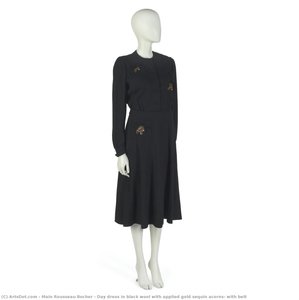
Artist Biography
The Architect of Modern Elegance
The story of Gabrielle Bonheur Chanel, known to the world as Coco Chanel, is one of the most profound transformations in the history of modern aesthetics. Born in 1883 in the quiet town of Saumur, France, her beginnings were far from the gilded halls of haute couture. Raised in the austerity of a poorhouse, Chanel’s early life was defined by hardship and a lack of formal privilege. Yet, it was this very struggle that forged her iron will and her unique perspective on beauty—a perspective that would eventually strip away the suffocating layers of Victorian excess to reveal a new, liberated silhouette for the modern woman. Her journey from a young milliner to the most influential fashion designer of the twentieth century is not merely a tale of commercial success, but a revolution of spirit and form.
Her ascent was catalyzed by pivotal encounters that bridged the gap between her humble origins and the heights of Parisian society. The influence of Arthur Capel, a wealthy British aristocrat, provided the essential patronage that allowed her to establish her first hat shop in Paris. This period marked the genesis of a design philosophy rooted in the concept of simplicity. Chanel possessed an uncanny ability to look at the restrictive, corseted garments of the era and see not just clothing, but a cage. She sought to replace the heavy, ornate structures of the past with something breathable, functional, and inherently chic. By drawing inspiration from menswear and sportswear, she introduced a sense of movement and ease that had previously been denied to women.
A Revolution in Silhouette and Substance
As her couture house expanded, Chanel’s impact moved beyond mere clothing into the realm of cultural identity. She became the pioneer of prêt-à-porter, or ready-to-wear, a move that democratized luxury and made high fashion accessible to a broader audience without sacrificing its essential allure. Her work was characterized by a masterful use of texture and a rejection of the unnecessary. The introduction of the Little Black Dress remains perhaps her most enduring contribution; she took a color previously reserved for mourning and transformed it into the ultimate symbol of sophistication and versatility. This single innovation redefined the evening wardrobe, proving that true elegance resides in restraint rather than ornamentation.
The development of her signature styles continued through the decades, most notably with the introduction of the tweed suit. This garment, much like her philosophy, blended rugged durability with refined grace, offering women a professional and commanding presence. Her ability to weave luxury into the fabric of daily life created a brand that became synonymous with an aspirational lifestyle. The Chanel aesthetic was never just about the clothes; it was about the liberation of the female form and the empowerment of the woman wearing it. This legacy is so profound that she remains the only fashion designer featured on Time Magazine’s list of the 100 most influential people of the twentieth century.
The Enduring Legacy of a Visionary
Beyond the seams and fabrics, Chanel’s historical significance lies in her role as a trailblazer for women's autonomy. She did not merely change what women wore; she changed how they moved through the world. Her designs reflected a changing social landscape where women were seeking greater freedom, mobility, and agency. The Chanel brand continues to stand as a monument to this era of transition, maintaining its status as a global icon of luxury and timelessness. Today, her influence can be felt in every corner of the fashion industry, from the runways of Paris to the everyday wardrobes of women across the globe.
The impact of Gabrielle Chanel can be summarized through several key pillars of her career:
- Innovation of Form: The replacement of restrictive corsetry with comfortable, sporty, and casual chic silhouettes.
- Democratization of Style: The introduction of ready-to-wear concepts that brought high fashion to the masses.
- Iconic Staples: The creation of timeless pieces such as the Little Black Dress and the tweed suit.
- Cultural Influence: A lasting legacy that redefined femininity and established a new standard for modern luxury.
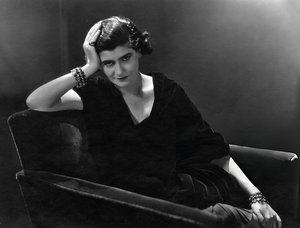
gabrielle bonheur chanel
1883 - 1971 , France
Quick Facts
- Artistic Movement Or Style: Haute couture
- Artists Or Movements Influenced By This Artist: ['Modernism']
- Artists Who Influenced This Artist: ['']
- Date Of Birth: August 19, 1883
- Date Of Death: January 10, 1971
- Full Name: Gabrielle Bonheur Chanel
- Nationality: French
- Notable Artworks:
- Suit
- Day Ensemble [Left]
- Ensemble in brown, black and slate blue tweed
- Place Of Birth: Saumur, France
Related Articles
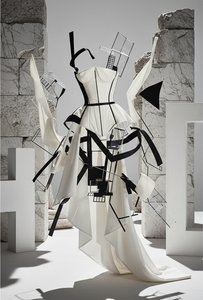
Gianfranco Ferré: Deconstructing Haute Couture – A Legacy of Architectural Form
Explore the revolutionary world of Gianfranco Ferré, 'the architect of fashion.' Discover his architectural approach to haute couture, iconic Dior designs, and lasting influence on luxury style. A deep dive for collectors & enthusiasts.
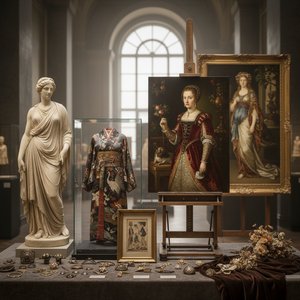
Draped Narratives: Fashion as Symbol & Subject in Historical Art
Explore the fascinating history of fashion as a symbol of power & status in art! Discover masterpieces from Gainsborough to Tissot and learn how clothing shaped societal narratives. Find museum-quality reproductions at ArtsDot.
Cristóbal Balenciaga: Deconstructing Haute Couture's Architectural Legacy
Explore the revolutionary world of Cristóbal Balenciaga, the 'couturier's couturier'. Discover his architectural designs, lasting influence on haute couture, and guide to collecting rare pieces. A connoisseur’s resource.
Georges Barbier: A Synthesis of Art Nouveau Elegance & Early 20th-Century Fashion Illustration
Explore the exquisite world of Georges Barbier, a leading Art Nouveau illustrator celebrated for his opulent fashion designs & masterful pochoir technique. Discover his legacy and find collectible art at ArtsDot.
Mariano Fortuny: A Fusion of Art, Fashion & Design – Exploring a Venetian Innovator's Legacy
Explore the captivating world of Mariano Fortuny – artist, designer & innovator. Discover his revolutionary textiles, iconic Delphos gown, and lasting influence on art, fashion & interiors. A collector's guide to a Venetian master.
![Day Ensemble [Left]\nDay Ensemble [Right]](/media/artworks/images-thumb/fe/85/fe856c62325dcb75602760bbc6a295c9.jpg)