 Preview
 Send
Send Share
Share
 Details

 Download
 Similars
 X-Ray
X-Ray Diaporama
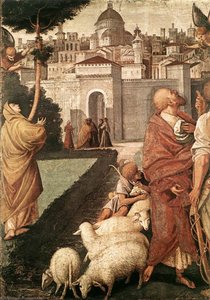
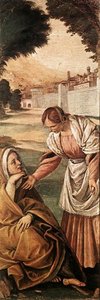
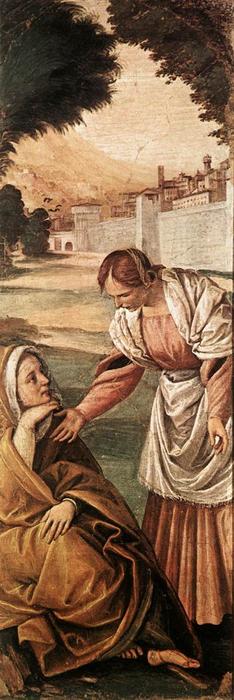
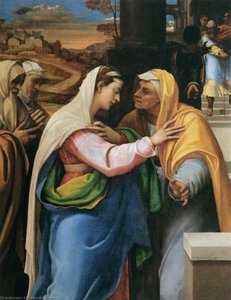
St Anne Consoled by a Woman
 Renaissance
 1544
1544 190.0 x 65.0 cm
 Pinacoteca di Brera
 Read More
Giclée / Art Print
Museum-quality giclée or canvas print with fast production and flexible finish options. ( Buy Hand Made Painting Buy Image)




































Pick from our preset sizes that match the artwork's original proportions.

You may enter your own dimensions to fit a specific frame or space. If your selected size does not match the original image's proportions, we will either crop the artwork or extend the image with a mirrored or solid-fill edge. A digital mockup will be sent for your approval before production begins.
Please note that the on-screen preview does not reflect the actual cropping or extension. Only the mockup will accurately show the final composition.
While custom sizes are available, we recommend selecting a dimension from the predefined list to preserve the original proportions.
Worldwide Delivery () in 2 weeks instead of standard 4/5 weeks. (27 August)

Free Worldwide Express Shipping

High-Quality Linen Canvas

Full Shipping Insurance

Customs Tax Refund Guarantee

True Color Matching Guarantee

60-Day Return Policy (Defects Only)

100% Money-Back Guarantee

Bulk Discount Offer
 Glass option is only available in size under 110 CM

St Anne Consoled by a Woman
Giclée / Art Print
Reproduction Size
-


Total Price
$ 63
Collectible Description
The Painting's Composition and Style
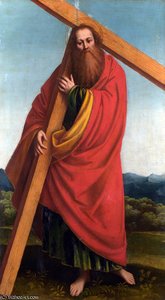
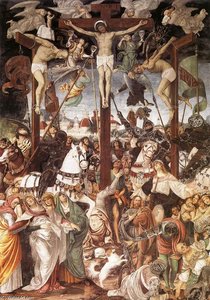
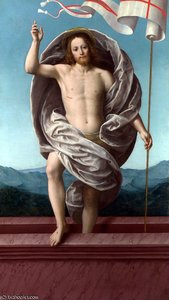
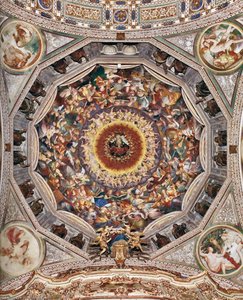
The painting depicts a scene where St Anne is being consoled by a woman, showcasing Ferrari's mastery of composition and style. The use of earth tones and subtle lighting creates a sense of intimacy and warmth, drawing the viewer into the scene. The fresco technique used by Ferrari adds depth and texture to the painting, making it a truly unique piece. Key Features of the Painting:- The painting's size and medium: 190 x 65 cm, frescoes
- The location: Pinacoteca di Brera museum in Milan, Italy
- The artist: Gaudenzio Ferrari, an Italian painter from the Renaissance period
Conclusion
St Anne Consoled by a Woman is a stunning painting that showcases Ferrari's talent and technique. As a professional expert in Art, I highly recommend visiting the Pinacoteca di Brera museum to see this masterpiece in person. For those who cannot visit, https://ArtsDot.com offers high-quality, handmade oil painting reproductions of this and other famous works of art.To learn more about Gaudenzio Ferrari and his paintings, you can also visit Wikipedia: https://en.wikipedia.org/wiki/Gaudenzio_Ferrari.
Related Artworks
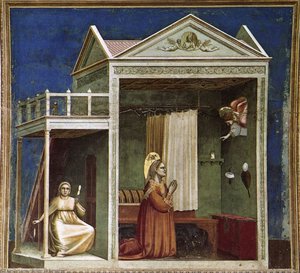
![Scrovegni - [03] - Annunciation To St Anne — Giotto Di Bondone, Gothic](/media/artworks/images-thumb/6e/14/6e14fd753af036cd9892d744d82cf988.jpg)
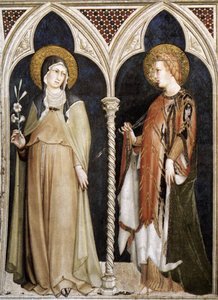
![Legend Of St Francis - [23] - St Francis Mourned By St Clare — Giotto Di Bondone, Gothic](/media/artworks/images-thumb/17/1c/171c284c41dc3ef8bca83e51c1e1e531.jpg)
Artist Biography
Michelangelo Buonarroti: A Titan of the Renaissance
Michelangelo, a name synonymous with artistic genius and unparalleled mastery, remains one of the most revered figures in Western art history. Born in Caprese, near Arezzo, in 1475, he was not simply an artist; he was a sculptor, painter, architect, draughtsman, and poet—a true Renaissance man who embodied the era’s ideals of human potential and creative exploration. His life, marked by both extraordinary triumphs and personal struggles, culminated in works that continue to captivate audiences centuries later. From the poignant beauty of his early sculptures to the dramatic frescoes adorning the Sistine Chapel, Michelangelo's legacy is one of profound innovation and enduring influence.Early Life and Artistic Training
Michelangelo’s childhood was steeped in a complex family dynamic. His father, Lodovico Buonarroti Simoni, a member of a minor Florentine noble family, initially resisted his son's ambition to pursue art, viewing it as an unsuitable profession for a man of standing. However, Michelangelo’s undeniable talent eventually won out, and he was apprenticed to the renowned sculptor Domenico Ghirlandaio at the age of thirteen. This early training provided him with a solid foundation in technique but also exposed him to the conventions of Florentine painting—a tradition that Michelangelo would later both embrace and transcend. Crucially, his time under Lorenzo de’ Medici, the “ Magnificent,” proved transformative. The young artist was granted access to the Medici family's vast collection of classical sculptures, sparking a lifelong fascination with ancient Greek and Roman art and profoundly shaping his artistic vision. This exposure instilled in him a deep respect for proportion, anatomy, and the idealized human form—elements that would become hallmarks of his work.Sculptural Masterpieces: David, Pietà, and Beyond
Michelangelo’s early career was dominated by sculpture, and he quickly established himself as a prodigious talent. The *Pietà* (1498-9), carved from a single block of marble in St. Peter's Basilica, is arguably his most moving work—a breathtaking depiction of the Virgin Mary cradling the dead Christ that showcases an astonishing command of form and emotion. The sculpture’s serene beauty and profound sense of grief continue to resonate with viewers today. Shortly after, he created *David* (1501-4), a colossal marble statue representing the biblical hero David before his battle with Goliath. This masterpiece, originally intended for the Florence Cathedral, became a symbol of Florentine civic pride and republican ideals—a testament to courage, strength, and defiance. Throughout his career, Michelangelo produced numerous other sculptures, including *Bacchus*, *Moses*, and several unfinished works for Pope Julius II’s tomb, each demonstrating his unparalleled skill and innovative approach to depicting the human figure.The Sistine Chapel: A Ceiling of Divine Drama
Perhaps Michelangelo's most ambitious undertaking was the fresco cycle on the ceiling of the Sistine Chapel in Vatican City (1508-1512). Commissioned by Pope Julius II, this monumental project pushed Michelangelo to his creative limits. Working under challenging conditions—suspended from scaffolding high above the chapel floor—he produced a series of breathtaking frescoes depicting scenes from Genesis, including *The Creation of Adam*, one of the most iconic images in Western art. The sheer scale and complexity of the undertaking, combined with the dramatic intensity of the figures and compositions, cemented Michelangelo’s reputation as a genius. Beyond the narrative scenes, the ceiling is also notable for its intricate detailing, vibrant colors, and masterful use of perspective—a testament to Michelangelo's technical virtuosity.Architectural Contributions and Lasting Legacy
While primarily known for his sculpture and painting, Michelangelo was also a significant architect. He designed several important buildings in Rome, including the Laurentian Library (1520-34) and the dome of St. Peter’s Basilica (completed after his death). His architectural designs were characterized by their innovative use of space, dynamic forms, and classical influences—reflecting his broader artistic vision. Michelangelo's influence on Western art is immeasurable. He revolutionized sculpture with his emphasis on anatomical accuracy, emotional expression, and dramatic dynamism. His frescoes in the Sistine Chapel set a new standard for ceiling painting, inspiring generations of artists. His architectural designs continue to be studied and admired for their elegance and innovation. Michelangelo died in Rome in 1564, leaving behind a body of work that remains both profoundly moving and technically astonishing—a testament to his genius and a cornerstone of Western artistic heritage.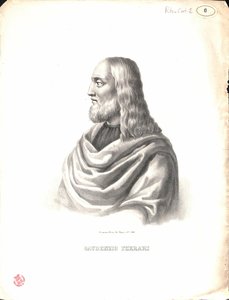
gaudenzio ferrari
1475 - 1546 , Italy
Quick Facts
- Artistic Movement Or Style: High Renaissance, Mannerism
- Artists Or Movements Influenced By This Artist:
- Raphael
- Botticelli
- Artists Who Influenced This Artist:
- Donatello
- Leonardo da Vinci
- Date Of Birth: March 6, 1475
- Date Of Death: February 18, 1564
- Full Name: Michelangelo di Lodovico Buonarroti Simoni
- Nationality: Italian
- Notable Artworks:
- Pietà
- David
- Sistine Chapel ceiling
- The Creation of Adam
- Moses
- The Last Judgment
- Place Of Birth: Caprese, Italy
Related Articles

The Fresco as Family Legacy: Preserving Heritage Through Wall Art
Explore the rich history & enduring legacy of fresco painting. Discover how to preserve family heritage through stunning wall art. Expert insights & restoration guidance.

The Enduring Legacy of Fresco Painting: Techniques, History & Contemporary Relevance
Explore the rich history & enduring artistry of fresco painting – from Giotto to Michelangelo! Discover techniques, conservation efforts, & modern applications. Learn how ArtsDot brings this timeless art form to your home.

The Enduring Legacy of Fresco: Technique, History & Artistic Expression Across Cultures
Explore the rich history & enduring legacy of fresco painting! Discover ancient techniques, Giotto's masterpieces, and modern applications. Expert insights for art lovers & professionals.
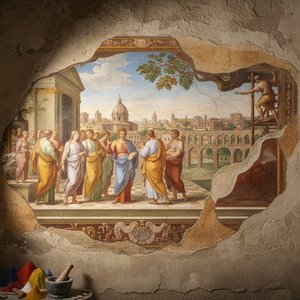
The Enduring Legacy of Fresco: Technique, History & Artistic Expression
Explore the rich history & enduring artistry of fresco painting. Discover techniques from Giotto to Michelangelo, conservation efforts, & modern applications. Learn how ArtsDot brings this timeless art form to your home.

Art That Lives With You: The Emotional Power of a Custom Interior Fresco
Discover the emotional power & timeless beauty of custom interior frescoes. Explore history, design tips & expert guidance from – creating lasting legacies.