

 Preview
 Send
Send Share
Share
 Details

 Download
 Similars
 X-Ray
X-Ray Diaporama
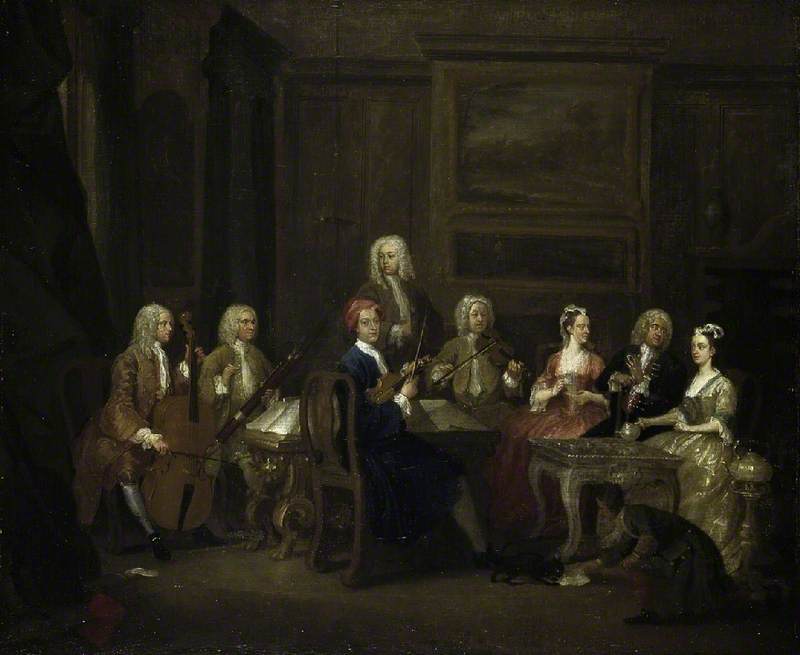
A Musical Party, the Mathias Family
 Baroque
 1730
1730 63.0 x 76.0 cm
 Fitzwilliam College
 Read More
Purchase a high-resolution, enhanced digital image, far superior to the online preview.
Each file is meticulously prepared by our in-house specialists using advanced tools and expert manual retouching. We ensure every image has exceptional clarity, precise color accuracy, and fine detail.
The final file is delivered via email within 72 hours, optimized for immediate use in professional, editorial, and print environments. This is the same quality trusted by top-tier design studios, publishers, and galleries.
Digital Image
Download a high-resolution file for personal display, printing, and creative projects. ( Buy Print Buy Hand Made Painting)
Included in Every Digital Image Order
Expert Digital Delivery, Guaranteed
When you choose ArtsDot.com, you're not just getting an image - you're receiving a professionally enhanced digital artwork, crafted with precision and backed by a satisfaction guarantee. Here's everything that comes with your order, automatically:

Fast Email Delivery
Your high-resolution digital image file will be emailed to you within 72 hours of ordering - ready for immediate use.

AI-Enhanced Digital File
Your artwork is professionally optimized using advanced AI tools and manual editing, ensuring maximum detail, clarity, and color accuracy.

Free Lifetime Re-Delivery
Accidentally deleted or lost your file? No worries - we'll resend it to you anytime, free of charge.

No Import Fees - Ever
Enjoy your artwork instantly with zero customs, duties, or delivery fees - digital downloads are always tax-free.

Color Accuracy Guarantee
We ensure your digital image reflects the original colors as closely as possible using professional tools and color management.

60-Day Satisfaction Guarantee
If you're not satisfied with your digital image, we'll revise it or refund 100% within 60 days - no questions asked.

100% Money-Back Guarantee
Not satisfied? Get a full refund within 60 days of receiving your digital file - no questions asked.

Bulk Order Discounts
Buy 3 images, save 10% - Buy 5, save 15% - Buy 10+, save 20%. Great for creative projects, galleries, and agencies.
Related Artworks
Artist Biography
Gawen Hamilton: A London Painter of Conversation and Craft
The name Gawen Hamilton often elicits a flicker of confusion, easily overshadowed by his more famous cousin, Gavin. Yet, this earlier Hamilton – born in 1698 near Glasgow and working primarily in London – deserves recognition as a pivotal figure in the burgeoning British art scene of the early 18th century. He wasn’t a revolutionary innovator like Hogarth or Turner, but rather a meticulous observer and recorder of his time, specializing in ‘conversation pieces’ that offered intimate glimpses into the social lives of artists, craftsmen, and their patrons – a remarkably candid approach for the era.
Hamilton's life is largely pieced together from the astute notes of George Vertue, a fellow member of the Rose and Crown Club, where the artist frequently gathered with other notable figures. Born into a family steeped in republican sympathies—his grandfather held radical views and amassed a collection of dissenting literature—Hamilton’s early years were shaped by this intellectual environment. He received a somewhat haphazard education, trained briefly by a lesser-known artist named Wilson before venturing to London. His career began amidst the vibrant social circles of the city's artistic community, a world brimming with patronage, competition, and lively debate.
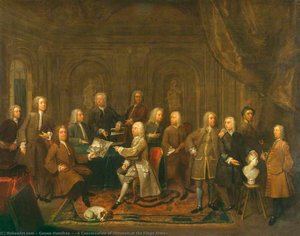
Early works like “The Rawson Conversation Piece” (1735) exemplify Hamilton’s distinctive style. This painting, depicting a group of artists and craftsmen assembled at the King’s Arms tavern in New Bond Street, is a masterclass in capturing fleeting moments of social interaction. Notice the careful attention to detail—the varied postures, expressions, and attire of each figure, all rendered with remarkable precision. Hamilton wasn't simply sketching faces; he was meticulously documenting the nuances of human behavior within a specific social context. The composition itself – crowded yet balanced – mirrors the bustling atmosphere of the club, conveying a sense of lively camaraderie. The painting’s success, secured through a raffle commissioned by its members, provided Hamilton with much-needed financial support and cemented his reputation as a skilled portraitist.
Hamilton's artistic development is often compared to that of William Hogarth, though with a crucial difference. While Hogarth frequently employed satire and moral commentary in his works, Hamilton’s focus remained largely observational. He possessed a remarkable ability to capture the essence of a group – not just their physical appearances but also their collective mood and social dynamics. Vertue noted Hamilton's particular skill at depicting groups with numerous small figures, a talent that allowed him to create scenes teeming with life and detail. This technique, reminiscent of Hogarth’s crowded compositions, was further refined by Hamilton’s keen eye for capturing subtle gestures and expressions.
Beyond the “conversation pieces,” Hamilton produced several notable portraits, including depictions of John Montagu, 2nd Duke of Montagu, Lady Mary Churchill, and their daughter Mary. These works demonstrate his ability to portray individuals with sensitivity and grace, capturing not only their physical likeness but also their personalities and social standing. The portrait of the Montagus, for example, is a testament to Hamilton’s skill in conveying familial affection and status within a formal setting. The inclusion of the family dog adds an element of domesticity and warmth to the composition.
The Rose and Crown Club: A Hub of Artistic Life
The Rose and Crown Club, located on Fleet Street, served as a central gathering place for London’s artistic community in the mid-18th century. It was here that Hamilton honed his skills, observing and documenting the social interactions of his fellow artists, craftsmen, and patrons. The club provided a unique opportunity for him to study human behavior in a relaxed and informal setting – a far cry from the often-stilted formality of courtly portraits.
Vertue’s notebooks reveal that the Rose and Crown was more than just a social club; it was a crucible of artistic ideas and collaborations. Members engaged in lively discussions about art, literature, and politics, exchanging knowledge and influencing each other's work. Hamilton’s membership in the club allowed him to participate in this vibrant intellectual exchange, shaping his artistic vision and contributing to the broader cultural landscape of London.
The club’s atmosphere—characterized by conviviality, debate, and a shared passion for art—is vividly captured in Hamilton's “Conversation of Virtuosis at the King’s Arms” (1735). This painting depicts a group of artists and craftsmen gathered around a table, engaged in a lively discussion. The composition is remarkably detailed, capturing not only their physical appearances but also their gestures, expressions, and interactions. The painting serves as a visual testament to the importance of social interaction in shaping artistic creativity.
Influences and Artistic Style
Hamilton’s style can be traced back to several influences, including William Hogarth, whose crowded compositions and attention to detail served as a model for Hamilton's work. However, Hamilton distinguished himself from Hogarth by focusing on social observation rather than moral commentary. He also drew inspiration from the Dutch masters, particularly their ability to capture light and shadow with remarkable realism.
Hamilton’s meticulous technique—characterized by precise drawing, careful rendering of textures, and a keen eye for detail—is evident in all his works. He was a master of capturing fleeting moments of social interaction, conveying not only the physical appearance of his subjects but also their personalities and emotions. His paintings are imbued with a sense of immediacy and authenticity, reflecting the vibrant atmosphere of London’s artistic community.
Despite being overshadowed by more prominent figures like Hogarth and Gavin Hamilton, Gawen Hamilton deserves recognition as a significant contributor to British art history. His ‘conversation pieces’ offer a unique glimpse into the social lives of artists and craftsmen in the early 18th century, revealing a world of lively debate, collaboration, and creative exchange.
Historical Significance and Legacy
Gawen Hamilton's work represents a crucial bridge between the formal portraiture of earlier generations and the more informal, observational style that would emerge in the late 18th century. He was one of the first British-born painters to specialize in ‘conversation pieces,’ a genre that would later be embraced by artists such as Thomas Gainsborough and George Romney.
Hamilton’s legacy is largely obscured by his relative obscurity, but his paintings continue to fascinate art historians and collectors. His meticulous attention to detail, combined with his ability to capture the essence of social interaction, makes his work a valuable window into the cultural landscape of London in the 18th century.
Furthermore, Hamilton’s association with George Vertue—a leading art historian and collector—provides invaluable insights into the artistic circles of his time. Vertue's notebooks offer a rich source of information about Hamilton’s life, work, and relationships, helping to illuminate the artist’s place in British art history.
gawen hamilton
1698 - 1737
Quick Facts
- Artistic Movement Or Style: Conversation pieces
- Artists Or Movements Influenced By This Artist: ['Gavin Hamilton']
- Artists Who Influenced This Artist: ['William Hogarth']
- Date Of Death: 1737
- Full Name: Gawen Hamilton
- Nationality: Scottish
- Notable Artworks:
- The Rawson Conversation Piece
- John Montagu portrait
- Place Of Birth: Hamilton, near Glasgow

