 Preview
 Send
Send Share
Share
 Details

 Download
 Similars
 X-Ray
X-Ray Diaporama
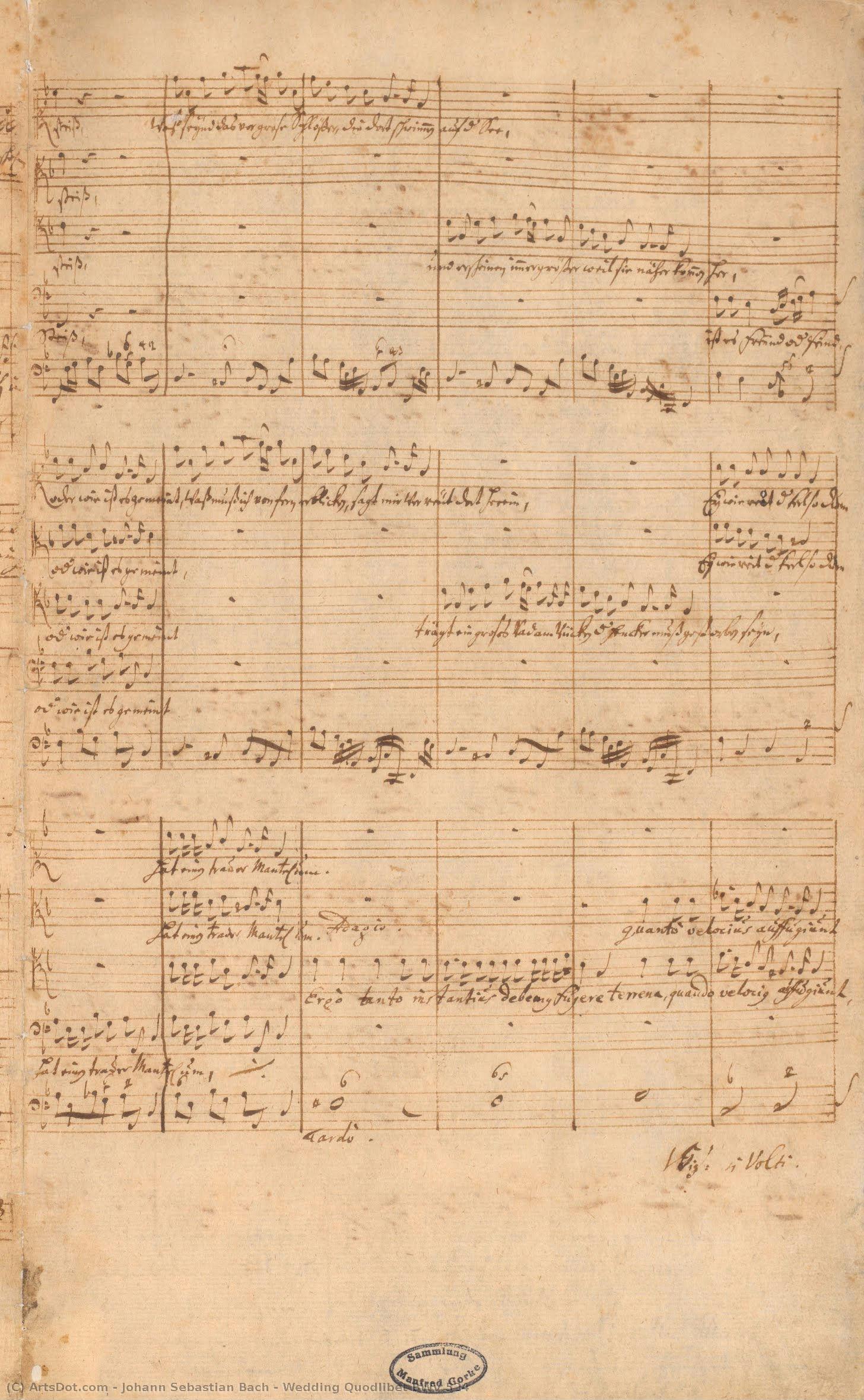
Wedding Quodlibet BWV 524


 Read More
Hand Made Oil Reproduction
Hand-painted oil on canvas in your size and frame, made to order by our artists. ( Buy Print Buy Image)




































Pick from our preset sizes that match the artwork's original proportions.

You may enter your own dimensions to fit a specific frame or space. If your selected size does not match the original image's proportions, we will either crop the artwork or extend the painting with additional hand-painted elements. A digital mockup will be sent for your approval before production begins.
Please note that the on-screen preview does not reflect the actual cropping or extension. Only the mockup will accurately show the final composition.
While custom sizes are available, we recommend selecting a dimension from the predefined list to preserve the original proportions.
After order, ArtsDot.com team will email client for instructions and provide a mockup preview
Worldwide Delivery () in 3/4 weeks instead of standard 5 weeks. (16 August). No compromise on quality.

Free Worldwide Express Shipping

High-Quality Linen Canvas

Full Shipping Insurance

Customs Tax Refund Guarantee

True Color Matching Guarantee

60-Day Return Policy (Defects Only)

100% Money-Back Guarantee

Bulk Discount Offer
 Glass option is only available in size under 110 CM

Wedding Quodlibet BWV 524
Reproduction Medium
Reproduction Size
-


Total Price
$ 263
Related Artworks
Artist Biography
The Architect of Sound: The Life and Legacy of Johann Sebastian Bach
Johann Sebastian Bach was not merely a composer; he was a master architect of the human soul, weaving intricate tapestries of sound that continue to resonate through the centuries. Born in 1685 in the small German town of Eisenach, Bach entered a world where music was already woven into the very fabric of daily life and spiritual devotion. As the youngest son of a musical family, his destiny was etched in the melodies of his childhood. However, tragedy struck early when he was orphaned at the age of ten, forcing him to find refuge with his eldest brother, Johann Christoph. This period of loss and subsequent mentorship laid the foundation for a discipline and technical prowess that would eventually redefine the boundaries of Western music. His journey through the musical landscapes of Germany—from the organ lofts of Arnstadt and Mühlhausen to the sophisticated courts of Weimar and Köthen—was a continuous evolution of craft. In each post, Bach expanded his repertoire, mastering the complex art of counterpoint and the profound depths of the organ. His time in Köthen, focused largely on chamber music, allowed him to explore the lighter, more instrumental textures that would later manifest in works like the Brandenburg Concertos. Yet, it was his appointment as the Thomaskantor in Leipzig that cemented his place in the heart of the Lutheran tradition. Here, amidst the rigorous demands of church service and university ensembles, he composed monumental choral works such as the St Matthew Passion and the Mass in B Minor, pieces that stand as pillars of spiritual and musical grandeur.A Mastery of Form and Complexity
The brilliance of Bach lies in his ability to marry mathematical precision with profound emotional depth. His work is characterized by an unparalleled command of polyphony, where multiple independent melodic lines intertwine to create a unified, breathtaking whole. To listen to the Goldberg Variations or the Well-Tempered Clavier is to witness a mind navigating the most complex structures imaginable, finding beauty in the rigorous logic of fugues and canons. His keyboard works, in particular, demonstrate a technical sophistication that challenged the limits of the instruments of his era, pushing the boundaries of what was possible through fingerwork and harmonic innovation. Beyond the keyboard, Bach’s influence permeated every facet of instrumental and vocal music:- The Brandenburg Concertos, which showcase a vibrant and diverse orchestration.
- The Cello Suites, which elevated the solo cello to a voice of profound intimacy and lyricism.
- The Sonatas and Partitas for Solo Violin, demonstrating the heights of technical virtuosity.
- The Toccata and Fugue in D Minor, an iconic testament to his mastery of the organ.
An Enduring Resonance
Though the later years of Bach's life were marked by the physical toll of his labors—including a tragic complication following eye surgery—his contribution to the musical canon remained unshakeable. While he was often viewed in his own time as a master of a vanishing style, the 19th-century Bach revival brought his genius back into the light, revealing him to be the foundational figure of the Western musical tradition. He did not merely write music; he codified the language of harmony and counterpoint that would serve as the bedrock for all composers who followed, from Mozart to Beethoven. Today, the name Bach evokes a sense of timelessness. His works are not museum pieces frozen in the Baroque era, but living, breathing entities that continue to inspire awe and introspection. Whether through the soaring heights of his choral masterpieces or the quiet, contemplative beauty of his solo instrumental works, Bach remains an eternal presence in the concert hall and the cathedral alike, a composer whose mathematical perfection and emotional truth remain unparalleled in the history of art.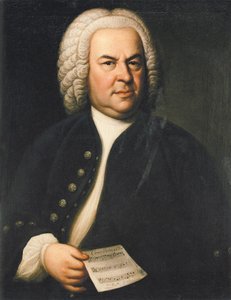
Johann Sebastian Bach
1685 - 1750 , Germany
Quick Facts
- Artistic Movement Or Style: Late Baroque
- Artists Who Influenced This Artist:
- Georg Friedrich Handel
- Johann Christoph Olearius
- Date Of Birth: March 31, 1685
- Date Of Death: July 28, 1750
- Full Name: Johann Sebastian Bach
- Nationality: German
- Notable Artworks:
- Brandenburg Concertos
- Goldberg Variations
- Well-Tempered Clavier
- Place Of Birth: Eisenach, Germany
Related Articles
Capturing Forever: Live-Painted Wedding Keepsakes & Artistic Memories for Planners
Transform wedding memories into stunning custom art! connects you with expert artists for live painting & personalized keepsakes. Elevate events & gifts – explore unique artistic solutions today!

Beyond the Guest Book: Unique Wedding Keepsakes Through Custom Artwork
Elevate your wedding memories with unique custom artwork! Discover personalized paintings & prints that capture the magic of your special day. Expert guidance, premium quality, lasting keepsakes.

Love on Canvas: Choosing the Perfect Artistic Style for Your Wedding Portrait
Discover the perfect artistic style for your wedding portrait! Explore realism, impressionism & more. Commission a timeless heirloom with expert guidance. Learn from .
Elevating Events: Why Wedding Planners Are Partnering with Artists Like Never Before
Elevate your wedding events with custom art! Discover how partnering with artists creates timeless keepsakes & unique experiences. Expert guidance for planners – explore 's curated collection.
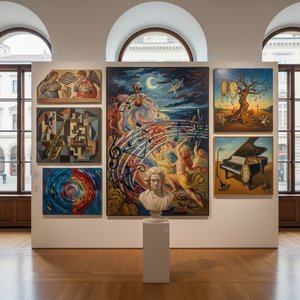
Harmonies on Canvas: Exploring the Visual Representation of Music in Art History
Explore the fascinating history of music's visual representation in art! From ancient symbolism to modern abstraction, discover how artists have captured sound and emotion on canvas. Expert insights & stunning examples.