 Preview
 Send
Send Share
Share
 Details

 Download
 Similars
 X-Ray
X-Ray Diaporama
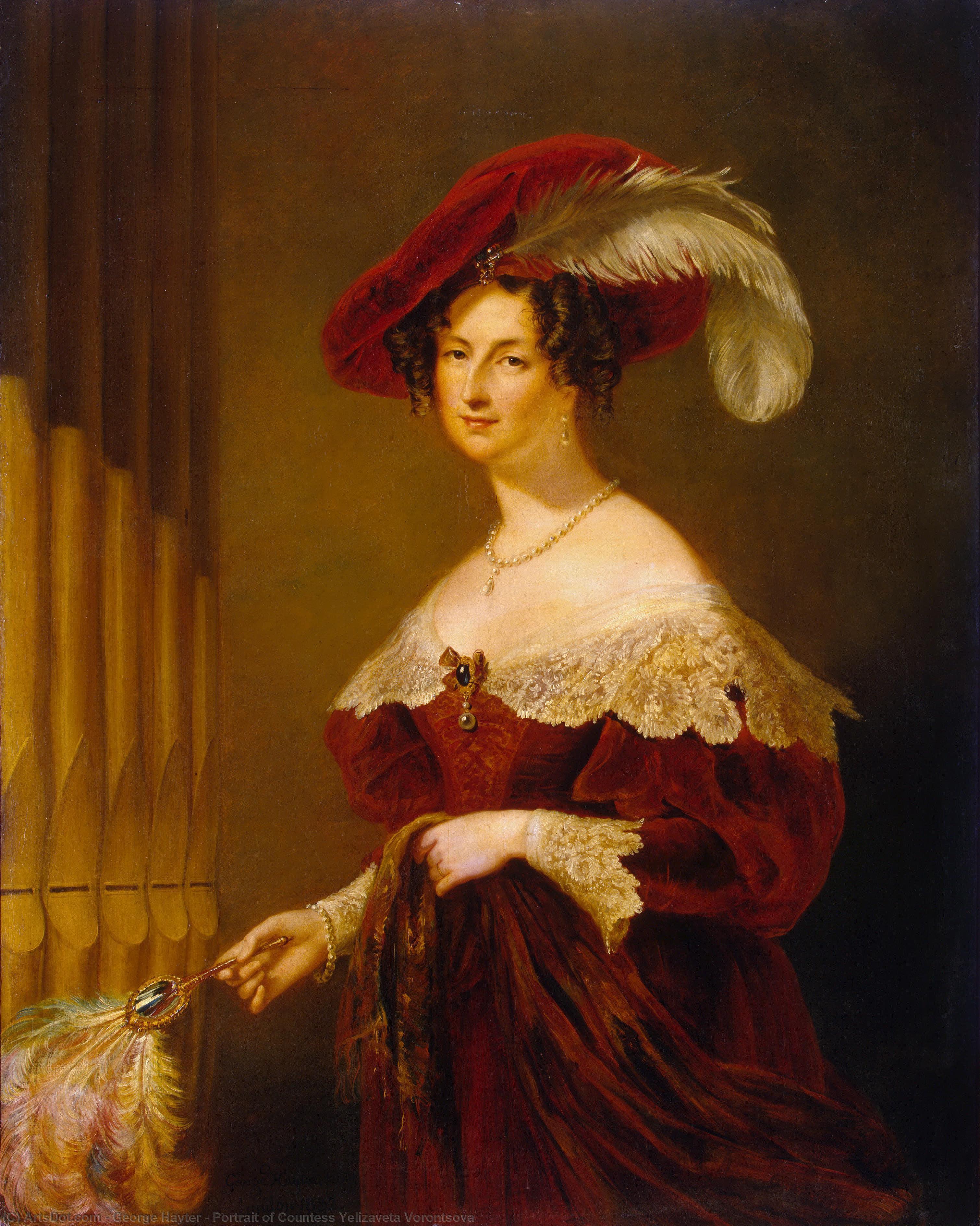
Portrait of Countess Yelizaveta Vorontsova
 Oil On Canvas
- WallArt
- Romantic Portraiture
 1832
1832- 19th Century
 127.0 x 102.0 cm
 Hermitage Museum
 Read More
Giclée / Art Print
Museum-quality giclée or canvas print with fast production and flexible finish options. ( Buy Hand Made Painting Buy Image)




P118B $10

P118H $10

P118W $10

P438Z $10

P508JH $12

P508YH $12

P805H $10

P805Z $10

P919BZ $10

P919G $10

P919XJ $10

P959ZH $10

P968JZ $12

W106C $8

W218G $10

W218JH $8

W218Y $10

W307PJ $10

W316G $10

W316PJ $8

W316Y $10

W398PJ $8

W4111J $10

W500HY $15

W500JH $15

W692G $12

W849H $8

W940BG $15

W953PJ $8




Pick from our preset sizes that match the artwork's original proportions.

You may enter your own dimensions to fit a specific frame or space. If your selected size does not match the original image's proportions, we will either crop the artwork or extend the image with a mirrored or solid-fill edge. A digital mockup will be sent for your approval before production begins.
Please note that the on-screen preview does not reflect the actual cropping or extension. Only the mockup will accurately show the final composition.
While custom sizes are available, we recommend selecting a dimension from the predefined list to preserve the original proportions.
Worldwide Delivery () in 2 weeks instead of standard 4/5 weeks. (23 August)

Free Worldwide Express Shipping

High-Quality Linen Canvas

Full Shipping Insurance

Customs Tax Refund Guarantee

True Color Matching Guarantee

60-Day Return Policy (Defects Only)

100% Money-Back Guarantee

Bulk Discount Offer
 Glass option is only available in size under 110 CM

Portrait of Countess Yelizaveta Vorontsova
Giclée / Art Print
Reproduction Size
-


Total Price
$ 63
Collectible Description
A Vision of Regency Splendor
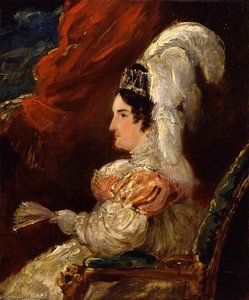
In the quiet, commanding presence of George Hayter’s 1832 masterpiece, Portrait of Countess Yelizaveta Vorontsova, one finds more than a mere likeness of nobility; one encounters a window into the refined soul of the Regency era. The canvas captures a moment of profound stillness, where the subject sits enveloped in an atmosphere of aristocratic grace. Clad in a striking red dress that commands the viewer's immediate attention, the Countess embodies the sartorial elegance and social poise of her time. Her attire, complemented by a delicate feathered hat and shimmering jewelry, speaks to a world of ceremony and high society, while the subtle inclusion of an organ in the background suggests a life steeped in culture, music, and the sophisticated rhythms of the nineteenth-century elite.
To gaze upon this portrait is to experience the meticulous artistry of George Hayter, a painter who possessed a rare ability to balance grand historical scale with the intimate nuances of character. Having studied under the dramatic Romanticist Johann Friedrich Fuseli and later absorbing the classical restraint of Antonio Canova during his transformative years in Rome, Hayter achieved a unique stylistic synthesis. In this work, he moves beyond simple representation to create a textured, tactile reality. The way light dances across the heavy folds of the Countess's drapery and catches the fine details of her accessories demonstrates a mastery of form that breathes life into the pigment, making the scene feel as though it might stir at any moment.
Technique and the Art of Light
The technical brilliance of this portrait lies in Hayter’s sophisticated handling of medium and light. While he was renowned for his delicate miniatures, in this larger-scale oil on canvas, he employs a technique that emphasizes depth and luminous tonal gradations. The artist painstakingly builds layers of color to achieve a velvety texture, particularly evident in the rich, saturated crimson of the Countess's gown. This careful delineation of shadow and highlight creates a three-dimensional effect, pulling the subject forward from the background and inviting the observer into her private sphere. Every brushstroke serves the purpose of enhancing the realism of the fabric, the softness of the skin, and the intricate luster of the ornaments she wears.
For the discerning collector or interior designer, this painting offers an unparalleled opportunity to introduce a sense of historical weight and timeless luxury into a space. The composition is balanced yet dynamic, making it a commanding focal point for a grand salon, a formal dining room, or a curated library. A high-quality reproduction of this work does not merely decorate a wall; it anchors a room with its narrative depth and classical beauty. It serves as an evocative conversation piece that bridges the gap between the storied past and contemporary elegance, providing a touch of Old World prestige to any sophisticated interior design scheme.
Related Artworks


Artist Biography
Early Life and Education
- Born: December 17, 1792, in St James's, London, England
- Died: January 18, 1871, in London, England
- Parents: Charles Hayter (miniature painter and drawing teacher) and an unknown mother.
- Early Training: Admitted to the Royal Academy Schools early in his life. Studied under Fuseli.
- Naval Service: Briefly served as a midshipman in the Royal Navy in 1808, but left after a disagreement about his art studies.
- Family Life: Married Sarah Milton when he was 15 and she was 28; they had three children. Later formed a relationship with Louisa Cauty, with whom he had two more children. His domestic life was unconventional for the time.
Artistic Development and Key Works
- Early Style: Initially focused on miniatures and portraits in chalk and crayons.
- Italian Period (1816-1826): Studied in Rome, influenced by Canova's classical style; painted a portrait of Canova. Became a member of the Academy of St. Luke in Rome.
- Significant Works:
- The Trial of Queen Caroline in the House of Lords (1820) – A large-scale work demonstrating his taste for dramatic scenes.
- The Trial of William, Lord Russell (1825) - Celebrated John Russell’s ancestry.
- Moving the Address to the Crown on the Opening of the First Reformed Parliament in the Old House of Commons (1833-1843) – A monumental work depicting a key moment in British history, showcasing nearly 400 portraits. Purchased by the government for the nation in 1854.
- The Coronation of Queen Victoria (1838) - An important royal portrait.
- The Marriage of Queen Victoria (1840) – Another significant royal commission.
- Style: Known for dramatic compositions, large-scale works with numerous figures, and a taste for historical subjects.
Royal Patronage and Recognition
- Appointment to the Royal Court: Appointed ‘painter of miniatures and portraits’ by Princess Charlotte and Prince Leopold early in his career.
- Principal Painter in Ordinary: Following David Wilkie's death, appointed 'principal painter in ordinary to the queen' in 1841.
- Knighthood: Knighted in 1841 for his services to the crown.
- Foreign Honours: Received the Persian order of the Lion and Sun.
Influences and Legacy
- Charles Hayter (Father): Early artistic training under his father, a miniature painter.
- Canova: Influenced by Canova's classical style during his time in Rome.
- French Romantic Art: Showed assimilation of the style and exotic subject-matter of contemporary French romantic art.
- Historical Significance: His large historical paintings, particularly The Moving of the Address to the Crown, provide valuable visual records of significant events in British history. He captured a pivotal moment in parliamentary reform.
- Legacy: While not elected to the Royal Academy, Hayter achieved considerable recognition and royal favour during his lifetime. His works are held in major collections including the National Portrait Gallery and the Royal Collection.
Later Years and Death
- Continued to paint portraits and historical subjects throughout his later years.
- Exhibited at the British Institution until 1859.
- Death: Died on January 18, 1871, in London.
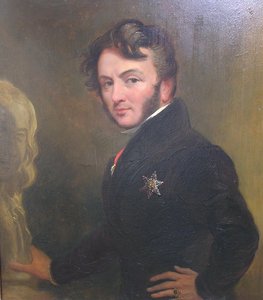
George Hayter
1792 - 1871 , United Kingdom
Quick Facts
- Artistic Movement Or Style: Historical and portrait painting
- Artists Who Influenced This Artist:
- Canova
- Henry Fuseli
- Date Of Birth: December 17, 1792
- Date Of Death: January 18, 1871
- Full Name: Sir George Hayter
- Nationality: English
- Notable Artworks:
- The Trial of Queen Caroline
- Moving the Address to the Crown
- The Coronation of Queen Victoria
- The Marriage of Queen Victoria
- Place Of Birth: London, United Kingdom
Related Articles

The Nuances of Graphite: Exploring Emotional Depth & Technical Mastery in Pencil Drawing
Explore the captivating world of graphite drawing! Discover its rich history, master essential techniques like chiaroscuro, and learn how artists evoke emotion through this timeless medium. Expert insights for art enthusiasts.
George Hayter: Portraiture, Power & Victorian Society's Canvas
Explore the life & work of George Hayter, Queen Victoria’s Principal Painter. Discover his iconic Victorian portraits, historical masterpieces, and lasting impact on British art history. Learn more at ArtsDot.
Richard Cosway: Capturing Regency Elegance & Intimacy Through Portraiture
Explore the captivating world of Richard Cosway, Regency society's celebrated portrait miniaturist. Discover his exquisite art, aristocratic patrons & lasting legacy with ArtsDot.

The Enduring Power of Line: Exploring Themes & Techniques in Drawing Across Art History
Explore the rich history of drawing! Discover key techniques like linear perspective & iconic artists from the Renaissance to modern times. Enhance your art appreciation with ArtsDot.
Frederick Bridgman: Anatomical Mastery & the Evolution of Figure Drawing Instruction
Explore the anatomical mastery of George B. Bridgman & his revolutionary figure drawing techniques. Discover how his methods transformed art instruction and continue to inspire artists today. Learn more at ArtsDot.