 Preview
 Send
Send Share
Share
 Details

 Download
 Similars
 X-Ray
X-Ray Diaporama
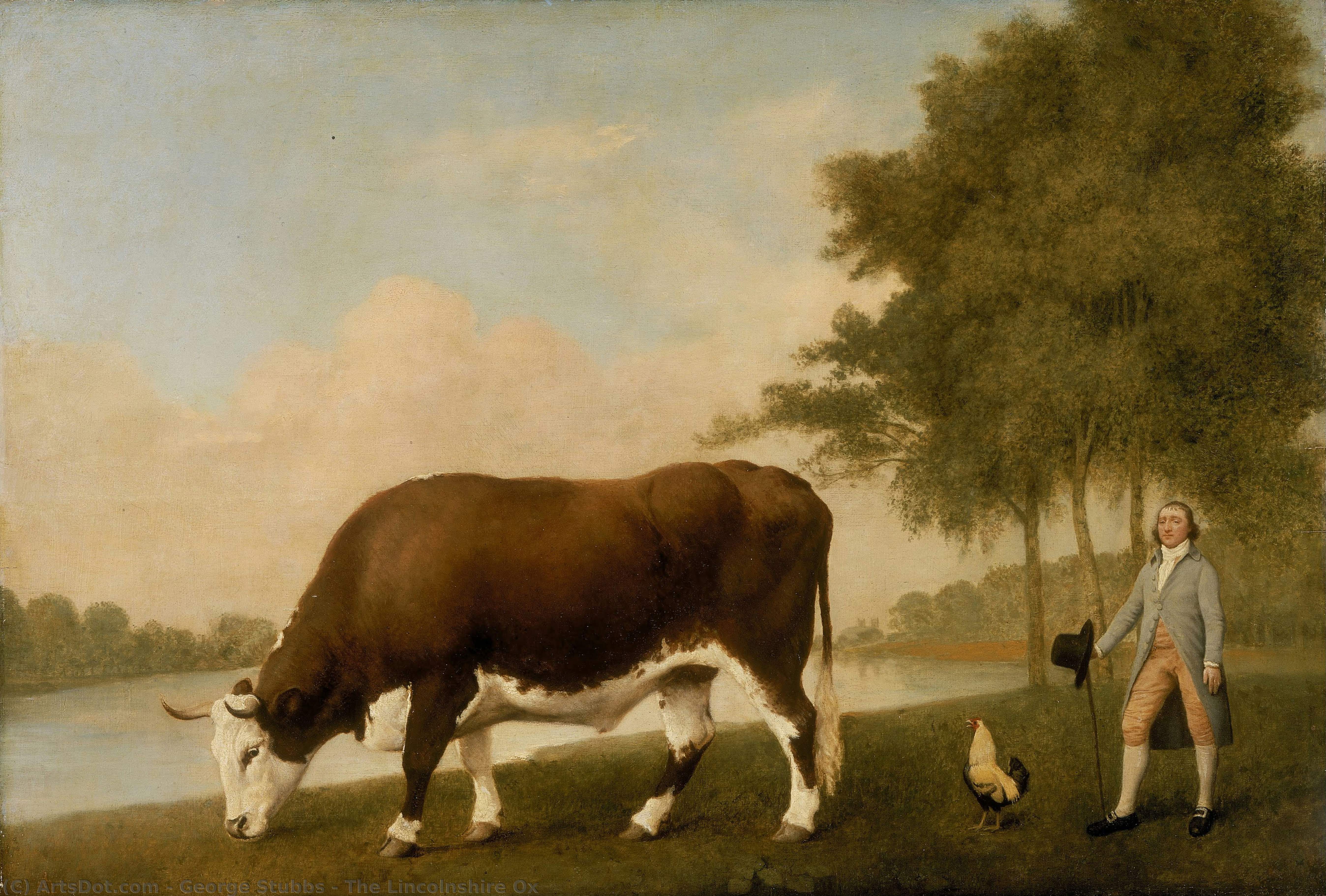
The Lincolnshire Ox
 Acrylic
- WallArt
- Romantic Landscape Painting
 1790
1790 990.0 x 679.0 cm
 Walker Art Gallery
 Read More
Hand Made Oil Reproduction
Hand-painted oil on canvas in your size and frame, made to order by our artists. ( Buy Print Buy Image)




P118B $10

P118H $10

P118W $10

P438Z $10

P508JH $12

P508YH $12

P805H $10

P805Z $10

P919BZ $10

P919G $10

P919XJ $10

P959ZH $10

P968JZ $12

W106C $8

W218G $10

W218JH $8

W218Y $10

W307PJ $10

W316G $10

W316PJ $8

W316Y $10

W398PJ $8

W4111J $10

W500HY $15

W500JH $15

W692G $12

W849H $8

W940BG $15

W953PJ $8




Pick from our preset sizes that match the artwork's original proportions.

You may enter your own dimensions to fit a specific frame or space. If your selected size does not match the original image's proportions, we will either crop the artwork or extend the painting with additional hand-painted elements. A digital mockup will be sent for your approval before production begins.
Please note that the on-screen preview does not reflect the actual cropping or extension. Only the mockup will accurately show the final composition.
While custom sizes are available, we recommend selecting a dimension from the predefined list to preserve the original proportions.
After order, ArtsDot.com team will email client for instructions and provide a mockup preview
Worldwide Delivery () in 3/4 weeks instead of standard 5 weeks. (16 August). No compromise on quality.

Free Worldwide Express Shipping

High-Quality Linen Canvas

Full Shipping Insurance

Customs Tax Refund Guarantee

True Color Matching Guarantee

60-Day Return Policy (Defects Only)

100% Money-Back Guarantee

Bulk Discount Offer
 Glass option is only available in size under 110 CM

The Lincolnshire Ox
Reproduction Medium
Reproduction Size
-


Total Price
$ 263
Artwork Description
A Monumental Portrait of Lincolnshire Livestock and Human Dignity
George Stubbs’s “The Lincolnshire Ox,” completed in 1790, transcends mere depiction; it embodies an ambitious exploration of anatomy, observation, and the intersection of rural life and scientific inquiry. This monumental canvas—measuring 990 x 679 cm—captures John Gibbons, a Lincolnshire farmer who achieved fame through his victory at a cock fight, alongside his extraordinary ox, a creature that defied conventional understanding of animal physiology during its time. Stubbs’s masterful rendering isn't simply about capturing the physical form; it’s an assertion of intellectual curiosity and a testament to the artist’s unwavering dedication to scientific accuracy.- Subject Matter: The painting centers on Gibbons himself, dressed in formal attire—a suit and hat—standing proudly beside his colossal ox. This juxtaposition immediately establishes a dialogue between human dignity and the raw power of nature. The inclusion of a champion cockerel perched atop branches underscores Stubbs’s fascination with animal behavior and reinforces the narrative of triumph and spectacle.
- Style & Technique: Stubbs employed a revolutionary approach to painting, prioritizing anatomical precision over idealized representation. He undertook extensive dissections of horses—a daring undertaking for his era—to meticulously study muscle structure and skeletal articulation. This dedication is palpable in “The Lincolnshire Ox,” where Stubbs painstakingly recreates the ox’s musculature with astonishing realism. The artist utilized oil paint on canvas, applying thick impasto strokes to convey texture and volume, particularly evident in the ox's hide.
Historical Context: Scientific Observation Meets Rural Tradition
The painting emerged during a period of burgeoning scientific interest in anatomy and natural history. Stubbs’s work aligns with the Enlightenment’s emphasis on empirical observation and rational inquiry—a stark contrast to the prevailing artistic conventions of the time, which favored mythological narratives and idealized portraits. Gibbons's ox wasn’t merely livestock; it represented a symbol of Lincolnshire’s agricultural prowess and was celebrated as an unparalleled specimen. The exhibition of the ox in London served as a focal point for showcasing scientific advancements alongside rural achievements.- Symbolism: Beyond its anatomical accuracy, “The Lincolnshire Ox” carries symbolic weight. The ox embodies strength, resilience, and fertility—qualities deeply rooted in Lincolnshire’s agricultural heritage. Furthermore, Gibbons's posture exudes confidence and accomplishment, reflecting the farmer’s success in securing this remarkable animal. The cockerel symbolizes victory and heralds a new era of scientific understanding.
Emotional Impact & Artistic Legacy
Stubbs’s “The Lincolnshire Ox” commands attention not only through its scale but also through its profound emotional resonance. The painting evokes awe at the grandeur of nature and admiration for human intellect—a harmonious blend that speaks to the enduring fascination with both animal anatomy and rural landscapes. Stubbs's pioneering technique continues to inspire artists today, demonstrating the transformative power of meticulous observation and unwavering commitment to artistic excellence. It stands as a cornerstone of British art history, securing its place as an unforgettable masterpiece.Related Artworks
Artist Biography
early life and training
george stubbs, a renowned english painter, was born on august 25, 1724, in liverpool, united kingdom. his early life was marked by a sparse record of his activities until the age of 35, with most information sourced from ozias humphry's memoirs, based on conversations with stubbs in 1794. stubbs began his artistic journey at the age of 15, initially working under his father, a currier or leather-dresser. he later approached hamlet winstanley, a lancashire painter and engraver, for a brief apprenticeship. this short stint allowed him to study the collection at knowsley hall.artistic development and notable works
stubbs's passion for anatomy led him to move to york in 1744, where he studied under surgeon charles atkinson at york county hospital. one of his earliest surviving works is a set of illustrations for john burton's textbook on midwifery, published in 1751. in 1756, stubbs rented a farmhouse in lincolnshire and spent 18 months dissecting horses, assisted by his common-law wife, mary spencer. this led to the publication of the anatomy of the horse in 1766, with original drawings now housed at the royal academy. stubbs's work was soon recognized by leading aristocratic patrons, including the 3rd duke of richmond, who commissioned three large pictures in 1759. this marked the beginning of his successful career, with works produced for several dukes and lords, culminating in the purchase of a house in marylebone, london.legacy and notable paintings
stubbs's most famous work, whistlejacket, a painting of a prancing horse commissioned by the 2nd marquess of rockingham, is now housed at the national gallery in london. this and two other paintings for rockingham break with convention, featuring plain backgrounds.- whistlejacket, a thoroughbred race horse rising on his hind legs, showcases stubbs's unparalleled skill in capturing the essence of horses.
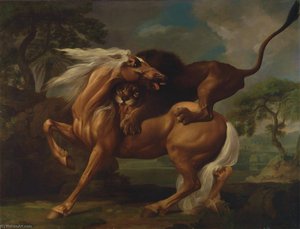
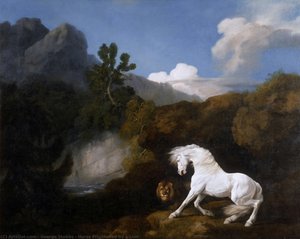
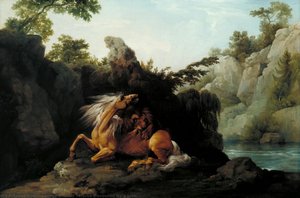
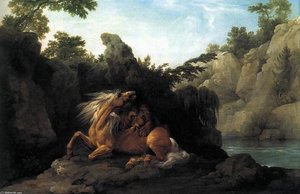
- stubbs's series of paintings on a lion attacking a horse are early examples of the romantic movement, demonstrating his influence on 18th-century art.
- view stubbs's artwork at https://ArtsDot.com/@/george_stubbs
- explore the national gallery in london's collection, featuring stubbs's notable works, at /en/art/show/art-8xyffg-en/
- learn more about stubbs's life and work on wikipedia at https://en.wikipedia.org/wiki/george_stubbs
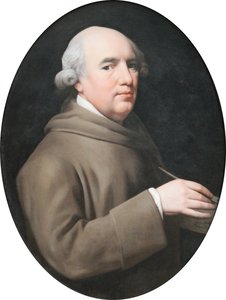
George Stubbs
1724 - 1806 , United Kingdom
Quick Facts
- Artistic Movement Or Style: Romanticism, Equine Art
- Artists Or Movements Influenced By This Artist: ['Joshua Reynolds']
- Artists Who Influenced This Artist: ['Hamlet Winstanley']
- Date Of Birth: August 25, 1724
- Date Of Death: July 10, 1806
- Full Name: George Stubbs
- Nationality: British
- Notable Artworks:
- Whistlejacket
- Lion & Horse
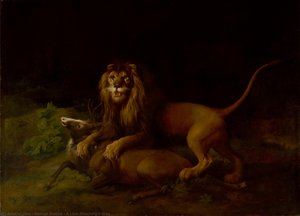
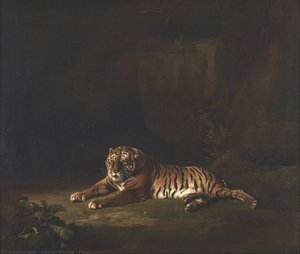
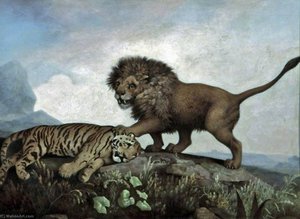
- A Lion and Tiger
- Place Of Birth: Liverpool, UK
Related Articles

Bronze Sculptures That Defined Art History | ArtsDot
Journey through art history with our Top 10 bronze sculptures! Explore masterpieces by Rodin, Michelangelo & more. Discover stories behind iconic statues and find museum-quality reproductions for your home decor at ArtsDot.com.
Animalia: Exploring the Enduring Presence of Animals in Art & Interior Design
Explore the rich history of animal symbolism in art, from ancient mythology to modern masterpieces. Discover how animals have inspired artists for centuries and learn how to incorporate these powerful motifs into your home décor.

The Enduring Form: Exploring Themes & Techniques in Sculpture Across Historical Periods
Explore the rich history of sculpture from ancient masterpieces to contemporary innovations. Discover key techniques, influential artists & investment potential for discerning art collectors.

Bronze Age to Modern Masters: 10 Sculptures That Redefined Art | ArtsDot
Journey through art history with 10 legendary bronze sculptures – from Michelangelo's David to Rodin’s Thinker. Explore the stories, techniques & timeless beauty of these masterpieces. Find museum-quality reproductions & elevate your home decor on ArtsDot.com.
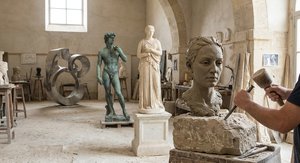
The Enduring Form: Sculpture Across History, Technique & Emotional Resonance
Explore the rich history of sculpture with ArtsDot. Discover key techniques, influential artists & investment potential for discerning collectors. Expert insights into valuing and collecting timeless masterpieces.