 Preview
 Send
Send Share
Share
 Details

 Download
 Similars
 X-Ray
X-Ray Diaporama
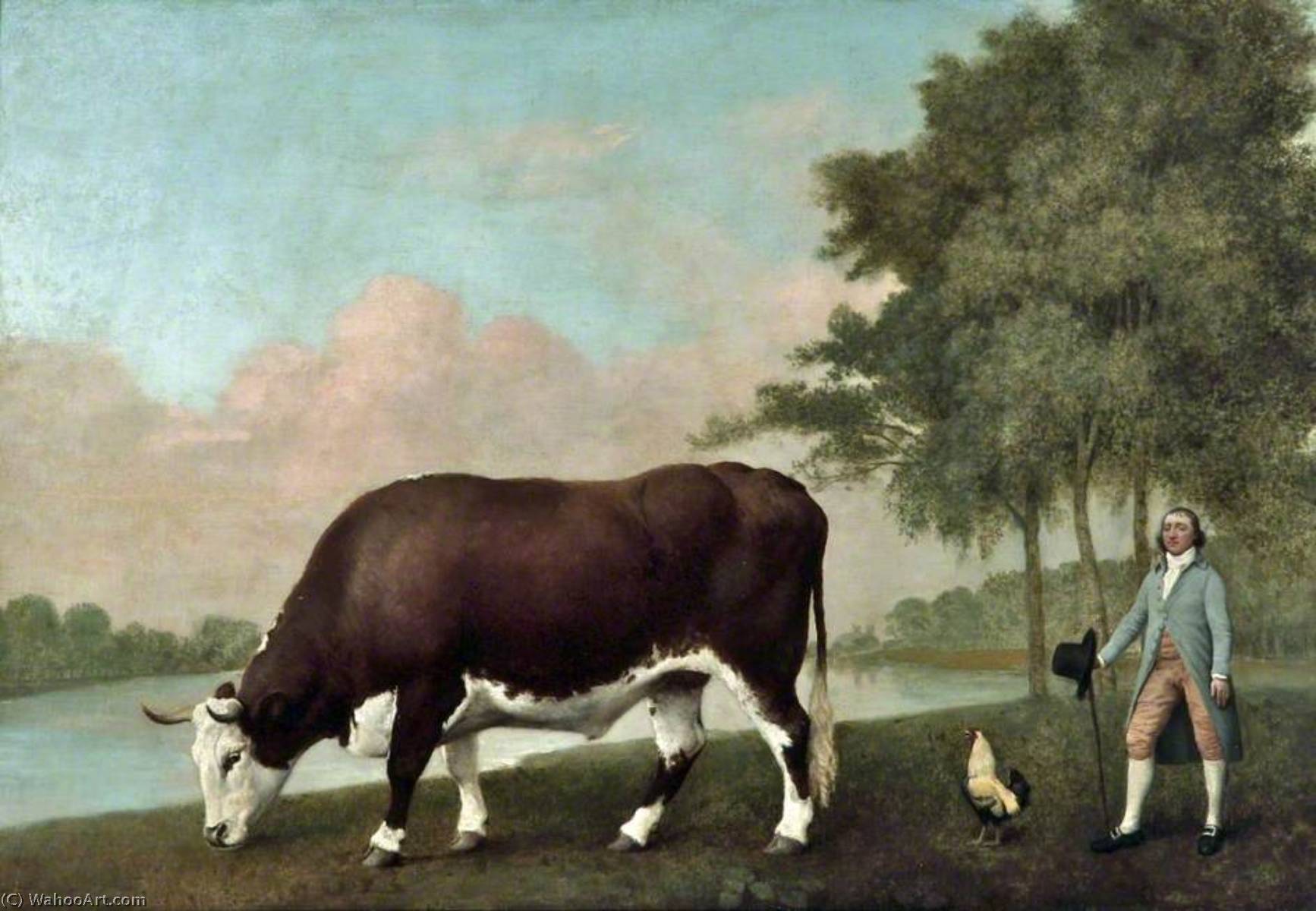
The Lincolnshire Ox
 Acrylic On Canvas
- WallArt
- Romantic Animal Painting
 1790
1790 68.0 x 99.0 cm
 Walker Art Gallery
 Read More
Hand Made Oil Reproduction
Hand-painted oil on canvas in your size and frame, made to order by our artists. ( Buy Print Buy Image)




P118B $10

P118H $10

P118W $10

P438Z $10

P508JH $12

P508YH $12

P805H $10

P805Z $10

P919BZ $10

P919G $10

P919XJ $10

P959ZH $10

P968JZ $12

W106C $8

W218G $10

W218JH $8

W218Y $10

W307PJ $10

W316G $10

W316PJ $8

W316Y $10

W398PJ $8

W4111J $10

W500HY $15

W500JH $15

W692G $12

W849H $8

W940BG $15

W953PJ $8




Pick from our preset sizes that match the artwork's original proportions.

You may enter your own dimensions to fit a specific frame or space. If your selected size does not match the original image's proportions, we will either crop the artwork or extend the painting with additional hand-painted elements. A digital mockup will be sent for your approval before production begins.
Please note that the on-screen preview does not reflect the actual cropping or extension. Only the mockup will accurately show the final composition.
While custom sizes are available, we recommend selecting a dimension from the predefined list to preserve the original proportions.
After order, ArtsDot.com team will email client for instructions and provide a mockup preview
Worldwide Delivery () in 3/4 weeks instead of standard 5 weeks. (16 August). No compromise on quality.

Free Worldwide Express Shipping

High-Quality Linen Canvas

Full Shipping Insurance

Customs Tax Refund Guarantee

True Color Matching Guarantee

60-Day Return Policy (Defects Only)

100% Money-Back Guarantee

Bulk Discount Offer
 Glass option is only available in size under 110 CM

The Lincolnshire Ox
Reproduction Medium
Reproduction Size
-


Total Price
$ 263
Artwork Description
George Stubbs’s Lincolnshire Ox: A Monument to Anatomical Observation and Romantic Idealism
The Lincolnshire Ox, completed in 1790 by George Stubbs (1724–1806), stands as a cornerstone of British Romantic art—a testament not only to Stubbs's unparalleled anatomical skill but also to his profound engagement with the natural world and its depiction within an evolving artistic landscape. Currently housed at the Walker Art Gallery in Liverpool, this monumental oil painting captures a pivotal moment in equine history and embodies the spirit of a generation captivated by sublime beauty and scientific inquiry.Subject Matter and Composition
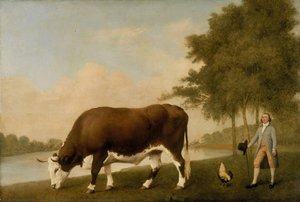
At first glance, the Lincolnshire Ox presents a deceptively simple scene: a colossal Hereford bull stands proudly amidst a rural pasture populated by trees and birds. However, Stubbs’s meticulous attention to detail elevates this pastoral tableau into something far more ambitious. The ox dominates the composition—its immense size commands immediate visual dominance—yet it is rendered with astonishing accuracy, reflecting Stubbs's dedication to dissecting animal corpses to understand their musculature and skeletal structure. This groundbreaking approach, pioneered by Stubbs himself, directly challenged academic conventions of his time and established him as a champion of scientific realism within the artistic realm. Alongside the bull is John Gibbons, its owner, who commissioned the artwork, adding a human element that underscores the importance of observation and documentation. Two birds—one perched on the bull’s shoulder and another soaring overhead—further enrich the visual narrative, symbolizing freedom and aspiration against the backdrop of the expansive countryside.Technique and Artistic Style
Stubbs employed a technique characterized by layered glazing – applying thin translucent layers of pigment over previous coats – to achieve remarkable tonal depth and luminosity. This masterful manipulation of light and shadow imbues the painting with an ethereal quality, capturing not merely the physical appearance of the bull but also its essence—its power, dignity, and connection to the natural world. The artist’s brushstrokes are deliberate and expressive, conveying a sense of dynamism and vitality that transcends mere representation. Stubbs's style aligns squarely with the burgeoning Romantic movement, which prioritized emotion and imagination alongside observation. Unlike Neoclassical art’s emphasis on idealized forms and rational order, Stubbs sought to portray animals as they truly existed—a bold departure from artistic tradition that cemented his place among the most influential painters of his era.Historical Context and Significance
Created during a period of significant scientific advancement – particularly anatomical studies spearheaded by figures like Charles Atkinson at York County Hospital – The Lincolnshire Ox reflects the broader intellectual currents shaping eighteenth-century Britain. Stubbs’s work represents a crucial step away from idealized depictions of animals toward a more scientifically informed approach, mirroring the growing fascination with natural history and comparative anatomy. Furthermore, its exhibition at the Royal Academy in 1790 coincided with a surge of interest in Romantic ideals—a celebration of sublime landscapes and heroic figures—demonstrating Stubbs’s contribution to shaping artistic sensibilities during this transformative period. The Lincolnshire Ox continues to inspire awe and admiration for its technical brilliance and its enduring portrayal of the majesty of nature, securing its legacy as an iconic masterpiece of British Romanticism.Symbolism and Emotional Impact
Beyond its anatomical precision, The Lincolnshire Ox carries symbolic weight. The bull itself embodies strength, resilience, and primal power—qualities admired in both animal and human subjects during the Romantic era. Gibbons’s presence alongside the ox underscores the importance of human interaction with the natural world, suggesting a harmonious coexistence between man and beast. The birds symbolize aspiration and freedom, hinting at an idealized vision of pastoral life untouched by urban pressures. Ultimately, Stubbs's Lincolnshire Ox transcends mere visual representation; it evokes a profound emotional response—a sense of wonder at the grandeur of creation and a contemplation of humanity’s place within its vastness.Related Artworks
Artist Biography
early life and training
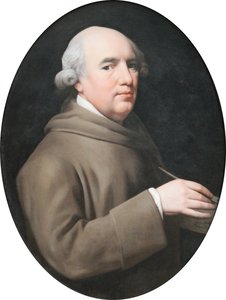
george stubbs, a renowned english painter, was born on august 25, 1724, in liverpool, united kingdom. his early life was marked by a sparse record of his activities until the age of 35, with most information sourced from ozias humphry's memoirs, based on conversations with stubbs in 1794. stubbs began his artistic journey at the age of 15, initially working under his father, a currier or leather-dresser. he later approached hamlet winstanley, a lancashire painter and engraver, for a brief apprenticeship. this short stint allowed him to study the collection at knowsley hall.artistic development and notable works
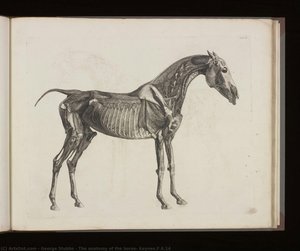
stubbs's passion for anatomy led him to move to york in 1744, where he studied under surgeon charles atkinson at york county hospital. one of his earliest surviving works is a set of illustrations for john burton's textbook on midwifery, published in 1751. in 1756, stubbs rented a farmhouse in lincolnshire and spent 18 months dissecting horses, assisted by his common-law wife, mary spencer. this led to the publication of the anatomy of the horse in 1766, with original drawings now housed at the royal academy. stubbs's work was soon recognized by leading aristocratic patrons, including the 3rd duke of richmond, who commissioned three large pictures in 1759. this marked the beginning of his successful career, with works produced for several dukes and lords, culminating in the purchase of a house in marylebone, london.legacy and notable paintings
stubbs's most famous work, whistlejacket, a painting of a prancing horse commissioned by the 2nd marquess of rockingham, is now housed at the national gallery in london. this and two other paintings for rockingham break with convention, featuring plain backgrounds.- whistlejacket, a thoroughbred race horse rising on his hind legs, showcases stubbs's unparalleled skill in capturing the essence of horses.
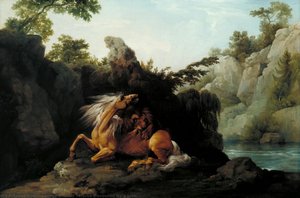
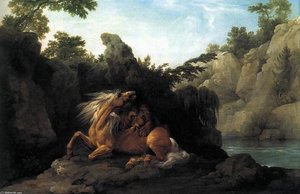
- stubbs's series of paintings on a lion attacking a horse are early examples of the romantic movement, demonstrating his influence on 18th-century art.
- view stubbs's artwork at https://ArtsDot.com/@/george_stubbs
- explore the national gallery in london's collection, featuring stubbs's notable works, at /en/art/show/art-8xyffg-en/
- learn more about stubbs's life and work on wikipedia at https://en.wikipedia.org/wiki/george_stubbs
George Stubbs
1724 - 1806 , United Kingdom
Quick Facts
- Artistic Movement Or Style: Romanticism, Equine Art
- Artists Or Movements Influenced By This Artist: ['Joshua Reynolds']
- Artists Who Influenced This Artist: ['Hamlet Winstanley']
- Date Of Birth: August 25, 1724
- Date Of Death: July 10, 1806
- Full Name: George Stubbs
- Nationality: British
- Notable Artworks:
- Whistlejacket
- Lion & Horse
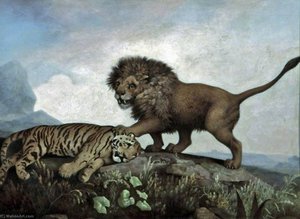
- A Lion and Tiger
- Place Of Birth: Liverpool, UK
Related Articles
Georges Braque's Masterpieces: 25 Paintings That Defined Cubism & Modern Art | ArtsDot
Explore 25 iconic Georges Braque paintings that revolutionized Cubism & modern art. Discover the stories behind his masterpieces, from Fauvism to Analytical Cubism. Find museum-quality reproductions & elevate your home decor with ArtsDot.com.
Georges Seurat's Masterpieces: 25 Paintings That Defined Pointillism | ArtsDot
Explore 25 iconic Georges Seurat paintings & discover the brilliance of Pointillism. From 'La Grande Jatte' to his harbor scenes, delve into art history with ArtsDot.com. Find museum-quality reproductions for your home decor. Explore the full collection online!
George Stubbs: Anatomical Precision & Romantic Vision in 18th-Century British Art
Explore the captivating world of George Stubbs, the 18th-century master renowned for his anatomical precision & Romantic animal paintings. Discover his legacy and investment potential.
Animalia: Exploring the Enduring Presence of Animals in Art & Interior Design
Explore the rich history of animal symbolism in art, from ancient mythology to modern masterpieces. Discover how animals have inspired artists for centuries and learn how to incorporate these powerful motifs into your home décor.
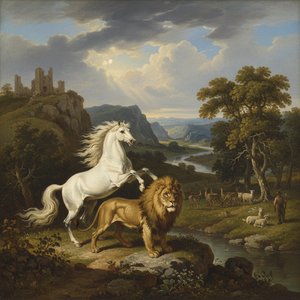
James Ward: A Study in British Romantic Landscape and Animal Painting
Explore the captivating world of James Ward (1769-1859), a master of British Romantic landscape & animal painting. Discover his iconic 'Gordale Scar' and exquisite portraits – a timeless art investment. Learn about his influences, style, and enduring legacy.