 Preview
 Send
Send Share
Share
 Details

 Download
 Similars
 X-Ray
X-Ray Diaporama
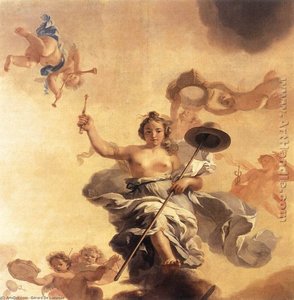
Allegory of the Freedom of Trade


 Read More
Giclée / Art Print
Museum-quality giclée or canvas print with fast production and flexible finish options. ( Buy Hand Made Painting Buy Image)




P118B $10

P118H $10

P118W $10

P438Z $10

P508JH $12

P508YH $12

P805H $10

P805Z $10

P919BZ $10

P919G $10

P919XJ $10

P959ZH $10

P968JZ $12

W106C $8

W218G $10

W218JH $8

W218Y $10

W307PJ $10

W316G $10

W316PJ $8

W316Y $10

W398PJ $8

W4111J $10

W500HY $15

W500JH $15

W692G $12

W849H $8

W940BG $15

W953PJ $8




Pick from our preset sizes that match the artwork's original proportions.

You may enter your own dimensions to fit a specific frame or space. If your selected size does not match the original image's proportions, we will either crop the artwork or extend the image with a mirrored or solid-fill edge. A digital mockup will be sent for your approval before production begins.
Please note that the on-screen preview does not reflect the actual cropping or extension. Only the mockup will accurately show the final composition.
While custom sizes are available, we recommend selecting a dimension from the predefined list to preserve the original proportions.
Worldwide Delivery () in 2 weeks instead of standard 4/5 weeks. (6 September)

Free Worldwide Express Shipping

High-Quality Linen Canvas

Full Shipping Insurance

Customs Tax Refund Guarantee

True Color Matching Guarantee

60-Day Return Policy (Defects Only)

100% Money-Back Guarantee

Bulk Discount Offer
 Glass option is only available in size under 110 CM

Allegory of the Freedom of Trade
Giclée / Art Print
Reproduction Size
-


Total Price
$ 63
The Allegory of the Freedom of Trade: A Baroque Masterpiece
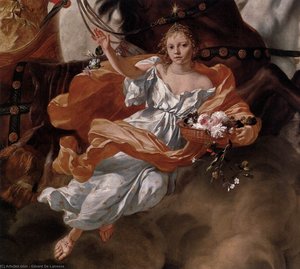
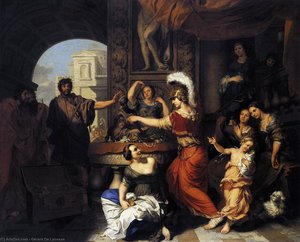
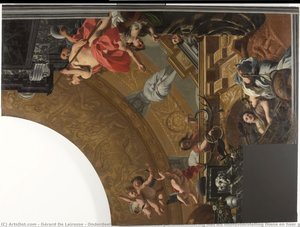
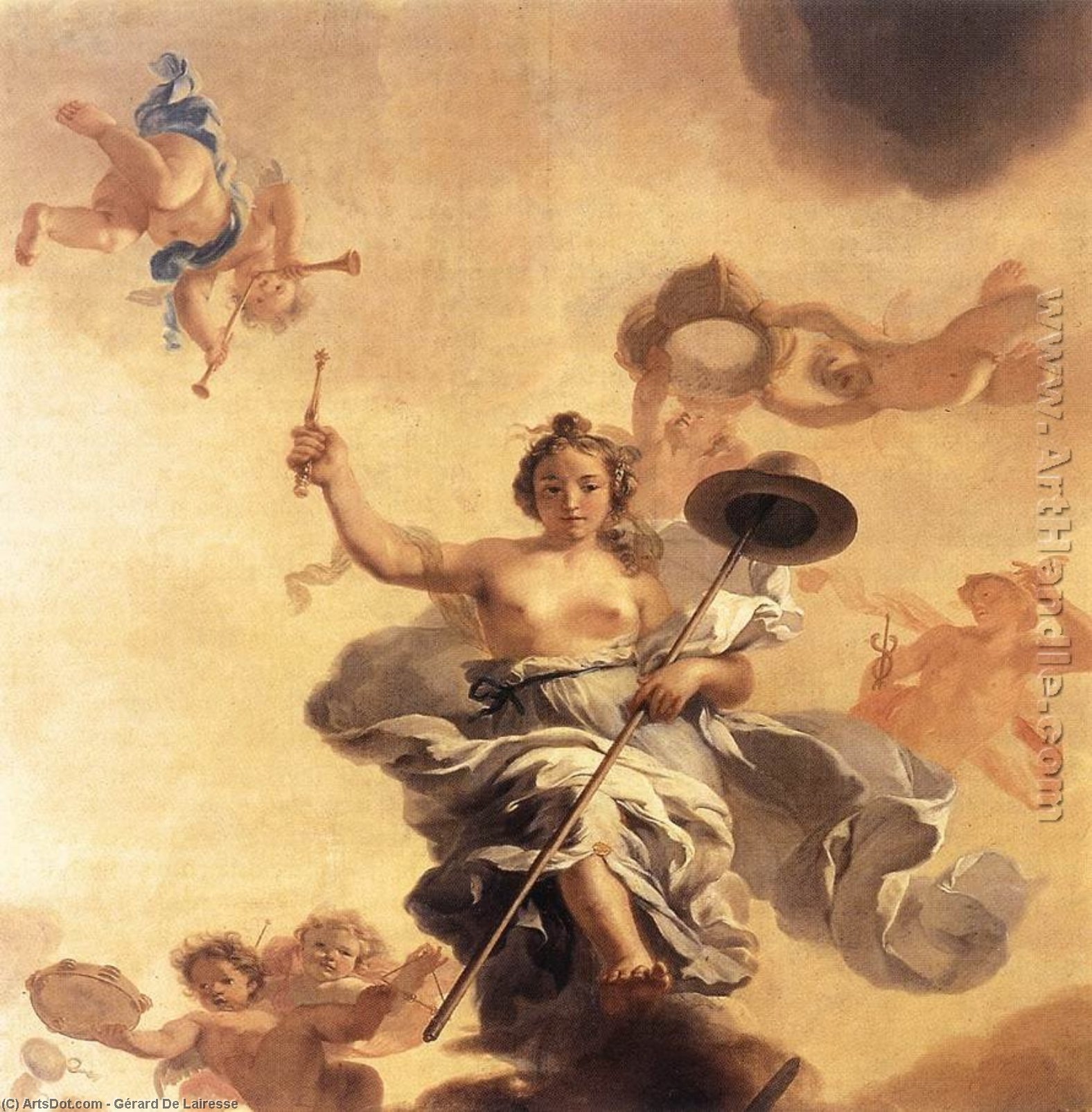
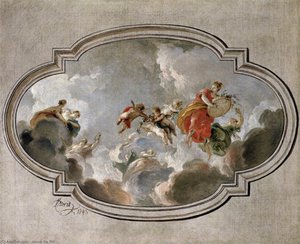
Gérard de Lairesse’s “Allegory of the Freedom of Trade,” painted in 1672, is more than just a beautiful depiction; it's a potent visual argument for the burgeoning commercial spirit of its age. Executed during the height of the Belgian Baroque, this painting exemplifies the movement’s dramatic flair and meticulous attention to detail – hallmarks of Lairesse’s distinctive style. The scene unfolds with a dynamism born from the central figure: a woman embodying freedom itself, soaring through the heavens on wings, a staff held aloft as if to guide trade routes across the globe.
The painting's composition is deliberately theatrical, drawing heavily on Baroque conventions of illusionistic space and dramatic lighting. Lairesse masterfully employs chiaroscuro – the stark contrast between light and dark – to sculpt the forms and heighten the sense of movement. The woman’s flowing hair, rendered with delicate brushstrokes, adds to her ethereal quality, while the surrounding figures, engaged in various activities, contribute to a bustling, almost chaotic, yet carefully orchestrated scene.
Symbolism Woven into the Fabric of Commerce
The allegorical nature of the work is immediately apparent. The winged woman, often interpreted as representing Fortune or Mercancy herself, isn’t merely a decorative element; she actively directs the flow of trade. Surrounding her are figures engaged in maritime activities – sailors, merchants, and even representations of goods themselves – all contributing to the narrative of prosperity and exchange. The bird, subtly integrated into the composition, further reinforces the theme of freedom and boundless possibilities. The inclusion of seated figures suggests the patronage and influence of wealthy merchants and rulers, a common feature in allegorical paintings commissioned for aristocratic homes.
Lairesse’s meticulous attention to detail extends beyond the symbolic elements. The fabrics worn by the figures are rendered with astonishing realism, showcasing his skill in depicting textures and materials. The use of color is equally sophisticated, employing rich reds, blues, and golds to evoke a sense of opulence and importance. This careful rendering of material was crucial for conveying status and wealth within the context of 17th-century trade.
Historical Context and Artistic Influence
"Allegory of the Freedom of Trade" reflects the significant economic changes occurring in Europe during the late 17th century, a period marked by increased global trade and the rise of merchant capitalism. Lairesse’s work served as both a celebration of this burgeoning commercial activity and a subtle endorsement of its values – ambition, innovation, and prosperity. His painting aligns with the broader artistic trends of the time, influenced by the works of Caravaggio and Rembrandt, but ultimately establishing his own distinct voice within the Belgian Baroque tradition.
Lairesse’s legacy extends beyond this single masterpiece. He became a leading figure in the development of Flemish art, influencing generations of artists with his dramatic compositions and masterful use of light and shadow. Reproductions of “Allegory of the Freedom of Trade” offer an exceptional opportunity to experience the power and beauty of this pivotal work firsthand.
Related Artworks



Artist Biography
Gérard de Lairesse: A Leading Figure of Belgian Baroque Art
Gérard de Lairesse (1640-1711) was a prominent Belgian painter who significantly contributed to the development and flourishing of Baroque art during the 17th century. Born in Liège, Belgium, his career spanned a period of considerable artistic transformation across Europe, leaving behind a legacy marked by dramatic compositions, masterful use of light and shadow, and a distinct influence on subsequent generations of artists.
Early Life and Training: Foundations of an Artistic Career
- Birth and Origins: Gérard de Lairesse was born in Liège, Belgium, in 1640.
- Apprenticeship under Erasmus II Massius: His artistic journey began with training under the tutelage of Erasmus II Massius, a well-regarded painter from the region. This foundational experience provided him with essential technical skills and an introduction to the art world.
- Influence of Caravaggio and Rembrandt: De Lairesse was deeply inspired by the works of two giants of European painting – Caravaggio and Rembrandt. The dramatic use of light and shadow (tenebrism) championed by Caravaggio, and the psychological depth and masterful handling of light characteristic of Rembrandt, profoundly shaped his artistic style and technique.
Artistic Style and Key Contributions: Defining a Baroque Vision
- Baroque Characteristics: De Lairesse’s paintings are quintessential examples of Baroque art, characterized by their dynamic compositions, intense emotionality, and dramatic use of light and shadow (chiaroscuro).
- Mastery of Chiaroscuro: He expertly employed chiaroscuro to create a sense of volume, depth, and heightened drama in his works. This technique was central to the Baroque aesthetic.
- Notable Works: Among his most celebrated pieces are "The Martyrdom of Saint Sebastian" and "The Baptism of Christ," which showcase his exceptional command of color, form, and composition. These paintings exemplify his ability to convey powerful narratives with emotional intensity.
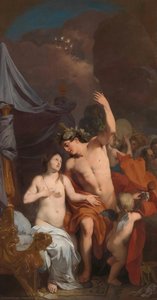
- Beyond Religious Subjects: While known for religious scenes, de Lairesse also explored mythological themes, portraits, and landscapes, demonstrating versatility within the Baroque style. Examples include "Apollo and Aurora," "Diana and Endymion" and “Allegory of the Five Senses”.
Influences and Legacy: Shaping Artistic Trends
- Utrecht Caravaggisti Influence: De Lairesse was heavily influenced by the Utrecht Caravaggisti, a group of Dutch painters who embraced Caravaggio’s dramatic lighting techniques.
- Peter Paul Rubens' Impact: The legacy of Peter Paul Rubens, a dominant figure in Flemish Baroque painting, also resonated within de Lairesse's work, though his style developed its own distinct characteristics.
- Influence on Jan van Huchtenburgh: His artistic innovations and techniques influenced later artists like Jan van Huchtenburgh, demonstrating the ripple effect of his contributions to the art world.
- Portraiture and Engraving: De Lairesse's influence extended beyond painting; he was also recognized for his portraiture and collaborations with engravers such as Gerard Valck who created prints based on his designs.
Historical Significance and Recognition
Gérard de Lairesse holds a significant place in the history of Belgian art, representing a key figure in the development of Baroque painting within the region. His skillful use of chiaroscuro, dramatic compositions, and emotive narratives established him as a notable artist of his time. Today, his works are recognized for their artistic merit and historical importance, with pieces residing in prestigious collections such as the National Gallery in London. ArtsDot.com offers high-quality reproductions of de Lairesse's masterpieces, allowing art enthusiasts to appreciate his contributions to Baroque art.
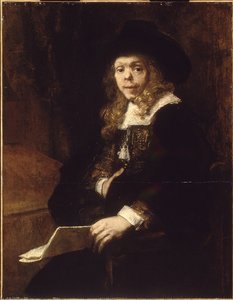
gérard de lairesse
1640 - 1711 , Belgium
Quick Facts
- Artistic Movement Or Style: Baroque art
- Artists Or Movements Influenced By This Artist: ['Jan van Huchtenburgh']
- Artists Who Influenced This Artist:
- Caravaggio
- Rembrandt
- Peter Paul Rubens
- Date Of Birth: 1640
- Date Of Death: 1711
- Full Name: Gérard de Lairesse
- Nationality: Belgian
- Notable Artworks:
- Martyrdom of Saint Sebastian
- Baptism of Christ
- Apollo and Aurora
- Diana and Endymion
- Allegory of the Five Senses
- Place Of Birth: Liège, Belgium
Related Articles

Goya's Masterpieces: Explore 25 Iconic Paintings & Art Prints | ArtsDot
Delve into the world of Francisco Goya with ArtsDot. Explore 25 iconic paintings – from 'The Third of May' to his haunting Black Paintings. Discover the stories, techniques & emotions behind these Spanish masterpieces. Find museum-quality art reproductions for your home at ArtsDot.com!

Dutch Baroque Masters: 10 Paintings That Shaped an Era | ArtsDot
Journey through the Golden Age with our guide to the Top 10 Dutch Baroque masterpieces! Explore iconic paintings by Rembrandt, Vermeer & Frans Hals. Find museum-quality art reproductions and elevate your home decor at ArtsDot.com.

Golden Age Reflections: Dutch Baroque Painting & Cultural Innovation
Explore the Dutch Golden Age of painting! Discover key artists like Vermeer & ter Borch, their innovative techniques, and the rich cultural context behind these Baroque masterpieces. Learn about collecting & appreciating this iconic art period.
Pieter de Hooch: Illuminating Dutch Domestic Life & Golden Age Charm
Explore the captivating world of Pieter de Hooch, a master of Dutch Golden Age painting. Discover his innovative use of light, intimate domestic scenes, and lasting influence on art history. Learn more at ArtsDot.

About Us
Discover our story! We bring world-class art into your life through expert curation, personalized creations, and free previews. Trusted by individuals and businesses since 2000.