 Preview
 Send
Send Share
Share
 Details

 Download
 Similars
 X-Ray
X-Ray Diaporama
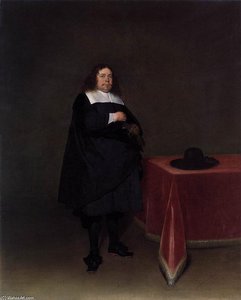
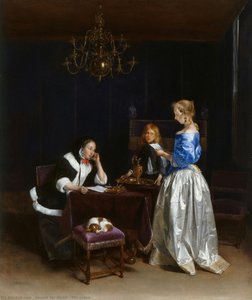
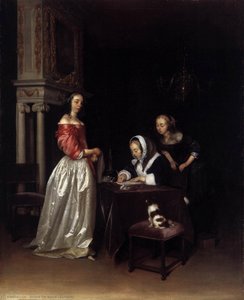
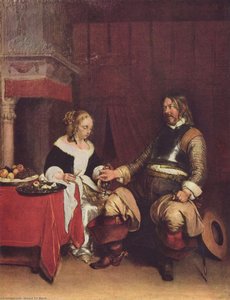
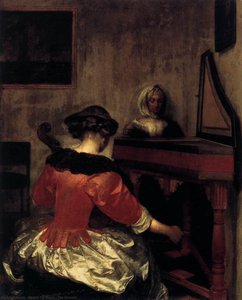
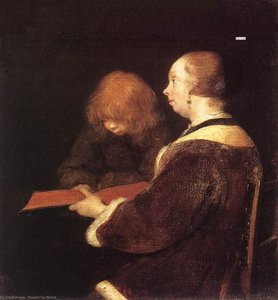
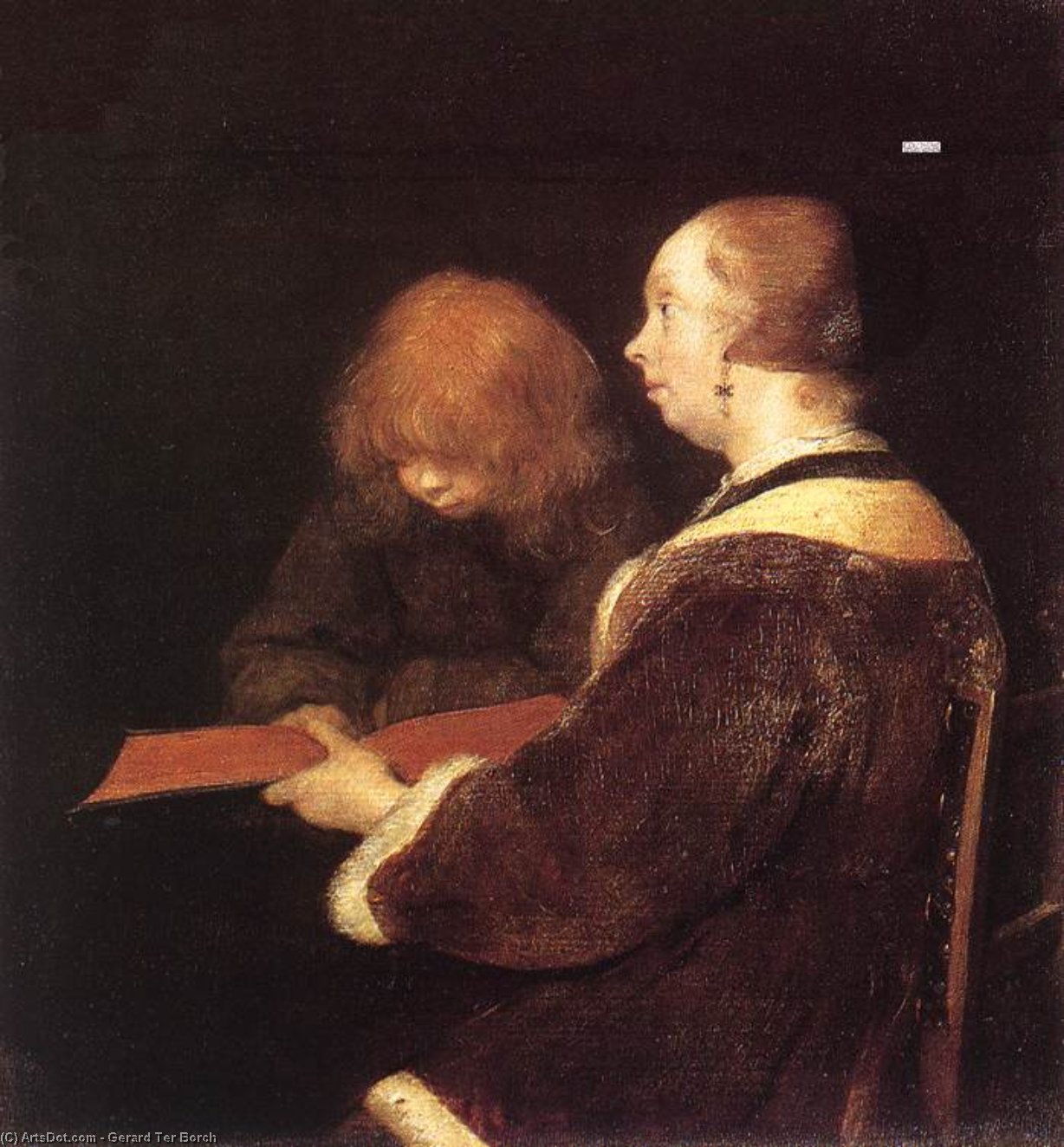
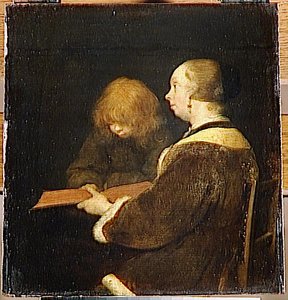
The Reading Lesson
 Baroque Portraiture
 27.0 x 25.0 cm
 The Louvre
 Read More
Hand Made Oil Reproduction
Hand-painted oil on canvas in your size and frame, made to order by our artists. ( Buy Print Buy Image)




P118B $10

P118H $10

P118W $10

P438Z $10

P508JH $12

P508YH $12

P805H $10

P805Z $10

P919BZ $10

P919G $10

P919XJ $10

P959ZH $10

P968JZ $12

W106C $8

W218G $10

W218JH $8

W218Y $10

W307PJ $10

W316G $10

W316PJ $8

W316Y $10

W398PJ $8

W4111J $10

W500HY $15

W500JH $15

W692G $12

W849H $8

W940BG $15

W953PJ $8




Pick from our preset sizes that match the artwork's original proportions.

You may enter your own dimensions to fit a specific frame or space. If your selected size does not match the original image's proportions, we will either crop the artwork or extend the painting with additional hand-painted elements. A digital mockup will be sent for your approval before production begins.
Please note that the on-screen preview does not reflect the actual cropping or extension. Only the mockup will accurately show the final composition.
While custom sizes are available, we recommend selecting a dimension from the predefined list to preserve the original proportions.
After order, ArtsDot.com team will email client for instructions and provide a mockup preview
Worldwide Delivery () in 3/4 weeks instead of standard 5 weeks. (17 August). No compromise on quality.

Free Worldwide Express Shipping

High-Quality Linen Canvas

Full Shipping Insurance

Customs Tax Refund Guarantee

True Color Matching Guarantee

60-Day Return Policy (Defects Only)

100% Money-Back Guarantee

Bulk Discount Offer
 Glass option is only available in size under 110 CM

The Reading Lesson
Reproduction Medium
Reproduction Size
-


Total Price
$ 263
Artwork Description
A Moment of Quiet Contemplation: Unveiling "The Reading Lesson"
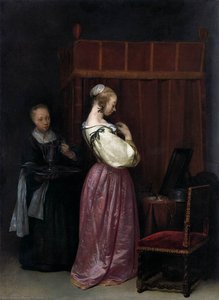
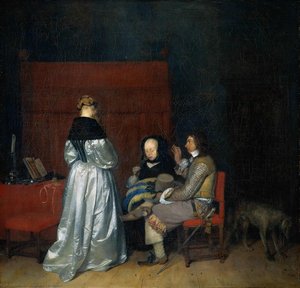
Gerard ter Borch’s “The Reading Lesson” isn't merely a depiction of two figures; it’s a meticulously crafted tableau of intimacy, knowledge, and the subtle dance between observation and engagement. Painted circa 1650-1660, this oil on canvas masterpiece, currently residing within the hallowed halls of the Louvre in Paris, offers a rare glimpse into the domestic sphere of 17th-century Dutch society – a world rendered with an astonishing level of realism and psychological depth rarely seen at the time. The painting immediately draws the viewer in, not with grand gestures or dramatic action, but with a quiet stillness that speaks volumes about the relationship between the figures and the act of learning itself.
The composition is deceptively simple yet profoundly effective. A young man, dressed in the rich fabrics of a scholar – velvet sleeves, a lace jabot, and a carefully arranged wig – sits attentively before an older gentleman, his face illuminated by the soft glow of candlelight. The elder, clad in the more subdued attire of a merchant or landowner, reads aloud from an open book, his gaze fixed on the young man’s earnest expression. The arrangement isn't one of formal instruction; rather, it suggests a shared moment of intellectual pursuit, a private lesson unfolding within the confines of their home. The careful positioning of the figures – the slight overlap of limbs, the mirroring of postures – creates a sense of connection and mutual respect.
Masterful Technique: Ter Borch’s Signature Realism
Ter Borch's genius lay in his ability to capture not just the outward appearance of his subjects but also their inner lives. This painting exemplifies his signature style, characterized by an almost photographic realism combined with a remarkable sensitivity to light and shadow – a technique known as *chiaroscuro*. Notice how the artist masterfully uses light to sculpt the figures’ forms, highlighting the textures of their clothing, the sheen of the book, and the delicate details of their faces. The dark background serves not merely as a backdrop but actively contributes to the drama, drawing the viewer's eye directly to the central figures.
The brushwork is incredibly fine and deliberate, almost microscopic in places. Ter Borch employed a technique known as *pointillé*, using countless tiny dots of paint to create an illusion of texture and depth. This meticulous approach lends the painting a remarkable sense of immediacy – it feels as though you could reach out and touch the velvet of the man’s sleeve or feel the weight of the book in his hands. Furthermore, the subtle variations in color and tone suggest a deep understanding of how light interacts with different materials, adding to the overall realism.
Symbolism and Context: A Window into Dutch Society
“The Reading Lesson” is more than just a portrait; it’s a window into the values and aspirations of 17th-century Dutch society. The emphasis on education and literacy was paramount during this period, as the burgeoning merchant class sought to cultivate both their wealth and their intellectual pursuits. The scene reflects the growing importance of the home as a space for learning and refinement – a departure from the more austere environments typically depicted in earlier portraits.
The book itself is laden with symbolic meaning. It represents not just knowledge but also virtue, piety, and social standing. The young man’s attentive posture suggests his desire to emulate the elder's wisdom and cultivate these qualities within himself. The inclusion of a candle further reinforces the theme of illumination – both literal and metaphorical – suggesting that learning is akin to bringing light into one’s life.
A Timeless Portrait: Emotion and Resonance
Despite its historical context, “The Reading Lesson” continues to resonate with viewers today. The painting evokes a sense of quiet contemplation, intimacy, and the enduring power of human connection. It captures a fleeting moment of shared experience – a silent exchange between two men bound by mutual respect and a common thirst for knowledge. Ter Borch’s masterful use of light, shadow, and detail creates an image that is both visually stunning and emotionally profound, solidifying its place as one of the most captivating works of the Dutch Golden Age.
Related Artworks
Artist Biography
**a pioneer of dutch genre painting**
gerard ter borch, a prominent figure in the dutch golden age, left an indelible mark on the art world with his genre paintings. born in december 1617 and passing away on december 8, 1681, ter borch's life was a testament to his artistic prowess.**early life and influences**
ter borch's early life is not well-documented, but it is known that he traveled extensively throughout europe, including london, germany, france, spain, and italy. this exposure broadened his artistic horizons, influencing his unique style. his sister, gesina ter borch, also pursued a career in painting, further solidifying the family's artistic inclinations.**notable works and achievements**
- **the letter**: a masterpiece showcasing ter borch's skill in capturing texture and light. - **the gallant conversation**: engraved by johann georg wille, this piece exemplifies the artist's ability to convey nuanced emotions. - **man on horseback (1634)**: an early work demonstrating ter borch's emerging talent. - **adrian pauw's arrival in münster (1646)**: a significant piece that highlights the artist's narrative capabilities.**museums and collections featuring ter borch's work**
- the hermitage: with six of his works, it boasts one of the largest collections. - berlin museum: features six pieces, showcasing ter borch's international appeal. - getty center: three of his paintings are part of this esteemed collection.**legacy and impact**
ter borch's influence on dutch painters like gabriel metsu, gerrit dou, eglon van der neer, and johannes vermeer is well-documented. his innovative approach to genre painting has made him a pivotal figure in the history of art.- for more on ter borch's life and works, visit https://ArtsDot.com/@/gerard-ter-borch
- explore the museum boijmans van beuningen rotterdam, netherlands, featuring some of ter borch's contemporaries at https://ArtsDot.com/@@/a@d3arrk-museum-boijmans-van-beuningen-rotterdam-netherlands
- learn more about the dutch golden age and its notable artists at https://en.wikipedia.org/wiki/dutch_golden_age
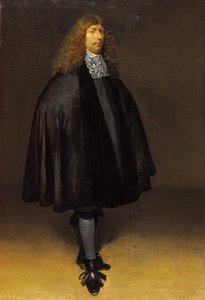
Gerard ter Borch
1617 - 1681 , Netherlands
Quick Facts
- Artistic Movement Or Style: Genre painting
- Artists Or Movements Influenced By This Artist: ['Diego Velázquez']
- Artists Who Influenced This Artist:
- Gabriel Metsu
- Gerrit Dou
- Eglon van der Neer
- Johannes Vermeer
- Date Of Birth: December 1617
- Date Of Death: 8 December 1681
- Full Name: Gerard ter Borch
- Nationality: Dutch
- Notable Artworks:
- The Letter
- The Gallant Conversation
- Man on horseback
- Adrian Pauw's arrival in Münster
- Place Of Birth: Zwolle, Netherlands
Related Articles
Gerard ter Borch: Intimacy & Light in the Dutch Golden Age
Explore the captivating world of Gerard ter Borch, a master of Dutch Golden Age genre painting. Discover his intimate scenes, masterful light, and lasting influence on art history. Learn more at ArtsDot.

Baroque Drama: Bringing Opulence & Emotion into Contemporary Interiors
Explore the opulent world of Baroque interior design! Discover key elements, modern applications & how to bring dramatic elegance into your home with 's authentic reproductions.

The Dramatic Flourish: Exploring the Baroque Movement's Enduring Legacy in Art History
Explore the dramatic world of Baroque art! Discover iconic artists like Caravaggio & Rubens, defining techniques, and its lasting impact on art history. Expert insights for collectors & enthusiasts at ArtsDot.

Baroque Masterpieces: 10 Paintings That Defined an Era |
Journey through the drama & grandeur of Baroque art! Explore 10 masterpieces by Caravaggio, Rembrandt, Rubens & more. Discover stunning oil paintings, rich colors & timeless stories. Find museum-quality reproductions at .

Golden Age Reflections: Dutch Baroque Painting & Cultural Innovation
Explore the Dutch Golden Age of painting! Discover key artists like Vermeer & ter Borch, their innovative techniques, and the rich cultural context behind these Baroque masterpieces. Learn about collecting & appreciating this iconic art period.