 Preview
 Send
Send Share
Share
 Details

 Download
 Similars
 X-Ray
X-Ray Diaporama
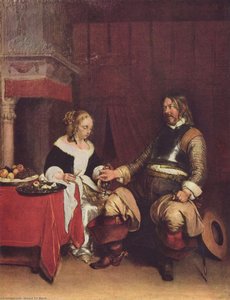
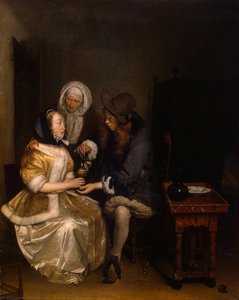
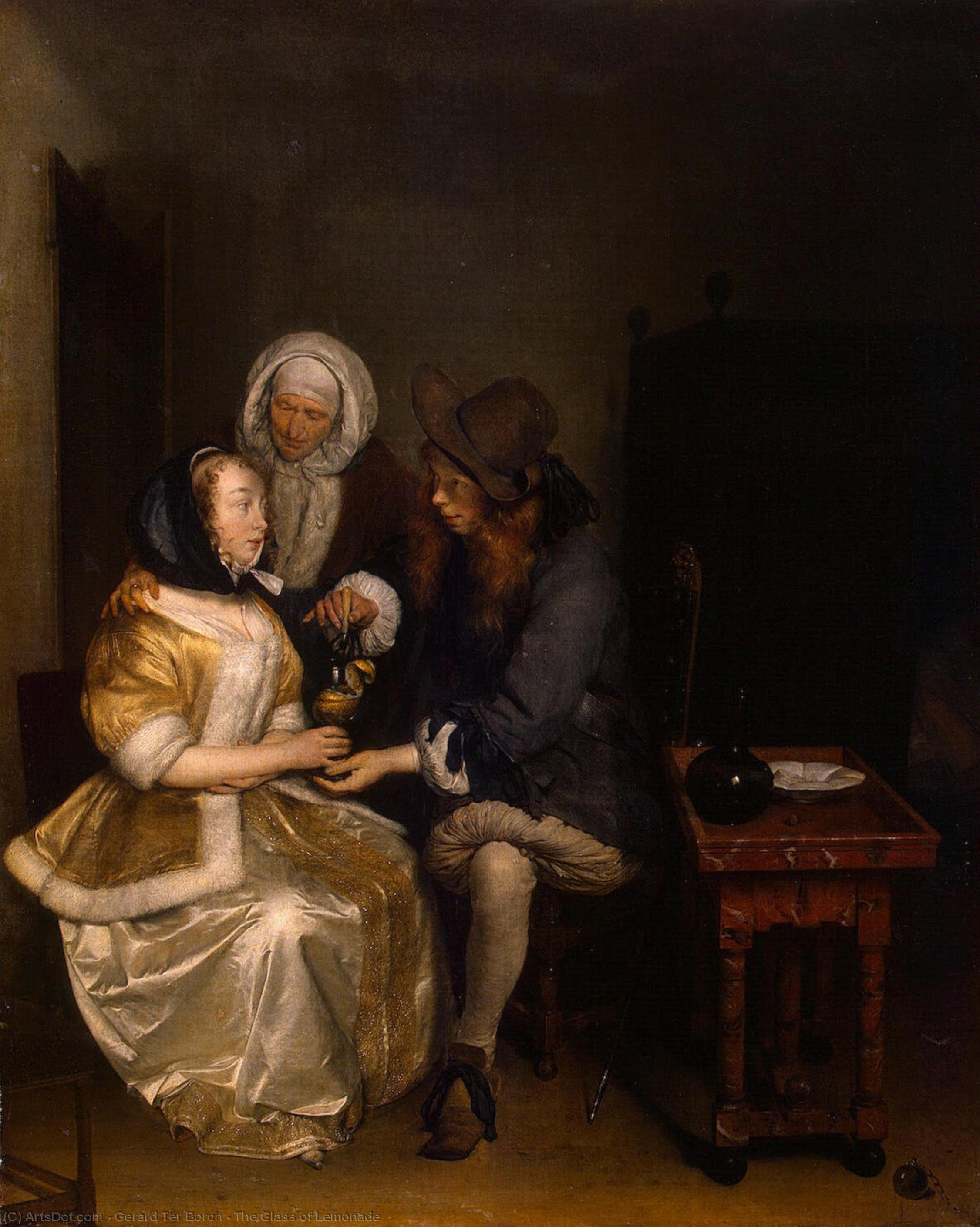
The Glass of Lemonade
 Oil On Canvas
- WallArt
- Baroque Dutch Genre Painting
 1655
1655 67.0 x 54.0 cm
 Hermitage Museum
 Read More
Hand Made Oil Reproduction
Hand-painted oil on canvas in your size and frame, made to order by our artists. ( Buy Print Buy Image)




P118B $10

P118H $10

P118W $10

P438Z $10

P508JH $12

P508YH $12

P805H $10

P805Z $10

P919BZ $10

P919G $10

P919XJ $10

P959ZH $10

P968JZ $12

W106C $8

W218G $10

W218JH $8

W218Y $10

W307PJ $10

W316G $10

W316PJ $8

W316Y $10

W398PJ $8

W4111J $10

W500HY $15

W500JH $15

W692G $12

W849H $8

W940BG $15

W953PJ $8




Pick from our preset sizes that match the artwork's original proportions.

You may enter your own dimensions to fit a specific frame or space. If your selected size does not match the original image's proportions, we will either crop the artwork or extend the painting with additional hand-painted elements. A digital mockup will be sent for your approval before production begins.
Please note that the on-screen preview does not reflect the actual cropping or extension. Only the mockup will accurately show the final composition.
While custom sizes are available, we recommend selecting a dimension from the predefined list to preserve the original proportions.
After order, ArtsDot.com team will email client for instructions and provide a mockup preview
Worldwide Delivery () in 3/4 weeks instead of standard 5 weeks. (17 August). No compromise on quality.

Free Worldwide Express Shipping

High-Quality Linen Canvas

Full Shipping Insurance

Customs Tax Refund Guarantee

True Color Matching Guarantee

60-Day Return Policy (Defects Only)

100% Money-Back Guarantee

Bulk Discount Offer
 Glass option is only available in size under 110 CM

The Glass of Lemonade
Reproduction Medium
Reproduction Size
-


Total Price
$ 263
Artwork Description
The Enigmatic Glance: Gerard ter Borch’s “The Glass of Lemonade”
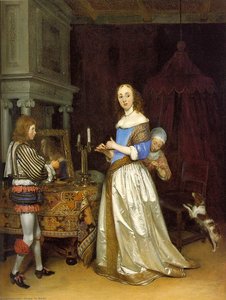
Gerard ter Borch's "The Glass of Lemonade," painted in 1655, is far more than a simple depiction of a social gathering; it’s a masterclass in psychological realism and the subtle dance of human interaction. This intimate scene, now housed within the State Hermitage Museum in St. Petersburg, offers a rare glimpse into the private lives of the Dutch bourgeoisie – a world of carefully constructed appearances and unspoken desires. Ter Borch, a pioneer of Dutch genre painting, moved beyond the straightforward depictions of everyday life favored by his contemporaries, instead focusing on capturing the nuances of emotion and the complexities of relationships within confined spaces. The painting’s power lies not in grand gestures or dramatic events, but in the quiet intensity of its subjects' gazes and the delicate suggestion of a hidden narrative.A Portrait of Intimacy: Composition and Setting
The composition is deceptively simple yet remarkably effective. Three figures occupy a modestly furnished dining room – a table bearing a bowl and scattered cups, a chair positioned invitingly, and a wall hinting at further domesticity. Two women, one holding the hand of the other, are central to the scene, their postures conveying both familiarity and a subtle undercurrent of tension. A man stands between them, his arm casually draped around the woman held by the first, creating an aura of protective attentiveness. The lighting is masterful – diffused and warm, casting soft shadows that accentuate the textures of the fabrics and the delicate details of the objects within the room. This careful attention to light and shadow isn’t merely aesthetic; it serves to heighten the sense of realism and draw the viewer into the scene, inviting them to become a silent observer of this private moment. The setting itself feels both familiar and slightly claustrophobic, reflecting the constraints and expectations placed upon individuals within 17th-century Dutch society.The Language of Gesture: Symbolism and Psychological Depth
Ter Borch’s genius lies in his ability to convey complex emotions through subtle gestures and averted glances. The woman being held by the other, her eyes downcast, suggests a vulnerability or perhaps even a hint of apprehension. The man's arm around her shoulder is not overtly affectionate but rather a gesture of comfort and protection – a silent reassurance amidst an unspoken tension. The “glass of lemonade,” itself a symbol of refreshment and social conviviality, becomes imbued with significance within this context. It’s not simply a beverage; it’s a prop in a delicate dance of power and desire. The painting's ambiguity is key to its enduring appeal. Ter Borch deliberately avoids offering easy answers or clear interpretations, leaving the viewer to ponder the unspoken dynamics between the figures. The small details – the way the light catches on the woman’s dress, the slight furrow in the man’s brow – all contribute to a richly layered and psychologically astute portrayal of human interaction.Ter Borch's Legacy: A Master of Domestic Realism
Gerard ter Borch stands as a pivotal figure in the development of Dutch genre painting, moving beyond the idealized depictions of courtly life towards a more grounded and realistic representation of everyday existence. His influence can be seen in the works of later artists such as Gabriel Metsu and Gerrit Dou, who similarly focused on capturing the nuances of domestic interiors and the complexities of human relationships. Ter Borch’s meticulous attention to detail – particularly his rendering of textures, fabrics, and light – set him apart from his contemporaries. “The Glass of Lemonade” exemplifies this commitment to realism, offering a remarkably detailed and evocative portrayal of a seemingly ordinary scene. It's a testament to the artist's ability to transform a simple moment into a profound meditation on human nature—a painting that continues to captivate viewers with its quiet intensity and enduring mystery. Reproductions of this work offer a unique opportunity to bring this masterful piece into any home, allowing one to appreciate the subtle beauty and psychological depth that Ter Borch so expertly captured over three centuries ago.Related Artworks
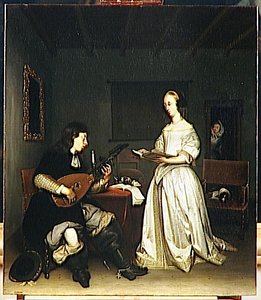
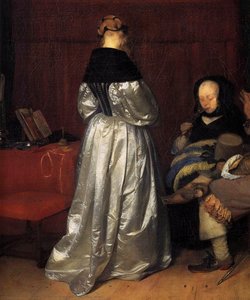
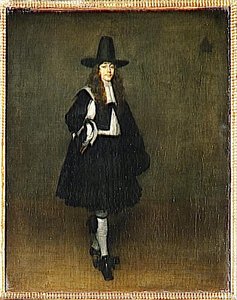
Artist Biography
**a pioneer of dutch genre painting**
gerard ter borch, a prominent figure in the dutch golden age, left an indelible mark on the art world with his genre paintings. born in december 1617 and passing away on december 8, 1681, ter borch's life was a testament to his artistic prowess.**early life and influences**
ter borch's early life is not well-documented, but it is known that he traveled extensively throughout europe, including london, germany, france, spain, and italy. this exposure broadened his artistic horizons, influencing his unique style. his sister, gesina ter borch, also pursued a career in painting, further solidifying the family's artistic inclinations.**notable works and achievements**
- **the letter**: a masterpiece showcasing ter borch's skill in capturing texture and light. - **the gallant conversation**: engraved by johann georg wille, this piece exemplifies the artist's ability to convey nuanced emotions. - **man on horseback (1634)**: an early work demonstrating ter borch's emerging talent. - **adrian pauw's arrival in münster (1646)**: a significant piece that highlights the artist's narrative capabilities.**museums and collections featuring ter borch's work**
- the hermitage: with six of his works, it boasts one of the largest collections. - berlin museum: features six pieces, showcasing ter borch's international appeal. - getty center: three of his paintings are part of this esteemed collection.**legacy and impact**
ter borch's influence on dutch painters like gabriel metsu, gerrit dou, eglon van der neer, and johannes vermeer is well-documented. his innovative approach to genre painting has made him a pivotal figure in the history of art.- for more on ter borch's life and works, visit https://ArtsDot.com/@/gerard-ter-borch
- explore the museum boijmans van beuningen rotterdam, netherlands, featuring some of ter borch's contemporaries at https://ArtsDot.com/@@/a@d3arrk-museum-boijmans-van-beuningen-rotterdam-netherlands
- learn more about the dutch golden age and its notable artists at https://en.wikipedia.org/wiki/dutch_golden_age
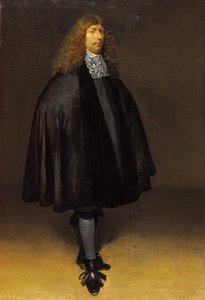
Gerard ter Borch
1617 - 1681 , Netherlands
Quick Facts
- Artistic Movement Or Style: Genre painting
- Artists Or Movements Influenced By This Artist: ['Diego Velázquez']
- Artists Who Influenced This Artist:
- Gabriel Metsu
- Gerrit Dou
- Eglon van der Neer
- Johannes Vermeer
- Date Of Birth: December 1617
- Date Of Death: 8 December 1681
- Full Name: Gerard ter Borch
- Nationality: Dutch
- Notable Artworks:
- The Letter
- The Gallant Conversation
- Man on horseback
- Adrian Pauw's arrival in Münster
- Place Of Birth: Zwolle, Netherlands
Related Articles
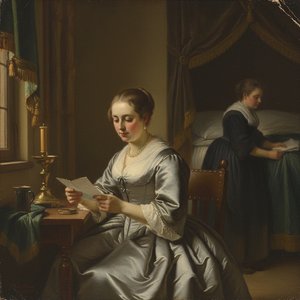
Gerard ter Borch: Intimacy & Light in the Dutch Golden Age
Explore the captivating world of Gerard ter Borch, a master of Dutch Golden Age genre painting. Discover his intimate scenes, masterful light, and lasting influence on art history. Learn more at ArtsDot.

Golden Age Reflections: Dutch Baroque Painting & Cultural Innovation
Explore the Dutch Golden Age of painting! Discover key artists like Vermeer & ter Borch, their innovative techniques, and the rich cultural context behind these Baroque masterpieces. Learn about collecting & appreciating this iconic art period.

Dutch Masters: 10 Golden Age Paintings That Still Inspire |
Journey into the Dutch Golden Age! Explore 10 iconic paintings by Rembrandt, Vermeer & Hals. Discover the stories behind these Baroque masterpieces and find museum-quality art reproductions to elevate your home decor on .

Dutch Baroque Masters: 10 Paintings That Shaped an Era | ArtsDot
Journey through the Golden Age with our guide to the Top 10 Dutch Baroque masterpieces! Explore iconic paintings by Rembrandt, Vermeer & Frans Hals. Find museum-quality art reproductions and elevate your home decor at ArtsDot.com.

Illuminating Innovation: Exploring the Dutch Golden Age of Painting
Explore the Dutch Golden Age of painting with ArtsDot. Discover Rembrandt, Vermeer & other Masters. Learn about key characteristics, iconic artworks, and lasting influence. Expert insights for collectors & enthusiasts.