 Preview
 Send
Send Share
Share
 Details

 Download
 Similars
 X-Ray
X-Ray Diaporama
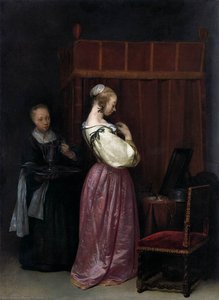
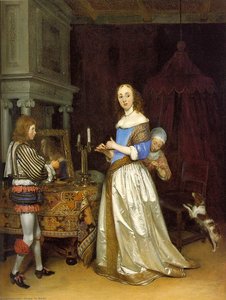
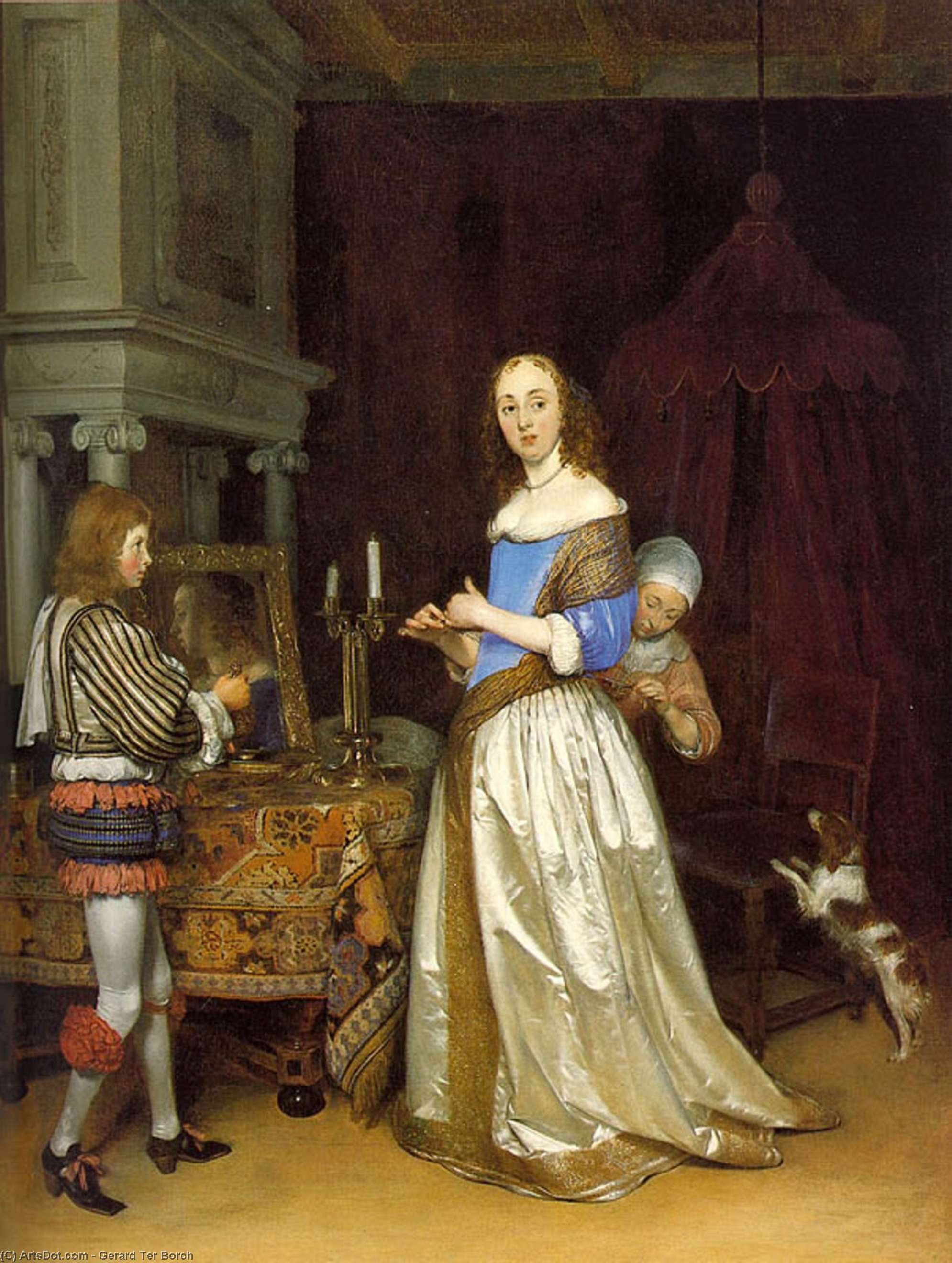
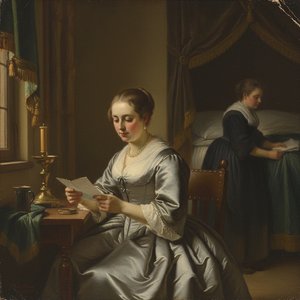
Lady at her Toilette


 Read More
Hand Made Oil Reproduction
Hand-painted oil on canvas in your size and frame, made to order by our artists. ( Buy Print Buy Image)




P118B $10

P118H $10

P118W $10

P438Z $10

P508JH $12

P508YH $12

P805H $10

P805Z $10

P919BZ $10

P919G $10

P919XJ $10

P959ZH $10

P968JZ $12

W106C $8

W218G $10

W218JH $8

W218Y $10

W307PJ $10

W316G $10

W316PJ $8

W316Y $10

W398PJ $8

W4111J $10

W500HY $15

W500JH $15

W692G $12

W849H $8

W940BG $15

W953PJ $8




Pick from our preset sizes that match the artwork's original proportions.

You may enter your own dimensions to fit a specific frame or space. If your selected size does not match the original image's proportions, we will either crop the artwork or extend the painting with additional hand-painted elements. A digital mockup will be sent for your approval before production begins.
Please note that the on-screen preview does not reflect the actual cropping or extension. Only the mockup will accurately show the final composition.
While custom sizes are available, we recommend selecting a dimension from the predefined list to preserve the original proportions.
After order, ArtsDot.com team will email client for instructions and provide a mockup preview
Worldwide Delivery () in 3/4 weeks instead of standard 5 weeks. (17 August). No compromise on quality.

Free Worldwide Express Shipping

High-Quality Linen Canvas

Full Shipping Insurance

Customs Tax Refund Guarantee

True Color Matching Guarantee

60-Day Return Policy (Defects Only)

100% Money-Back Guarantee

Bulk Discount Offer
 Glass option is only available in size under 110 CM

Lady at her Toilette
Reproduction Medium
Reproduction Size
-


Total Price
$ 263
Artwork Description
The Intimate Glow of Domestic Life
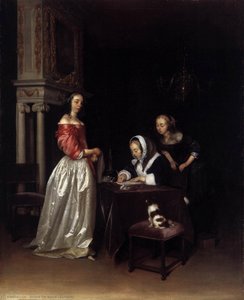
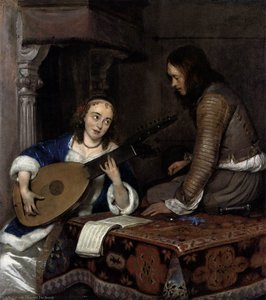
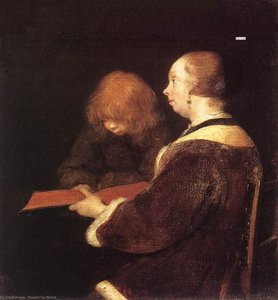
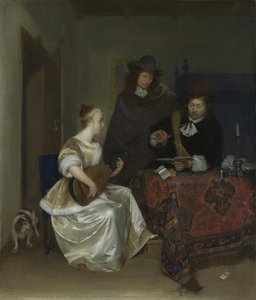
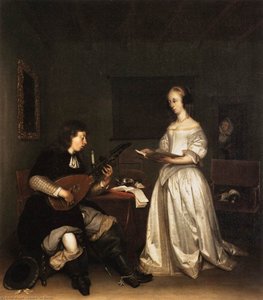
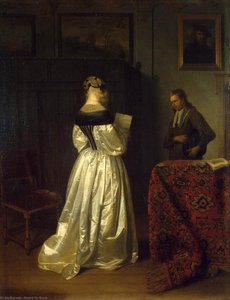
To gaze upon Gerard ter Borch's depiction, Lady at her Toilette, is to step directly into the softly lit drawing rooms of the Dutch Golden Age. This painting transcends a mere portrait; it is an exquisitely composed tableau vivant, capturing a moment suspended in time—a breath held between vanity and connection. The central figure, elegantly draped in blue, commands attention as she regards her reflection, yet her focus seems to extend beyond the polished surface of the mirror itself. She cradles a child upon her lap, grounding the scene in themes of nurturing and domestic intimacy. Surrounding her are figures caught in various states of repose or gentle engagement—a seated companion, another standing nearby, all contributing to an atmosphere thick with unspoken conversation.
Mastery of Light and Atmosphere
Ter Borch was a virtuoso of light, and nowhere is this more evident than here. The illumination within the room feels organic, as if emanating from unseen sources—perhaps candles or filtered daylight—that catch the sheen on silk, the gleam in an eye, and the soft texture of skin. His technique allows for an almost palpable sense of atmosphere; one can almost smell the beeswax and hear the hushed tones of conversation. The careful placement of objects, from the plush couches to the attentive dog resting near the foreground, all contribute to a meticulously crafted illusion of depth and lived-in luxury. It is this masterful handling of chiaroscuro that gives the work its enduring, dreamlike quality.
A Glimpse into 17th Century Society
The scene speaks volumes about the social rituals of the period. The act of toilette itself was a public performance, yet here it is rendered with profound privacy. This painting serves as a window into the refined leisure class of 1660s Amsterdam or Haarlem—a world where art, conversation, and personal presentation were interwoven threads of daily existence. The inclusion of multiple figures suggests a gathering of friends or family, emphasizing community bonds within the confines of a wealthy household. It is a celebration not of grand historical events, but of the quiet, cultivated pleasures of life.
Symbolism of Connection and Reflection
Beyond the surface beauty, the painting invites contemplation on deeper human themes. The mirror itself acts as a potent symbol—not only reflecting physical appearance but perhaps also the self's internal state or the nature of memory. The presence of the child anchors the piece in continuity and legacy. Every figure seems connected by an invisible thread of shared experience. For the modern admirer, this work offers a poignant meditation on connection: the bond between mother and child, the quiet companionship between friends, and the enduring act of self-appreciation.
Bringing the Salon Home
For those who seek to infuse their own interiors with the timeless elegance of the Dutch Golden Age, a reproduction of this piece offers unparalleled depth. It is more than mere decoration; it is an emotional anchor for any drawing room or private study. The soft palette, the masterful handling of texture, and the inherent sense of gentle narrative make it a conversation starter that speaks to sophistication and an appreciation for human connection. Owning this vision allows one to curate not just a wall hanging, but a mood—one of serene, cultured intimacy.
Related Artworks
Artist Biography
**a pioneer of dutch genre painting**
gerard ter borch, a prominent figure in the dutch golden age, left an indelible mark on the art world with his genre paintings. born in december 1617 and passing away on december 8, 1681, ter borch's life was a testament to his artistic prowess.**early life and influences**
ter borch's early life is not well-documented, but it is known that he traveled extensively throughout europe, including london, germany, france, spain, and italy. this exposure broadened his artistic horizons, influencing his unique style. his sister, gesina ter borch, also pursued a career in painting, further solidifying the family's artistic inclinations.**notable works and achievements**
- **the letter**: a masterpiece showcasing ter borch's skill in capturing texture and light. - **the gallant conversation**: engraved by johann georg wille, this piece exemplifies the artist's ability to convey nuanced emotions. - **man on horseback (1634)**: an early work demonstrating ter borch's emerging talent. - **adrian pauw's arrival in münster (1646)**: a significant piece that highlights the artist's narrative capabilities.**museums and collections featuring ter borch's work**
- the hermitage: with six of his works, it boasts one of the largest collections. - berlin museum: features six pieces, showcasing ter borch's international appeal. - getty center: three of his paintings are part of this esteemed collection.**legacy and impact**
ter borch's influence on dutch painters like gabriel metsu, gerrit dou, eglon van der neer, and johannes vermeer is well-documented. his innovative approach to genre painting has made him a pivotal figure in the history of art.- for more on ter borch's life and works, visit https://ArtsDot.com/@/gerard-ter-borch
- explore the museum boijmans van beuningen rotterdam, netherlands, featuring some of ter borch's contemporaries at https://ArtsDot.com/@@/a@d3arrk-museum-boijmans-van-beuningen-rotterdam-netherlands
- learn more about the dutch golden age and its notable artists at https://en.wikipedia.org/wiki/dutch_golden_age
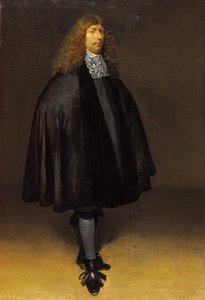
Gerard ter Borch
1617 - 1681 , Netherlands
Quick Facts
- Artistic Movement Or Style: Genre painting
- Artists Or Movements Influenced By This Artist: ['Diego Velázquez']
- Artists Who Influenced This Artist:
- Gabriel Metsu
- Gerrit Dou
- Eglon van der Neer
- Johannes Vermeer
- Date Of Birth: December 1617
- Date Of Death: 8 December 1681
- Full Name: Gerard ter Borch
- Nationality: Dutch
- Notable Artworks:
- The Letter
- The Gallant Conversation
- Man on horseback
- Adrian Pauw's arrival in Münster
- Place Of Birth: Zwolle, Netherlands
Related Articles
Gerard ter Borch: Intimacy & Light in the Dutch Golden Age
Explore the captivating world of Gerard ter Borch, a master of Dutch Golden Age genre painting. Discover his intimate scenes, masterful light, and lasting influence on art history. Learn more at ArtsDot.

Golden Age Reflections: Dutch Baroque Painting & Cultural Innovation
Explore the Dutch Golden Age of painting! Discover key artists like Vermeer & ter Borch, their innovative techniques, and the rich cultural context behind these Baroque masterpieces. Learn about collecting & appreciating this iconic art period.

Dutch Masters: 10 Golden Age Paintings That Still Inspire |
Journey into the Dutch Golden Age! Explore 10 iconic paintings by Rembrandt, Vermeer & Hals. Discover the stories behind these Baroque masterpieces and find museum-quality art reproductions to elevate your home decor on .

Illuminating Innovation: Exploring the Dutch Golden Age of Painting
Explore the Dutch Golden Age of painting with ArtsDot. Discover Rembrandt, Vermeer & other Masters. Learn about key characteristics, iconic artworks, and lasting influence. Expert insights for collectors & enthusiasts.
Illuminating Realism: Exploring the Dutch Golden Age of Painting (1600-1700)
Explore the Dutch Golden Age of painting (1600-1700) with ArtsDot. Discover Rembrandt, Vermeer & other masters. Learn about techniques, history & find museum-quality reproductions.