 Preview
 Send
Send Share
Share
 Details

 Download
 Similars
 X-Ray
X-Ray Diaporama
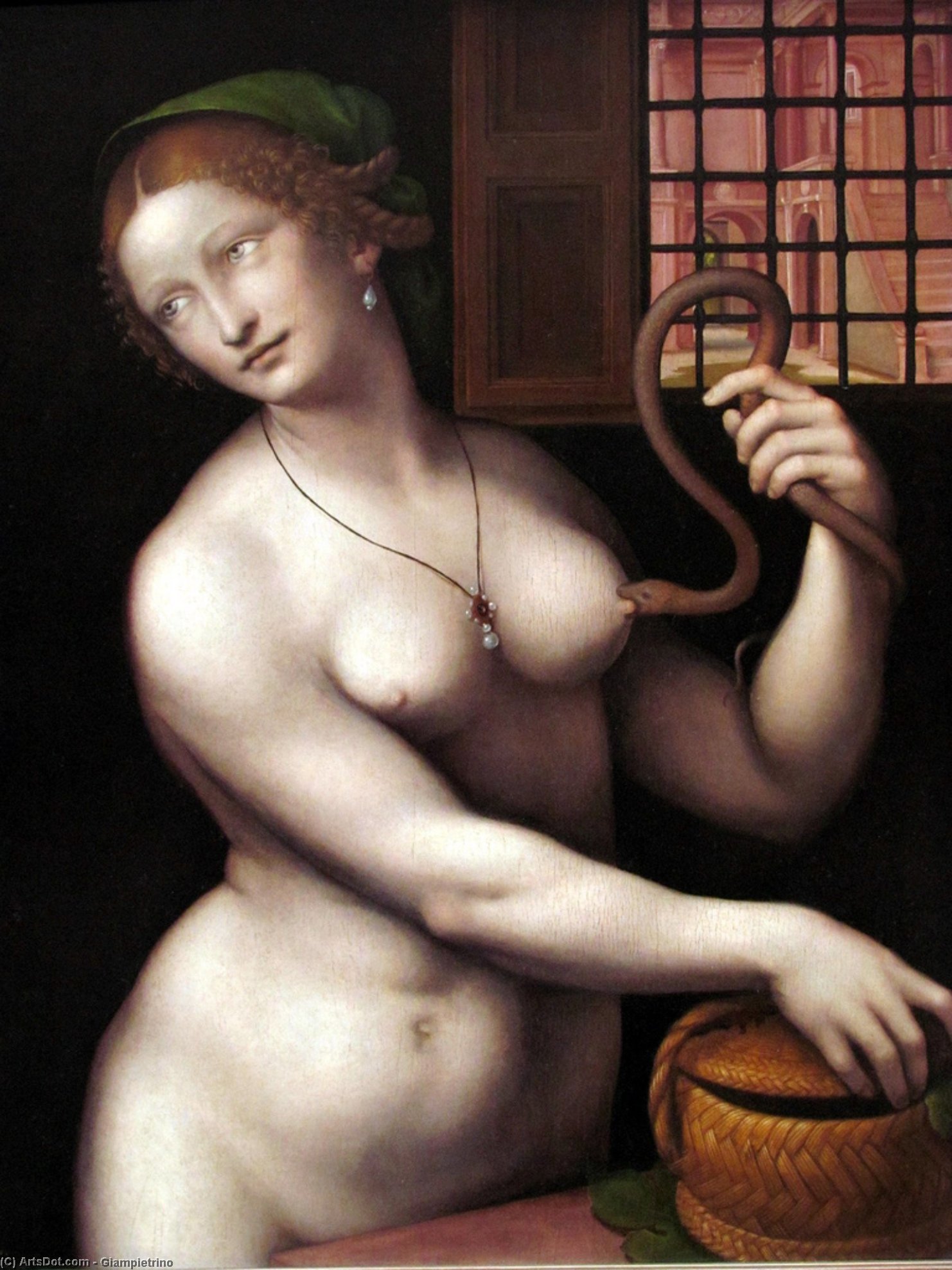
The Death of Cleopatra


 Read More
Giclée / Art Print
Museum-quality giclée or canvas print with fast production and flexible finish options. ( Buy Hand Made Painting Buy Image)




P118B $10

P118H $10

P118W $10

P438Z $10

P508JH $12

P508YH $12

P805H $10

P805Z $10

P919BZ $10

P919G $10

P919XJ $10

P959ZH $10

P968JZ $12

W106C $8

W218G $10

W218JH $8

W218Y $10

W307PJ $10

W316G $10

W316PJ $8

W316Y $10

W398PJ $8

W4111J $10

W500HY $15

W500JH $15

W692G $12

W849H $8

W940BG $15

W953PJ $8




Pick from our preset sizes that match the artwork's original proportions.

You may enter your own dimensions to fit a specific frame or space. If your selected size does not match the original image's proportions, we will either crop the artwork or extend the image with a mirrored or solid-fill edge. A digital mockup will be sent for your approval before production begins.
Please note that the on-screen preview does not reflect the actual cropping or extension. Only the mockup will accurately show the final composition.
While custom sizes are available, we recommend selecting a dimension from the predefined list to preserve the original proportions.
Worldwide Delivery () in 2 weeks instead of standard 4/5 weeks. (28 August)

Free Worldwide Express Shipping

High-Quality Linen Canvas

Full Shipping Insurance

Customs Tax Refund Guarantee

True Color Matching Guarantee

60-Day Return Policy (Defects Only)

100% Money-Back Guarantee

Bulk Discount Offer
 Glass option is only available in size under 110 CM

The Death of Cleopatra
Giclée / Art Print
Reproduction Size
-


Total Price
$ 63
A Poignant Encounter with Tragedy and Grace
In the quiet intensity of Giampietrino’s The Death of Cleopatra, we are invited into a moment of profound historical and personal transition. This masterpiece, painted in 1538, serves as more than just a depiction of a legendary demise; it is a breathtaking fusion of Hellenistic grandeur and the delicate naturalism of the Italian Renaissance. The portrait captures the Egyptian Queen at the precipice of eternity, her figure imbued with a dignity that transcends the violence of her end. As she sits before an open, airy window, the soft light illuminates a scene that feels simultaneously intimate and monumental, making it an exquisite focal point for any collection dedicated to the evocative power of classical history.
The composition is a masterclass in Renaissance structure, utilizing a pyramidal arrangement to anchor Cleopatra within the frame. This technique, famously championed by Leonardo da Vinci—whose influence breathes through every stroke of Giampietrino’s brush—directs the viewer's eye upward toward the Queen's face, ensuring her emotional presence remains the heart of the work. The artist employs a sophisticated use of chiaroscuro, creating dramatic contrasts between light and shadow that lend a sculptural weight to her features and a haunting depth to the surrounding atmosphere. For the discerning collector, this interplay of light offers a dynamic visual experience that changes beautifully depending on the lighting of a room.
Symbolism and the Art of the Sublime
Every element within this painting is laden with symbolic resonance, designed to stir the soul and provoke contemplation. The most striking feature is the snake held within Cleopatra’s hand—a potent emblem that represents both the venomous deceit of her fate and the royal authority she wields even in her final moments. This delicate yet deadly interaction serves as a memento mori, a reminder of the fleeting nature of power and life. The way the light catches the scales of the serpent and the subtle textures of her jewelry creates a tactile reality that draws the viewer into her tragic narrative.
Beyond the central drama, the meticulous rendering of the drapery and the luminous skin tones speak to Giampietrino's mastery of oil glazes. The layering of pigment achieves a translucent quality, allowing a soft glow to emanate from Cleopatra’s form, contrasting with the darker, more somber undertones of her impending death. This tension between beauty and decay makes the piece an extraordinary choice for interior designers looking to introduce narrative depth and emotional complexity into a space. To possess a reproduction of this work is to hold a piece of the Renaissance spirit—a timeless tribute to the intersection of human vulnerability and eternal legend.
Related Artworks









Artist Biography
The Shadow of the Master: The Life and Legacy of Giampietrino
In the vibrant, transformative atmosphere of the Italian Renaissance, few artists captured the lingering essence of a legend as effectively as Giampietrino. Known to history by his more formal name, Giovanni Pietro Rizzoli, this North Italian painter emerged from the Lombard school during a period when the stylistic innovations of Leonardo da Vinci were sweeping through the peninsula. While much of his early life remains shrouded in the mists of time, his presence is indelibly etched into the annals of art history through his profound connection to Leonardo's circle. For decades, the artist was a phantom, known only by the moniker "Giampietrino" found in studio records, until scholars eventually linked this talented hand to the documented life of Rizzoli.
To study Giampietrino is to witness a masterful dialogue with greatness. He was often described by art historians as an "exploiter of Leonardo's repertory," a phrase that suggests not merely a follower, but a sophisticated interpreter of the High Renaissance style. His work serves as a vital bridge, helping to disseminate the subtle complexities of Leonardo’s late techniques—such as sfumato and the delicate interplay of light and shadow—to a wider audience across Lombardy and beyond. He did not simply mimic his predecessor; rather, he absorbed the master's vocabulary to create a body of work that felt both familiar in its grace and distinct in its execution.
A Tapestry of Devotion and Myth
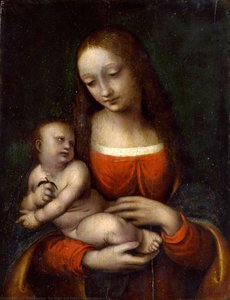
The breadth of Giampietrino’s oeuvre is as impressive as it is varied, ranging from monumental altarpieances to intimate, evocative portraits. He possessed a remarkable ability to navigate between the sacred and the profane, moving seamlessly from the tender, maternal warmth of his Madonnas to the dramatic, tragic allure of mythological figures. His religious compositions, such as the Madonna with Child, are celebrated for their serene beauty and an exquisite attention to detail that captures a sense of timeless grace. In these works, one finds a profound emotional depth, where the soft rendering of flesh and the gentle gaze of the Virgin evoke a deep sense of piety and peace.
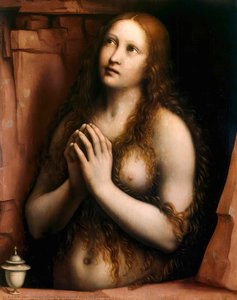
Beyond the altar, Giampietrino’s imagination flourished in the realm of classical legend. He was particularly adept at depicting powerful, singular women, imbuing them with a psychological complexity that foreshadowed later Renaissance developments. His explorations of figures such as Cleopatra and Mary Magdalene allow viewers to experience the fusion of Greek and Egyptian aesthetics through a Lombard lens. In his depiction of The Death of Cleopatra, for instance, the artist captures a tragic, cinematic quality, utilizing rich textures and a dramatic palette to tell a story of fallen royalty and enduring sorrow.
Artistic Evolution and Historical Significance
As Giampietrino’s career progressed through his active years between 1495 and 1549, his personal style began to assert itself more clearly against the heavy influence of his mentors. While he remained a faithful student of Leonardo's forms, contemporary observers noted a characteristic use of paler skin tones, a stylistic choice that lent his figures a luminous, almost ethereal quality. This subtle departure from the more robust shadows of the Leonardeschi allowed his work to possess a unique, delicate brilliance that became a hallmark of his mature period.
The historical significance of Giampietrino lies in his role as a cultural conduit. Through his prolific output—often producing multiple versions of the same subject—he ensured that the aesthetic revolution of the late 15th century reached every corner of the Italian landscape. His legacy is found not only in the surviving masterpieces housed in prestigious institutions like The Hermitage and the Uffizi Gallery but also in the way he helped define the visual language of the Lombard school. He remains a testament to the power of artistic continuity, proving that even those working in the shadow of giants can leave an indelible mark upon the light of history.
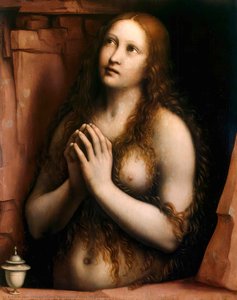
giampietrino
1495 - 1549 , Italy
Quick Facts
- Artistic Movement Or Style: Lombard school, Renaissance
- Artists Or Movements Influenced By This Artist:
- Bernardino Luini
- Giulio Cesare Procaccini
- Artists Who Influenced This Artist: ['Leonardo da Vinci']
- Date Of Birth: 1495
- Date Of Death: 1549
- Full Name: Giovanni Pietro Rizzoli
- Nationality: Italian
- Notable Artworks:
- Madonna with Child
- Repentant Mary Magdalene
- The Death of Cleopatra
- Place Of Birth: Italy
Related Articles

Leonardo da Vinci's Masterpieces: Explore 25 Iconic Artworks for Your Home | ArtsDot
Journey through Leonardo da Vinci's genius with our curated selection of 25 iconic artworks. Explore the stories behind Mona Lisa, The Last Supper & more Renaissance masterpieces. Find museum-quality art reproductions for your home at ArtsDot.com.

Leonardo da Vinci: A Renaissance Master’s Synthesis of Art, Science & Human Observation – Reinterpreted for the Collector
Explore Leonardo da Vinci’s timeless masterpieces with ArtsDot. Discover insights into his art, science, and legacy – trusted expertise for discerning collectors seeking authentic reproductions & investment opportunities.

Louvre Masterpieces: Explore the Top 25 Artworks for Your Home | ArtsDot
Journey through the Louvre's 25 most iconic artworks! Explore masterpieces by Leonardo da Vinci, Michelangelo & Delacroix. Discover art history, techniques & find museum-quality reproductions for your home at ArtsDot.com.
Renaissance Humanism's Greatest Art: 10 Masterpieces for Your Home
Explore 10 Renaissance Humanism masterpieces by Leonardo da Vinci, Michelangelo & Raphael. Discover the stories behind these iconic paintings & sculptures and bring timeless art into your home with museum-quality reproductions from ArtsDot.com. Explore the full collection online!

Uffizi's 25 Masterpieces: Renaissance Art & Timeless Decor Inspiration
Journey through the Uffizi Gallery's 25 most iconic Renaissance artworks! Explore Botticelli, Leonardo da Vinci & Michelangelo’s masterpieces. Find museum-quality art reproductions and curated decor ideas to bring timeless Italian beauty into your home. Discover all masterpieces on ArtsDot.com