 Preview
 Send
Send Share
Share
 Details

 Download
 Similars
 X-Ray
X-Ray Diaporama
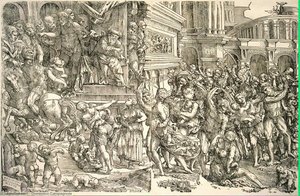
Simon Deceiving the Trojans
 Acrylic On Canvas
- WallArt
- Mannerist Printmaking
 1540
1540 366.0 x 478.0 cm
 Hermitage Museum
 Read More
Hand Made Oil Reproduction
Hand-painted oil on canvas in your size and frame, made to order by our artists. ( Buy Print Buy Image)




P118B $10

P118H $10

P118W $10

P438Z $10

P508JH $12

P508YH $12

P805H $10

P805Z $10

P919BZ $10

P919G $10

P919XJ $10

P959ZH $10

P968JZ $12

W106C $8

W218G $10

W218JH $8

W218Y $10

W307PJ $10

W316G $10

W316PJ $8

W316Y $10

W398PJ $8

W4111J $10

W500HY $15

W500JH $15

W692G $12

W849H $8

W940BG $15

W953PJ $8




Pick from our preset sizes that match the artwork's original proportions.

You may enter your own dimensions to fit a specific frame or space. If your selected size does not match the original image's proportions, we will either crop the artwork or extend the painting with additional hand-painted elements. A digital mockup will be sent for your approval before production begins.
Please note that the on-screen preview does not reflect the actual cropping or extension. Only the mockup will accurately show the final composition.
While custom sizes are available, we recommend selecting a dimension from the predefined list to preserve the original proportions.
After order, ArtsDot.com team will email client for instructions and provide a mockup preview
Worldwide Delivery () in 3/4 weeks instead of standard 5 weeks. (16 August). No compromise on quality.

Free Worldwide Express Shipping

High-Quality Linen Canvas

Full Shipping Insurance

Customs Tax Refund Guarantee

True Color Matching Guarantee

60-Day Return Policy (Defects Only)

100% Money-Back Guarantee

Bulk Discount Offer
 Glass option is only available in size under 110 CM

Simon Deceiving the Trojans
Reproduction Medium
Reproduction Size
-


Total Price
$ 263
Artwork Description
Simon Deceiving the Trojans: A Masterpiece of Mannerist Drama
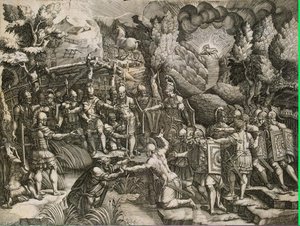
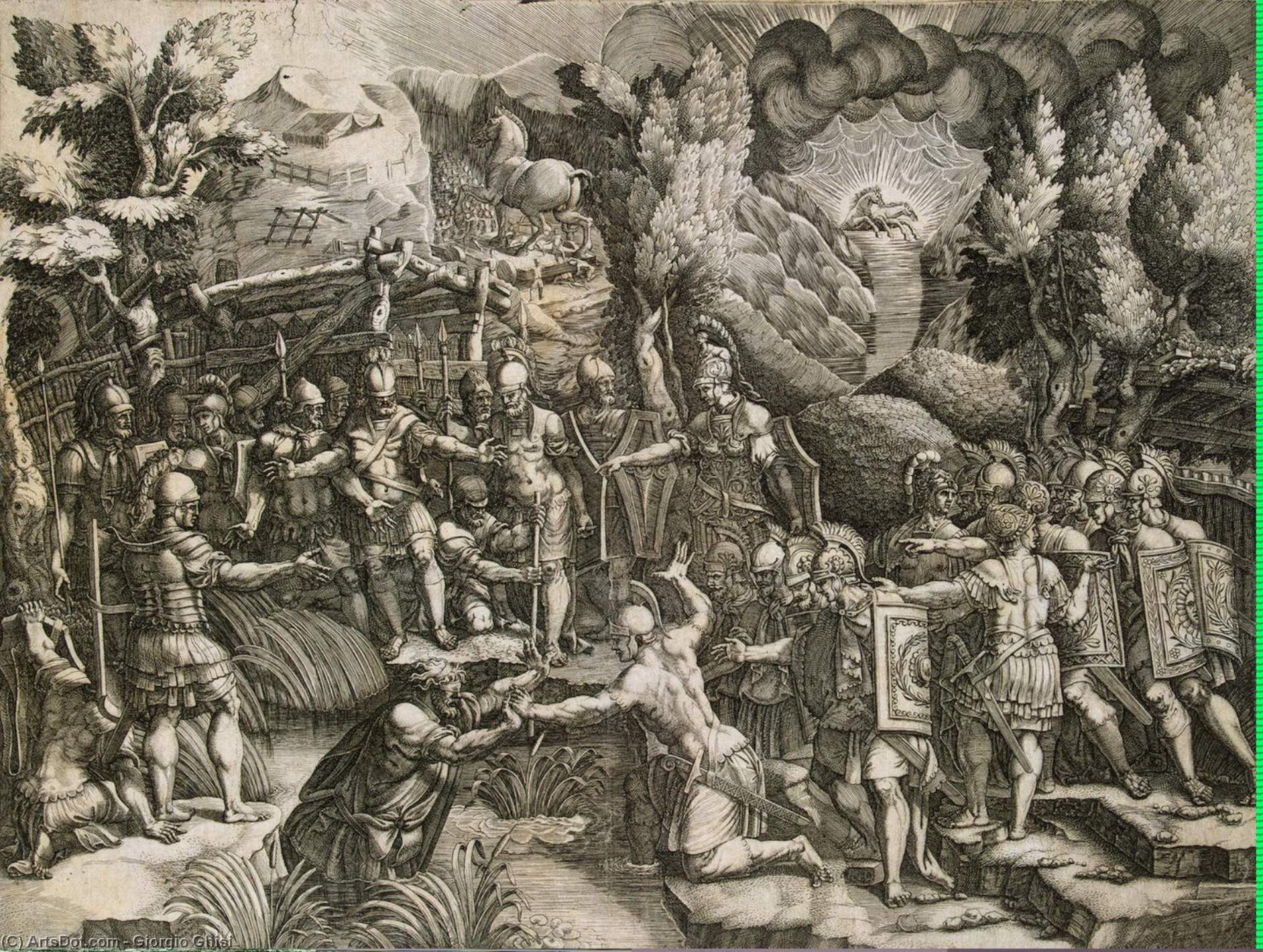
Giorgio Ghisi’s “Simon Deceiving the Trojans,” completed in 1540, is not merely a depiction of a pivotal moment from Virgil's *Aeneid*; it’s a meticulously crafted embodiment of Renaissance anxieties about deception, betrayal, and the fragility of human judgment. This powerful engraving, rendered in stark black and white, captures the chilling intensity of Simon’s manipulation as he extends his hand to the assembled Trojans, offering them a false promise of peace while secretly orchestrating their downfall. The scene unfolds with an almost theatrical quality, drawing the viewer directly into the heart of this dramatic encounter.
Ghisi's masterful technique is immediately apparent in the intricate detail and dynamic composition. He was a leading figure in the Florentine engraving tradition, inheriting and expanding upon the legacy of artists like Dürer and Holbein. His skill lies not just in rendering form with precision – note the carefully sculpted musculature of Simon’s hand, the armor gleaming on the Trojan warriors – but also in conveying emotion through subtle gestures and averted gazes. The use of hatching and cross-hatching creates a remarkable sense of depth and texture, lending weight to the scene and emphasizing the palpable tension. The artist's attention to light and shadow is particularly striking; it’s not merely about illumination, but about sculpting volume and directing the viewer’s eye across the composition.
A Window into Renaissance Political Intrigue
“Simon Deceiving the Trojans” resonates deeply within its historical context. The story of Troy's fall was a potent allegory for the political machinations of the Italian city-states, constantly embroiled in alliances and betrayals. Virgil’s epic poem served as a cautionary tale, highlighting the dangers of trusting deceitful leaders. Ghisi, working in Mantua – a region frequently caught in the crossfire of these power struggles – likely intended his engraving to serve as a visual commentary on contemporary political realities. The image speaks not just to the Trojan War but to the ever-present threat of manipulation and the consequences of misplaced trust within the courts and councils of Renaissance Italy.
The scene itself is meticulously rendered, reflecting the meticulousness demanded by the patronage system of the time. Ghisi was commissioned by powerful families like the Gonzaga of Mantua, who valued art as a means of projecting power and demonstrating cultural sophistication. The composition’s arrangement – Simon at the center, surrounded by the expectant Trojans – reinforces his position as the architect of their doom. The figures are not simply individuals; they represent factions, allegiances, and the inevitable clash between hope and despair.
Symbolism and Emotional Resonance
Beyond its historical context, “Simon Deceiving the Trojans” is rich in symbolic meaning. Simon’s outstretched hand represents a deceptive offer – a promise of safety that masks an impending catastrophe. The Trojans' expressions range from hopeful anticipation to cautious skepticism, mirroring the audience’s own potential for misjudgment. The darkness enveloping the background symbolizes the unknown fate awaiting them, while the light focused on Simon highlights his manipulative power.
The engraving evokes a profound sense of unease and foreboding. It's not a gloriously heroic depiction of war; instead, it presents a grim portrait of human vulnerability and the devastating consequences of betrayal. The viewer is left with a lingering feeling of apprehension, recognizing in Simon’s actions a reflection of the darker aspects of human nature – the temptation to deceive, the willingness to sacrifice others for personal gain. The image's enduring power lies in its ability to tap into these fundamental anxieties about trust and deception, making it a timeless masterpiece.
A Timeless Reproduction
Reproductions of “Simon Deceiving the Trojans” offer an exceptional opportunity to bring this dramatic Renaissance scene into any interior space. The stark monochrome palette lends itself beautifully to contemporary design, providing a sophisticated contrast against warmer tones or creating a striking focal point within a room. The engraving’s powerful composition and evocative imagery make it ideal for hallways, studies, or even larger living areas – spaces where contemplation and a touch of historical gravitas are valued. Consider framing the reproduction in a classic wooden frame to further enhance its Renaissance aesthetic.
Related Artworks


Artist Biography
The Master of Line and Light: The Life of Giorgio Ghisi
In the vibrant, shifting landscape of the Italian Renaissance, few artists possessed the technical dexterity to translate the monumental grandeur of fresco and painting into the delicate, precise language of the copperplate. Giorgio Ghisi, born in the storied city of Mantua around 1520, emerged as a virtuoso of this medium, a master whose burin could conjure depth, drama, and movement from mere lines. While his early life remains partially veiled by the mists of history, his artistic lineage is clear; he was a product of the Mantuan tradition, likely honing his craft under the guidance of Giovanni Battista Scultori. This foundation in the Florentine style of engraving provided him with the essential tools to navigate the complex aesthetic demands of the Mannerist era—a period defined by its fascination with elongated elegance, tension, and theatricality.
Ghisi’s early career was deeply intertwined with the artistic pulse of Mantua, particularly through his engagement with the works of Giulio Romano. By replicating the compositions of this dominant figure, Ghisi did more than simply copy; he interpreted the muscularity and architectural scale of Romano's vision through a new, graphic lens. His journey took him to the heart of the Roman art world during the pontificate of Paul III, where his talent caught the eye of the influential print publisher Antonio Lafreri. It was here that Ghisi achieved a significant milestone in his burgeoning reputation, producing ambitious engravings that captured the divine scale of Michelangelo’s Last Judgement. To translate such a colossal fresco onto separate copper plates required not only immense physical stamina but an unparalleled ability to manage complex spatial relationships and light, marking him as a formidable force in the printmaking community.
A Journey Through Europe: From Italy to Antwerp
The trajectory of Ghisi’s life took a transformative turn around 1549, when he migrated northward to Antwerp. This relocation was far more than a change in geography; it was an immersion into the most sophisticated print-publishing hub of Northern Europe. Joining the prestigious Guild of St. Luke, Ghisi found himself at the epicenter of innovation, working alongside the legendary Hieronymus Cock and his publishing house, Aux Quatre Vents. This period of his life represents a fascinating synthesis of Italian Mannerist grace and the meticulous, detail-oriented tradition of the Northern masters. In Antwerp, his work began to reflect a broader European dialogue, as he collaborated with artists such as Ambrosius Bosschaert and integrated the stylistic nuances of the Flemish school into his repertoire.
His ability to adapt and innovate allowed him to become a bridge between two worlds. While his roots remained firmly planted in the classical and mythological themes of Italy, his technical execution began to embrace the atmospheric textures and intricate patterns characteristic of the North. This period of his career was marked by an extraordinary productivity that saw him reproducing the works of Raphael and Francesco Primaticcio, ensuring that the sophisticated aesthetic of the Italian Renaissance could be disseminated across the continent. His prints were not merely reproductions; they were highly sought-after artistic objects that carried the prestige of the masters they depicted to a much wider, international audience.
Legacy of the Burin and the Damascened Blade
Beyond the realm of paper and ink, Ghisi’s artistry extended into the rare and exquisite world of damascened metalwork. Though very few surviving examples of this craft remain, it speaks to a polymathic talent—a man capable of applying his eye for intricate detail to the permanent, shimmering surfaces of precious metals. This mastery over both the ephemeral line of the engraver and the enduring strike of the goldsmith underscores the breadth of his creative spirit. His work in metalwork, much like his prints, required a profound understanding of contrast and ornamentation, qualities that defined the late Mannerist aesthetic.
The historical significance of Giorgio Ghisi lies in his role as a vital conduit of Renaissance culture. Through his meticulous engravings, he helped shape the visual vocabulary of Europe, allowing the monumental achievements of Michelangelo and the grace of Raphael to permeate the libraries and collections of scholars and collectors far beyond the borders of Italy. He remains a testament to the power of the print medium—a medium that could capture the soul of an era and preserve it in the fine, indelible lines of a master craftsman. His legacy is found not only in the museums that house his prints but in the very way we perceive the dramatic interplay of shadow and light that defines the height of the Renaissance.
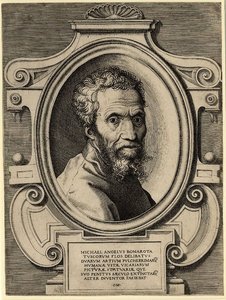
Giorgio Ghisi
1520 - 1582 , Italy
Quick Facts
- Artistic Movement Or Style: Late Mannerism
- Artists Or Movements Influenced By This Artist: ['Michelangelo']
- Artists Who Influenced This Artist: ['Giovanni Battista Scultori']
- Date Of Birth: 1520
- Date Of Death: 1582
- Full Name: Giorgio Ghisi
- Nationality: Italian
- Notable Artworks:
- The Judgment of Paris
- Simon Deceiving the Trojans
- The Dream of Raphael
- Place Of Birth: Mantua, Italy
Related Articles
Engraving's Golden Age: 10 Masterpieces That Redefined Art | ArtsDot
Journey through art history with our Top 10 Legendary Engravings! Explore masterpieces by Dürer, Rembrandt & Goya. Discover the stories behind these iconic prints and find museum-quality reproductions for your home at ArtsDot.com.
Engraving: A Historical Survey of Technique, Artistic Expression & Enduring Legacy
Explore the rich history of engraving with ArtsDot. Discover techniques, iconic artists like Dürer & Callot, collecting tips, and expert guidance for preserving your art investment. Learn about intaglio printing & more!

The Intricate World of Engraving: A Historical Survey of Technique, Artistic Expression & Enduring Legacy
Explore the rich history of engraving with ArtsDot. Discover techniques, iconic artists like Dürer & Callot, collecting tips, and expert guidance for preserving your art investment. Learn about intaglio printing & more!

Hendrick Goltzius: Master Engraver & the Flourishing of Dutch Mannerism
Explore the life & art of Hendrick Goltzius, a master engraver of Dutch Mannerism. Discover his innovative techniques, iconic engravings like 'Jahel', and lasting influence on Baroque art. Learn about collecting Goltzius today.
Albrecht Dürer's Masterpieces: 25 Iconic Artworks for Your Home | ArtsDot
Explore 25 iconic artworks by Albrecht Dürer, a master of the German Renaissance. Discover the stories behind Melencolia I, Knight Death and Devil & more. Find museum-quality art reproductions for your home at ArtsDot.com.