 Preview
 Send
Send Share
Share
 Details

 Download
 Similars
 X-Ray
X-Ray Diaporama
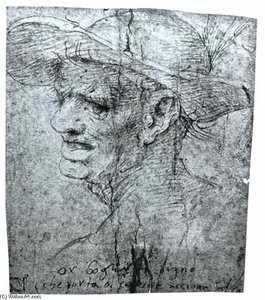
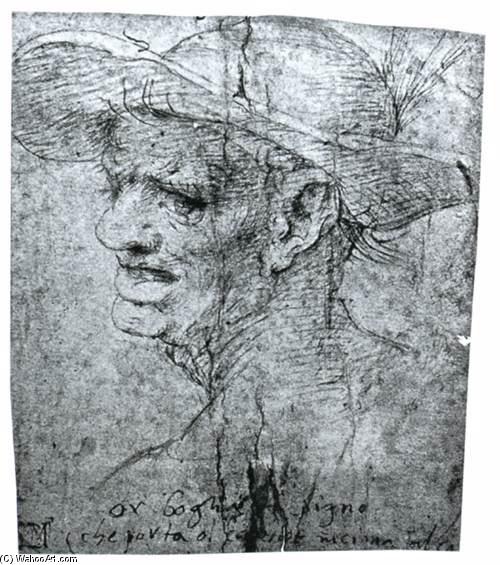
Head of an Executioner
 Acrylic On Canvas
- WallArt
- Renaissance Academicism
 1560
1560 119.0 x 92.0 cm
 Biblioteca Ambrosiana
 Read More
Hand Made Oil Reproduction
Hand-painted oil on canvas in your size and frame, made to order by our artists. ( Buy Print Buy Image)




P118B $10

P118H $10

P118W $10

P438Z $10

P508JH $12

P508YH $12

P805H $10

P805Z $10

P919BZ $10

P919G $10

P919XJ $10

P959ZH $10

P968JZ $12

W106C $8

W218G $10

W218JH $8

W218Y $10

W307PJ $10

W316G $10

W316PJ $8

W316Y $10

W398PJ $8

W4111J $10

W500HY $15

W500JH $15

W692G $12

W849H $8

W940BG $15

W953PJ $8




Pick from our preset sizes that match the artwork's original proportions.

You may enter your own dimensions to fit a specific frame or space. If your selected size does not match the original image's proportions, we will either crop the artwork or extend the painting with additional hand-painted elements. A digital mockup will be sent for your approval before production begins.
Please note that the on-screen preview does not reflect the actual cropping or extension. Only the mockup will accurately show the final composition.
While custom sizes are available, we recommend selecting a dimension from the predefined list to preserve the original proportions.
After order, ArtsDot.com team will email client for instructions and provide a mockup preview
Worldwide Delivery () in 3/4 weeks instead of standard 5 weeks. (17 August). No compromise on quality.

Free Worldwide Express Shipping

High-Quality Linen Canvas

Full Shipping Insurance

Customs Tax Refund Guarantee

True Color Matching Guarantee

60-Day Return Policy (Defects Only)

100% Money-Back Guarantee

Bulk Discount Offer
 Glass option is only available in size under 110 CM

Head of an Executioner
Reproduction Medium
Reproduction Size
-


Total Price
$ 263
Artwork Description
Gian Paolo Lomazzo: Bridging the Gap Between Vision and Theory
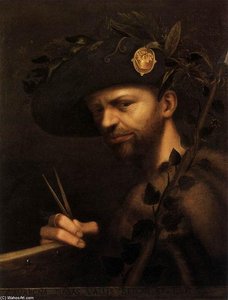
Gian Paolo Lomazzo – a figure both painter and profound art theorist – resonates through the late 16th century as a pivotal bridge between the dynamism of Mannerism and the burgeoning academicism that would define the following era. Born in Milan in 1538, Lomazzo’s life was unexpectedly shaped by blindness, an event that paradoxically propelled him into a career dedicated to analyzing and codifying the very art he could no longer create. His legacy rests not solely on his paintings – though they were undeniably accomplished – but primarily on his two monumental treatises: *Trattato dell' arte della pittura, scultura et architettura* (1584) and *Idea del tempio della pittura* (1590). These works represent a systematic attempt to understand and articulate the principles governing artistic creation, influencing generations of artists and art historians alike. Lomazzo’s early training was rooted in the traditions of Venetian Renaissance painting, absorbing influences from masters like Titian and Giorgione who championed color and illusionistic depth. However, his profound intellectual curiosity led him to question the prevailing stylistic trends, recognizing the limitations of Mannerism's obsession with artificiality and distortion. This critical perspective fueled his determination to establish a new framework for artistic endeavor—one grounded in observation, proportion, and harmonious balance.- Subject Matter: Lomazzo’s ‘Head of an Executioner,’ executed around 1560, is a portrait study capturing a moment of solemn contemplation. The subject's gaze directs the viewer inward, inviting reflection on themes of mortality and judgment—a characteristic preoccupation of Renaissance humanist thought.
- Style & Technique: The artwork embodies the stylistic ideals championed by Lomazzo himself – namely, academic realism. Employing charcoal or pencil on paper, Lomazzo meticulously rendered the figure’s facial features with remarkable accuracy, utilizing hatching and cross-hatching to achieve a convincing illusion of volume and texture.
- Historical Context: Created during the High Renaissance in Milan—a city renowned for its artistic patronage—the portrait reflects the humanist spirit of the period. Lomazzo's treatise served as a cornerstone in establishing standards for artistic excellence, countering Mannerist excesses and advocating for a return to classical ideals.
- Medium & Technique: The original artwork utilized charcoal or graphite pencil on paper, demonstrating Lomazzo’s mastery of draughtsmanship and his commitment to capturing the nuances of human anatomy with unwavering precision.
Related Artworks


Artist Biography
Gian Paolo Lomazzo: Bridging the Gap Between Vision and Theory
The name Gian Paolo Lomazzo – a figure both painter and profound art theorist – resonates through the late 16th century as a pivotal bridge between the dynamism of Mannerism and the burgeoning academicism that would define the following era. Born in Milan in 1538, Lomazzo’s life was unexpectedly shaped by blindness, an event that paradoxically propelled him into a career dedicated to analyzing and codifying the very art he could no longer create. His legacy rests not solely on his paintings – though they were undeniably accomplished – but primarily on his two monumental treatises: *Trattato dell' arte della pittura, scultura et architettura* (1584) and *Idea del tempio della pittura* (1590). These works represent a systematic attempt to understand and articulate the principles governing artistic creation, influencing generations of artists and art historians alike.
Lomazzo’s early training was rooted in the traditions of Milanese painting. He began his apprenticeship with Giovan Battista della Cerva, a lesser-known artist who served as assistant to Gaudenzio Ferrari – a master whose influence is still visible in Lomazzo's work. This formative period exposed him to the prevailing stylistic trends of the time, including the complex compositions and dramatic lighting characteristic of Mannerism. However, it was his encounter with Leonardo da Vinci that proved particularly transformative. Lomazzo’s relentless pursuit of knowledge about the enigmatic master – fueled by access to Leonardo's sketches and writings through Francesco Melzi, his protégé – became a defining feature of his life. He meticulously documented every detail he could glean, transforming himself into an unofficial biographer and archivist of Leonardo’s artistic legacy. This obsessive research shaped not only his understanding of Leonardo but also the core tenets of his own theoretical approach.
The Blind Eye and the Birth of Theory
The onset of complete blindness in 1571 dramatically altered the course of Lomazzo's life. Rather than abandoning art, he turned his formidable intellect to its analysis. He recognized that his unique perspective – one deprived of visual experience – offered a novel vantage point from which to examine artistic principles. This shift is brilliantly illustrated by his *Idea del tempio della pittura*, a work far more philosophical and metaphysical than his earlier treatise. Here, Lomazzo draws parallels between the structure of art and the “four temperaments” theory of human psychology, developed by Hippocrates and Galen. He argued that just as individuals possess distinct personalities shaped by these fundamental qualities – sanguine, choleric, melancholic, and phlegmatic – so too do artworks embody specific moods and emotions. This innovative approach demonstrated Lomazzo’s willingness to transcend traditional artistic boundaries and embrace a broader, more holistic understanding of the creative process.
A Masterpiece in Words: *Trattato dell' arte della pittura, scultura et architettura*
Lomazzo’s *Trattato*, published in 1584, stands as his most enduring achievement. It is a comprehensive guide to the principles of painting, sculpture, and architecture, meticulously organized around three key categories: *doctrina* (the record of discoveries), *prattica* (practical application), and *estetica* (aesthetic judgment). The *doctrina* section details technical innovations such as perspective, a concept he championed with considerable enthusiasm. The *prattica* section provides practical advice on composition, color theory, and the use of materials. Crucially, Lomazzo’s *estetica* explores the role of decorum – a Renaissance adaptation of classical ideals that dictated the appropriate subject matter and style for different settings and functions. He argued that interiors should reflect the purpose of the space, creating a harmonious balance between form and function. His work was remarkably prescient, anticipating later developments in academic art theory and establishing him as a central figure in shaping the artistic landscape of Italy.
Legacy and Influence
Gian Paolo Lomazzo’s influence extends far beyond his own lifetime. His *Trattato* became a standard text for artists and students throughout Europe, serving as a foundational resource for generations of art historians and theorists. His emphasis on systematic analysis, combined with his insightful observations about Leonardo da Vinci, cemented his reputation as a leading intellectual figure of the Renaissance. While many of his paintings have been lost or remain unidentified, his theoretical writings continue to be studied and debated today, demonstrating the enduring relevance of his ideas. Lomazzo’s life serves as a poignant reminder that brilliance can emerge from unexpected circumstances – in this case, the profound limitations imposed by blindness. He transformed personal adversity into a legacy of intellectual rigor and artistic insight, solidifying his place as one of the most important figures in the history of art criticism.
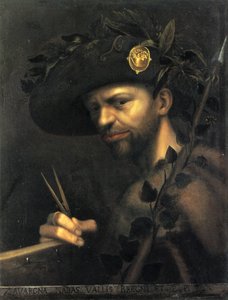
giovan paolo lomazzo
1538 - 1592 , Italy
Quick Facts
- Artistic Movement Or Style: Mannerism
- Artists Or Movements Influenced By This Artist:
- Raphael
- Michelangelo
- Artists Who Influenced This Artist:
- Leonardo da Vinci
- Gaudenzio Ferrari
- Date Of Birth: April 26, 1538
- Date Of Death: January 27, 1592
- Full Name: Gian Paolo Lomazzo
- Nationality: Italian
- Notable Artworks:
- Fall of Simon Magus
- Allegory of the Lenten Feast
- Self-Portrait
- Place Of Birth: Milan, Italy
Related Articles

The Nuances of Graphite: Exploring Emotional Depth & Technical Mastery in Pencil Drawing
Explore the captivating world of graphite drawing! Discover its rich history, master essential techniques like chiaroscuro, and learn how artists evoke emotion through this timeless medium. Expert insights for art enthusiasts.

Charcoal & Canvas: 10 Masterpieces of Shadow & Light |
Explore 10 iconic paintings dominated by charcoal tones – from Rembrandt's dramatic chiaroscuro to Goya’s expressive portraits. Discover the stories behind these masterpieces & find museum-quality art reproductions for your home at .

The Enduring Power of Line: Exploring Themes & Techniques in Drawing Across Art History
Explore the rich history of drawing! Discover key techniques like linear perspective & iconic artists from the Renaissance to modern times. Enhance your art appreciation with ArtsDot.

The Art of the Line: Discover Captivating Drawings to Transform Your Home with Sophisticated Minimalist Elegance
Elevate your home with the profound elegance of fine art drawings. From soulful charcoal sketches to minimalist line art, discover how captivating textures and masterful contours can transform your interior design. Explore expert curation for a sophisticated, meaningful living space.
Mannerism: Bridging Renaissance Harmony & Baroque Drama – A Study of Style & Affectation
Explore the fascinating world of Mannerism! Discover its key characteristics, pioneering artists like Pontormo & Bronzino, and its pivotal role in bridging Renaissance harmony to Baroque drama. A comprehensive guide for art enthusiasts.