 Preview
 Send
Send Share
Share
 Details

 Download
 Similars
 X-Ray
X-Ray Diaporama
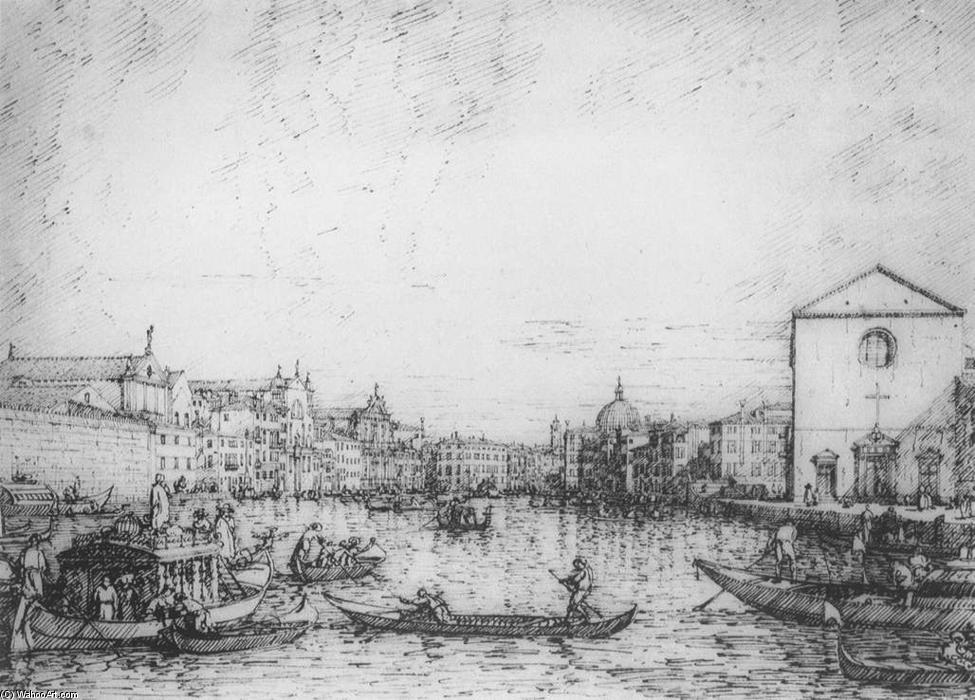
Grand Canal: Looking North-East from Santa Croce to San Geremia
 Etching
- WallArt
- Baroque Venetian School
 1732
1732 270.0 x 377.0 cm
 Royal Collection
 Read More
Hand Made Oil Reproduction
Hand-painted oil on canvas in your size and frame, made to order by our artists. ( Buy Print Buy Image)




P118B $10

P118H $10

P118W $10

P438Z $10

P508JH $12

P508YH $12

P805H $10

P805Z $10

P919BZ $10

P919G $10

P919XJ $10

P959ZH $10

P968JZ $12

W106C $8

W218G $10

W218JH $8

W218Y $10

W307PJ $10

W316G $10

W316PJ $8

W316Y $10

W398PJ $8

W4111J $10

W500HY $15

W500JH $15

W692G $12

W849H $8

W940BG $15

W953PJ $8




Pick from our preset sizes that match the artwork's original proportions.

You may enter your own dimensions to fit a specific frame or space. If your selected size does not match the original image's proportions, we will either crop the artwork or extend the painting with additional hand-painted elements. A digital mockup will be sent for your approval before production begins.
Please note that the on-screen preview does not reflect the actual cropping or extension. Only the mockup will accurately show the final composition.
While custom sizes are available, we recommend selecting a dimension from the predefined list to preserve the original proportions.
After order, ArtsDot.com team will email client for instructions and provide a mockup preview
Worldwide Delivery () in 3/4 weeks instead of standard 5 weeks. (16 August). No compromise on quality.

Free Worldwide Express Shipping

High-Quality Linen Canvas

Full Shipping Insurance

Customs Tax Refund Guarantee

True Color Matching Guarantee

60-Day Return Policy (Defects Only)

100% Money-Back Guarantee

Bulk Discount Offer
 Glass option is only available in size under 110 CM

Grand Canal: Looking North-East from Santa Croce to San Geremia
Reproduction Medium
Reproduction Size
-


Total Price
$ 288
Artwork Description
A Venetian Dream Captured in Monochrome
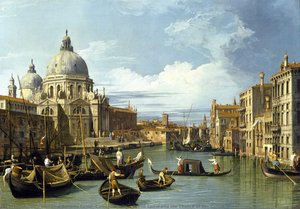
To gaze upon this depiction of the Grand Canal looking northeast from Santa Croce toward San Geremia is to step directly into the heart of 18th-century Venice. It is more than just an architectural record; it is a meticulously preserved moment of life, rendered with the breathtaking precision characteristic of Giovanni Antonio Canaletto. The scene unfolds before us, dominated by the majestic sweep of the waterway, where history and daily commerce intertwine under a diffused, almost dreamlike light. The composition masterfully employs linear perspective, drawing the eye inexorably down the length of the canal until it meets the distant focal point—a grand structure crowned with a prominent dome. This sense of receding depth gives the viewer an immediate, immersive connection to the space.
The Artistry of Line and Shadow
Technically, this piece is a profound study in line work. The original execution, likely utilizing pen and ink on paper, showcases Canaletto's unparalleled skill in rendering texture through sheer draughtsmanship. Observe how the buildings lining the banks are not merely drawn, but seem to have been etched into existence by countless fine lines. The artist employs hatching and cross-hatching with an almost scientific rigor, building up tonal variations that define shadow and depth where color cannot assist. The water itself is given life through short, broken strokes, suggesting the gentle ripple of passing boats and the subtle play of reflections. This dedication to line density allows the monochrome medium to achieve a richness of texture, making the stone facades feel palpable and the moving water seem almost liquid.
Historical Echoes and Topographical Mastery
Canaletto was the quintessential topographical artist, and this work stands as a prime example of his *veduta* style. During the height of Venice’s mercantile power in the early 18th century, such views were highly sought after by patrons across Europe who desired tangible souvenirs of their travels. This painting captures not just the architecture, but the very rhythm of life—the passage of various boats, the steady presence of human activity against the backdrop of enduring stone. It speaks to a time when Venice was at its zenith, a vibrant hub whose daily routines Canaletto immortalized for posterity.
Symbolism and Enduring Tranquility
While the subject matter is bustling—a canal teeming with life—the overall emotional resonance is one of profound tranquility and timelessness. The careful balance between the rigid geometry of the rectangular buildings and the organic curves of the domes and water suggests a harmonious coexistence between human endeavor and natural flow. For the modern admirer, this piece offers an escape; it invites contemplation on permanence against the backdrop of constant movement. It whispers tales of Venetian culture, inviting us to slow our pace and simply observe the grand passage.
Bringing Venice Home: Reproduction for the Collector
For those who wish to incorporate the spirit of this masterpiece into a contemporary setting, acquiring a high-quality reproduction allows one to possess this historical dialogue. The meticulous detail captured in the original etching—the interplay between light and shadow, the architectural grandeur, the sense of deep perspective—is faithfully translated. Whether displayed in a formal salon or a thoughtfully designed study, this artwork serves as an eloquent conversation piece, offering depth, history, and unparalleled artistic grace to any interior space.
Related Artworks
Artist Biography
early life and training
giovanni antonio canal, commonly known as canaletto, was born on october 18, 1697, in venice, italy. he was the son of bernardo canal, a painter of theatrical scene settings, and artemisia barbieri. canaletto's early training in painting began with his father, who taught him the fundamentals of art.
the making of a master
in 1718, canaletto traveled to rome, where he worked on producing scenery for two operas by alessandro scarlatti. this experience had a profound impact on his development as an artist. upon returning to venice, canaletto began painting in his signature topographical style, which would eventually make him famous.
notable works and collaborations
some of canaletto's most notable works include:
- the stonemason's yard (c. 1725), a masterpiece showcasing his early skill.
- regatta on the grand canal, a vivid depiction of venetian public ceremonies.
- eton college (1746-1756), a testament to his influence in england. collaboration with his nephew bellotto, who became an accomplished artist in his own right.
artistic style and technique
canaletto's use of precise perspective and meticulous preparatory drawings has led some experts to believe he may have employed a camera obscura for topographical accuracy. however, his primary concern remained the compositional design, ensuring his works were not merely accurate recordings but also visually stunning.
legacy and collections
canaletto's work can be found in various museums, including the national gallery, london, which showcases his influence on 18th-century art. his legacy extends to the numerous artists he inspired, cementing his place as a master of venetian landscapes.
- view canaletto's works at https://ArtsDot.com/@/giovanni-antonio-canal
- explore more about canaletto on wikipedia
- discover the beauty of venetian art at the palumbo-fossati collection (venice, italy)
key dates
- october 18, 1697: born in venice, italy
- 1718: traveled to rome
- 1725: painted the stonemason's yard
- 1746-1756: visited england, painting notable works like eton college
- april 19, 1768: passed away in venice, italy
remember to explore the world of art at https://ArtsDot.com for more biographies and artworks.
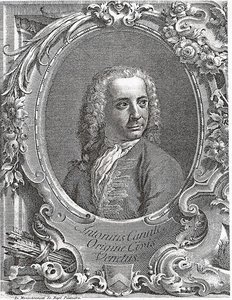
Canaletto
1697 - 1768 , Italy
Quick Facts
- Artistic Movement Or Style: Vedute Venice
- Artists Or Movements Influenced By This Artist: ['Tintoretto']
- Artists Who Influenced This Artist: ['Giovanni Paolo Pannini']
- Date Of Birth: October 18, 1697
- Date Of Death: April 19, 1768
- Full Name: Giovanni Antonio Canal
- Nationality: Italian
- Notable Artworks:
- The Stonemason's Yard
- Regatta on the Grand Canal
- Eton College
- Place Of Birth: Venice, Italy
Related Articles
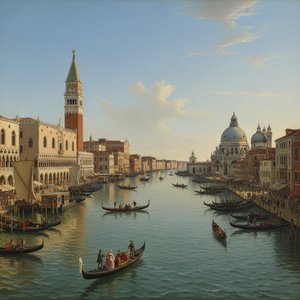
Giovanni Antonio Canal (Canaletto): A Venetian Master of Light, Space & Societal Observation
Explore the life & art of Giovanni Antonio Canal (Canaletto), a Venetian master renowned for his breathtaking cityscapes. Discover his techniques, legacy, and captivating depictions of 18th-century Venice & London.

Giclée Prints: Archival Quality & Aesthetic Nuances for the Discerning Collector
Explore the world of giclée prints with ArtsDot. Learn about archival quality, aesthetic nuances & investment potential. Expert guidance for discerning art collectors seeking museum-quality reproductions and lasting value.

The Enduring Legacy of Fine Art Prints: Technique, History & Aesthetic Impact
Explore the rich history & techniques of fine art prints. Discover investment potential, assess authenticity, and learn how to preserve your collection with expert guidance. Trusted insights for discerning collectors.
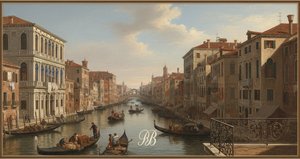
Bernardo Bellotto: Canaletto's Nephew & Master of Veduta Painting – A Comprehensive Exploration
Explore the life & art of Bernardo Bellotto, Canaletto’s nephew and a master of veduta painting. Discover his stunning cityscapes of Dresden & Warsaw, artistic techniques, and lasting legacy. Expert insights for collectors.

Echoes of Time: Exploring the Enduring Appeal & Historical Context of Vintage Art Prints
Explore the captivating world of vintage art prints! Discover their history, collecting tips & enduring appeal. Expert insights on chromolithography and building a legacy collection with ArtsDot.