 Preview
 Send
Send Share
Share
 Details

 Download
 Similars
 X-Ray
X-Ray Diaporama
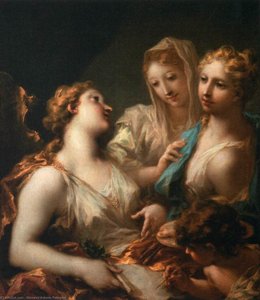
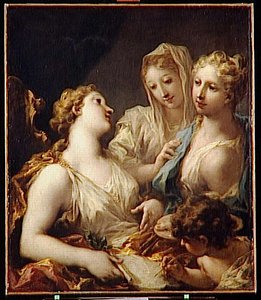
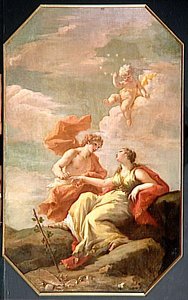
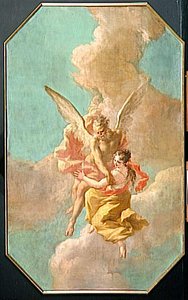
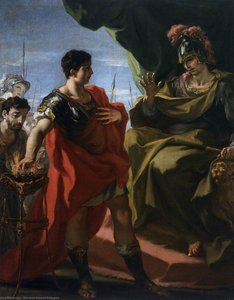
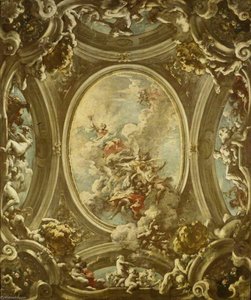
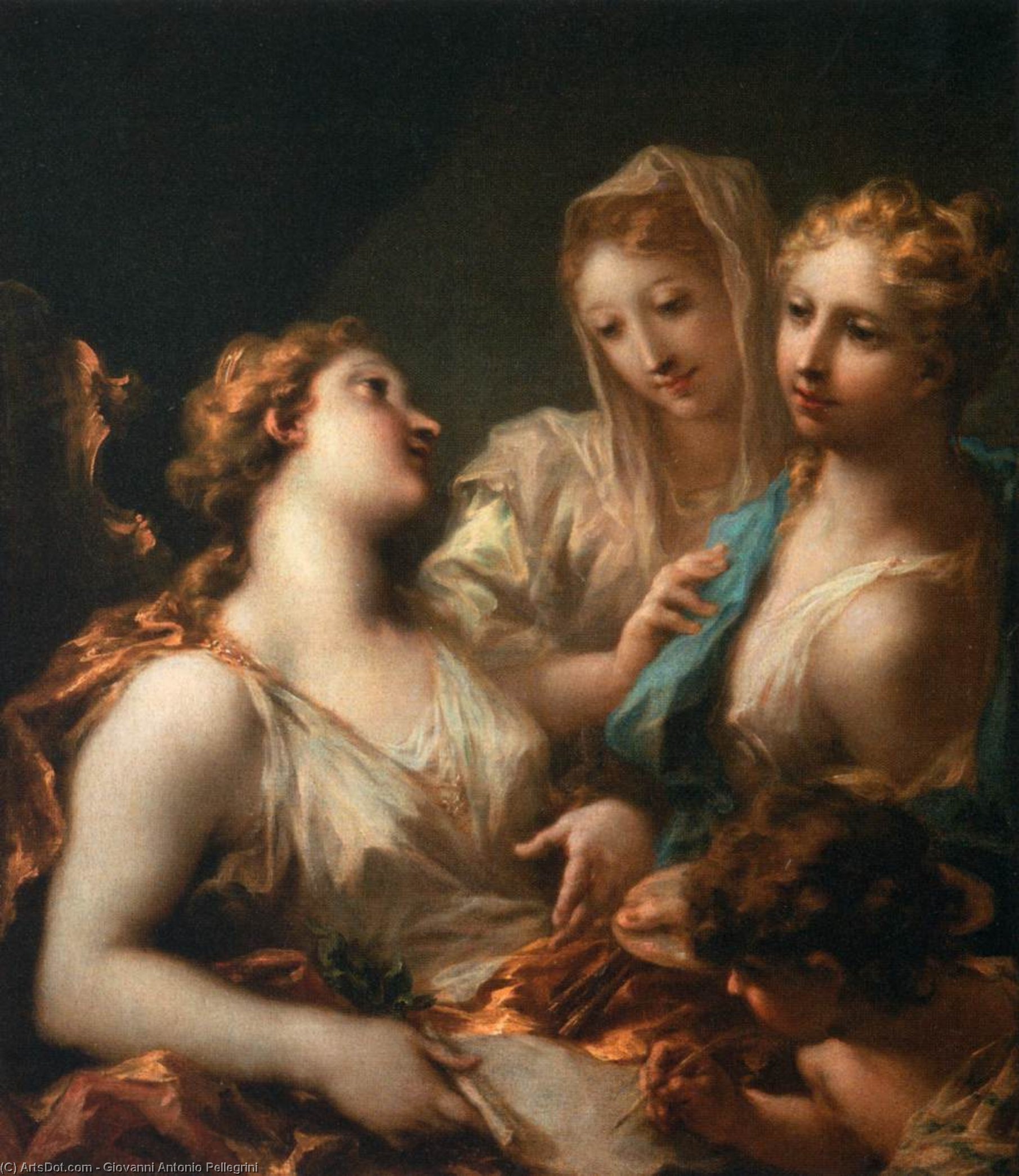
Painting and Drawing Instructing Love
 Oil On Canvas
- WallArt
- Baroque
 1733
1733 99.0 x 85.0 cm
 The Louvre
 Read More
Hand Made Oil Reproduction
Hand-painted oil on canvas in your size and frame, made to order by our artists. ( Buy Print Buy Image)




P118B $10

P118H $10

P118W $10

P438Z $10

P508JH $12

P508YH $12

P805H $10

P805Z $10

P919BZ $10

P919G $10

P919XJ $10

P959ZH $10

P968JZ $12

W106C $8

W218G $10

W218JH $8

W218Y $10

W307PJ $10

W316G $10

W316PJ $8

W316Y $10

W398PJ $8

W4111J $10

W500HY $15

W500JH $15

W692G $12

W849H $8

W940BG $15

W953PJ $8




Pick from our preset sizes that match the artwork's original proportions.

You may enter your own dimensions to fit a specific frame or space. If your selected size does not match the original image's proportions, we will either crop the artwork or extend the painting with additional hand-painted elements. A digital mockup will be sent for your approval before production begins.
Please note that the on-screen preview does not reflect the actual cropping or extension. Only the mockup will accurately show the final composition.
While custom sizes are available, we recommend selecting a dimension from the predefined list to preserve the original proportions.
After order, ArtsDot.com team will email client for instructions and provide a mockup preview
Worldwide Delivery () in 3/4 weeks instead of standard 5 weeks. (24 August). No compromise on quality.

Free Worldwide Express Shipping

High-Quality Linen Canvas

Full Shipping Insurance

Customs Tax Refund Guarantee

True Color Matching Guarantee

60-Day Return Policy (Defects Only)

100% Money-Back Guarantee

Bulk Discount Offer
 Glass option is only available in size under 110 CM

Painting and Drawing Instructing Love
Reproduction Medium
Reproduction Size
-


Total Price
$ 263
Artwork Description
The Gentle Art of Instruction: A Venetian Vision
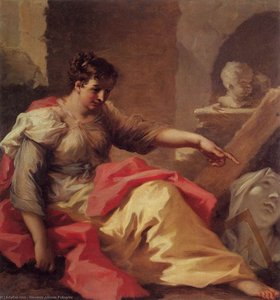
This exquisite canvas, titled Painting and Drawing Instructing Love, transports us into an intimate, luminous moment steeped in the cultured atmosphere of early eighteenth-century Venice. At its heart lies a tender tableau: three elegantly dressed women gathered around a central figure—a baby—whose nascent talents are being nurtured through the delicate act of art. The composition is not merely a portrait; it is a meditation on pedagogy, devotion, and the transmission of beauty across generations. The woman cradling the child, resplendent in her blue gown, anchors the scene with maternal grace, while the surrounding figures lean in, their gestures suggesting whispered secrets of technique and artistic refinement.
Mastery in Baroque Light: Pellegrini's Touch
The hand that guided this vision belonged to Giovanni Antonio Pellegrini, an artist whose career spanned the vibrant transition from High Renaissance ideals into the dramatic flourish of the Baroque era. Pellegrini, a Venetian master, possessed a unique ability to blend classical structure with emotional immediacy. His technique, evident in the soft modeling of flesh and the rich drapery folds, speaks to his deep understanding of light—a hallmark of Venetian painting. Observe how the light seems to emanate from within the scene itself, illuminating the faces and the implements of art, giving the entire gathering an almost ethereal glow. The presence of the angel in the upper left corner elevates the narrative beyond the domestic sphere, suggesting divine blessing upon this pursuit of creative knowledge.
Symbolism Woven into Canvas: Love and Art
The title itself hints at a profound allegory. This is not just instruction; it is the teaching of Love, understood through the universal language of art. The act of painting or drawing becomes a metaphor for nurturing affection, wisdom, and civilization itself. Each woman embodies a facet of this guidance—perhaps one teaches composition, another color theory, and the third, the gentle spirit that inspires creation. For the collector or designer, this piece offers more than mere decoration; it serves as a sophisticated conversation starter, evoking themes of mentorship, familial bonds, and the enduring power of creative endeavor.
A Timeless Echo for Modern Spaces
To bring the grace of 1733 into a contemporary setting is to infuse a room with historical depth and palpable warmth. The rich palette, dominated by jewel tones against softer skin tones, ensures that this work commands attention without overwhelming a space. Whether adorning a formal drawing-room or lending an air of cultivated romance to a gallery wall, the reproduction captures Pellegrini’s signature elegance. It invites the viewer to pause, to observe the subtle interplay between gesture and gaze, and to feel the quiet joy inherent in learning something beautiful.
CLASSIFICATION: Art ReproductionRelated Artworks



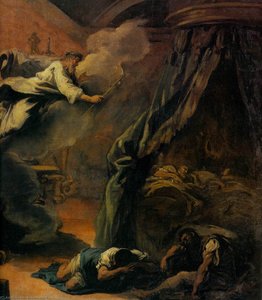

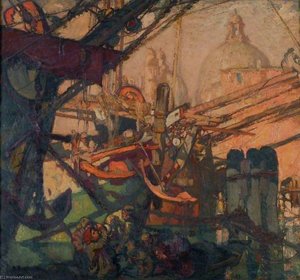
Artist Biography
The Venetian Master of Light and Motion
In the vibrant, water-bound splendor of 18th-century Venice, a new era of painterly elegance was being forged by the brush of Giovanni Antonio Pellegrini. Born in 1675 to a humble shoemaker, Pellegrini’s ascent from the streets of Venice to the royal courts of Europe is a testament to a singular talent that bridged the gap between the structured grandeur of the Renaissance and the emotive, swirling energy of the Baroque. His work does not merely sit upon a surface; it breathes with an atmospheric lightness, capturing a sense of spontaneous movement that would later inspire the great Giambattista Tiepolo. To look upon a Pellegrini is to witness the transition of an era, where the heavy shadows of the past began to dissolve into the luminous, airy compositions of a new age.
The foundations of his mastery were laid under the guidance of Paolo Pagani, a mentor who rooted him in the disciplined Milanese tradition. However, it was his encounter with the expressive brilliance of Sebastiano Ricci that truly ignited his creative spirit. From Ricci, Pellegrini inherited a sophisticated command of color and a penchant for dynamic, sweeping compositions. This stylistic evolution was further refined during his travels through Rome, where the whispers of emerging Neoclassical currents prompted him to experiment with more structured principles, creating a unique tension between classical order and Baroque theatricality.
A European Odyssey of Grandeur
Pellegrini was not a painter confined by borders; he was a true cosmopolitan of the arts. His reputation for capturing light and atmosphere propelled him across the continent, earning him prestigious commissions from the most influential patrons of his time. His journey took him through the Netherlands, Germany, Austria, and France, but it was in England where his legacy left an indelible mark on the architectural landscape. At magnificent estates such as Kimbolton Castle and Castle Howard, Pellegrini’s murals transformed ceilings into celestial gateways, utilizing a technique that mimicked the effortless grace of fresco painting to create vast, illusionistic vistas.
These international endeavors showcased his unparalleled ability to manipulate light, making heavy stone surfaces appear as weightless as clouds. His work in England served as a bridge, bringing the sophisticated aesthetic of the Venetian school to the British aristocracy and influencing the development of decorative painting in Northern Europe. Each commission was an opportunity for him to showcase his signature spontaneity—a quality that allowed his figures to dance across the canvas with a lifelike vitality that felt both monumental and intimately human.
Legacy and Artistic Significance
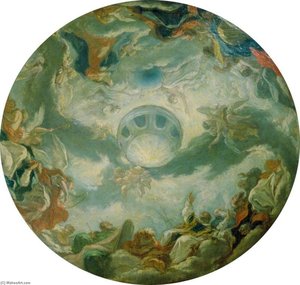
The historical significance of Giovanni Antonio Pellegrini lies in his role as a pivotal evolutionary link. He stood at the crossroads of history, synthesizing the perspectival depth of the Renaissance with the dramatic, emotive fervor of the Baroque. His mastery of the fresco technique and his ability to decorate massive architectural spaces—most notably the breathtaking dome above the staircase at San Rocco in Venice—demonstrated a technical prowess that few could match.
Ultimately, Pellegrini’s influence can be traced through the lineage of great Venetian masters. By softening the edges of the Baroque and introducing a luminous, airy quality to his compositions, he paved the way for the Rococo movement and provided the essential stylistic groundwork for Tiepolo. His life's work remains a celebration of movement, light, and the enduring power of the Venetian spirit, marking him as one of the most innovative and influential painters of the early 18th century.
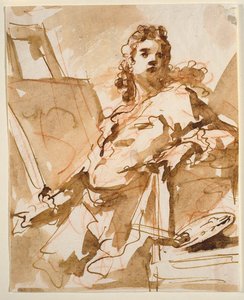
Giovanni Antonio Pellegrini
1675 - 1741 , Italy
Quick Facts
- Artistic Movement Or Style: Baroque & Renaissance
- Artists Or Movements Influenced By This Artist: ['Giovanni Battista Tiepolo']
- Artists Who Influenced This Artist:
- Paolo Veronese
- Luca Giordano
- Date Of Birth: Venice, Italy (1675)
- Date Of Death: 1741
- Full Name: Giovanni Antonio Pellegrini
- Nationality: Italian
- Notable Artworks:
- Bacchus and Ariadne
- Allegory of Sculpture
- Place Of Birth: Venice
Related Articles

Jacopo Tintoretto's Masterpieces: 25 Paintings That Define Venetian Drama | ArtsDot
Explore 25 breathtaking masterpieces by Jacopo Tintoretto, the Venetian master of drama and light. Discover the stories behind iconic Renaissance paintings & find museum-quality art reproductions to elevate your home decor on ArtsDot.com.

Baroque Masterpieces: 10 Paintings That Defined an Era |
Journey through the drama & grandeur of Baroque art! Explore 10 masterpieces by Caravaggio, Rembrandt, Rubens & more. Discover stunning oil paintings, rich colors & timeless stories. Find museum-quality reproductions at .

Baroque Drama: Bringing Opulence & Emotion into Contemporary Interiors
Explore the opulent world of Baroque interior design! Discover key elements, modern applications & how to bring dramatic elegance into your home with 's authentic reproductions.

The Dramatic Flourish: Exploring the Baroque Movement's Enduring Legacy in Art History
Explore the dramatic world of Baroque art! Discover iconic artists like Caravaggio & Rubens, defining techniques, and its lasting impact on art history. Expert insights for collectors & enthusiasts at ArtsDot.
Baroque Painting's Greatest Hits: 10 Masterpieces for Your Home | ArtsDot
Journey through Baroque painting's glory! Explore 10 masterpieces by Caravaggio, Rembrandt & Vermeer. Discover dramatic lighting, rich colors & timeless stories. Find museum-quality art reproductions for your home at ArtsDot.com.