 Send
Send Share
Share
 Details

 Download
 Similars
 Diaporama
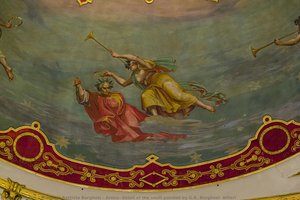
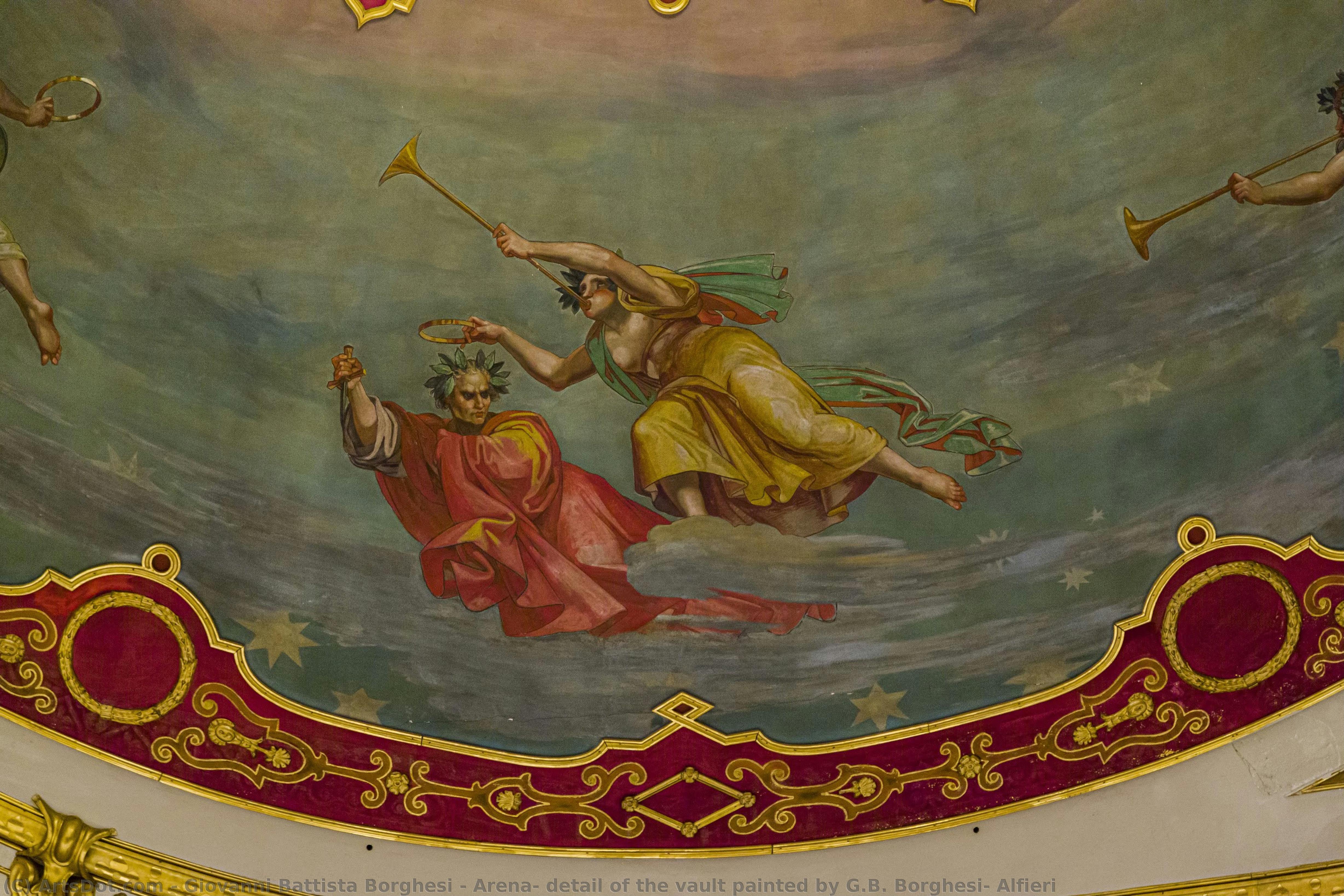
Arena, detail of the vault painted by G.B. Borghesi, Alfieri


 Read More
Giclée / Art Print
Museum-quality giclée or canvas print with fast production and flexible finish options. ( Buy Hand Made Painting Buy Image)




































Pick from our preset sizes that match the artwork's original proportions.

You may enter your own dimensions to fit a specific frame or space. If your selected size does not match the original image's proportions, we will either crop the artwork or extend the image with a mirrored or solid-fill edge. A digital mockup will be sent for your approval before production begins.
Please note that the on-screen preview does not reflect the actual cropping or extension. Only the mockup will accurately show the final composition.
While custom sizes are available, we recommend selecting a dimension from the predefined list to preserve the original proportions.
Worldwide Delivery () in 2 weeks instead of standard 4/5 weeks. (6 September)

Free Worldwide Express Shipping

High-Quality Linen Canvas

Full Shipping Insurance

Customs Tax Refund Guarantee

True Color Matching Guarantee

100-Day Return Policy (Defects Only)

100% Money-Back Guarantee

Bulk Discount Offer
 Glass option is only available in size under 110 CM

Arena, detail of the vault painted by G.B. Borghesi, Alfieri
Giclée / Art Print
Reproduction Size
-


Total Price
$ 63
A Celestial Coronation: The Grandeur of Borghesi’s Vault
To gaze upward into the vault of the Arena is to be transported from the terrestrial realm into a breathtaking celestial theater. This exquisite detail of the ceiling fresco, painted in 1829 by the Italian master Giovanni Battista Borghesi, serves as a window into the Neoclassical soul. At the heart of this composition, a divine drama unfolds: a woman draped in luminous yellow robes descends to crown a seated figure clad in regal red. This central act of coronation is not merely a depiction of ceremony, but an evocative symbol of triumph and grace. The figures are suspended in a dreamlike state, surrounded by a sky that transitions from soft, billowing clouds to a deep, starlit expanse, suggesting a moment where the heavens themselves descend to honor earthly or mythological virtue.
The technical mastery of Borghesi is evident in the way he manipulates light and texture to create an illusion of infinite depth. The fresco utilizes a vibrant palette where the warmth of gold and crimson clashes beautifully against the more muted, ethereal tones of the nocturnal sky. One can almost feel the weight of the heavy fabrics and the delicate shimmer of the gilded borders that frame this heavenly scene. Above the central protagonists, musical figures emerge from the periphery—one sounding a trumpet-like instrument, another cradling a stringed instrument—adding an auditory dimension to the visual feast. This orchestration of imagery suggests that the coronation is accompanied by a divine symphony, enveloping the viewer in a sense of cosmic harmony.
Neoclassical Elegance and Timeless Symbolism
Rooted in the Neoclassical tradition, Borghesi’s work reflects the era's profound reverence for classical antiquity and structured beauty. Every element, from the intricate gold detailing to the precise anatomical rendering of the figures, speaks to a period that sought to find order and nobility in mythological allegory. The use of stars scattered throughout the background does more than provide a setting; it imbue the work with a sense of permanence and destiny. For the discerning collector or interior designer, this piece offers much more than mere decoration. It provides a focal point of profound historical weight, capable of anchoring a room with its themes of authority, celebration, and the eternal cycle of glory.
Integrating a high-quality reproduction of such a masterpiece into a contemporary space allows for a sophisticated dialogue between history and modernity. Whether placed in a grand library, a formal dining hall, or a curated gallery wall, the fresco’s dramatic composition and rich color story command attention. It invites contemplation, prompting guests to look upward and lose themselves in the swirling clouds and golden light of 19th-century Italy. To possess such an image is to hold a fragment of the Parma school's legacy, bringing the opulent, theatrical spirit of the Teatro Regio era into the intimate setting of a modern home.
Related Artworks



Artist Biography
The Neoclassical Vision of Giovanni Battista Borghesi
In the heart of Parma, Italy, during the twilight of the eighteenth century, a talent was born that would eventually weave itself into the very fabric of Italian scenic and mural art. Giovanni Battista Borghesi, often referred to as Giambattista, emerged from the fertile artistic landscape of his birthplace to become a defining voice of the Neoclassical period. Born on November 25, 1790, Borghesi’s journey into the world of fine art began with a precocious discipline. At the tender age of fifteen, he entered the esteemed studio of Biagio Martini, a mentorship that would serve as the crucible for his technical mastery. Under Martini’s guidance, the young artist moved beyond mere imitation, learning to balance the rigorous structural demands of Neoclassicism with a burgeoning sense of decorative elegance.
Borghesi’s early career was defined by the intimate and the sacred, as he applied his developing skills to the modest yet profound task of mural painting. His hands graced the walls of private residences and local churches, where he learned the delicate art of storytelling through pigment and plaster. These early decorations were more than mere embellishments; they were exercises in spatial harmony and light. As his reputation grew, so did the scale of his ambitions. He transitioned seamlessly from the static confines of wall paintings to the grand, ephemeral world of scenic design, a move that required an extraordinary command of perspective and theatrical illusion. This duality—the ability to paint for both the permanent architecture of a building and the fleeting spectacle of the stage—distinguished him as a versatile master of his era.
A Legacy Etched in Parma’s Grandeur
The true splendor of Borghesi’s artistry is perhaps most vibrantly felt in the architectural landmarks of Parma. His contributions to the Teatro Regio di Parma stand as a testament to his ability to elevate public spaces through sophisticated composition. One of his most celebrated achievements, the Allegory of Maria Luigia, serves as a breathtaking example of his skill. In this work, Borghesi utilized the Neoclassical penchant for bold colors and intricate, flowing designs to create a narrative that is both visually stunning and deeply symbolic. The piece, which resides within the Museo Glauco Lombardi collection, captures the essence of an era that sought to find beauty in order, clarity, and classical grandeur.
Beyond the theater and the museum, Borghesi’s influence extended to the very arenas of civic life. His work on the Parma Arena showcased a meticulous attention to detail, proving that his talent was as suited for large-scale public works as it was for delicate allegorical figures. Throughout his life, his style remained anchored in a certain Neoclassical simplicity, yet it was never devoid of complexity. He possessed a rare ability to use light and shadow to breathe life into his subjects, ensuring that even the most structured compositions retained an emotional resonance that could captivate an audience.
Though he passed away on December 11, 1846, the artistic imprint left by Giovanni Battista Borghesi remains indelible. His life’s work represents a bridge between the rigid traditions of his mentors and the expressive potential of the nineteenth-century decorative arts. To study Borghesi is to study the soul of Parma itself—a legacy of elegance, precision, and an enduring passion for the transformative power of art.

giovanni battista borghesi
1790 - 1846 , Italy
Quick Facts
- Artistic Movement Or Style: Neoclassicism
- Artists Or Movements Influenced By This Artist: Neoclassical painting
- Artists Who Influenced This Artist: Biagio Martini
- Date Of Birth: November 25, 1790
- Date Of Death: December 11, 1846
- Full Name: Giovanni Battista Borghesi
- Nationality: Italian
- Notable Artworks:
- Allegory of Maria Luigia
- Arena
- Place Of Birth: Parma, Italy
Related Articles

The Fresco as Family Legacy: Preserving Heritage Through Wall Art
Explore the rich history & enduring legacy of fresco painting. Discover how to preserve family heritage through stunning wall art. Expert insights & restoration guidance.

The Enduring Legacy of Fresco Painting: Techniques, History & Contemporary Relevance
Explore the rich history & enduring artistry of fresco painting – from Giotto to Michelangelo! Discover techniques, conservation efforts, & modern applications. Learn how ArtsDot brings this timeless art form to your home.

The Enduring Legacy of Fresco: Technique, History & Artistic Expression Across Cultures
Explore the rich history & enduring legacy of fresco painting! Discover ancient techniques, Giotto's masterpieces, and modern applications. Expert insights for art lovers & professionals.
Golden Hues: 10 Masterpieces Dominated by Chrome Yellow | ArtsDot
Immerse yourself in golden light! Explore 10 famous paintings dominated by 'Chrome Yellow', from Van Gogh’s Sunflowers to Monet's Haystacks. Discover the stories behind these iconic Impressionist & Post-Impressionist masterpieces and find museum-quality art reproductions at ArtsDot.com.
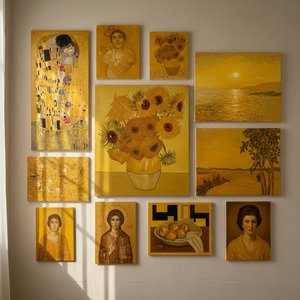
Golden Hues: Top 10 Paintings Dominated by Yellow Ochre |
Explore 10 iconic paintings bathed in golden yellow ochre! From Van Gogh's sunflowers to Monet’s haystacks, discover the stories behind these masterpieces. Find museum-quality art reproductions & elevate your home decor on .