 Preview
 Send
Send Share
Share
 Details

 Download
 Similars
 X-Ray
X-Ray Diaporama
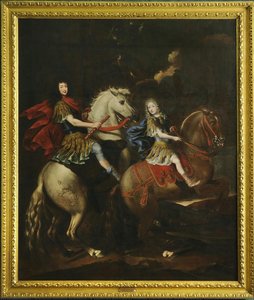
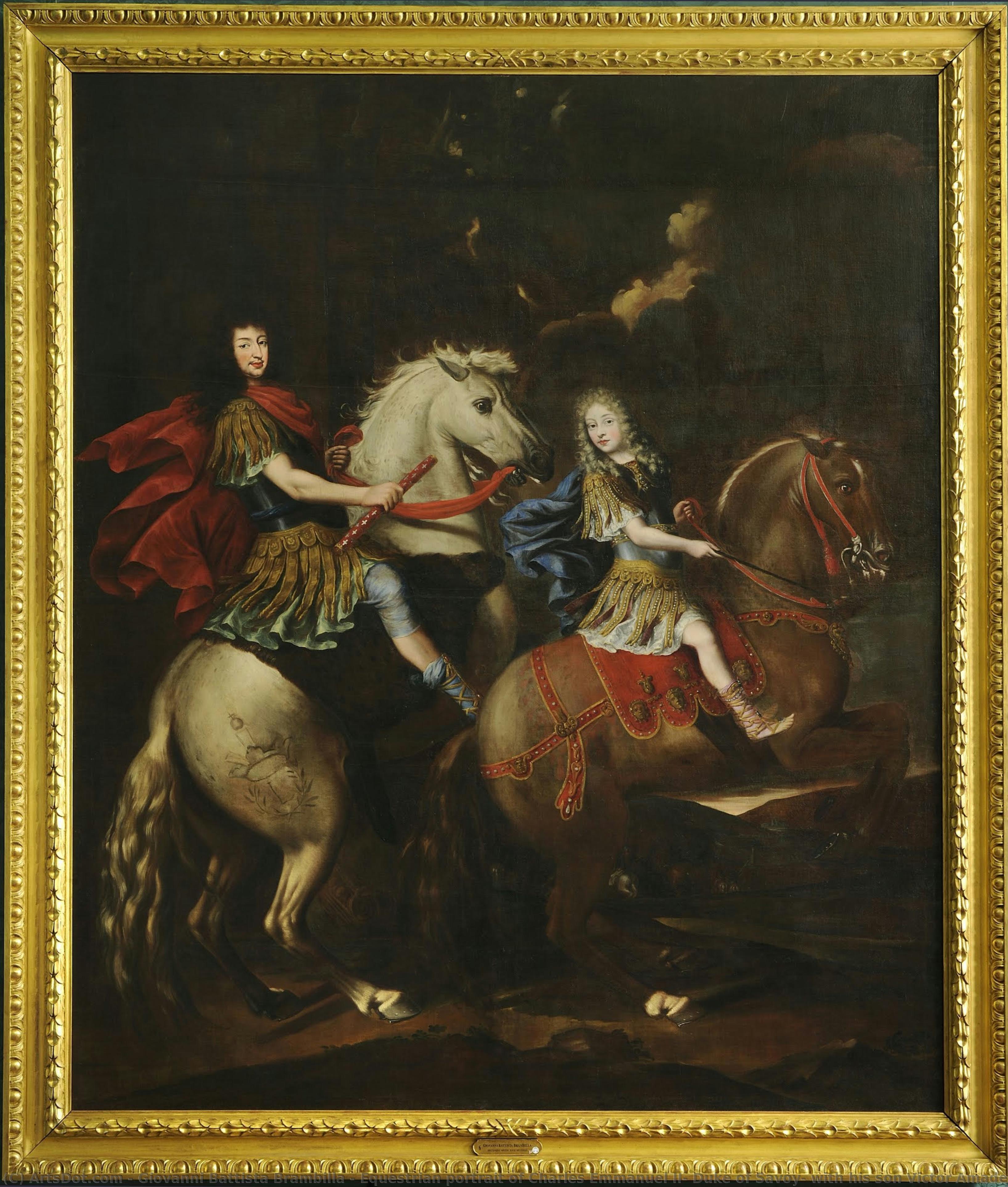
Equestrian portrait of Charles Emmanuel II, Duke of Savoy, with his son Victor Amadeus II


 Read More
Hand Made Oil Reproduction
Hand-painted oil on canvas in your size and frame, made to order by our artists. ( Buy Print Buy Image)




P118B $10

P118H $10

P118W $10

P438Z $10

P508JH $12

P508YH $12

P805H $10

P805Z $10

P919BZ $10

P919G $10

P919XJ $10

P959ZH $10

P968JZ $12

W106C $8

W218G $10

W218JH $8

W218Y $10

W307PJ $10

W316G $10

W316PJ $8

W316Y $10

W398PJ $8

W4111J $10

W500HY $15

W500JH $15

W692G $12

W849H $8

W940BG $15

W953PJ $8




Pick from our preset sizes that match the artwork's original proportions.

You may enter your own dimensions to fit a specific frame or space. If your selected size does not match the original image's proportions, we will either crop the artwork or extend the painting with additional hand-painted elements. A digital mockup will be sent for your approval before production begins.
Please note that the on-screen preview does not reflect the actual cropping or extension. Only the mockup will accurately show the final composition.
While custom sizes are available, we recommend selecting a dimension from the predefined list to preserve the original proportions.
After order, ArtsDot.com team will email client for instructions and provide a mockup preview
Worldwide Delivery () in 3/4 weeks instead of standard 5 weeks. (4 September). No compromise on quality.

Free Worldwide Express Shipping

High-Quality Linen Canvas

Full Shipping Insurance

Customs Tax Refund Guarantee

True Color Matching Guarantee

60-Day Return Policy (Defects Only)

100% Money-Back Guarantee

Bulk Discount Offer
 Glass option is only available in size under 110 CM

Equestrian portrait of Charles Emmanuel II, Duke of Savoy, with his son Victor Amadeus II
Reproduction Medium
Reproduction Size
-


Total Price
$ 263
A Regal Encounter in Motion
In the grand tradition of European courtly portraiture, few motifs command as much immediate respect and awe as the equestrian scene. Giovanni Battista Brambilla’s Equestrian portrait of Charles Emmanuel II, Duke of Savoy, with his son Victor Amadeus II, serves as a breathtaking window into an era where power was articulated through movement, nobility, and the mastery of the horse. The composition captures a profound moment of connection between a sovereign and his heir, set against a dramatic, overcast sky that lends a sense of historical weight to the encounter. As the two riders approach one another, their horses positioned in a delicate balance of strength and grace, the viewer is drawn into a silent dialogue of lineage and legacy.
The painting is far more than a mere depiction of two figures on horseback; it is a carefully constructed piece of political rhetoric. Brambilla utilizes the classical language of the Baroque to emphasize the legitimacy of the House of Savoy. By placing the Duke and his son in such an intimate yet formal arrangement, the artist highlights the continuity of the dynasty. The attention to detail—from the subtle brand on the Duke’s horse to the intricate, old-style attire that echoes the majestic portraits of Louis XIV at Versailles—serves to elevate the subjects above the mundane. Every brushstroke is designed to remind the observer of the Duke's authority and the divine right of his succession.
Mastery of Light and Classical Elegance
Technically, Brambilla demonstrates a profound command over the textures and atmospheric qualities essential to late 18th-century Italian painting. The artist employs a palette that captures the somber, dignified mood of a cloudy Piedmontese afternoon, allowing the highlights on the riders' helmets and the muscular definition of the horses to emerge with striking clarity. There is a palpable sense of depth achieved through the soft transitions of light and shadow, a technique learned from his mentor Carlo Delfino, which lends a theatrical dimension to the scene. The way the light catches the folds of the heavy fabrics and the sheen of the animals' coats creates a tactile experience that invites the eye to linger on the craftsmanship.
For the discerning collector or interior designer, this piece offers an unparalleled opportunity to introduce a sense of historical gravitas into a curated space. A high-quality reproduction of this work does not merely decorate a wall; it anchors a room with its themes of heritage and endurance. Whether placed in a formal study, a grand hallway, or a sophisticated living area, the painting provides a focal point that sparks conversation about art history, European nobility, and the timeless allure of the Baroque aesthetic. It is an investment in atmosphere, bringing the quiet, commanding presence of the Savoyard court into the modern home.
Related Artworks
![Scrovegni - [05] - Joachim's Dream — Giotto Di Bondone, Gothic](/media/artworks/images-thumb/8f/67/8f67bb5da87296bd452b3f0b237b528d.jpg)

Artist Biography
Giovanni Battista Brambilla: A Piedmontese Master of the Baroque
Born in Piedmont, Italy, around 1770 – though precise dates remain elusive, a testament to the fragmented records of his era – Giovanni Battista Brambilla emerged as a significant figure within the artistic landscape of late 18th and early 19th-century Italy. His life was inextricably linked to the political and social shifts occurring in the region, particularly the rise of the House of Savoy and its ambition to establish a distinct Piedmontese identity. Unlike many artists who sought patronage in Rome or Florence, Brambilla’s career unfolded primarily within the borders of his native province, yet his work resonated with a classical sensibility that transcended regional boundaries.
Brambilla's artistic journey began under the tutelage of Carlo Delfino, a prominent Neapolitan painter known for his dramatic and theatrical style. This early influence instilled in Brambilla a penchant for dynamic compositions and an understanding of Baroque principles – particularly the use of strong contrasts of light and shadow, and a heightened sense of movement. He quickly established himself as a skilled artist working primarily for churches throughout Turin and surrounding areas. His commissions included altarpieces, devotional scenes, and decorative elements, reflecting the religious fervor of the time and the importance of art in shaping civic identity.
A pivotal moment in Brambilla’s career came with his appointment as court painter to Charles Emmanuel II, Duke of Savoy, and later Vittorio Amedeo II, Prince of Piedmont. This prestigious patronage afforded him access to a wider audience and allowed him to produce some of his most celebrated works. The equestrian portrait of Charles Emmanuel II, now housed in the Palazzo Madama of Turin, stands as a testament to his skill in capturing regal grandeur and conveying a sense of power and authority. Similarly, the portrait of Vittorio Amedeo II exemplifies his ability to render complex figures with remarkable detail and psychological insight.
The Court Painter and Regional Identity
Brambilla’s work during this period was deeply intertwined with the evolving identity of Piedmont. The House of Savoy sought to project an image of strength, sophistication, and cultural refinement – a deliberate counterpoint to the perceived decadence of other Italian states. Brambilla's paintings served as visual embodiments of this ambition, depicting scenes of courtly life, historical events, and allegorical representations that reinforced the legitimacy and prestige of the ruling dynasty.
However, Brambilla’s artistic practice was not solely defined by the demands of the court. He also engaged in commissions for churches and private patrons, producing a diverse body of work encompassing religious subjects, portraits, and decorative panels. His paintings often incorporated elements of classical antiquity – referencing Roman sculpture, architecture, and mythology – reflecting a broader trend among Piedmontese artists to draw inspiration from the ancient world.
Technique and Style
Brambilla’s style is characterized by a masterful command of technique and a keen eye for detail. He was particularly adept at rendering fabrics, costumes, and facial expressions with remarkable accuracy. His compositions are often dynamic and theatrical, employing diagonal lines and dramatic lighting to create a sense of movement and visual interest. While rooted in Baroque traditions, his work also exhibits a certain restraint and elegance – a hallmark of the Piedmontese artistic style.
His use of color is notable for its richness and depth. He favored warm earth tones—ochres, siennas, and umbers—which he skillfully combined with brighter accents to create vibrant and engaging scenes. He was also known for his meticulous preparatory sketches, which reveal a thoughtful and deliberate approach to his work.
Legacy and Historical Significance
Giovanni Battista Brambilla’s contribution to the artistic landscape of Piedmont is often understated, overshadowed by more prominent figures from the Roman and Florentine schools. However, his paintings provide valuable insights into the cultural and political dynamics of the region during a period of significant transformation. His work reflects the aspirations of the House of Savoy to establish a distinct Piedmontese identity – one rooted in classical ideals but shaped by the realities of local history and circumstance.
Today, Brambilla’s paintings are housed primarily in the Palazzo Madama of Turin, where they continue to captivate viewers with their technical skill, dramatic flair, and historical significance. His legacy as a skilled court painter and regional artist endures, offering a glimpse into the artistic world of Piedmont during a pivotal era in Italian history.
Quick Facts
- Artistic Movement Or Style: Baroque religious art
- Artists Or Movements Influenced By This Artist: ['Palazzo Madama artworks']
- Artists Who Influenced This Artist: ['Carlo Delfino']
- Date Of Death: Living
- Full Name: Giovanni Battista Brambilla
- Nationality: Italian
- Notable Artworks:
- Equestrian portrait (Savoy)
- Martyrdom of St. Dalmazio
- Place Of Birth: Piedmont, Italy
Related Articles
The Equine Muse: A Historical & Artistic Exploration of Horses in Painting
Explore the captivating history of horses in painting! Discover Renaissance masterpieces, Baroque grandeur & expert insights for collecting equestrian art. Learn about symbolism, techniques & lasting value with ArtsDot.
The Noble Steed on Canvas: A Historical & Artistic Exploration of Horse Painting Across Cultures
Explore the rich history of horse painting! Discover masterpieces from Stubbs to Munnings & learn about symbolism, techniques & artists. Find museum-quality reproductions at ArtsDot.
John Francis Sartorius II: Equestrian Elegance & the Rise of British Portraiture
Explore the captivating world of Francis Sartorius II (1734-1804), a leading British painter renowned for his exquisite equestrian portraits and hunting scenes. Discover his life, techniques & enduring legacy.
The Grandeur of Baroque Portraiture: Power, Emotion & Artistic Innovation
Explore the grandeur of Baroque portraiture! Discover Rubens, Van Dyck & the masters of 17th-century art. Uncover symbolism, techniques & lasting influence. Expert insights for collectors and enthusiasts.
The Noble Steed: A Historical & Artistic Exploration of Equestrian Art Across Cultures
Explore the captivating history of equestrian art with ArtsDot. Discover masterpieces from Velázquez to Van Dyck & learn about collecting these timeless works. Expert insights for discerning connoisseurs.