 Preview
 Send
Send Share
Share
 Details

 Download
 Similars
 X-Ray
X-Ray Diaporama
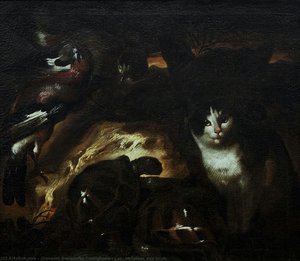
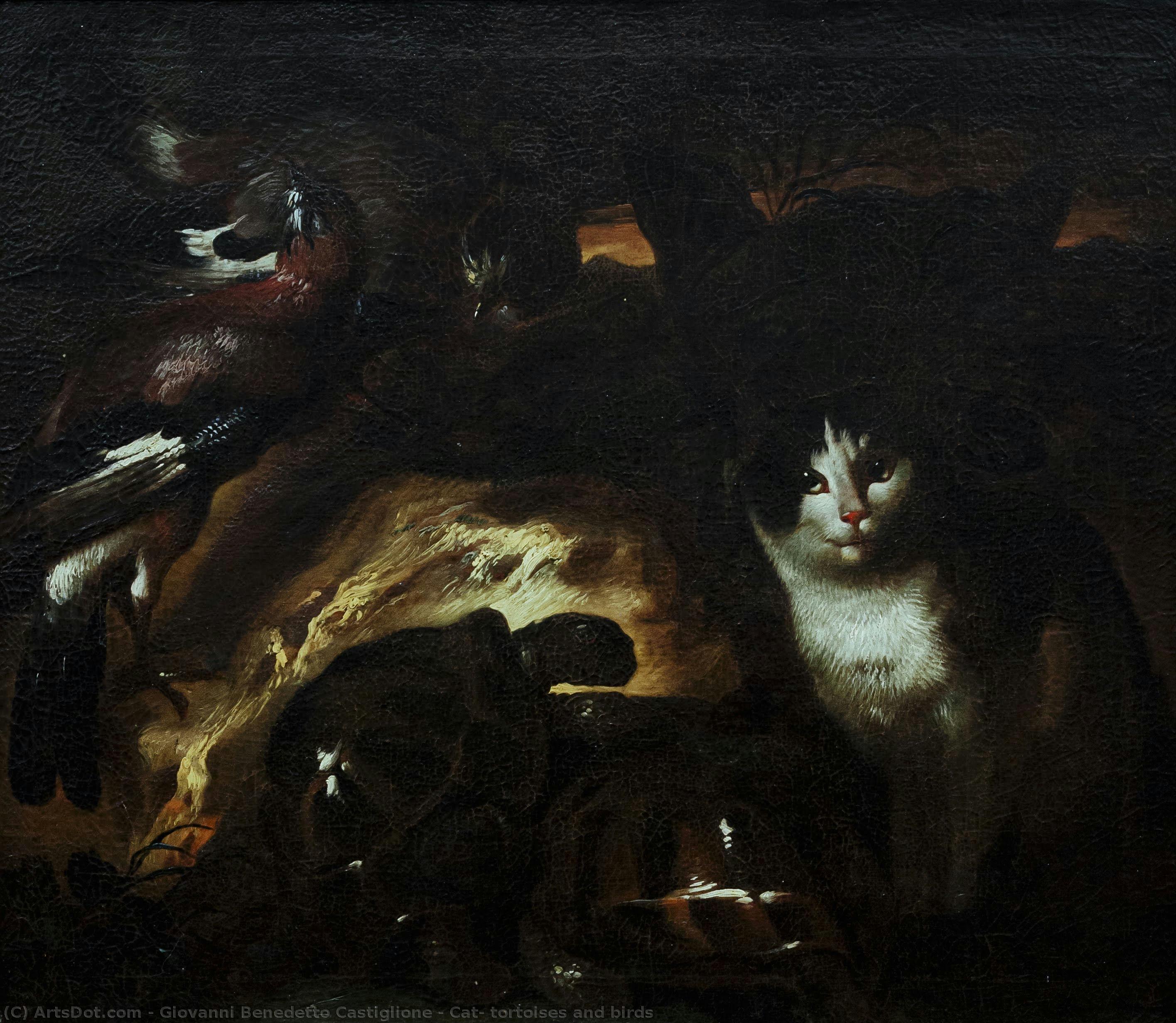
Cat, tortoises and birds


 Read More
Giclée / Art Print
Museum-quality giclée or canvas print with fast production and flexible finish options. ( Buy Hand Made Painting Buy Image)




P118B $10

P118H $10

P118W $10

P438Z $10

P508JH $12

P508YH $12

P805H $10

P805Z $10

P919BZ $10

P919G $10

P919XJ $10

P959ZH $10

P968JZ $12

W106C $8

W218G $10

W218JH $8

W218Y $10

W307PJ $10

W316G $10

W316PJ $8

W316Y $10

W398PJ $8

W4111J $10

W500HY $15

W500JH $15

W692G $12

W849H $8

W940BG $15

W953PJ $8




Pick from our preset sizes that match the artwork's original proportions.

You may enter your own dimensions to fit a specific frame or space. If your selected size does not match the original image's proportions, we will either crop the artwork or extend the image with a mirrored or solid-fill edge. A digital mockup will be sent for your approval before production begins.
Please note that the on-screen preview does not reflect the actual cropping or extension. Only the mockup will accurately show the final composition.
While custom sizes are available, we recommend selecting a dimension from the predefined list to preserve the original proportions.
Worldwide Delivery () in 2 weeks instead of standard 4/5 weeks. (28 August)

Free Worldwide Express Shipping

High-Quality Linen Canvas

Full Shipping Insurance

Customs Tax Refund Guarantee

True Color Matching Guarantee

60-Day Return Policy (Defects Only)

100% Money-Back Guarantee

Bulk Discount Offer
 Glass option is only available in size under 110 CM

Cat, tortoises and birds
Giclée / Art Print
Reproduction Size
-


Total Price
$ 63
A Baroque Symphony of Nature and Shadow
In the quiet, monochromatic depths of Giovanni Benedetto Castiglione’s Cat, tortoises and birds, we are invited into a world where the boundaries between predator and prey dissolve into a singular, breathtaking moment of stillness. Created around 1600, this masterpiece serves as a profound testament to the Baroque fascination with the natural order. The composition is anchored by the watchful gaze of a cat, whose eyes seem to pierce through the centuries to meet our own with an unsettling curiosity. This central figure acts as the emotional heartbeat of the piece, grounding a scene that is otherwise filled with the delicate, fluttering energy of birds and the slow, ancient presence of a tortoise. The absence of color does not diminish the work; rather, it strips away distractions, forcing the viewer to confront the raw textures of fur, feather, and shell through a masterful interplay of light and shadow.
The technical brilliance of Castiglione, often referred to as Il Grechetto, is on full display in this evocative depiction. As a master of line and atmosphere, he utilizes a sophisticated range of tones to create depth within a seemingly flat plane. The birds, perched precariously on weathered branches, are rendered with such precision that one can almost hear the rustle of wings against the silence of the scene. Above, a solitary bird in the upper corner adds a sense of verticality and spatial complexity, while the tortoise in the lower-right corner provides a heavy, terrestrial counterpoint to the airy lightness of the avian subjects. This meticulous attention to detail creates a tactile experience, making the artwork an ideal centerpiece for those who appreciate the intricate nuances of classical printmaking and etching techniques.
Symbolism and the Eternal Cycle
Beyond its surface beauty, Cat, tortoises and birds functions as a complex allegory of life, vigilance, and the interconnectedness of all living things. In the seventeenth-century Italian tradition, animal imagery often carried profound symbolic weight. The cat, a symbol of both domesticity and predatory instinct, represents the ever-present tension of survival. The birds, representing the ephemeral and the spiritual, contrast sharply with the tortoise, an ancient emblem of endurance and the slow passage of time. Together, these creatures form a microcosm of the natural world, where every element plays a vital role in a larger, cosmic equilibrium. For the discerning collector or interior designer, this piece offers more than mere decoration; it provides a contemplative window into the philosophical inquiries of the Baroque era.
Integrating such a profound work into a contemporary space allows for a sophisticated dialogue between historical depth and modern aesthetics. Whether placed in a sunlit gallery or a moody, library-inspired study, the high-quality reproduction of this Castiglione treasure brings an air of intellectual rigor and timeless elegance to any environment. It is a piece that demands slow looking, rewarding the observer with new discoveries of light, texture, and meaning with every encounter. To possess this work is to hold a fragment of the Genoese Baroque, capturing a fleeting moment of natural harmony that remains as captivating today as it was four centuries ago.
Related Artworks
Artist Biography
The Master of Line: Giovanni Benedetto Castiglione's Baroque Vision
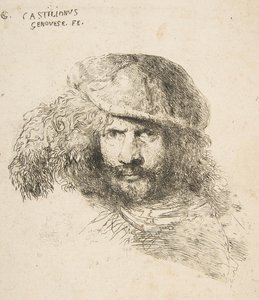
To encounter the work of Giovanni Benedetto Castiglione is to step into a richly detailed, meticulously observed corner of the Seicento Italian world. Born in Genoa in 1609, this artist emerged from the vibrant crucible of the Genoese School, establishing himself as a pivotal figure among Baroque masters. While his career spanned painting, printmaking, and drawing, it is perhaps his technical brilliance and his unique fascination with the natural world that continue to draw scholars and admirers alike. His early artistic education remains somewhat shrouded in mystery, though whispers suggest tutelage under Sinibaldo Scorza, an influence that undoubtedly shaped his profound command of line and shadow.
The currents of art flowing through Genoa during the seventeenth century were potent, drawing inspiration from masters such as Anthony van Dyck and Peter Paul Rubens. These influences are visible in Castiglione's ability to render figures with both dramatic flair and palpable realism. Yet, while he was capable of capturing grand historical narratives and evocative portraits, it is a distinct turn toward the pastoral and the animalistic that truly defines his enduring legacy.
A Deep Affinity for the Natural World
What sets Castiglione apart from many of his contemporaries is the sheer prominence given to fauna in his compositions. Where religious or historical events might serve as mere backdrop, the animals often become the undeniable protagonists. Consider his depictions of biblical scenes; the drama unfolds not through the human conflict, but through the magnificent stampede of creatures. This focus suggests more than mere artistic habit; it hints at a deep philosophical engagement with nature's inherent power and order.
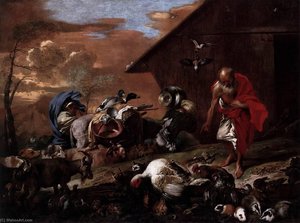
His fascination found a perfect subject in narratives such as Noah's Ark, where the gathering and passage of diverse animal life become central to the visual narrative. Furthermore, his celebrated series of exotic heads—portraits often featuring vaguely oriental males and women—demonstrates an equally keen eye for ethnographic detail, making these prints highly sought after across various global collections.
Innovation in Printmaking: The Art of Monotype
Beyond his painted canvases, Castiglione was a revolutionary craftsman within the printmaking medium. He is credited with inventing or at least popularizing the technique of monotyping—a process that allowed for unique, ephemeral impressions from plates. This technical mastery elevated his prints beyond mere reproductions; they became singular artistic statements in their own right. His etchings, such as those published by Giovanni Giacomo de Rossi, showcase this versatility, ranging from allegorical figures like Diogenes searching for a man to complex mythological scenes.
His ability to manipulate line and shading within the confines of printmaking allowed him to achieve an atmospheric quality that was both delicate and robust. This technical prowess underscores his status not just as a painter, but as a consummate visual engineer.
Legacy and Enduring Influence
Castiglione’s commitment to detail in rendering nature has led art historians to draw direct parallels between his work and the still life traditions of the Flemish school. His attention to texture—the sheen on an animal's coat, the curve of a horn—is nothing short of masterful. He managed to imbue even seemingly mundane farm animals with dignity and presence.
Il Grechetto, as he was sometimes known, left behind a body of work that speaks to both the grand sweep of Baroque drama and the quiet intimacy of natural observation. His prints remain vibrant testaments to the Seicento spirit—a period where art embraced complexity, technical innovation, and an unwavering celebration of life in all its forms.
giovanni benedetto castiglione
1609 - 1664 , Italy
Quick Facts
- Artistic Movement Or Style: Baroque
- Artists Or Movements Influenced By This Artist:
- Sinibaldo Scorza
- Flemish still life
- Artists Who Influenced This Artist:
- Anthony van Dyck
- Peter Paul Rubens
- Date Of Birth: March 23, 1609
- Date Of Death: May 5, 1664
- Full Name: Giovanni Benedetto Castiglione
- Nationality: Italian
- Notable Artworks:
- Noah's Ark
- Diogenes searching
- Genius of Castiglione
- Place Of Birth: Genoa, Italy
Related Articles

Dark Masterpieces: 10 Iconic Paintings Dominated by Black Tones |
Explore 10 iconic paintings dominated by black tones, from Rembrandt’s chiaroscuro to Goya's dark expressions. Discover the stories behind these masterpieces & find museum-quality art reproductions for your home at .
Feathered Visions: A Historical & Artistic Exploration of Birds in Painting
Explore the rich history of birds in painting! Discover symbolism, artistic movements & master artists like Audubon. High-quality reproductions available at ArtsDot.
Mars Black Masterpieces: 10 Iconic Paintings & Timeless Art Decor Ideas
Delve into the power of 'Mars Black' with 10 iconic paintings by masters like Rembrandt & Caravaggio. Explore dramatic chiaroscuro, gothic art, and timeless beauty. Find museum-quality reproductions & elevate your home decor on .
Lamp Black & Masterpieces: 10 Paintings That Define Shadow & Light |
Delve into the captivating world of 'Lamp Black' tones with 10 iconic paintings by masters like Rembrandt & Caravaggio. Explore Baroque chiaroscuro, dramatic lighting & shadow in art history. Find museum-quality reproductions at
Ivory Black Masters: 10 Paintings That Define Dramatic Art |
Delve into the power of 'Ivory Black' with 10 iconic paintings by masters like Rembrandt & Caravaggio. Explore dramatic chiaroscuro, gothic moods & timeless art history. Find museum-quality reproductions and elevate your home decor at