The Master of Line: Giovanni Benedetto Castiglione's Baroque Vision
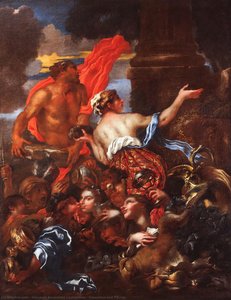
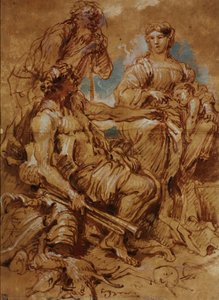
To encounter the work of Giovanni Benedetto Castiglione is to step into a richly detailed, meticulously observed corner of the Seicento Italian world. Born in Genoa in 1609, this artist emerged from the vibrant crucible of the Genoese School, establishing himself as a pivotal figure among Baroque masters. While his career spanned painting, printmaking, and drawing, it is perhaps his technical brilliance and his unique fascination with the natural world that continue to draw scholars and admirers alike. His early artistic education remains somewhat shrouded in mystery, though whispers suggest tutelage under Sinibaldo Scorza, an influence that undoubtedly shaped his profound command of line and shadow.
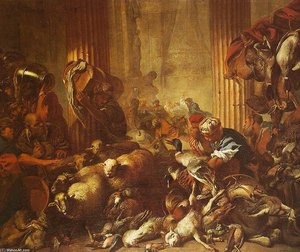
The currents of art flowing through Genoa during the seventeenth century were potent, drawing inspiration from masters such as Anthony van Dyck and Peter Paul Rubens. These influences are visible in Castiglione's ability to render figures with both dramatic flair and palpable realism. Yet, while he was capable of capturing grand historical narratives and evocative portraits, it is a distinct turn toward the pastoral and the animalistic that truly defines his enduring legacy.
A Deep Affinity for the Natural World
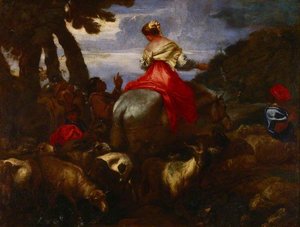
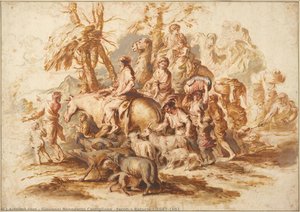
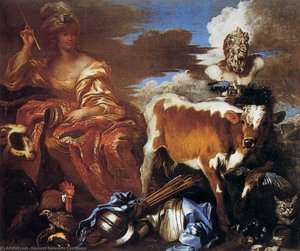
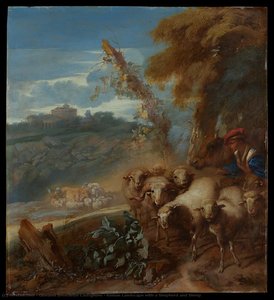
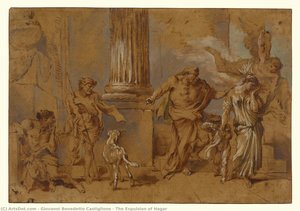
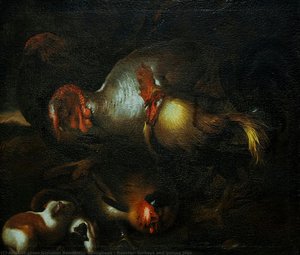
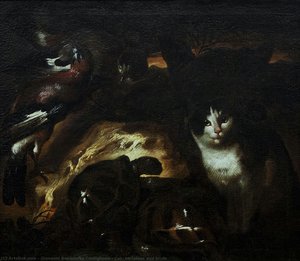
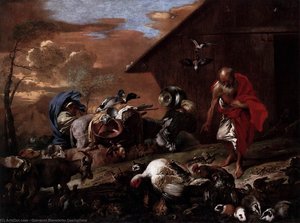
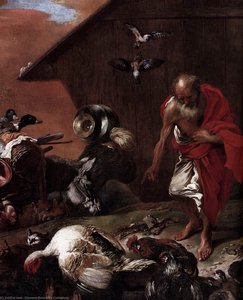
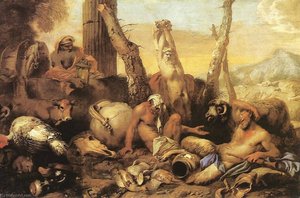
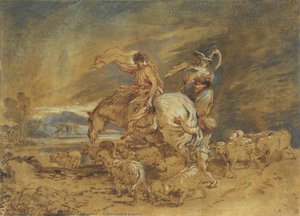
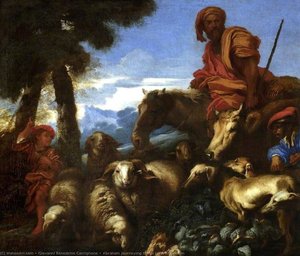
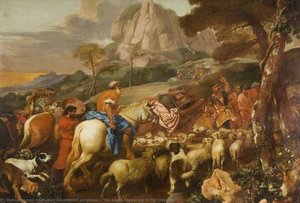
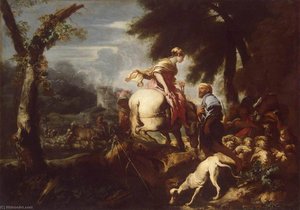
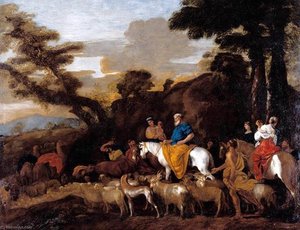
What sets Castiglione apart from many of his contemporaries is the sheer prominence given to fauna in his compositions. Where religious or historical events might serve as mere backdrop, the animals often become the undeniable protagonists. Consider his depictions of biblical scenes; the drama unfolds not through the human conflict, but through the magnificent stampede of creatures. This focus suggests more than mere artistic habit; it hints at a deep philosophical engagement with nature's inherent power and order.
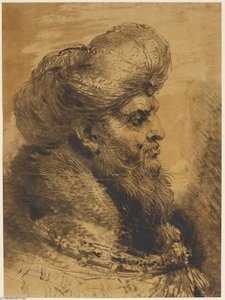
His fascination found a perfect subject in narratives such as Noah's Ark, where the gathering and passage of diverse animal life become central to the visual narrative. Furthermore, his celebrated series of exotic heads—portraits often featuring vaguely oriental males and women—demonstrates an equally keen eye for ethnographic detail, making these prints highly sought after across various global collections.
Innovation in Printmaking: The Art of Monotype
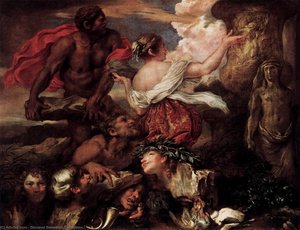
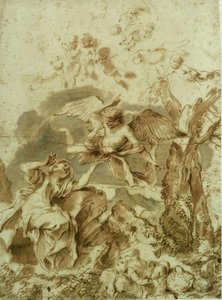
Beyond his painted canvases, Castiglione was a revolutionary craftsman within the printmaking medium. He is credited with inventing or at least popularizing the technique of monotyping—a process that allowed for unique, ephemeral impressions from plates. This technical mastery elevated his prints beyond mere reproductions; they became singular artistic statements in their own right. His etchings, such as those published by Giovanni Giacomo de Rossi, showcase this versatility, ranging from allegorical figures like Diogenes searching for a man to complex mythological scenes.
His ability to manipulate line and shading within the confines of printmaking allowed him to achieve an atmospheric quality that was both delicate and robust. This technical prowess underscores his status not just as a painter, but as a consummate visual engineer.
Legacy and Enduring Influence
Castiglione’s commitment to detail in rendering nature has led art historians to draw direct parallels between his work and the still life traditions of the Flemish school. His attention to texture—the sheen on an animal's coat, the curve of a horn—is nothing short of masterful. He managed to imbue even seemingly mundane farm animals with dignity and presence.
Il Grechetto, as he was sometimes known, left behind a body of work that speaks to both the grand sweep of Baroque drama and the quiet intimacy of natural observation. His prints remain vibrant testaments to the Seicento spirit—a period where art embraced complexity, technical innovation, and an unwavering celebration of life in all its forms.