 Preview
 Send
Send Share
Share
 Details

 Download
 Similars
 X-Ray
X-Ray Diaporama
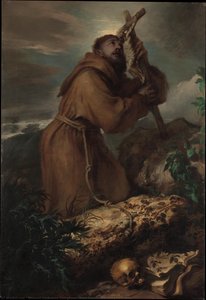
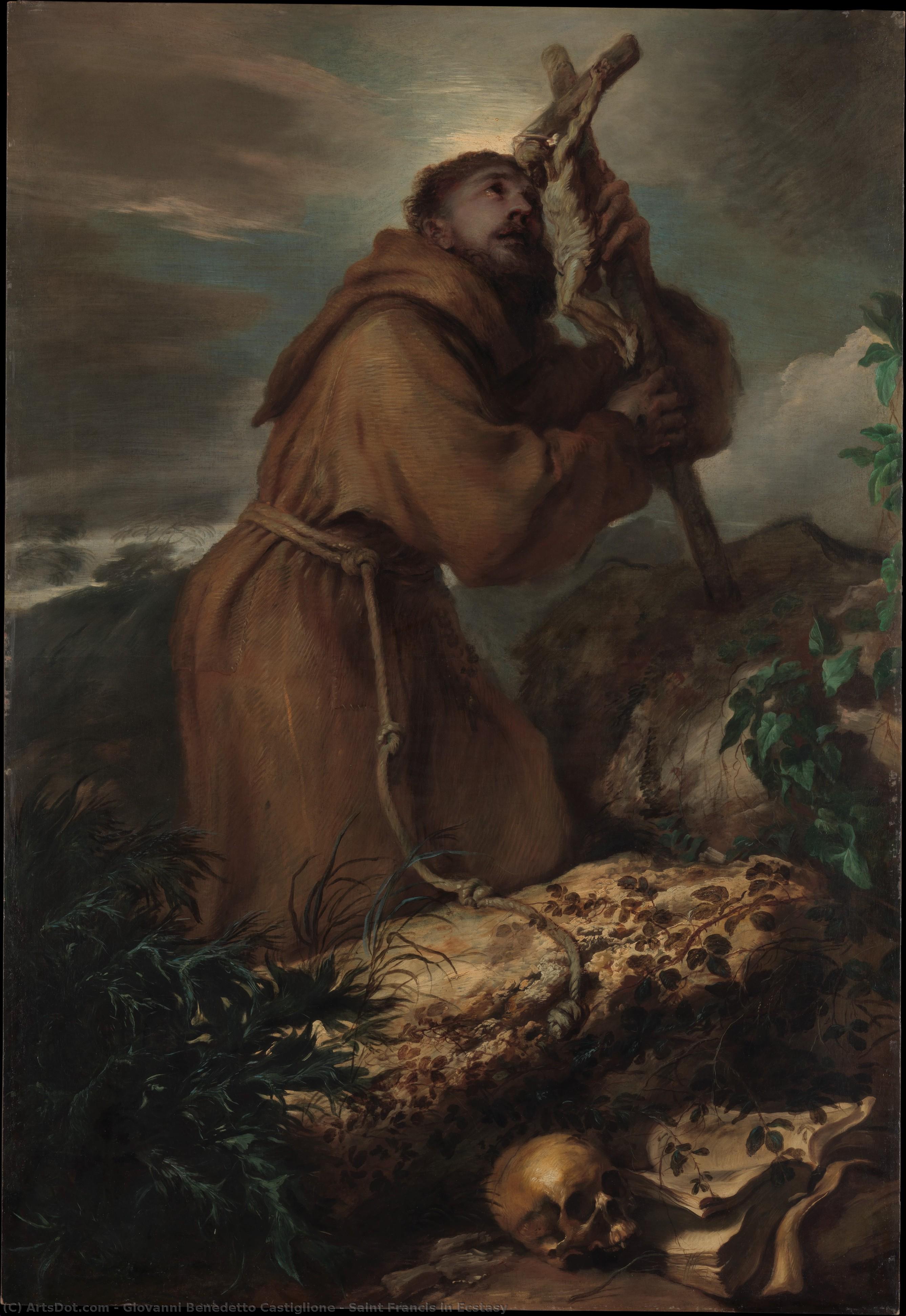
Saint Francis in Ecstasy
 Oil On Canvas
- WallArt
- Baroque
 1650
1650 196.0 x 135.0 cm
 Metropolitan Museum of Art
 Read More
Hand Made Oil Reproduction
Hand-painted oil on canvas in your size and frame, made to order by our artists. ( Buy Print Buy Image)




P118B $10

P118H $10

P118W $10

P438Z $10

P508JH $12

P508YH $12

P805H $10

P805Z $10

P919BZ $10

P919G $10

P919XJ $10

P959ZH $10

P968JZ $12

W106C $8

W218G $10

W218JH $8

W218Y $10

W307PJ $10

W316G $10

W316PJ $8

W316Y $10

W398PJ $8

W4111J $10

W500HY $15

W500JH $15

W692G $12

W849H $8

W940BG $15

W953PJ $8




Pick from our preset sizes that match the artwork's original proportions.

You may enter your own dimensions to fit a specific frame or space. If your selected size does not match the original image's proportions, we will either crop the artwork or extend the painting with additional hand-painted elements. A digital mockup will be sent for your approval before production begins.
Please note that the on-screen preview does not reflect the actual cropping or extension. Only the mockup will accurately show the final composition.
While custom sizes are available, we recommend selecting a dimension from the predefined list to preserve the original proportions.
After order, ArtsDot.com team will email client for instructions and provide a mockup preview
Worldwide Delivery () in 3/4 weeks instead of standard 5 weeks. (17 August). No compromise on quality.

Free Worldwide Express Shipping

High-Quality Linen Canvas

Full Shipping Insurance

Customs Tax Refund Guarantee

True Color Matching Guarantee

60-Day Return Policy (Defects Only)

100% Money-Back Guarantee

Bulk Discount Offer
 Glass option is only available in size under 110 CM

Saint Francis in Ecstasy
Reproduction Medium
Reproduction Size
-


Total Price
$ 263
Artwork Description
Giovanni Benedetto Castiglione’s “Saint Francis in Ecstasy”: A Glimpse of Divine Grace
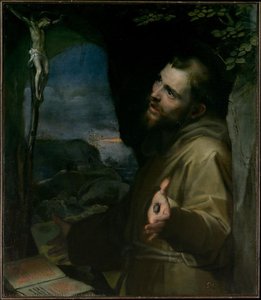
“Saint Francis in Ecstasy,” painted by Giovanni Benedetto Castiglione around 1650, is more than just a portrait; it's an immersive experience. The painting captures a pivotal moment in the life of Saint Francis of Assisi – his visionary encounter on Mount La Verna, where he received the stigmata, the wounds mirroring Christ’s crucifixion. Castiglione masterfully translates this profound spiritual event into a tangible image, inviting viewers to contemplate themes of devotion, mortality, and the divine connection between humanity and nature.
The scene unfolds dramatically against a twilight sky, a backdrop that immediately establishes a sense of solemnity and heightened emotion. Francis, clad in the rich, flowing robes of a Capuchin friar – a later iteration of the Franciscan order emphasizing austerity – kneels on a rugged precipice, his gaze fixed upwards towards a sculpted representation of Christ’s crucifixion. The composition is carefully balanced; the earthly realm of stone and shadow contrasts sharply with the ethereal light emanating from above, symbolizing the spiritual ascent Francis undertakes. Castiglione's skill lies not just in depicting the figure but in creating an atmosphere thick with reverence and quiet contemplation.
A Symphony of Technique: Line, Impasto, and Dramatic Light
Castiglione’s artistic approach is characterized by a remarkable command of technique. He employs short, repeated diagonal brushstrokes to build up the textures of Francis's clothing – a deliberate choice that imbues the fabric with a tactile quality, inviting us to almost feel its weight and movement. This technique, combined with his use of impasto—thickly applied paint—creates a dynamic surface, full of visual interest and depth. The skull and open book at the base of the composition serve as potent reminders of earthly vanities, juxtaposed against the saint’s spiritual focus.
The artist's masterful manipulation of light is particularly noteworthy. The dramatic chiaroscuro—the stark contrast between light and shadow—draws our attention to Francis, highlighting his posture of devotion and emphasizing the symbolic weight of the scene. The golden rays piercing through the darkness suggest divine grace illuminating a humble soul, while the shadowed elements represent the world’s temptations and imperfections. This interplay of light and dark isn't merely aesthetic; it’s a visual representation of the spiritual struggle between earthly desires and divine aspiration.
Symbolism Woven into the Landscape
Beyond the central figures, “Saint Francis in Ecstasy” is rich with symbolic detail. The rocky precipice itself represents the arduous path to enlightenment, while the distant valley hints at a world beyond earthly concerns. The skull and book—traditional symbols of mortality and worldly knowledge—are deliberately placed beneath Francis’s feet, suggesting that true understanding lies not in material possessions or intellectual pursuits but in spiritual devotion. Even the animal figures – a donkey and a bird – contribute to the painting's layered symbolism, representing the Franciscan commitment to compassion for all creatures.
A Legacy of Baroque Grandeur
Castiglione’s “Saint Francis in Ecstasy” stands as a testament to the flourishing Baroque artistic tradition. Influenced by masters like Van Dyck, Rubens, and Rembrandt, Castiglione developed his own distinctive style characterized by dramatic lighting, dynamic compositions, and an intense emotionality. The painting's enduring appeal lies not only in its technical brilliance but also in its ability to resonate with viewers on a deeply human level – reminding us of the timeless quest for meaning, faith, and connection to something greater than ourselves. Reproductions of this powerful work offer a window into a world of spiritual contemplation and artistic mastery.
Related Artworks
Artist Biography
The Master of Line: Giovanni Benedetto Castiglione's Baroque Vision
To encounter the work of Giovanni Benedetto Castiglione is to step into a richly detailed, meticulously observed corner of the Seicento Italian world. Born in Genoa in 1609, this artist emerged from the vibrant crucible of the Genoese School, establishing himself as a pivotal figure among Baroque masters. While his career spanned painting, printmaking, and drawing, it is perhaps his technical brilliance and his unique fascination with the natural world that continue to draw scholars and admirers alike. His early artistic education remains somewhat shrouded in mystery, though whispers suggest tutelage under Sinibaldo Scorza, an influence that undoubtedly shaped his profound command of line and shadow.
The currents of art flowing through Genoa during the seventeenth century were potent, drawing inspiration from masters such as Anthony van Dyck and Peter Paul Rubens. These influences are visible in Castiglione's ability to render figures with both dramatic flair and palpable realism. Yet, while he was capable of capturing grand historical narratives and evocative portraits, it is a distinct turn toward the pastoral and the animalistic that truly defines his enduring legacy.
A Deep Affinity for the Natural World
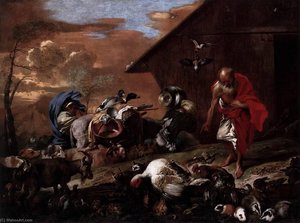
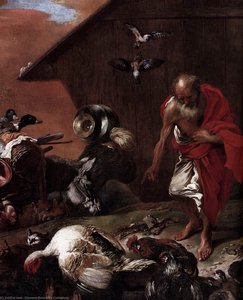
What sets Castiglione apart from many of his contemporaries is the sheer prominence given to fauna in his compositions. Where religious or historical events might serve as mere backdrop, the animals often become the undeniable protagonists. Consider his depictions of biblical scenes; the drama unfolds not through the human conflict, but through the magnificent stampede of creatures. This focus suggests more than mere artistic habit; it hints at a deep philosophical engagement with nature's inherent power and order.
His fascination found a perfect subject in narratives such as Noah's Ark, where the gathering and passage of diverse animal life become central to the visual narrative. Furthermore, his celebrated series of exotic heads—portraits often featuring vaguely oriental males and women—demonstrates an equally keen eye for ethnographic detail, making these prints highly sought after across various global collections.
Innovation in Printmaking: The Art of Monotype
Beyond his painted canvases, Castiglione was a revolutionary craftsman within the printmaking medium. He is credited with inventing or at least popularizing the technique of monotyping—a process that allowed for unique, ephemeral impressions from plates. This technical mastery elevated his prints beyond mere reproductions; they became singular artistic statements in their own right. His etchings, such as those published by Giovanni Giacomo de Rossi, showcase this versatility, ranging from allegorical figures like Diogenes searching for a man to complex mythological scenes.
His ability to manipulate line and shading within the confines of printmaking allowed him to achieve an atmospheric quality that was both delicate and robust. This technical prowess underscores his status not just as a painter, but as a consummate visual engineer.
Legacy and Enduring Influence
Castiglione’s commitment to detail in rendering nature has led art historians to draw direct parallels between his work and the still life traditions of the Flemish school. His attention to texture—the sheen on an animal's coat, the curve of a horn—is nothing short of masterful. He managed to imbue even seemingly mundane farm animals with dignity and presence.
Il Grechetto, as he was sometimes known, left behind a body of work that speaks to both the grand sweep of Baroque drama and the quiet intimacy of natural observation. His prints remain vibrant testaments to the Seicento spirit—a period where art embraced complexity, technical innovation, and an unwavering celebration of life in all its forms.
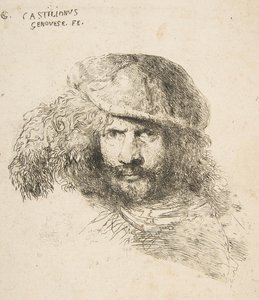
giovanni benedetto castiglione
1609 - 1664 , Italy
Quick Facts
- Artistic Movement Or Style: Baroque
- Artists Or Movements Influenced By This Artist:
- Sinibaldo Scorza
- Flemish still life
- Artists Who Influenced This Artist:
- Anthony van Dyck
- Peter Paul Rubens
- Date Of Birth: March 23, 1609
- Date Of Death: May 5, 1664
- Full Name: Giovanni Benedetto Castiglione
- Nationality: Italian
- Notable Artworks:
- Noah's Ark
- Diogenes searching
- Genius of Castiglione
- Place Of Birth: Genoa, Italy
Related Articles
Francis Bacon's Masterpieces: Exploring 25 Iconic Paintings | ArtsDot
Delve into the haunting world of Francis Bacon with ArtsDot. Explore 25 iconic paintings, from his visceral portraits to powerful triptychs. Discover the stories behind these masterpieces & find museum-quality art reproductions for your home. Explore the full collection online!

The Dramatic Flourish: Exploring the Baroque Movement's Enduring Legacy in Art History
Explore the dramatic world of Baroque art! Discover iconic artists like Caravaggio & Rubens, defining techniques, and its lasting impact on art history. Expert insights for collectors & enthusiasts at ArtsDot.

Baroque Masterpieces: 10 Paintings That Defined an Era |
Journey through the drama & grandeur of Baroque art! Explore 10 masterpieces by Caravaggio, Rembrandt, Rubens & more. Discover stunning oil paintings, rich colors & timeless stories. Find museum-quality reproductions at .
The Golden Age Reforged: Dramatic Realism & Religious Zeal in Spanish Baroque Art
Explore the dramatic world of Spanish Baroque art! Discover masters like Zurbarán & the powerful influence of religious zeal on painting techniques – a guide for collectors and enthusiasts.
Theatricality & Triumph: Baroque Drama in Painting & Sculpture
Explore the dramatic world of Baroque art! Discover its history, defining characteristics, & lasting influence on painting & sculpture. Expert insights into Caravaggio, Zurbarán, and Bernini – plus high-quality reproductions at ArtsDot.