

 Preview
 Send
Send Share
Share
 Details

 Download
 Similars
 X-Ray
X-Ray Diaporama
Circe


 Read More
Purchase a high-resolution, enhanced digital image, far superior to the online preview.
Each file is meticulously prepared by our in-house specialists using advanced tools and expert manual retouching. We ensure every image has exceptional clarity, precise color accuracy, and fine detail.
The final file is delivered via email within 72 hours, optimized for immediate use in professional, editorial, and print environments. This is the same quality trusted by top-tier design studios, publishers, and galleries.
Digital Image
Download a high-resolution file for personal display, printing, and creative projects. ( Buy Print Buy Hand Made Painting)
Included in Every Digital Image Order
Expert Digital Delivery, Guaranteed
When you choose ArtsDot.com, you're not just getting an image - you're receiving a professionally enhanced digital artwork, crafted with precision and backed by a satisfaction guarantee. Here's everything that comes with your order, automatically:

Fast Email Delivery
Your high-resolution digital image file will be emailed to you within 72 hours of ordering - ready for immediate use.

AI-Enhanced Digital File
Your artwork is professionally optimized using advanced AI tools and manual editing, ensuring maximum detail, clarity, and color accuracy.

Free Lifetime Re-Delivery
Accidentally deleted or lost your file? No worries - we'll resend it to you anytime, free of charge.

No Import Fees - Ever
Enjoy your artwork instantly with zero customs, duties, or delivery fees - digital downloads are always tax-free.

Color Accuracy Guarantee
We ensure your digital image reflects the original colors as closely as possible using professional tools and color management.

60-Day Satisfaction Guarantee
If you're not satisfied with your digital image, we'll revise it or refund 100% within 60 days - no questions asked.

100% Money-Back Guarantee
Not satisfied? Get a full refund within 60 days of receiving your digital file - no questions asked.

Bulk Order Discounts
Buy 3 images, save 10% - Buy 5, save 15% - Buy 10+, save 20%. Great for creative projects, galleries, and agencies.
Collectible Description
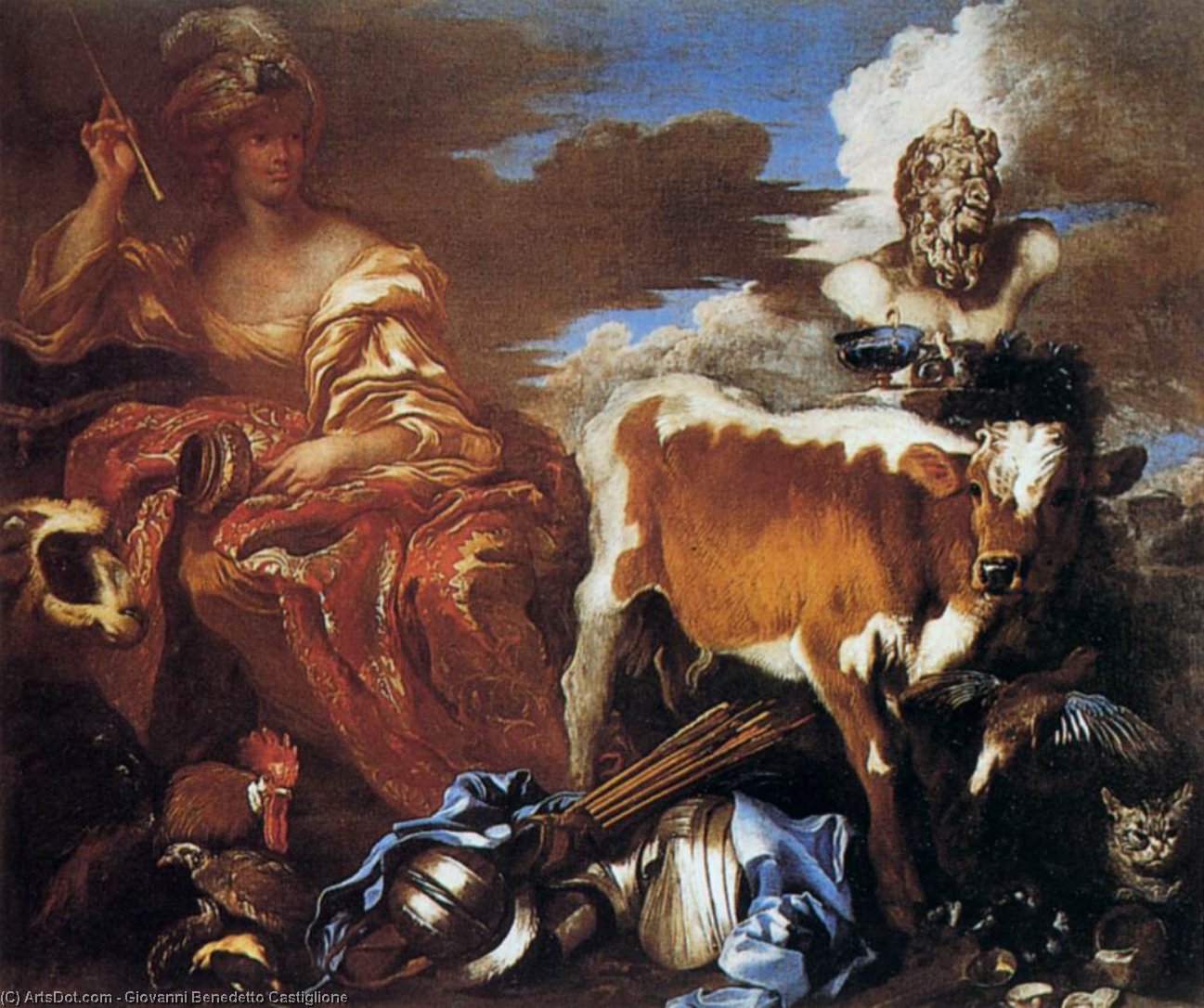
Giovanni Benedetto Castiglione’s Circe: A Symphony of Myth and Technique
The painting “Circe” by Giovanni Benedetto Castiglione stands as a testament to the Baroque fascination with dramatic storytelling and meticulous observation—a captivating oil on canvas that transports viewers back to 1650 Florence. Housed within the Galleria degli Uffizi, this artwork isn’t merely a depiction of Homer's myth; it’s an immersive experience crafted through masterful artistic choices designed to resonate deeply with its audience.Composition and Symbolism: A Tableau of Transformation
Castiglione’s composition immediately draws the eye toward a central figure—a woman adorned in scarlet, holding aloft a wand, her gaze unwavering as she confronts the viewer. To her right resides a serene cow, an animal frequently associated with fertility and nurturing – perhaps symbolizing Circe's ability to reshape reality or anchoring the scene within the pastoral landscape of Odysseus’s journey. Dominating the background are two enigmatic figures: a man concealed behind a mask, representing secrecy and the unknown perils inherent in divine intervention; and a woman gazing upwards towards the heavens, embodying regal authority and spiritual contemplation. These elements intertwine to create a dynamic visual narrative that underscores the transformative power of myth itself.The Baroque Style: Light, Shadow, and Emotional Depth
Castiglione’s artistic style embodies the core tenets of Baroque painting—a deliberate emphasis on dramatic lighting and meticulous shading to convey emotion and heighten realism. The artist skillfully manipulates chiaroscuro, creating a palpable sense of depth and dimensionality that envelops the viewer. Notice how light illuminates Circe's face and wand, highlighting her determination, while shadows drape across the cow and mask figure, fostering an atmosphere of mystery and intrigue. This technique wasn’t simply about accurate representation; it was about evoking feeling—a cornerstone of Baroque artistic philosophy.Technique: Monotyping – An Innovative Approach
Castiglione pioneered monotyping, a revolutionary printing process that allowed for unparalleled nuance in color and tonal variation. Unlike etching or engraving, monotyping involves applying ink directly to the canvas surface, creating a single impression that captures the artist’s initial vision. This method ensured that each print retained the unique character of its origin—a deliberate departure from traditional methods that prioritized uniformity. The resulting image possesses an ethereal quality, mirroring the transformative magic at play within the mythological narrative.A Legacy Enduring Through Reproduction: Exploring Castiglione's Vision
As seen in other works by Giovanni Benedetto Castiglione, such as those available on ArtsDot.com, “Circe” exemplifies his dedication to capturing both visual splendor and psychological complexity. Its enduring appeal lies not only in its stunning depiction of Homer’s tale but also in the artist's profound understanding of how art could communicate emotion and inspire contemplation. To experience Castiglione’s masterpiece firsthand is a privilege; however, high-quality reproductions on ArtsDot.com offer an accessible pathway to appreciating this iconic artwork—a window into the artistic spirit of its time. Learn more about the Galleria degli Uffizi and its collection on ArtsDot.com Discover the mythological story of Circe on Wikipedia.Related Artworks

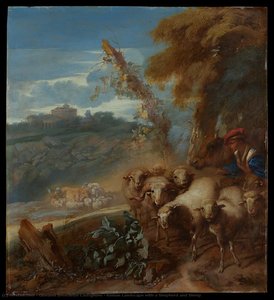
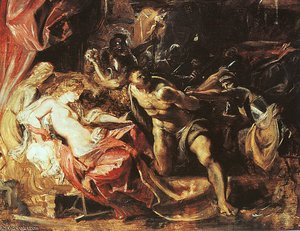
Artist Biography
The Master of Line: Giovanni Benedetto Castiglione's Baroque Vision
To encounter the work of Giovanni Benedetto Castiglione is to step into a richly detailed, meticulously observed corner of the Seicento Italian world. Born in Genoa in 1609, this artist emerged from the vibrant crucible of the Genoese School, establishing himself as a pivotal figure among Baroque masters. While his career spanned painting, printmaking, and drawing, it is perhaps his technical brilliance and his unique fascination with the natural world that continue to draw scholars and admirers alike. His early artistic education remains somewhat shrouded in mystery, though whispers suggest tutelage under Sinibaldo Scorza, an influence that undoubtedly shaped his profound command of line and shadow.
The currents of art flowing through Genoa during the seventeenth century were potent, drawing inspiration from masters such as Anthony van Dyck and Peter Paul Rubens. These influences are visible in Castiglione's ability to render figures with both dramatic flair and palpable realism. Yet, while he was capable of capturing grand historical narratives and evocative portraits, it is a distinct turn toward the pastoral and the animalistic that truly defines his enduring legacy.
A Deep Affinity for the Natural World
What sets Castiglione apart from many of his contemporaries is the sheer prominence given to fauna in his compositions. Where religious or historical events might serve as mere backdrop, the animals often become the undeniable protagonists. Consider his depictions of biblical scenes; the drama unfolds not through the human conflict, but through the magnificent stampede of creatures. This focus suggests more than mere artistic habit; it hints at a deep philosophical engagement with nature's inherent power and order.
His fascination found a perfect subject in narratives such as Noah's Ark, where the gathering and passage of diverse animal life become central to the visual narrative. Furthermore, his celebrated series of exotic heads—portraits often featuring vaguely oriental males and women—demonstrates an equally keen eye for ethnographic detail, making these prints highly sought after across various global collections.
Innovation in Printmaking: The Art of Monotype
Beyond his painted canvases, Castiglione was a revolutionary craftsman within the printmaking medium. He is credited with inventing or at least popularizing the technique of monotyping—a process that allowed for unique, ephemeral impressions from plates. This technical mastery elevated his prints beyond mere reproductions; they became singular artistic statements in their own right. His etchings, such as those published by Giovanni Giacomo de Rossi, showcase this versatility, ranging from allegorical figures like Diogenes searching for a man to complex mythological scenes.
His ability to manipulate line and shading within the confines of printmaking allowed him to achieve an atmospheric quality that was both delicate and robust. This technical prowess underscores his status not just as a painter, but as a consummate visual engineer.
Legacy and Enduring Influence
Castiglione’s commitment to detail in rendering nature has led art historians to draw direct parallels between his work and the still life traditions of the Flemish school. His attention to texture—the sheen on an animal's coat, the curve of a horn—is nothing short of masterful. He managed to imbue even seemingly mundane farm animals with dignity and presence.
Il Grechetto, as he was sometimes known, left behind a body of work that speaks to both the grand sweep of Baroque drama and the quiet intimacy of natural observation. His prints remain vibrant testaments to the Seicento spirit—a period where art embraced complexity, technical innovation, and an unwavering celebration of life in all its forms.
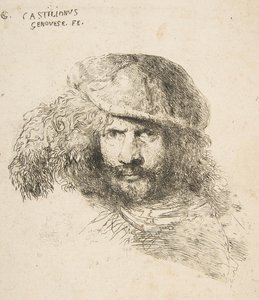
giovanni benedetto castiglione
1609 - 1664 , Italy
Quick Facts
- Artistic Movement Or Style: Baroque
- Artists Or Movements Influenced By This Artist:
- Sinibaldo Scorza
- Flemish still life
- Artists Who Influenced This Artist:
- Anthony van Dyck
- Peter Paul Rubens
- Date Of Birth: March 23, 1609
- Date Of Death: May 5, 1664
- Full Name: Giovanni Benedetto Castiglione
- Nationality: Italian
- Notable Artworks:
- Noah's Ark
- Diogenes searching
- Genius of Castiglione
- Place Of Birth: Genoa, Italy

